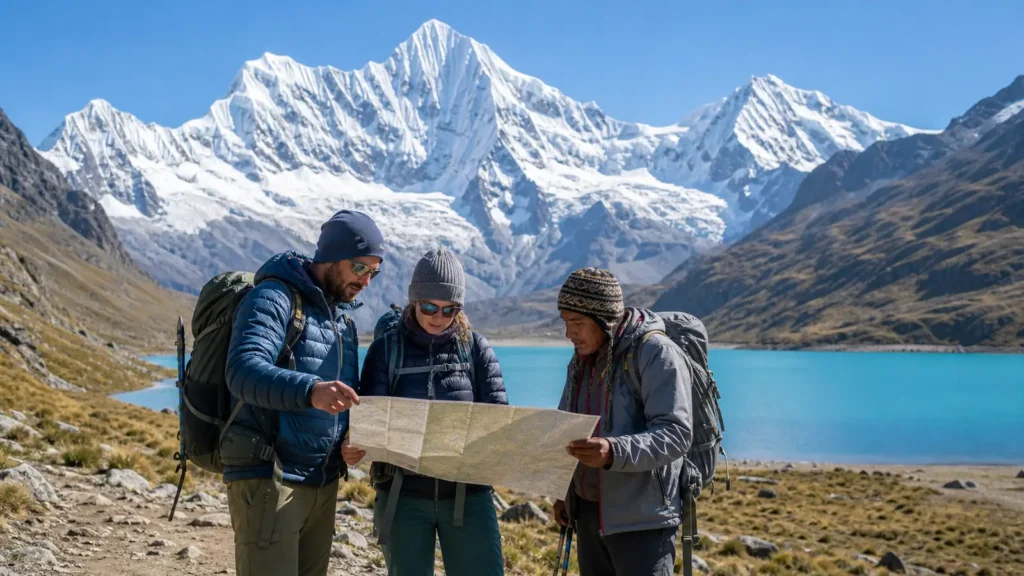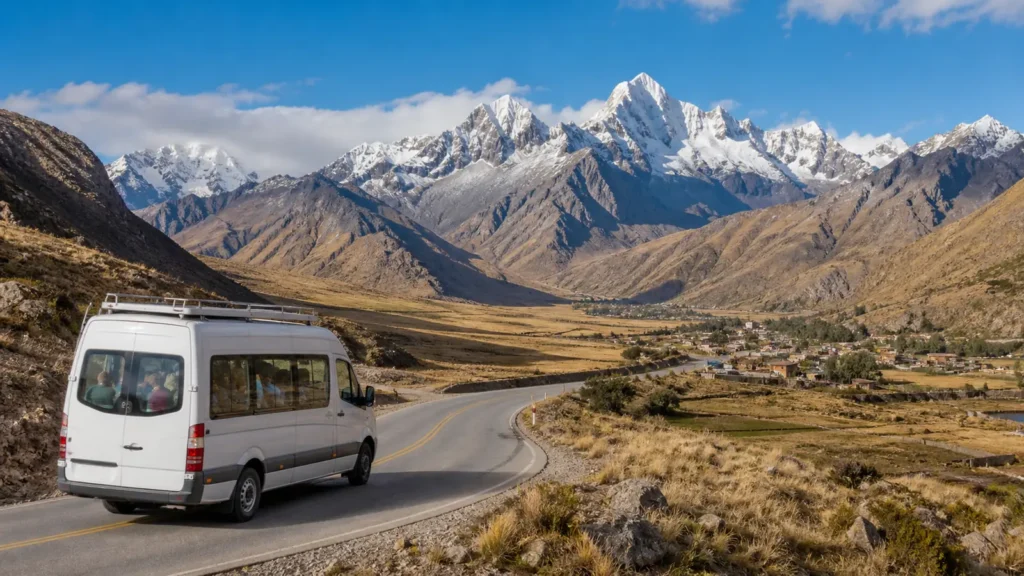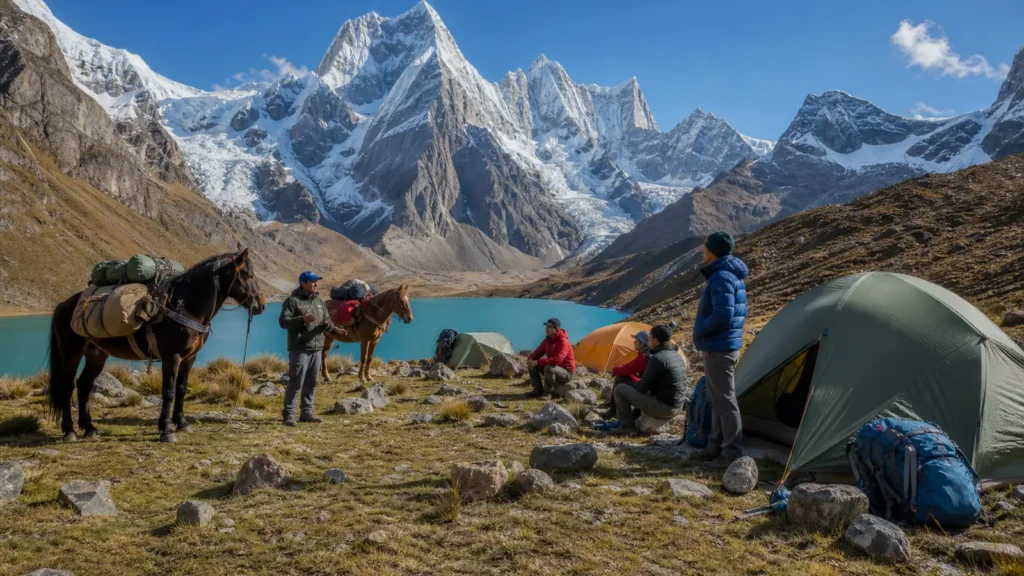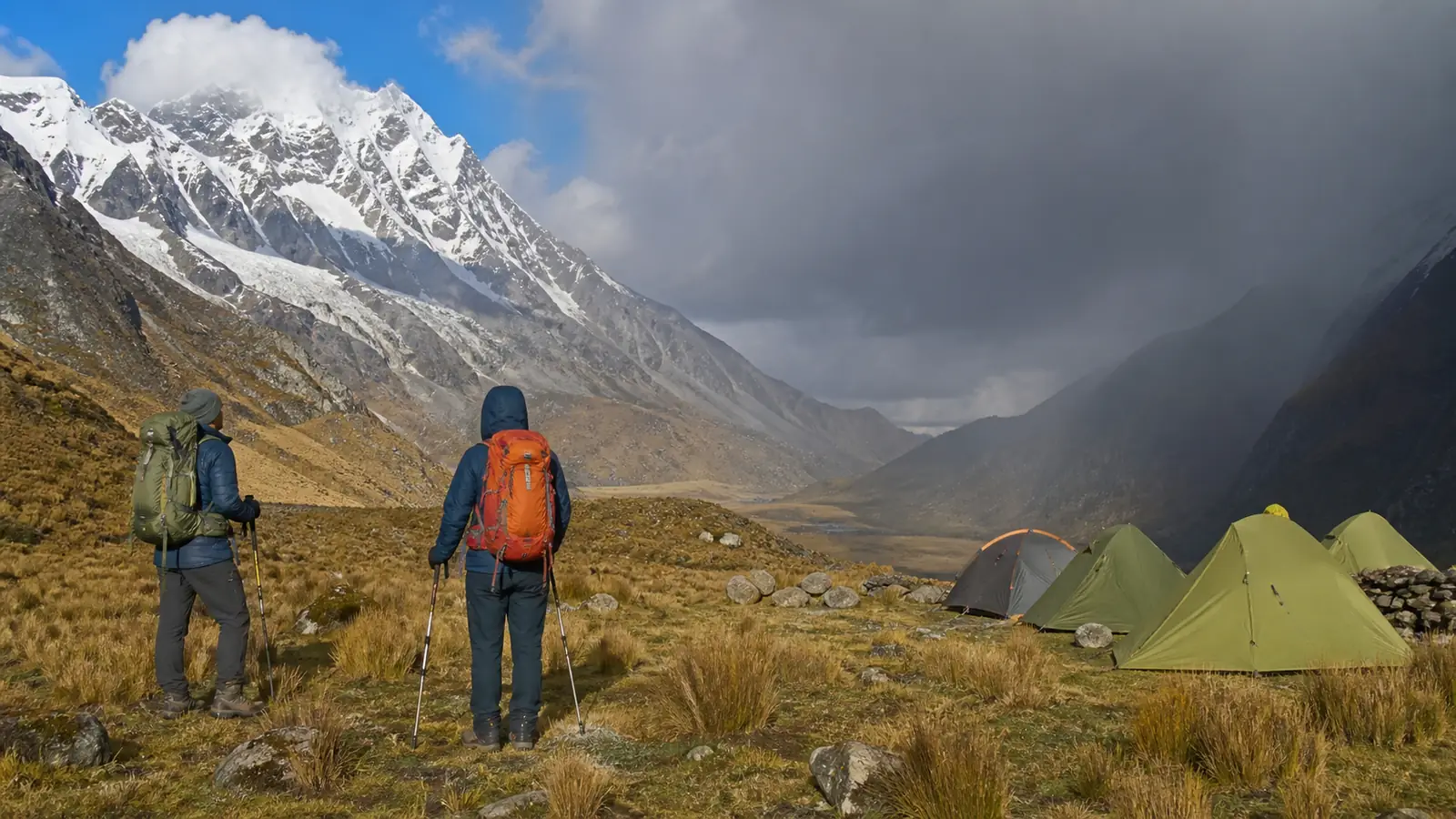

Huayhuash Trek weather is defined by altitude, season and rapid local changes. Most hikers favor the drier period from May through September, but clear skies can produce very cold nights, and rain, hail or snow remains possible at any time. A useful forecast therefore combines the monthly pattern with the elevation and exposure of each day’s route.
How weather works in the Cordillera Huayhuash
The Cordillera Huayhuash is a compact high-mountain range south of Peru’s Cordillera Blanca. Camps and passes sit in terrain where elevation strongly influences temperature, wind and precipitation. A valley can remain sunny while cloud gathers around a pass, and a short shower can fall as sleet or snow higher on the route. This is why a city forecast for Huaraz cannot describe every stage of the trek.
Peru’s National Service for Natural Protected Areas describes the regional climate as predominantly cold and dry under glacial influence. Its official Huayhuash profile notes that nights above 4,000 meters can fall below freezing and that the main precipitation period extends broadly from September to mid-April. These are regional patterns rather than a promise for a particular departure.
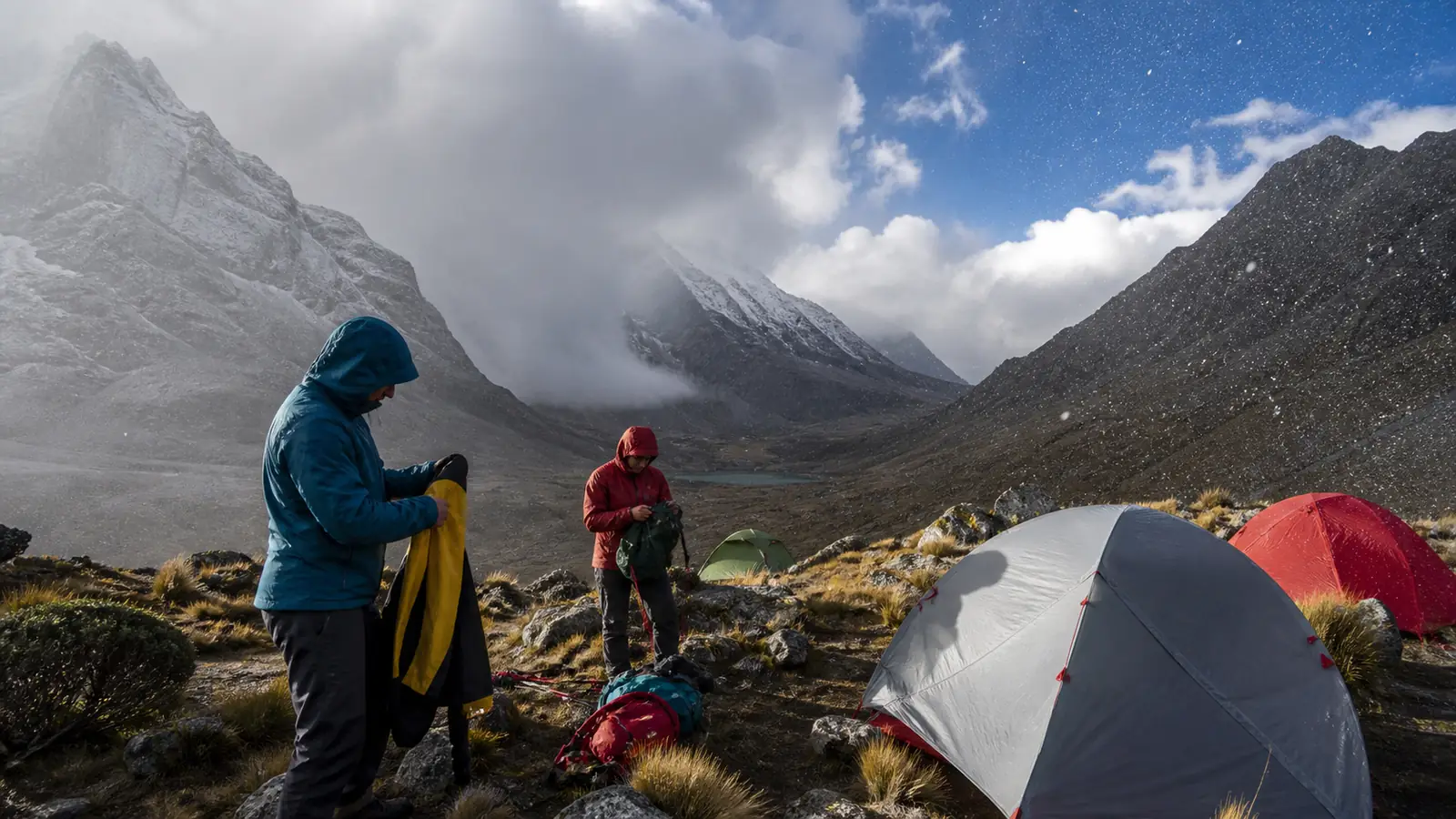
Huayhuash Trek weather by month
The table below is a planning guide, not a day-by-day forecast. Seasonal transitions shift from year to year, and conditions at a 4,700-meter pass can differ sharply from those in a sheltered camp. Check current trail reports and a mountain forecast shortly before departure.
| Month | Typical pattern | What hikers should expect |
|---|---|---|
| January | Core wet season | Frequent cloud, rain and possible snow on high passes. Mud, wet gear and reduced mountain visibility may affect plans. |
| February | Wet and unsettled | Persistent moisture and afternoon storms are possible. Some operators limit departures or adjust routes for safety. |
| March | Wet season easing gradually | Green landscapes but continued rain risk. Trail and road conditions matter more than the calendar alone. |
| April | Transition toward drier weather | Improving visibility can alternate with late-season showers. Flexibility and complete rain protection remain essential. |
| May | Beginning of the main dry window | Often clearer and more settled, with colder nights becoming noticeable. A strong early-season option after checking access. |
| June | Dry, clear and cold | Good mountain visibility is common. Expect frost and potentially sub-zero conditions at camp before sunrise. |
| July | Peak dry-season pattern | Generally dry trails and clear views, but cold nights, wind and occasional weather systems still occur. |
| August | Dry with increasing wind at times | Usually favorable for trekking. Dust, strong sun and exposed-pass wind can be as important as rain. |
| September | Late dry season and transition | Many good trekking days remain, while afternoon cloud and isolated showers may become more frequent. |
| October | Variable shoulder season | A mix of clear mornings, growing cloud and early rains. Add schedule margin and waterproof critical equipment. |
| November | Increasing rainfall | Greener valleys and fewer trekkers, with greater uncertainty on passes and more demanding camp logistics. |
| December | Wet-season conditions established | Rain, cloud and possible high-elevation snow can interrupt views and require itinerary changes. |
Dry-season weather from May to September
May through September is the main trekking window because precipitation is generally lower and long periods of clear visibility are more likely. Drier ground can make high passes and camp setup easier. It is also the period when the contrast between intense daytime sun and nighttime cold becomes especially pronounced.
June, July and August are not “warm months” in Huayhuash. Under clear skies, heat escapes quickly after sunset. Frost can form around tents and water containers, while exposed ridges may feel much colder in the wind. Hikers should select a sleeping bag by its comfort rating and expected camp elevation, not by a generic description such as three-season.
Demand can also be higher during the central dry months. Anyone deciding between weather stability, crowd levels and availability should consult the future guide to the best time to hike the Huayhuash Trek. That article will compare travel priorities; this page remains focused specifically on climate and weather behavior.
Rainy-season conditions from October to April
The wetter cycle often begins during the spring transition and becomes more established from December through March. Rain can soften trails, increase stream flow and leave clothing or sleeping systems difficult to dry. At higher elevations the same system may produce hail, sleet or snow. Cloud can also hide the peaks that motivate many photographers to choose the route.
Wet-season trekking is not simply the dry-season itinerary with a rain jacket. Transport access, river crossings, camp drainage and the guide’s ability to alter stages become more important. A green landscape and fewer visitors may appeal to experienced trekkers, but those advantages must be weighed against uncertainty and the possibility that a responsible operator postpones or modifies a departure.
April and October are shoulder months rather than guaranteed boundaries. They can deliver excellent conditions or several unstable days. If traveling near either edge, preserve a flexible day and avoid booking a non-refundable onward connection immediately after the trek.
Temperatures: why one number is misleading
A single “Huayhuash temperature” is not useful because itineraries move through different elevations and microclimates. Sunlit valleys can feel comfortable during the day, while high passes are cold and windy. Once the sun drops behind the mountains, camp temperatures can fall rapidly. SERNANP specifically notes sub-zero nights above 4,000 meters.
Sun exposure is another part of the temperature story. Thin, dry air and high ultraviolet radiation can cause sunburn even when the wind feels cold. Sunglasses with reliable UV protection, sunscreen, a brimmed hat and lip protection belong in the weather system, not only in a summer packing list.
Your planned camp elevations should be reviewed alongside the Huayhuash Trek altitude and acclimatization guide. Weather and altitude interact: cold can make rest and hydration harder, while fatigue at elevation can reduce the group’s ability to respond to a sudden storm.
Wind, snow, hail and fast-changing mountain conditions
Wind is easy to underestimate because rainfall charts do not show exposure. A moderate temperature can feel severe on an open pass, and gusts can affect balance, tent setup and the use of ponchos. A fitted waterproof shell normally performs better in exposed terrain than loose protection that catches the wind.
Snowfall does not need to be deep to affect the route. A thin layer can conceal rocks or make a descent slippery. Hail can accumulate quickly and thunderstorms introduce lightning risk on ridges. The guide may need to start earlier, wait, turn around or use a lower alternative. Those decisions are evidence of competent risk management, not a failure to deliver the itinerary.
How weather affects short and long Huayhuash routes
A short itinerary reduces the number of days exposed to changing weather, but it may have less spare time to absorb a delayed crossing. A full circuit encounters more valleys, passes and camp elevations, increasing both the chance of varied conditions and the value of a flexible schedule. Route length alone does not determine safety.
Before booking, review the planned stages in the future Huayhuash Trek itinerary guide. Ask where each camp sits, which days cross the most exposed passes and what alternatives exist. Travelers with limited time can also examine the existing Huayhuash Trek 5 Days and request its current daily weather contingency plan.
What to pack for Huayhuash weather
A flexible layering system is more reliable than one heavy jacket. Start with a moisture-managing base layer, add insulation and finish with a waterproof, wind-resistant shell. Keep a warmer layer for camp, plus gloves and a warm hat. Store sleeping clothes and the sleeping bag inside independent waterproof liners even when the main duffel has a rain cover.
- Waterproof shell with a functional hood
- Breathable base layers and insulating mid-layer
- Warm camp jacket, hat and gloves
- Sleeping bag chosen for sub-zero comfort conditions
- Waterproof storage for electronics and sleeping equipment
- Sun hat, UV-protective sunglasses, sunscreen and lip balm
- Trekking poles for wet, snowy or loose descents
- Spare dry socks and one protected set of sleeping clothes
The complete gear system will be developed in the Huayhuash Trek packing list. Avoid buying only from a checklist: confirm what the operator supplies, the sleeping-bag rating, duffel weight limit and whether rain protection is provided for transported equipment.
Forecasts and decisions during the trek
Mountain forecasts become more useful close to departure, but they still describe probabilities over a grid. Combine them with observations from guides, drivers and communities who know current access and trail conditions. Download information before leaving coverage and do not expect a mobile signal throughout the circuit.
Each morning, the group should understand the expected conditions, water access, exposed sections and turnaround options. Start times may change to cross a pass before afternoon cloud develops. If the forecast worsens, protect essential equipment first and preserve enough time to reach camp without rushing.
Planning links for the complete Huayhuash cluster
This weather guide forms part of the future complete Huayhuash Trek guide. The planned supporting resources will cover the best season, altitude, itinerary and packing in greater depth. Until those pages are published, visitors can browse the current Cordillera Huayhuash trekking collection and review the five-day guided option.
Frequently asked questions
What is the best weather for the Huayhuash Trek?
Most trekkers prefer the drier conditions usually found from May through September. The central dry months often provide clear views but can bring the coldest nights.
How cold does Huayhuash get at night?
Nights above 4,000 meters can fall below freezing. Exact temperatures depend on camp elevation, cloud, wind and the individual weather system.
Can it snow during the dry season?
Yes. Dry season lowers the probability of sustained precipitation but does not eliminate snow, hail or isolated storms in high mountains.
Is the rainy season suitable for trekking?
It carries greater operational uncertainty, wet trails and reduced visibility. Feasibility must be assessed with a qualified local operator using current conditions.
Are weather apps accurate in Huayhuash?
They are useful as one input, but they cannot represent every pass and valley. Combine forecasts with local observations and conservative decisions.
Official source and editorial note
Regional climate and conservation facts were checked against the official SERNANP profile for the Cordillera Huayhuash Reserved Zone. Conditions, roads and local rules can change; confirm them shortly before travel.