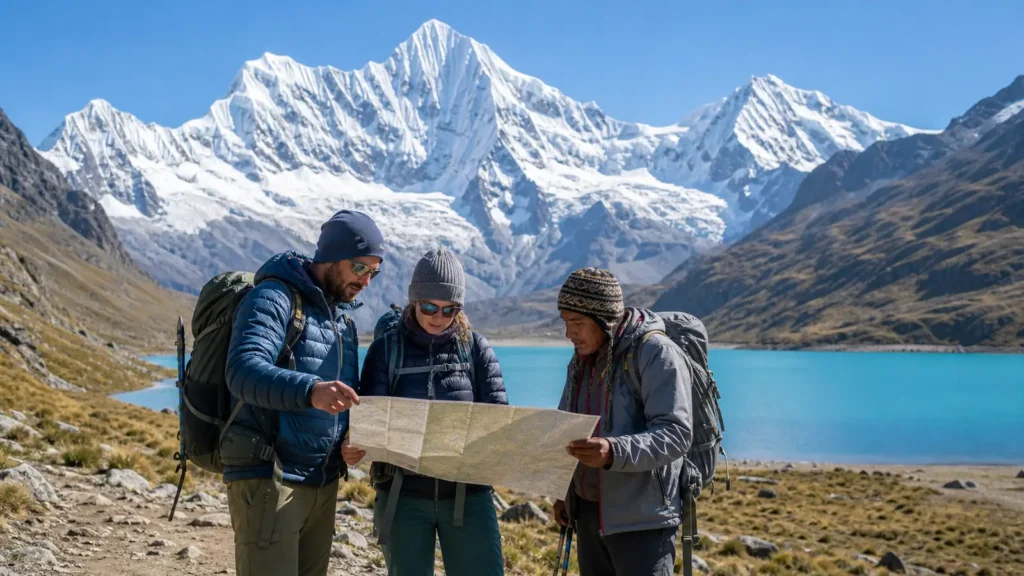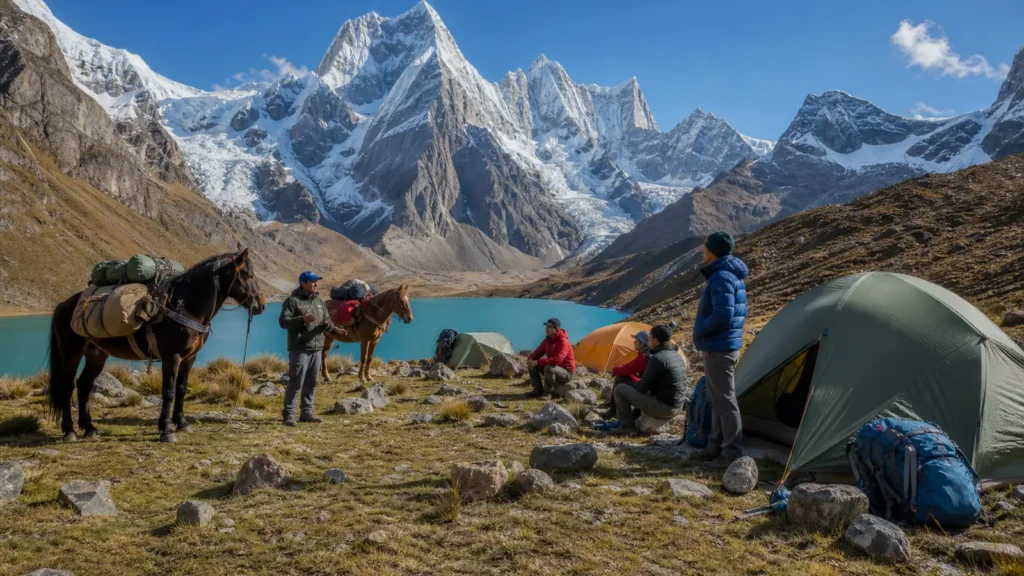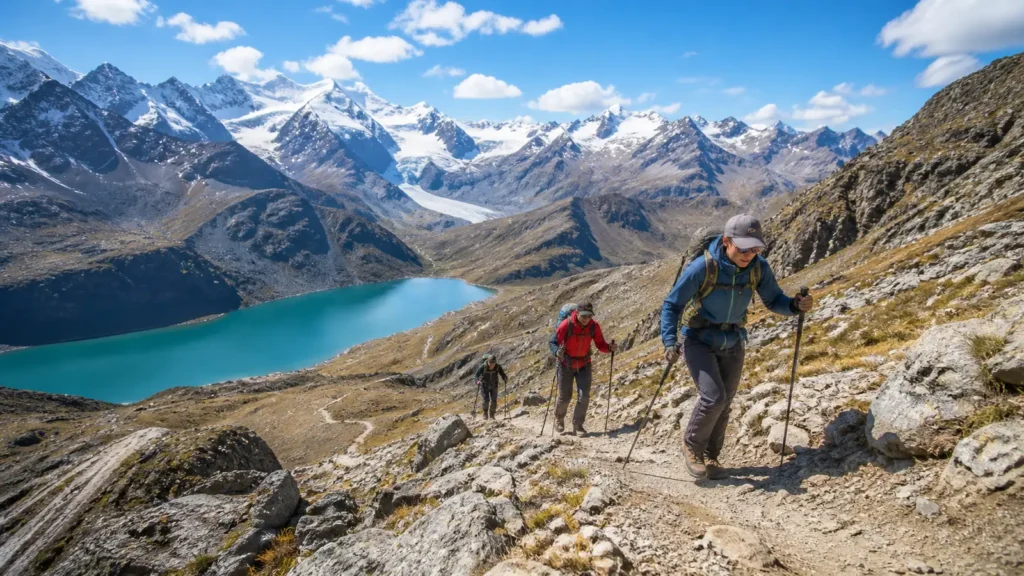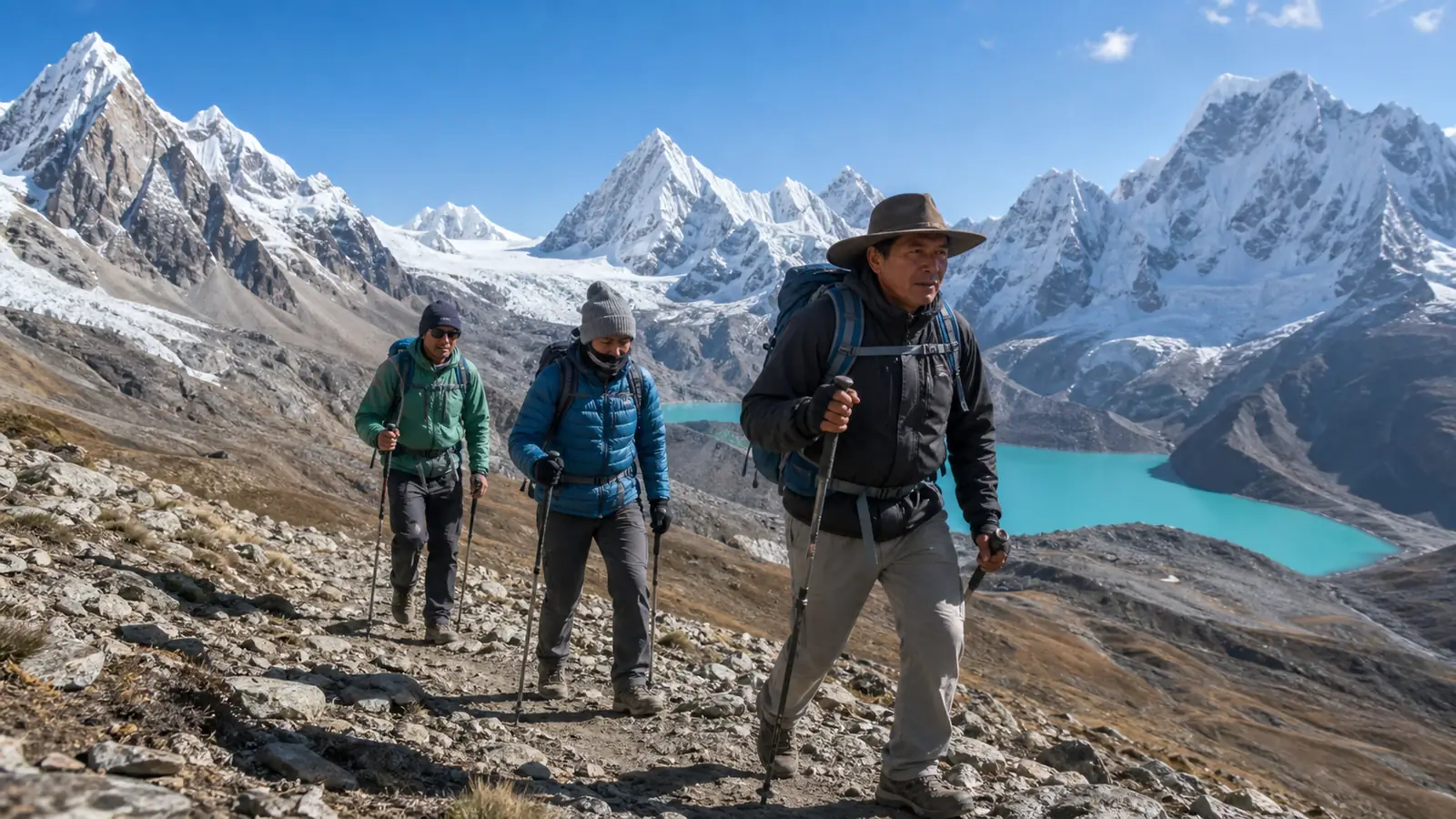

Huayhuash Trek altitude is a defining part of the journey, not a detail to manage after arrival. Most itineraries spend repeated days and nights at elevations where the body needs time to adapt, while the route crosses high passes in a remote mountain environment. A successful plan therefore begins with gradual acclimatization, conservative pacing and a clear response to symptoms.
How high is the Huayhuash Trek?
The Cordillera Huayhuash is a genuinely high-altitude trekking destination. Much of a typical circuit is above 4,000 meters (13,123 feet), and common route variants cross several passes around the upper 4,000-meter range. Exact maximum and camp elevations change with the chosen trail, side trips, campsite and GPS source, so a single number should never substitute for a day-by-day profile.
The official profile of the protected area describes a landscape of 21 peaks dominated by Yerupajá at 6,634 meters. Trekkers do not climb those summits on the standard circuit, but they travel through the valleys and passes beneath them. That geography explains the long periods at elevation and the limited opportunities for a quick road evacuation.
Before booking, request the planned sleeping altitude, highest point, ascent and descent for every day. The maximum pass matters, but the elevation where you sleep often matters more for acclimatization. Our future Huayhuash Trek map and elevation guide will help compare route variants, while the Huayhuash Trek itinerary guide will explain how those numbers fit into a realistic schedule.
Why altitude changes the trekking experience
Air pressure falls as elevation increases, so each breath delivers less oxygen to the body. Breathing and heart rate commonly rise, particularly during movement. A pace that feels easy at home may feel demanding on the first high pass, and sleep can be lighter or interrupted during the initial nights.
These adjustments are not the same as altitude illness. The practical challenge is to notice patterns rather than dismiss every symptom or panic about every change. Mild breathlessness during uphill effort can be expected; breathlessness at rest is not something to normalize. A guide should ask how each hiker slept, ate and felt before the group starts another ascent.
Fitness helps performance, not altitude immunity
Aerobic conditioning, leg strength and hiking experience make the physical work more manageable. They do not guarantee protection against acute mountain sickness. The CDC specifically notes that training and physical fitness do not reduce a traveler’s risk. Previous uneventful trips are useful context, but they are not a promise that the next ascent will be symptom-free.
This distinction prevents a dangerous mistake: a strong athlete may climb too fast because the pace feels comfortable, then develop symptoms later. Keep training for the demands described in our Huayhuash Trek difficulty guide, but treat acclimatization as its own requirement. The future Huayhuash Trek training guide will build endurance without presenting fitness as a medical safeguard.
Acclimatization before the circuit
Acute acclimatization happens mainly during the first several days after arrival at altitude. For many international visitors, moving directly from Lima near sea level to Huaraz and immediately starting the circuit is unnecessarily aggressive. Building buffer days into the trip is more useful than hiding them inside a tight itinerary.
A practical approach is to spend roughly three to five days adapting in the Huaraz area before committing to the remote route, with the exact plan adjusted to prior altitude exposure, health, arrival elevation and professional advice. The goal is gradual exposure and recovery, not collecting the highest possible acclimatization hike.
Start with an easy day, eat normally, rest and observe how the body responds. Later walks can gain more elevation while returning to a lower sleeping point. Do not turn an acclimatization outing into an exhausting test. Heavy fatigue, dehydration and poor sleep make it harder to judge how someone is actually adapting.
An example acclimatization sequence in Huaraz
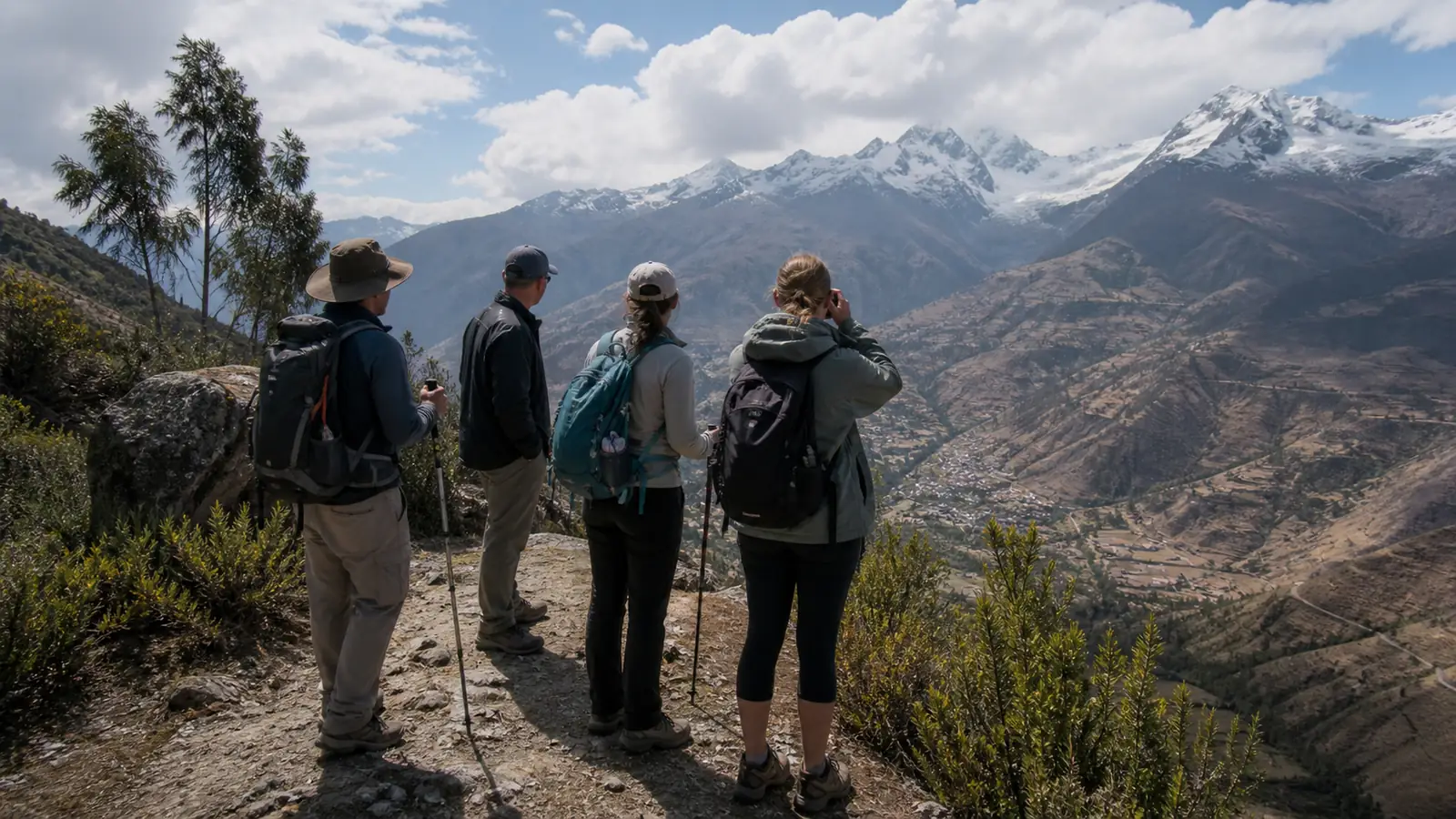
This is a planning example rather than a medical prescription. On the arrival day, keep activity light and recover from travel. On the next day, take a gentle local walk without chasing speed. If everyone feels well, complete a moderate day hike that reaches higher ground and returns to Huaraz. Add another progressive outing or recovery day according to symptoms, previous experience and the trek’s first sleeping altitude.
The correct sequence is not identical for every traveler. Someone arriving after several nights at comparable elevation may need a different plan from someone flying from sea level. A person who becomes unwell needs assessment and time, not a harder hike to “force” adaptation. Reserve enough flexibility to delay departure without losing the entire trip.
Sleeping altitude versus the highest point
Crossing a high pass for a short period and descending to sleep lower creates a different exposure from camping at the pass elevation. This is the logic behind the familiar phrase “climb high, sleep low,” although actual Huayhuash camps are determined by route geography and logistics. Compare itineraries using both maximum elevation and overnight elevation.
Once travelers are above 3,000 meters, the CDC and Wilderness Medical Society describe conservative increases in sleeping elevation: generally no more than about 500 meters per night, with an additional acclimatization night for each 1,000 meters gained. Terrain may prevent an itinerary from following that rule perfectly, which makes acclimatization before the circuit and expert route planning even more important.
Altitude profiles vary by Huayhuash route
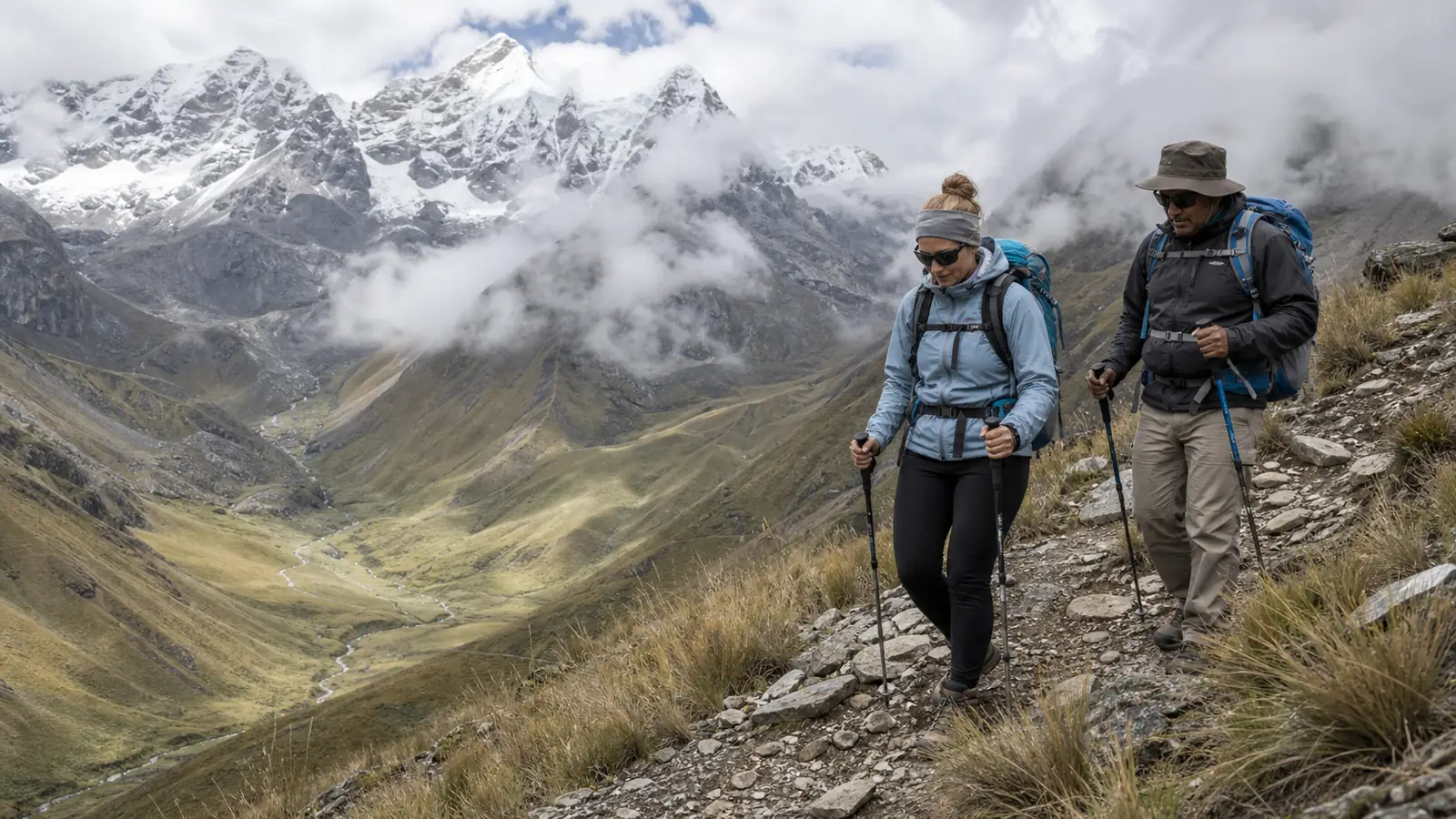
A full circuit typically produces repeated cycles: camp, ascent to a pass, descent to the next valley and another high night. A shorter trek reduces the total number of days but can compress elevation gain into a smaller window. Shorter therefore does not automatically mean safer or easier.
The current Huayhuash Trek 5 Days should be evaluated as a concentrated high-altitude program for already acclimatized hikers. Longer routes may allow more gradual progress, yet they also extend exposure, cold nights and cumulative fatigue. Ask the operator how the first two trekking days are designed and what happens if a participant should not ascend.
Normal adjustment and acute mountain sickness
Acute mountain sickness, often shortened to AMS, commonly includes headache together with symptoms such as nausea, dizziness, unusual fatigue or poor sleep after a recent ascent. Symptoms can overlap with dehydration, travel fatigue, infection or lack of food, which is why diagnosis should not be improvised from one sign alone.
The central field rule is straightforward: do not ascend to sleep higher when a hiker has symptoms consistent with altitude illness. Rest, communicate and obtain appropriate guidance. If symptoms worsen despite stopping ascent, descending is the reliable way to reduce altitude exposure. No summit, pass or fixed schedule is worth overriding a deteriorating condition.
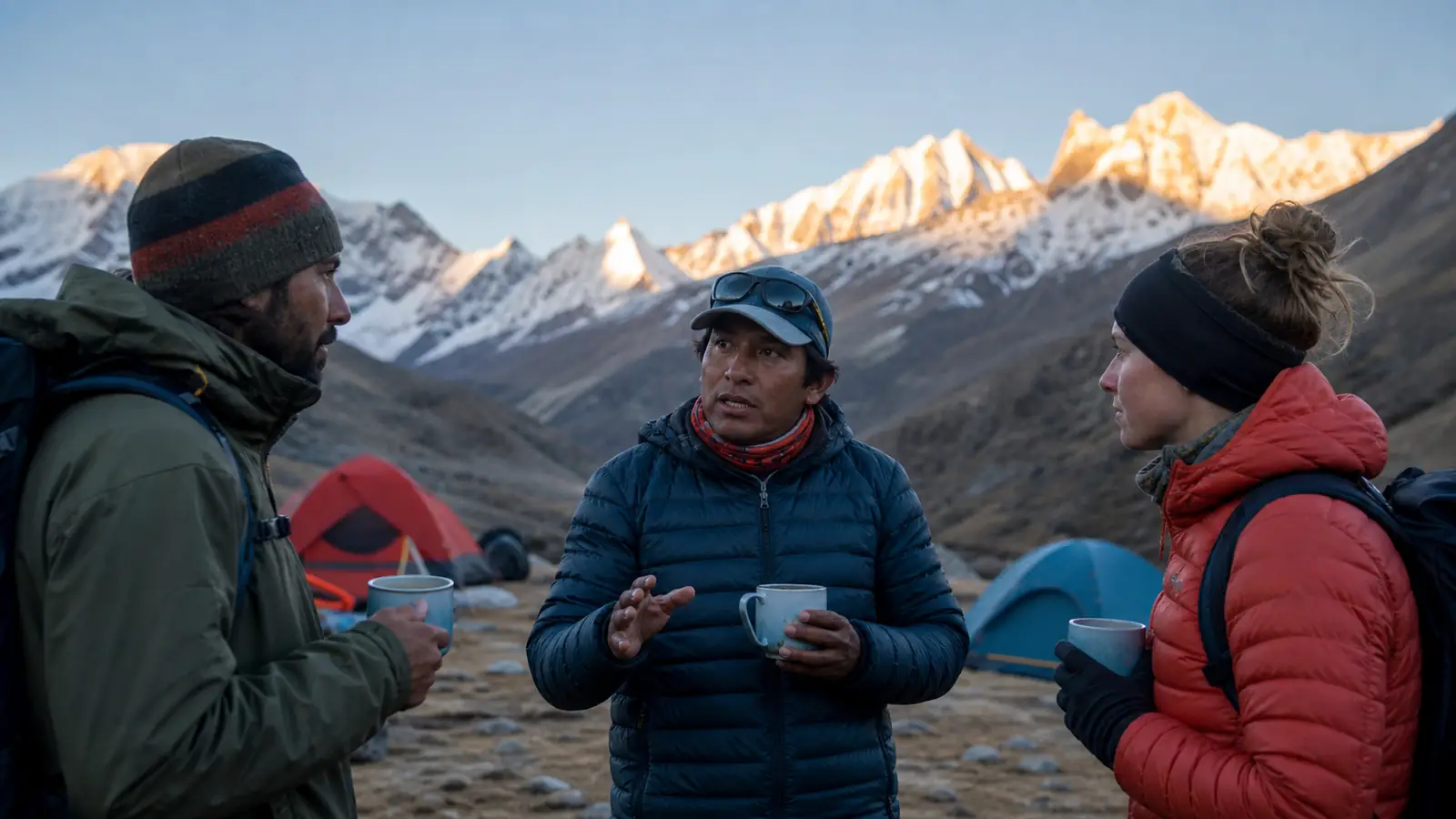
Guides and travelers should discuss symptoms privately and honestly. Hikers sometimes hide a headache because they fear delaying the group. A team culture that rewards early reporting is safer and usually solves problems sooner than one that celebrates silence.
Emergency warning signs: HACE and HAPE
High-altitude cerebral edema (HACE) and high-altitude pulmonary edema (HAPE) are medical emergencies. Confusion, altered behavior, marked drowsiness or loss of coordination can indicate cerebral involvement. Breathlessness at rest, severe weakness, chest congestion or a worsening cough at altitude can indicate pulmonary edema. Symptoms that impair walking or mental function require immediate action.
Do not leave a severely ill person alone or wait for morning merely to preserve the itinerary. Descend as soon as safely possible and activate the expedition emergency plan. Supplemental oxygen or a portable hyperbaric chamber may be useful when available, but neither should be used to justify continued ascent or delay evacuation.
Medication requires individual medical advice
Acetazolamide is sometimes used to support acclimatization or prevent altitude illness in selected travelers. Other medicines have narrower roles. Suitability, dose, contraindications and interactions depend on the individual and should be discussed with a clinician familiar with high-altitude medicine before travel.
Do not borrow medication from another trekker or rely on pills to compensate for a rushed ascent. A traveler with significant heart, lung, neurological or blood conditions, pregnancy, or a prior severe altitude reaction should seek personalized medical guidance well before departure. Bring an adequate supply of regular prescriptions and confirm insurance coverage for the planned elevation.
Pulse oximeters: useful context, not a verdict
A pulse oximeter can add information, but a single oxygen-saturation reading does not diagnose or exclude altitude illness. Cold fingers, movement, nail products, device quality and normal individual variation can affect results. Numbers also fall with elevation even in healthy people.
Use the device consistently, allow warm hands to rest, and interpret trends alongside symptoms and function. A hiker who is confused or cannot walk normally needs urgent action regardless of a reassuring screen. Conversely, an unexpectedly low reading without symptoms should be repeated and discussed rather than treated from the number alone.
Hydration, food, alcohol and sleep
Altitude increases fluid loss through breathing, while cold can reduce the desire to drink. Drink regularly according to thirst and daily conditions, and use urine color as one practical clue rather than forcing excessive water. Overhydration can also be dangerous. Include electrolytes and salty food when appropriate for sustained effort.
Eat before appetite drops. Carbohydrate-rich meals and familiar snacks are often easier to tolerate during demanding stages. Limit or avoid alcohol during the acclimatization period because it can worsen sleep, impair judgment and contribute to dehydration. Sedating sleep medicines can affect breathing and should not be used casually at altitude.
Protect recovery with dry sleeping clothes, an adequate sleeping bag and an insulated mat. The future Huayhuash Trek packing list will connect equipment choices with warmth, sleep and daypack weight.
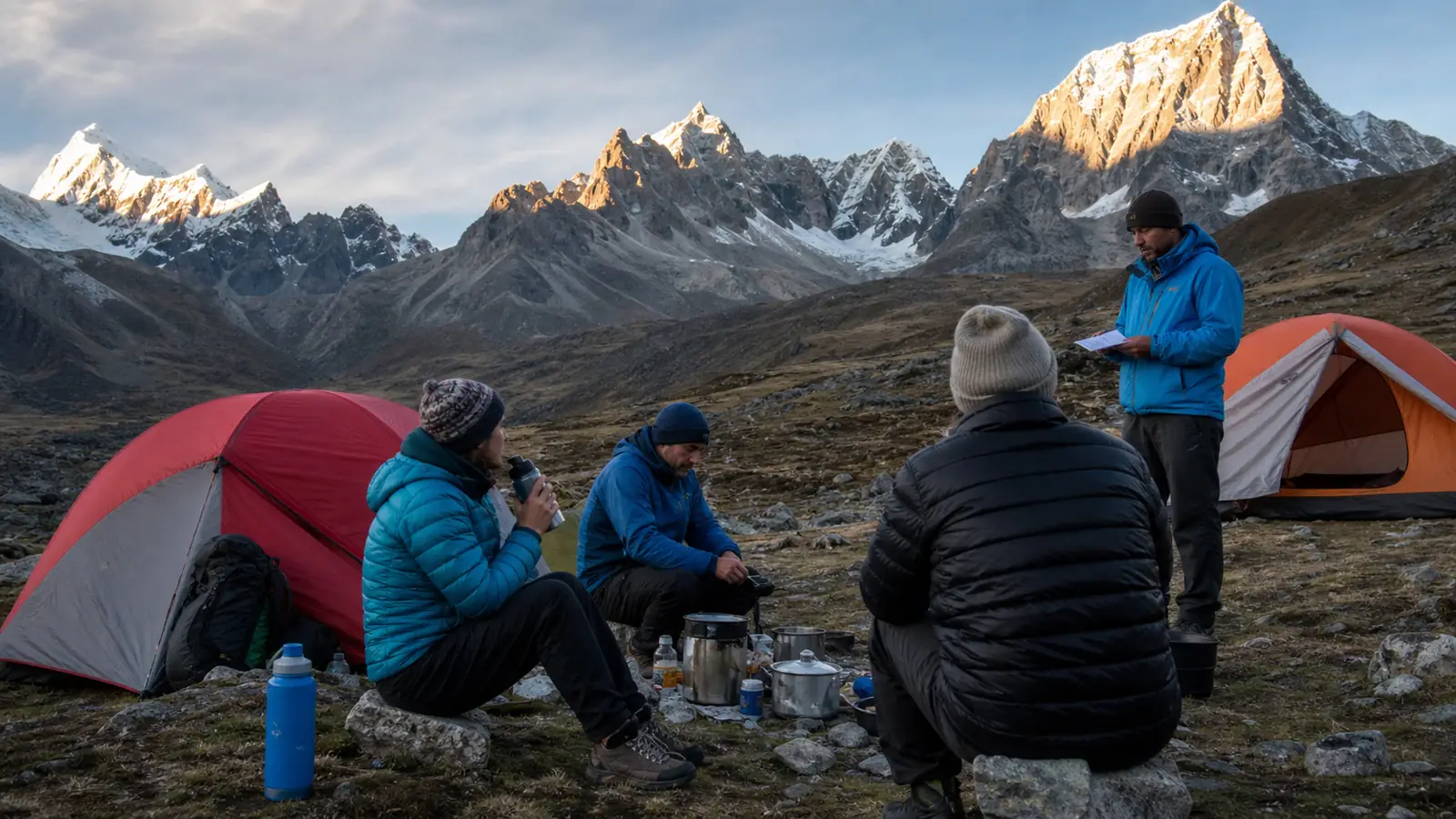
Weather and altitude interact
Cold, wind, rain and intense sun do not cause AMS, but they increase the workload and can complicate symptom assessment. A headache after hours of sun exposure may have several contributors. A wet, cold hiker may struggle to eat and recover before the next pass.
Read the Huayhuash Trek weather guide for monthly patterns and the best time to hike Huayhuash guide for a practical timing decision. Even in the main trekking season, carry waterproof protection, insulation and sun protection every day.
A daily altitude check for guides and hikers
- Did everyone sleep, eat and hydrate reasonably?
- Does anyone have a new or worsening headache, nausea, dizziness or unusual fatigue?
- Can each hiker walk normally and communicate clearly?
- Is today’s sleeping elevation higher, and is the group ready for that increase?
- What is the descent option if symptoms appear beyond the pass?
- Are weather, daylight and transport conditions still compatible with the plan?
Repeat the conversation during the day, not only at breakfast. The future Huayhuash Trek safety guide will cover communications, evacuation planning and insurance in greater detail.
Questions to ask a Huayhuash operator
- What are the highest point and sleeping elevation for every day?
- How many acclimatization days do you recommend before departure?
- What symptoms stop a participant from ascending?
- Who has first-aid and altitude experience?
- What communication equipment travels with the group?
- Where are the practical descent and evacuation routes?
- Is oxygen or a portable pressure chamber carried, and who is trained to use it?
- Can the departure or itinerary change without pressuring a sick traveler to continue?
Altitude planning checklist
- Review the complete daily elevation profile, not only the highest pass.
- Add several acclimatization and contingency days before the trek.
- Discuss personal risk factors and medication with a qualified clinician.
- Train for consecutive hiking days while remembering that fitness is not immunity.
- Carry insurance that explicitly covers trekking at the route’s elevation.
- Know the emergency plan and report symptoms immediately.
- Never ascend with worsening altitude symptoms.
Final advice
Responsible Huayhuash Trek altitude planning is built around time and flexibility. Acclimatize before entering the remote circuit, choose a route whose sleeping profile matches your preparation, move conservatively and make descent an available decision rather than a failure.
Use the future complete Huayhuash Trek guide as the central planning resource. You can also browse the current Huayhuash trekking collection and discuss the five-day program with the local team before choosing a departure.
Frequently asked questions
What is the highest altitude on the Huayhuash Trek?
It depends on the route and optional side trips. Several established passes are in the upper 4,000-meter range. Confirm the operator’s actual track and camp plan instead of relying on one generic maximum.
How many acclimatization days do I need?
Many travelers benefit from approximately three to five days of progressive acclimatization around Huaraz, but prior exposure, health and itinerary matter. Seek individualized medical advice when risk factors exist.
Can a very fit person skip acclimatization?
No. Fitness improves hiking performance but does not prevent altitude illness.
Should I continue if I have a mild headache?
Do not ascend higher when symptoms may represent AMS. Stop, communicate with the guide and obtain appropriate assessment. Worsening symptoms require descent.
Is a pulse oximeter required?
It can provide useful context, but symptoms, behavior and walking ability matter more than one reading. It is not a substitute for training or clinical judgment.
Does drinking more water prevent altitude sickness?
No. Appropriate hydration supports normal function, but forced overhydration does not prevent altitude illness and can create other risks.
Is a shorter Huayhuash trek safer?
Not automatically. Short routes reduce total exposure but may compress elevation gain. Evaluate the daily sleeping profile and your acclimatization.
Medical and editorial note
This article provides general travel-planning information, not diagnosis or personal medical advice. High-altitude recommendations were checked against the CDC Yellow Book guidance on high-altitude travel and the Wilderness Medical Society 2024 clinical practice guideline. Geographic context was checked against the official SERNANP Cordillera Huayhuash profile. Conditions, routes and health needs vary; consult qualified professionals and your operator before travel.