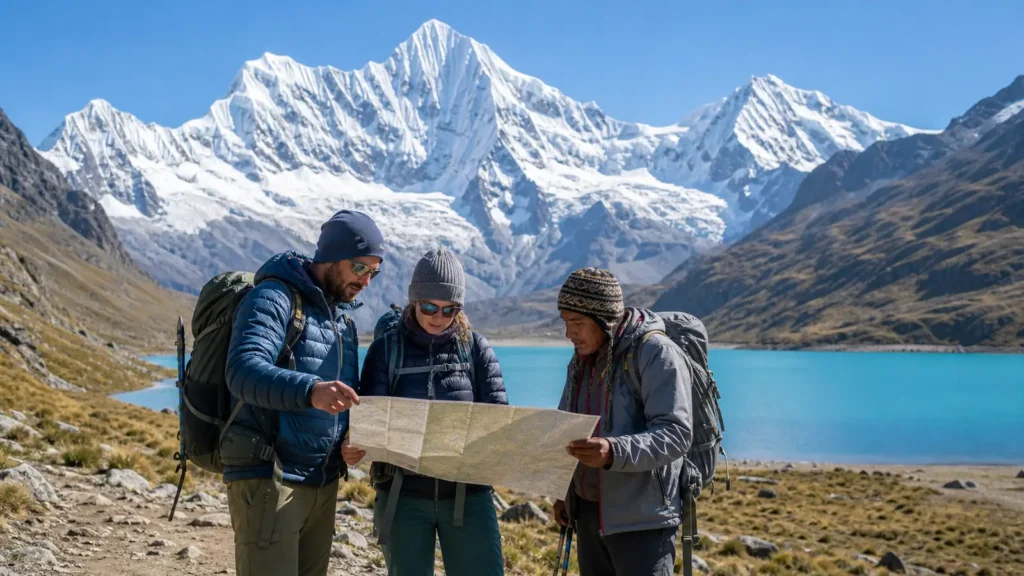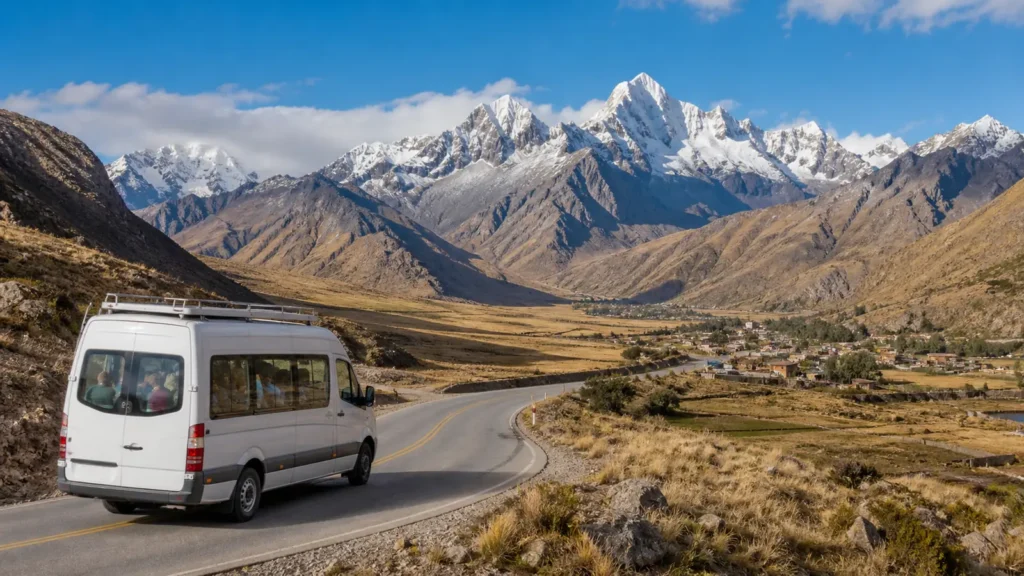

Huayhuash Trek difficulty is best described as strenuous high-altitude trekking. The standard circuit is usually nontechnical, but it combines repeated mountain passes, long ascents and descents, cold camps, remote terrain and several consecutive hiking days. Strong general fitness helps, yet acclimatization, pacing and recovery often determine success more than speed.
Why the Huayhuash Trek is considered difficult
No single feature explains the challenge. A steep climb at sea level may be manageable, but the same effort above 4,500 meters feels very different. A moderate daily distance can become demanding after several cold nights. A descent that seems easy on a map may strain the knees after the group has already crossed a high pass.
The difficulty is cumulative. Hikers need enough aerobic capacity to keep moving, leg strength to climb and descend, balance for uneven surfaces, and recovery to repeat the effort the next morning. The remote setting adds consequences: there may be no nearby road, hotel or quick transfer if someone becomes exhausted.
Is the Huayhuash Trek technical?
The established trekking routes generally do not require rock-climbing skills, ropes or glacier travel. Hikers follow mountain paths across puna, valleys and high passes. That makes the main circuit a trek rather than a mountaineering expedition, but “nontechnical” should never be confused with “easy.” Loose rock, mud, stream crossings and snow can still demand careful foot placement.
Optional ascents or special variants may introduce technical terrain and require equipment, guides and experience beyond ordinary trekking. Diablo Mudo, for example, should not be treated as an automatic extension to a hiking itinerary. Ask whether every advertised activity remains on a standard trail and reject vague descriptions that blur trekking with climbing.
Altitude is the biggest multiplier
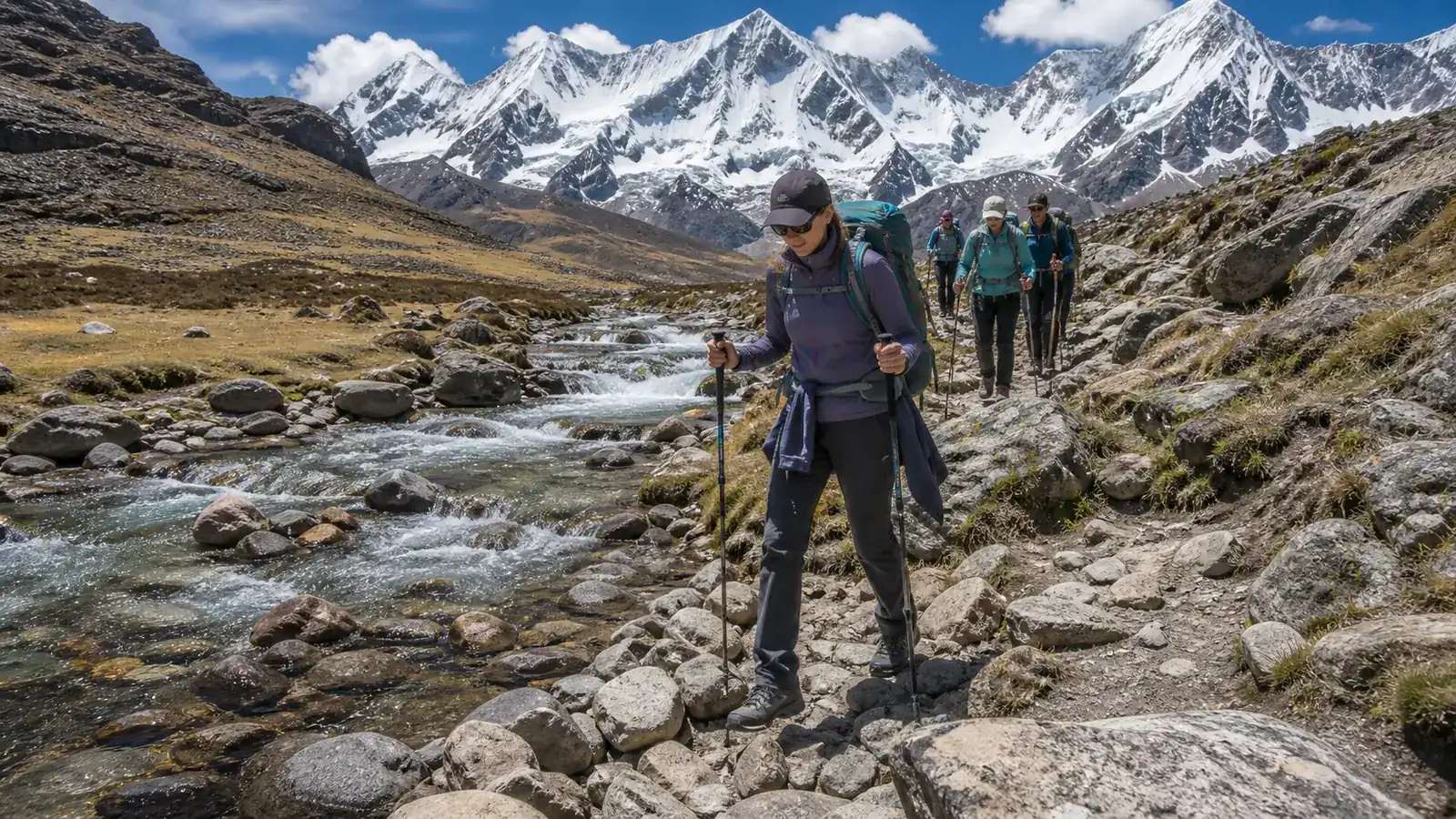
Much of the circuit takes place above 4,000 meters, and several common passes approach or exceed roughly 4,700 meters depending on the route and measurement. At these elevations, less available oxygen reduces pace and increases the effort of ordinary movement. Fit hikers are not immune to altitude illness.
Fitness and acclimatization solve different problems. Training improves the body’s ability to perform work; acclimatization helps it adjust to elevation. Arriving in Huaraz, taking gradual acclimatization walks and communicating symptoms are essential parts of the expedition. The future Huayhuash Trek altitude and acclimatization guide will cover ascent planning and warning signs without duplicating the physical assessment on this page.
Long, repeated ascents rather than one dramatic climb
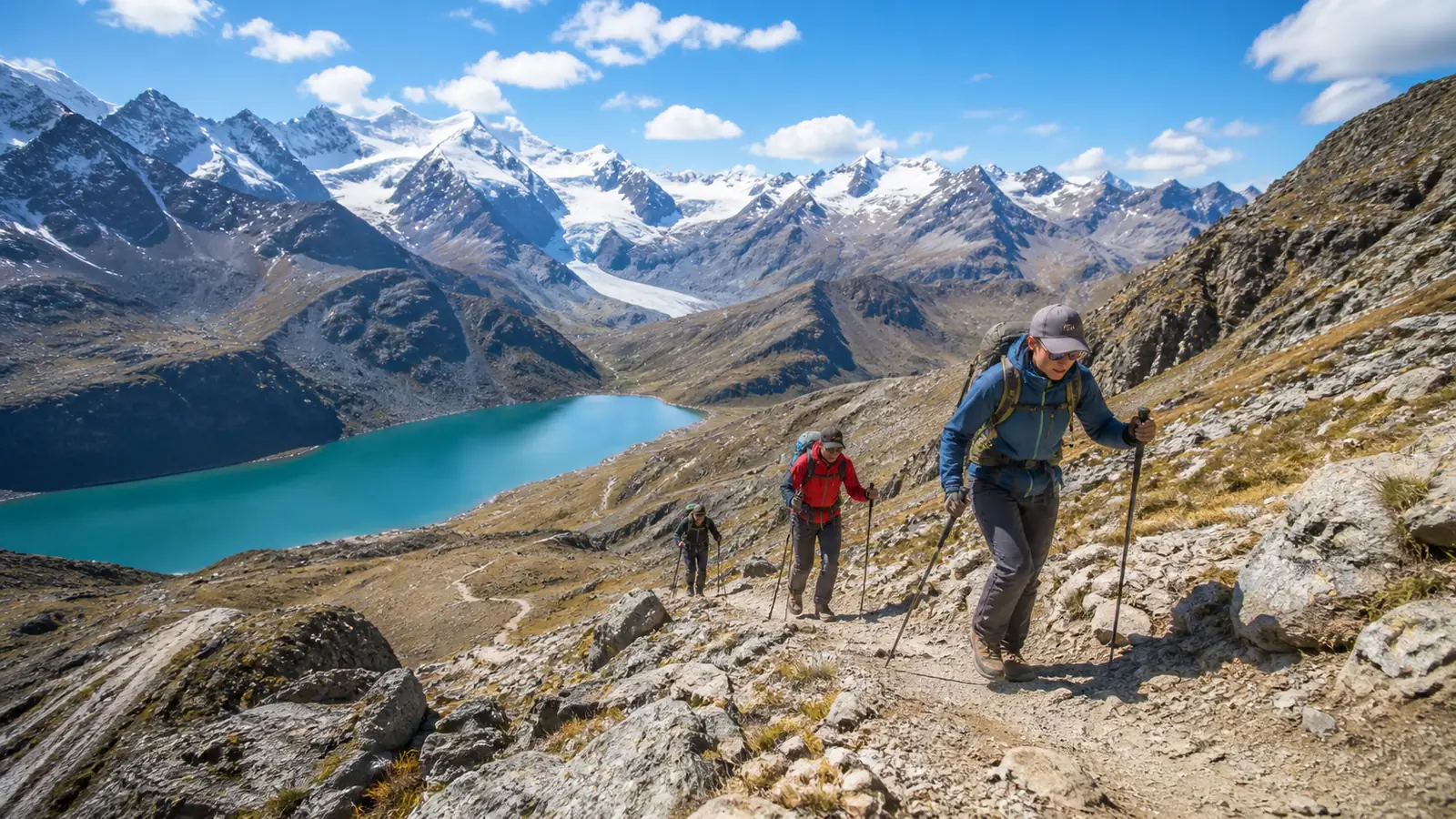
Huayhuash routes repeatedly move from camp toward a pass and then descend into another valley. The gradient may change throughout the morning, and switchbacks can continue long after the destination first becomes visible. Starting too fast is one of the most common ways to turn a manageable stage into an exhausting one.
A sustainable pace should allow controlled breathing and short conversation on moderate ground. Hikers who race ahead often cool down while waiting or use energy needed later in the day. A guide’s slow pace can feel unnecessarily conservative during the first hour and prove exactly right near the pass.
Descents can be harder than expected
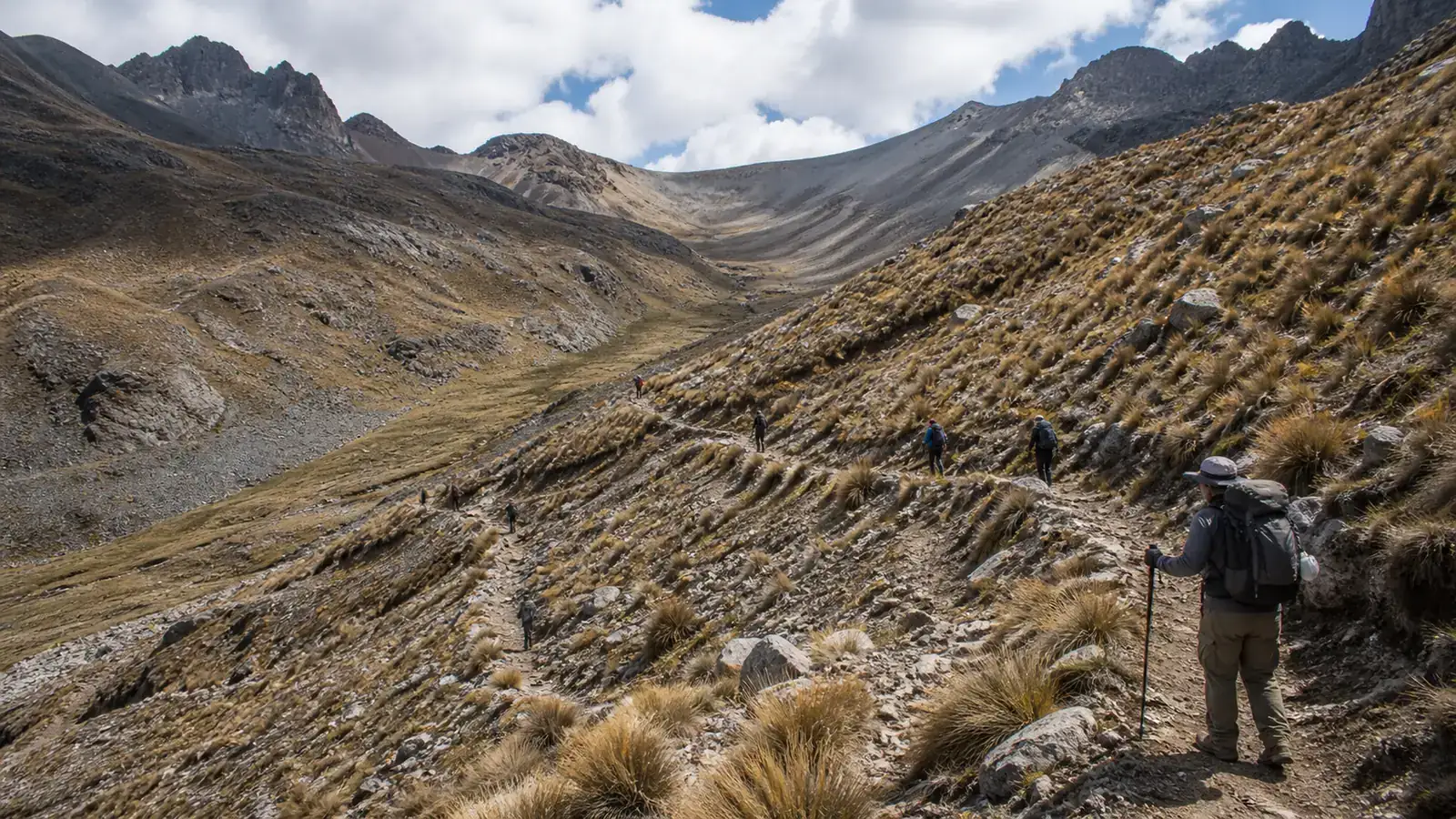
Many people train for climbing and ignore the descent. Downhill movement places repeated eccentric load on quadriceps and increases stress on knees, ankles and feet. Loose gravel or wet rock requires control rather than speed. Fatigue makes poor foot placement more likely during the final hour before camp.
Trekking poles, appropriate footwear and specific downhill training can reduce strain. Shorter steps and a stable torso are generally more useful than leaning far backward. Anyone with a history of knee problems should test consecutive descents before the trip and seek professional advice when appropriate.
Daily distance does not tell the whole story
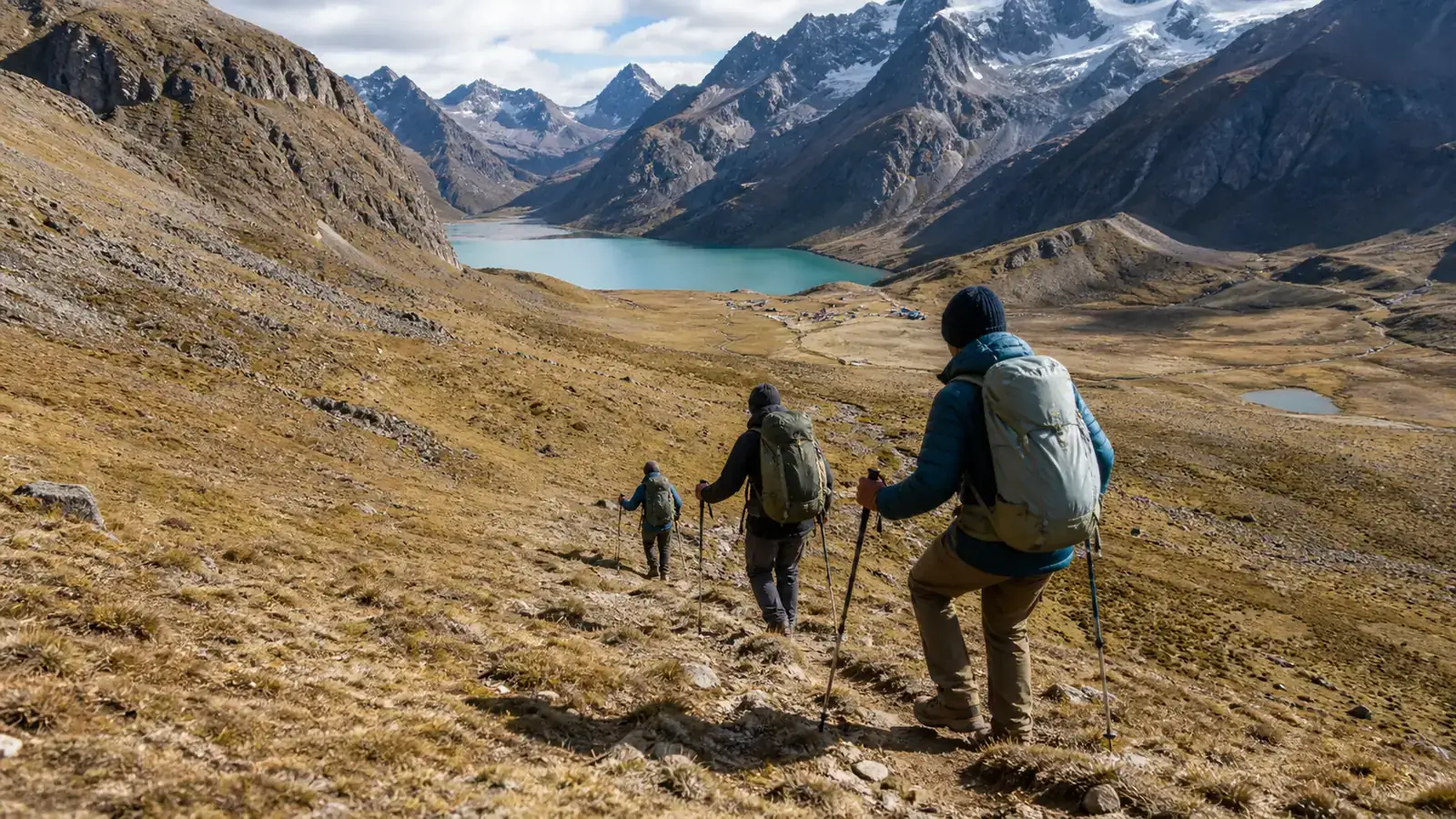
A stage of ten or twelve kilometers may sound modest to an experienced runner, but distance alone omits altitude, elevation gain, trail surface and accumulated fatigue. Transport time and camp routines also shape the day. The group may wake before sunrise, pack equipment, hike for hours and arrive with limited daylight for recovery.
When comparing programs, request daily distance, estimated ascent, descent, highest point and expected walking time. Treat those figures as estimates because GPS tracks, camp choices and weather adjustments differ. The future Huayhuash Trek map and route guide and Huayhuash Trek itinerary guide will make those comparisons more precise.
Weather makes the same route easier or harder
Dry, clear ground can turn a pass into a straightforward endurance challenge. Rain, hail or snow can reduce traction and visibility, while wind increases heat loss and affects balance. Cold nights also influence sleep quality and recovery. This is why two groups on the same itinerary may report very different difficulty.
Review the detailed Huayhuash Trek weather guide and the decision-focused best time to hike Huayhuash article. Choosing the main dry-season window improves probability, but every departure still needs waterproof layers, insulation and the ability to alter plans.
Five-day, eight-day and full-circuit difficulty
A shorter route usually reduces total fatigue and nights in camp, but it is not automatically easy. Transport and high-altitude stages may be compressed, leaving limited recovery time. The Huayhuash Trek 5 Days is better viewed as a concentrated expedition for travelers who already have appropriate fitness and acclimatization.
Eight-day routes cover more terrain and require stronger day-to-day recovery. Ten- or twelve-day circuits add sustained exposure, more passes and greater logistical commitment, even when individual stages are well distributed. Longer can be more immersive and sometimes better paced, but the body must repeat the work for many more mornings.
| Route style | Primary difficulty | Best suited to |
|---|---|---|
| Short 4–6 day trek | Compressed stages and rapid logistics | Acclimatized hikers with limited time |
| Approximately 8 days | Multiple passes and sustained recovery | Fit trekkers with prior multi-day experience |
| 10–12 day circuit | High cumulative load and remote commitment | Well-prepared hikers comfortable with long camping trips |
| Independent variation | Navigation, logistics and emergency self-reliance | Experienced autonomous mountain travelers |
Can a beginner hike Huayhuash?
A person new to Huayhuash can succeed; a person new to all hiking should not use the circuit as an experiment. Before traveling, complete several full-day hikes with meaningful elevation gain and at least one shorter multi-day trek. Learn how your feet, knees, appetite and sleep respond when effort continues beyond one day.
Beginners benefit from a guided route, animal support, conservative itinerary and honest screening. They should be willing to move slowly and turn back if necessary. Confidence is useful, but evidence from training is more reliable. If a local training hike leaves you unable to walk normally the following day, more preparation is needed.
Fitness benchmark: questions to ask yourself
- Can I hike for six to eight hours at a steady pace without relying on repeated long rests?
- Can I climb and descend significant elevation on consecutive days?
- Have I used my boots, poles and daypack on rough ground?
- Can I recover after a cold or imperfect night’s sleep?
- Am I comfortable communicating symptoms instead of hiding them?
- Have I completed at least one multi-day trek or realistic training weekend?
- Does my schedule include acclimatization rather than only travel and trekking days?
A “no” does not automatically disqualify you. It identifies what to improve. Several months of consistent work can change the answer more safely than a last-minute burst of intense exercise.
How to train for Huayhuash difficulty
Preparation should combine aerobic endurance, leg and trunk strength, time on feet and controlled downhill work. Hiking remains the most specific practice, but cycling, running, stairs and incline walking can build capacity. Strength sessions should include step-ups, split squats, calf work, hip hinges and loaded carries appropriate to the individual.
Progress gradually and include occasional back-to-back hiking days. Train with the footwear and approximate daypack weight you will use, not the full duffel carried by pack animals. Reduce training volume before departure so you arrive rested. The future Huayhuash Trek training guide will provide a structured progression.
Pack weight and support level change the challenge
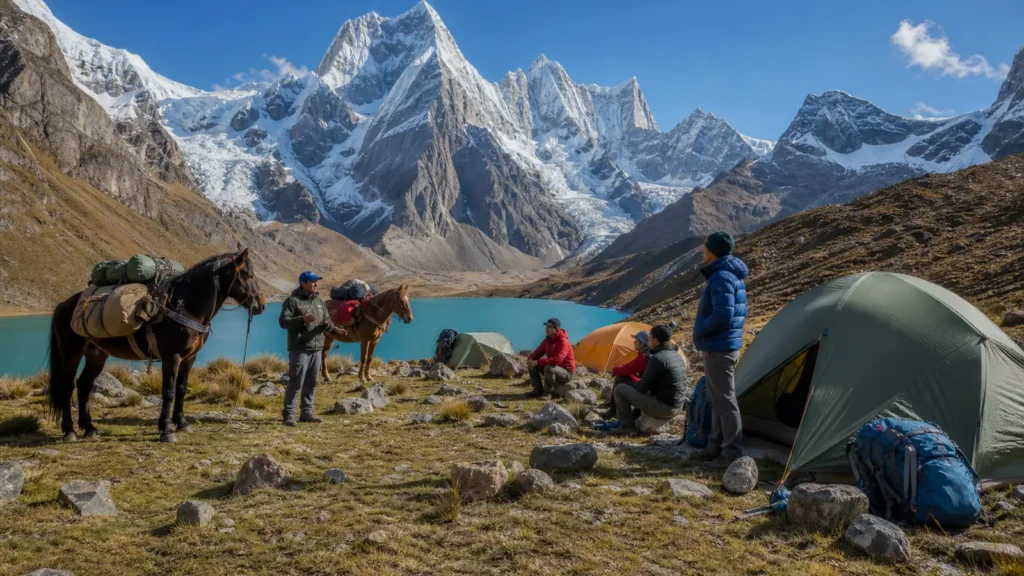
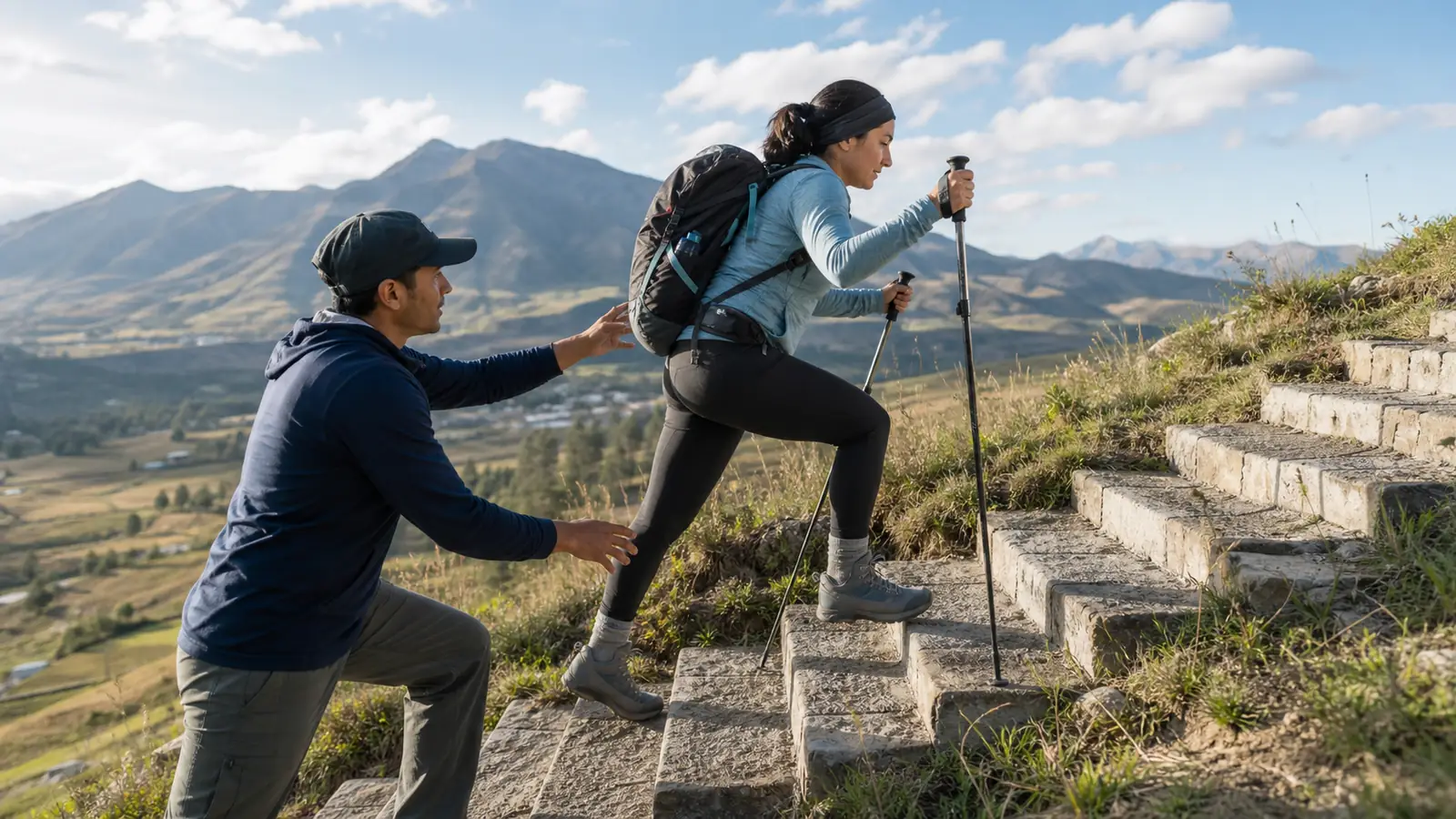
Carrying camping equipment and food makes the route significantly harder. Guided services commonly use donkeys or mules for group gear and a limited personal duffel, leaving hikers with a daypack. Confirm the actual weight allowance and what must remain with you: water, layers, sun protection, camera, medication and daily food.
A lighter pack does not remove the need for strength. It reduces fatigue and improves balance, which is valuable on long descents. The future Huayhuash Trek packing list will distinguish essential daypack items from transported equipment and explain where saving weight is sensible.
Mental difficulty and expedition routine
Remote trekking requires patience. Clothes may remain dusty, sleep can be interrupted, appetite may change and the pass can appear closer than it is. Hikers also share decisions with a group. A person who is physically capable but inflexible about pace, food or itinerary changes may find the expedition harder than expected.
Break the day into manageable sections, eat before energy drops and focus on a sustainable rhythm. Accept that turning around can be the strongest decision. Good morale does not mean pretending everything is comfortable; it means communicating problems early enough to solve them.
When difficulty becomes a safety problem
Ordinary fatigue should improve with rest, food and a reduced pace. Confusion, loss of coordination, breathlessness at rest, chest symptoms or a rapidly worsening headache are different. They require immediate attention and may require descent. Pain that changes the gait can also lead to a secondary accident on uneven terrain.
Before departure, know who makes decisions, what communication equipment is carried and where evacuation routes exist. Insurance should cover trekking at the planned elevation. These issues will be developed in the future Huayhuash Trek safety guide.
How to make the trek more manageable
- Choose a duration that matches your evidence from previous hikes.
- Spend adequate time acclimatizing in and around Huaraz.
- Use pack-animal support if carrying expedition weight is not your goal.
- Begin each stage slowly and preserve energy for the descent.
- Protect sleep with an appropriate bag, insulated mat and dry clothing.
- Eat and drink consistently before fatigue suppresses appetite.
- Keep weather and itinerary decisions flexible.
- Report symptoms early and follow the guide’s safety instructions.
Final assessment
Huayhuash is difficult because it asks the body to perform repeatedly in a cold, high and remote environment. It is not reserved for elite athletes, nor is it suitable for an unprepared traveler who relies on determination alone. The right route, training, acclimatization and support can turn a severe challenge into a controlled expedition.
Use the future complete Huayhuash Trek guide as the central planning page. Until then, browse the existing Huayhuash trekking collection and compare the current five-day guided program with your actual experience.
Frequently asked questions
How hard is the Huayhuash Trek compared with other Peru treks?
Its repeated high passes, long duration and remoteness generally make the full circuit more demanding than shorter classic routes. Exact comparisons depend on itinerary and support.
Do I need mountaineering experience?
Not for the standard trekking circuit. Technical extensions or summits are separate activities and require appropriate expertise.
How fit should I be?
You should be able to hike long days with elevation gain and descend under control on consecutive days. Training evidence matters more than a general fitness label.
Is the five-day Huayhuash route easy?
No. It reduces total duration but remains a high-altitude trek and may compress demanding stages.
What is the hardest part?
Many hikers identify altitude and repeated pass crossings as the main challenge; others struggle more with cold sleep or long descents.
Can pack animals carry my equipment?
Many guided services include animal support with a weight limit. You still carry a daypack and should verify the exact arrangement.
Can determination compensate for poor acclimatization?
No. Motivation cannot prevent altitude illness. Ascend responsibly and respond to symptoms.
Source and editorial note
Geographic and high-altitude context was checked against the official SERNANP profile for the Cordillera Huayhuash Reserved Zone. Walking times, route conditions and support arrangements vary; confirm the current itinerary before travel.