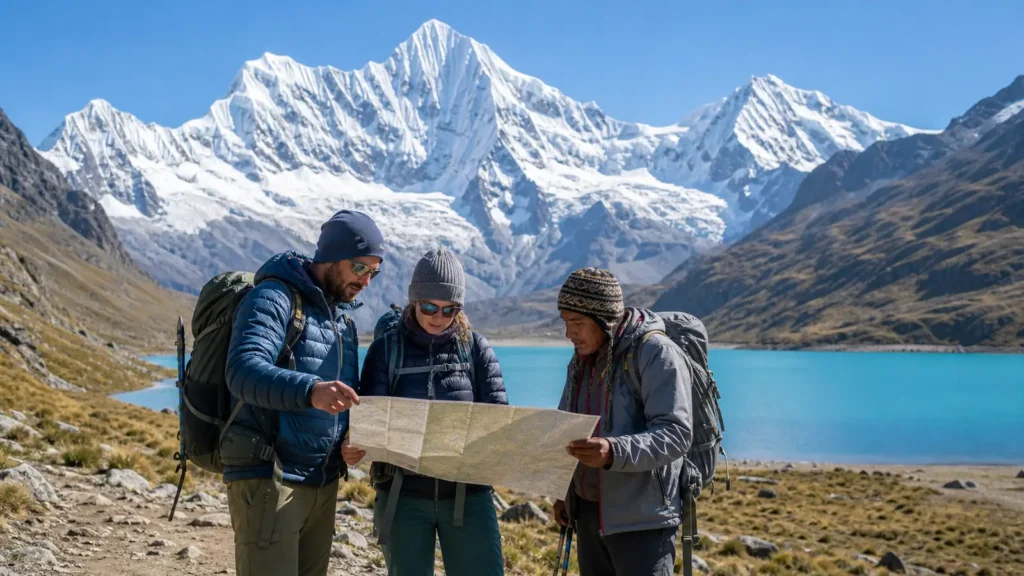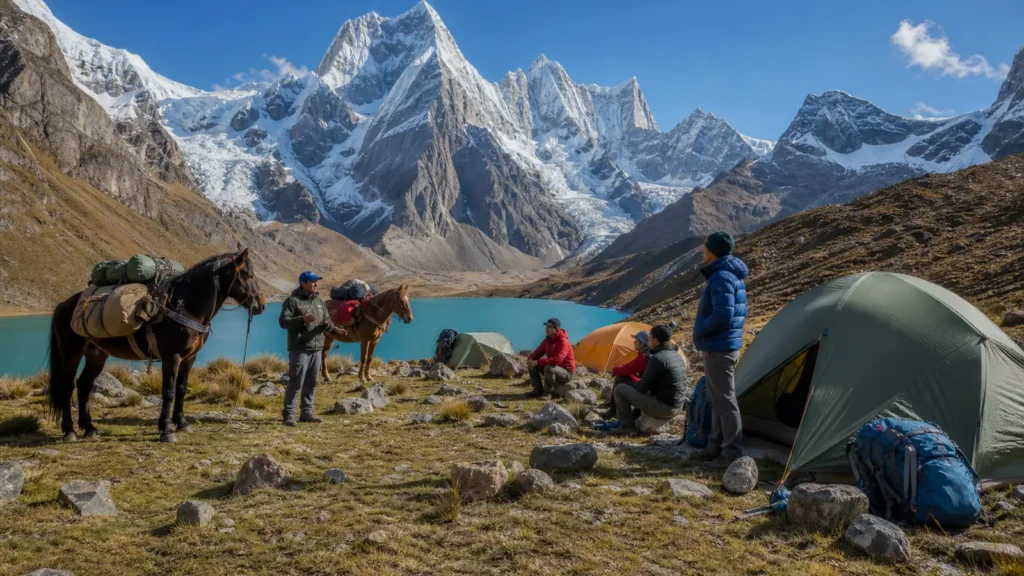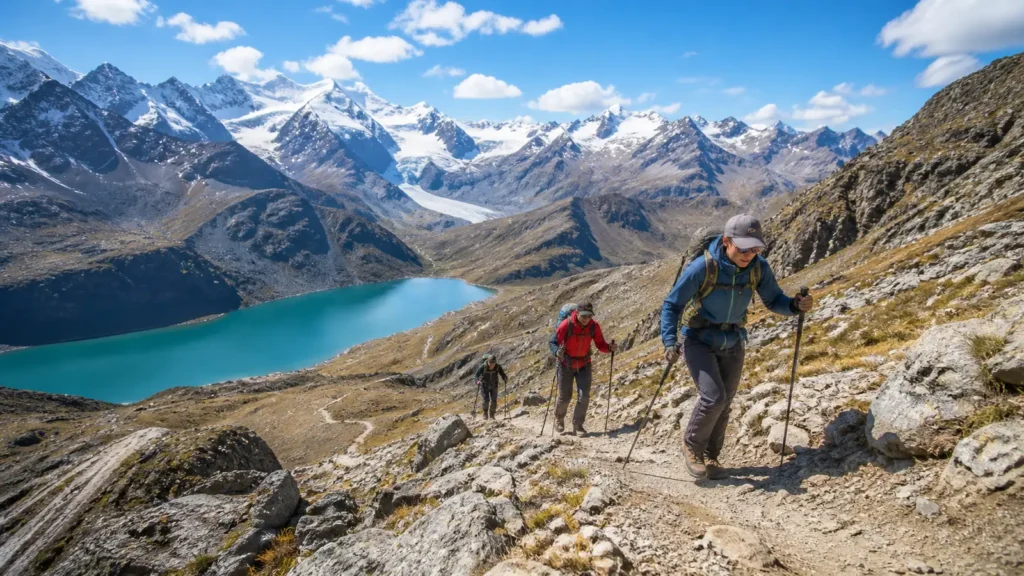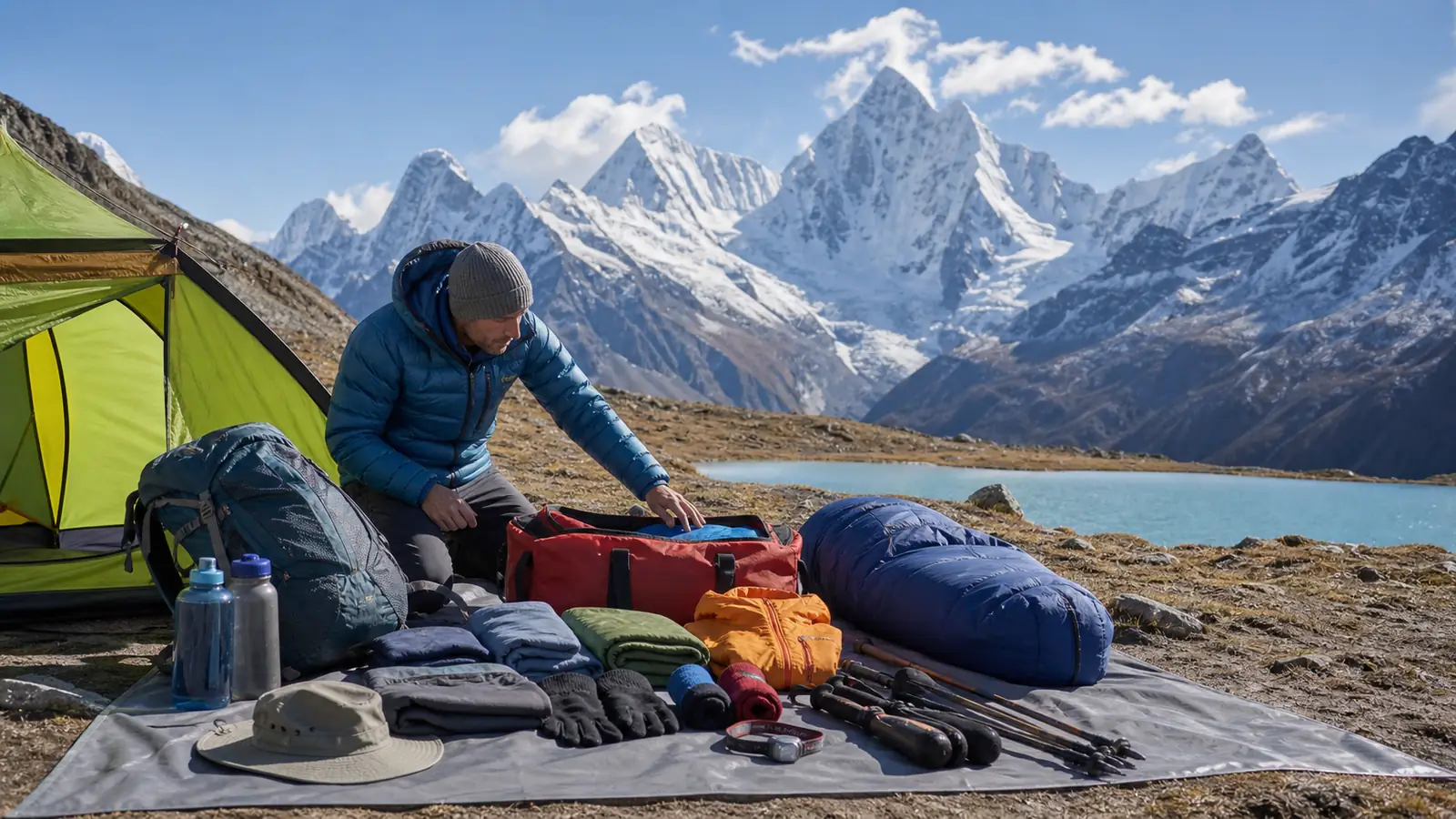

A reliable Huayhuash Trek packing list must prepare you for intense sun, cold camps, wind, rain and long days above 4,000 meters without filling your bag with unnecessary duplicates. The goal is a flexible system: dry layers for camp, weather protection that stays accessible, a warm sleep setup and a light daypack containing everything you would need if the transported duffel arrived later than you.
Essential packing checklist
| System | Core items | Where it belongs |
|---|---|---|
| Clothing | Base layers, fleece, insulated jacket, waterproof shell, hiking trousers, camp layer | Daily shell in daypack; spare layers in duffel |
| Sleep | Cold-weather sleeping bag, insulated pad, dry sleep clothing | Duffel unless self-supported |
| Trail | Footwear, poles, water, snacks, sun protection, gloves, warm hat | Worn or in daypack |
| Safety | Headlamp, personal medication, small first-aid kit, whistle, navigation backup | Daypack |
| Personal | Toiletries, toilet paper, documents, cash, power bank | Split according to daily need |
This list assumes a supported trekking service. Independent hikers must add their own shelter, cooking equipment, food, fuel, water treatment, navigation and emergency systems. Check the exact inclusions before buying anything.
Daypack versus transported duffel
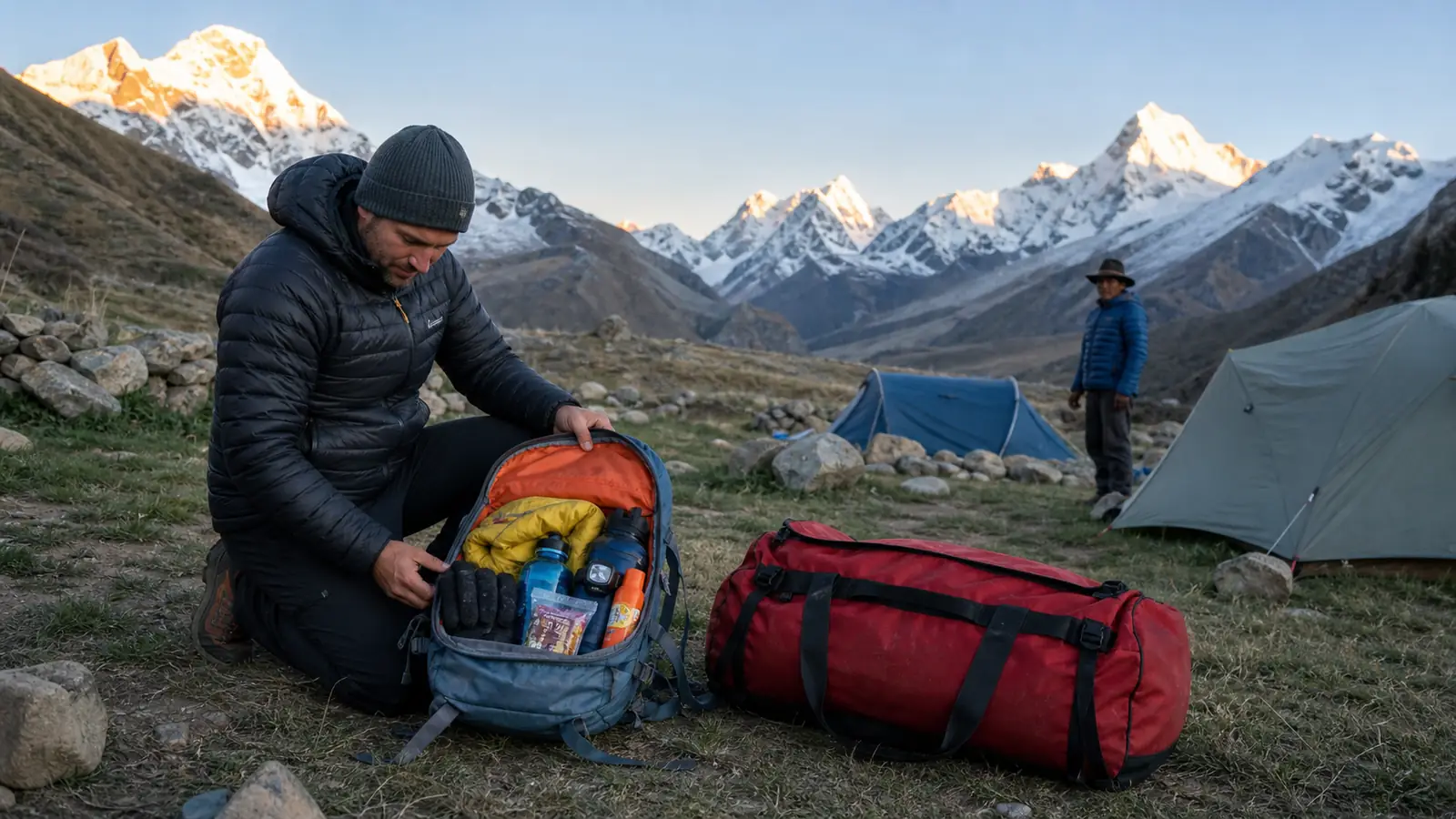
On the current Huayhuash Trek 5 Days and Huayhuash Trek 8 Days, pack animals transport main luggage and expedition equipment. Each traveler receives a duffel allowance of up to 10 kilograms and hikes with a light daypack. This division makes careful packing more important, not less.
Your duffel may leave camp before breakfast and arrive after you. You usually cannot retrieve it during the stage. The daypack must therefore hold water, lunch or snacks, waterproof layers, insulation, sun protection, hat, gloves, personal medication, headlamp, valuables and basic blister care.
A 20–35 liter pack is generally suitable for supported routes. Choose fit over theoretical capacity: the hip belt should carry part of the load, shoulder straps should not rub and bottles or a hydration hose should remain accessible. Test it on full hiking days before Peru.
How heavy should your bags be?
Treat the 10-kilogram duffel limit as a maximum, not a goal. The expedition team must also transport tents, kitchen equipment and food. A lighter personal bag supports responsible animal loads and simplifies camp organization.
Your supported daypack will commonly weigh about 5–8 kilograms after water, layers and daily essentials are added, although body size, camera equipment and water capacity change the figure. Train with the weight you expect to carry. Review the Huayhuash Trek difficulty guide for the effect of load, passes and repeated descents; our future Huayhuash training guide will explain how to introduce pack weight gradually.
Use a luggage scale in Huaraz and remove “just in case” duplicates. One flexible midlayer is more valuable than three similar sweaters. Keep a separate bag at your hotel for travel clothing that does not belong on the circuit.
The Huayhuash layering system
Temperatures can shift from strong sun during an ascent to cold wind at a pass and freezing conditions after sunset. Clothing should be added or removed before you become soaked with sweat or deeply chilled. Wool or synthetic layers manage moisture better than cotton, which loses insulating value when wet.
Base layers
- Two or three quick-drying hiking tops for a multi-day route.
- One thermal long-sleeve top reserved for cold evenings or sleeping.
- One thermal bottom for camp and sleep.
- Enough underwear to rotate, wash and dry when conditions allow.
Do not pack a fresh cotton shirt for every day. Rewearing technical layers is normal on an expedition, and fewer garments leave room for warmth and weather protection.
Midlayer and insulation
Carry a breathable fleece or similar active midlayer plus a warmer insulated jacket for stops and camp. Down offers excellent warmth for its weight but must remain dry; synthetic insulation can be more forgiving in damp conditions. Store the insulating jacket inside a waterproof liner when not in use.
Waterproof and windproof shell
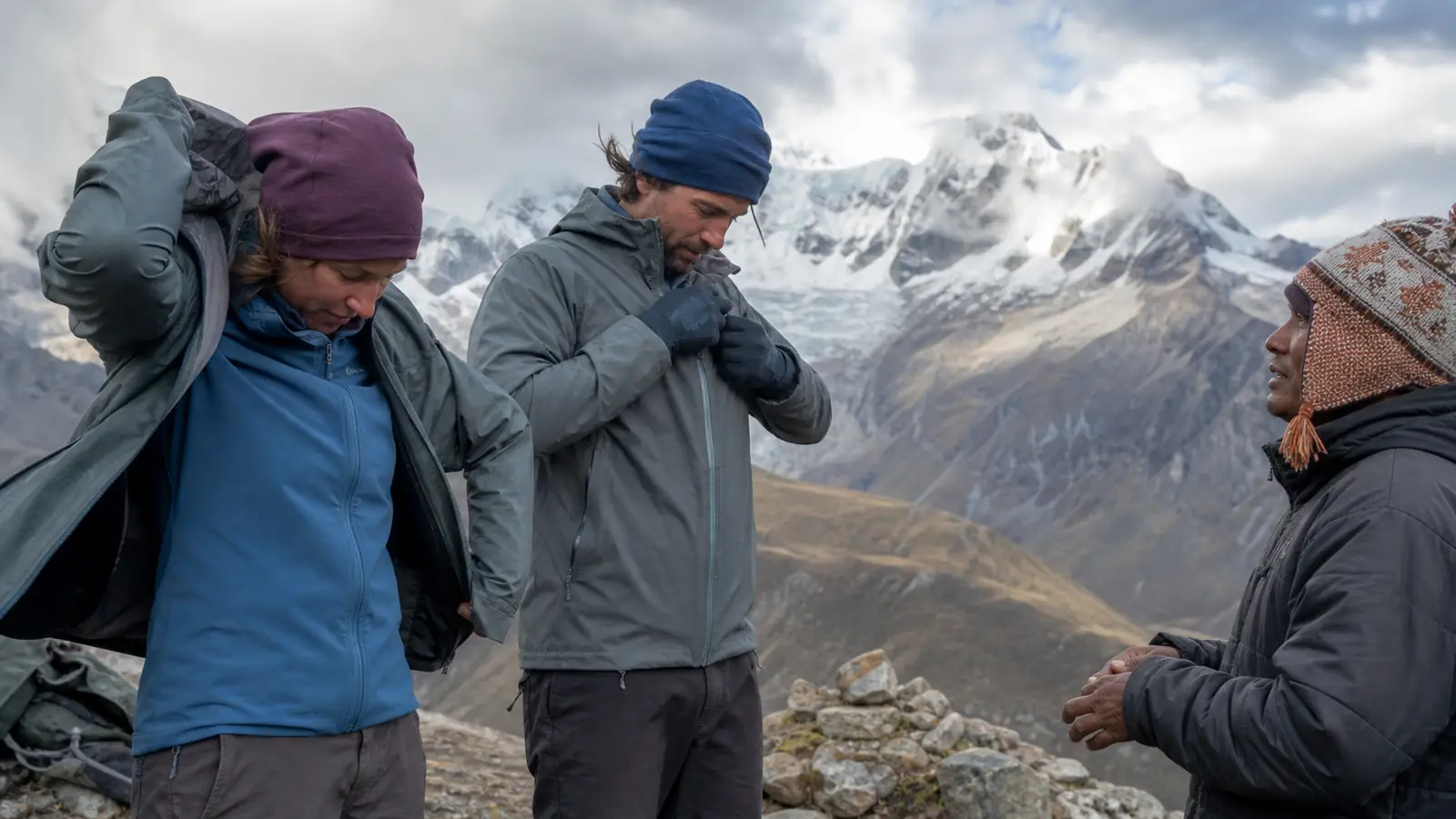
Bring a hooded waterproof jacket and waterproof over-trousers. A light poncho can supplement protection but should not be the only defense in strong wind. Check that the shell fits over the warm layers without restricting movement and that the hood works with your hat.
Hiking trousers and camp clothing
Two pairs of quick-drying trekking trousers are enough for most supported circuits. One can be lighter for sunny stages and one slightly warmer or more weather resistant. Shorts are optional, but high UV exposure, insects in lower valleys and rapid temperature changes make full coverage useful.
Reserve a completely dry set of thermal layers and warm socks for camp. Change out of damp hiking clothes soon after arrival. Add comfortable camp footwear only if it is light, secure on uneven ground and does not replace necessary shoes.
Footwear: boots, shoes and socks
The circuit includes rock, gravel, mud, grass and long descents. Use footwear that already fits your feet under load. Supportive waterproof hiking boots are a dependable choice for many travelers; experienced hikers may prefer lighter trail footwear in dry conditions. The best option is the one you have tested on consecutive rough days.
Do not arrive with new boots. Train in the same socks and insoles, test downhill movement and address heel lift before departure. Bring:
- Two or three pairs of hiking socks.
- One dry thermal pair for sleeping.
- Personal blister-prevention tape or patches you know how to use.
- Optional gaiters for mud, rain or loose debris.
Cut toenails before the trek and leave room for foot swelling. Long descents punish footwear that feels merely “almost right.”
Sleeping bag and insulated pad
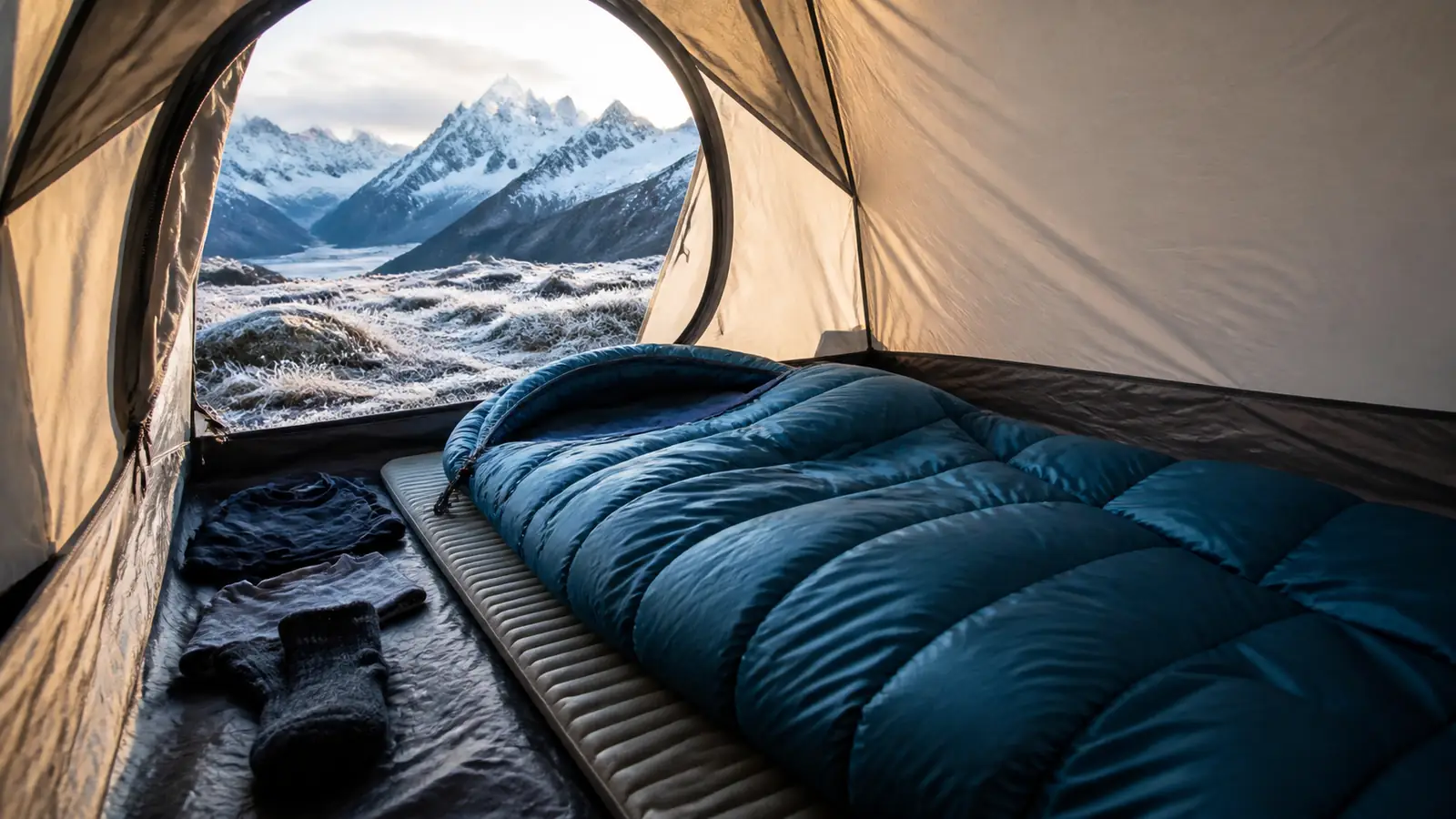
Huayhuash camps commonly sit above 4,000 meters, and below-freezing nights are possible even in the main trekking season. Select a sleeping bag using its standardized comfort rating rather than a vague marketing name or extreme survival limit. Many travelers consider a comfort rating around -10°C to -15°C appropriate, but cold sensitivity, season, clothing and the complete sleep system matter. Confirm the operator’s current recommendation for your departure.
Explora el Peru currently includes a sleeping pad but lists the sleeping bag as an optional rental on the eight-day service. Ask about the rented bag’s comfort rating, condition, liner and cleaning. If using your own bag, protect it with a dry bag or waterproof liner.
A sleeping bag cannot compensate for an inadequate pad. Insulation beneath the body limits heat loss to the ground. Confirm what type of pad is supplied and consider whether your personal comfort requires an additional lightweight layer.
Rain protection and waterproof organization
A pack cover helps but does not keep every item dry in wind-driven rain. Line both daypack and duffel with robust waterproof bags, then protect the sleeping bag, electronics and sleep clothing separately. This creates redundancy if one closure fails.
Keep the rain jacket and trousers near the top of the daypack. If they are buried under lunch and camera gear, you will already be wet when they appear. Review the Huayhuash weather guide and best time to hike Huayhuash article for seasonal context, but pack rain protection for every departure.
Sun and eye protection
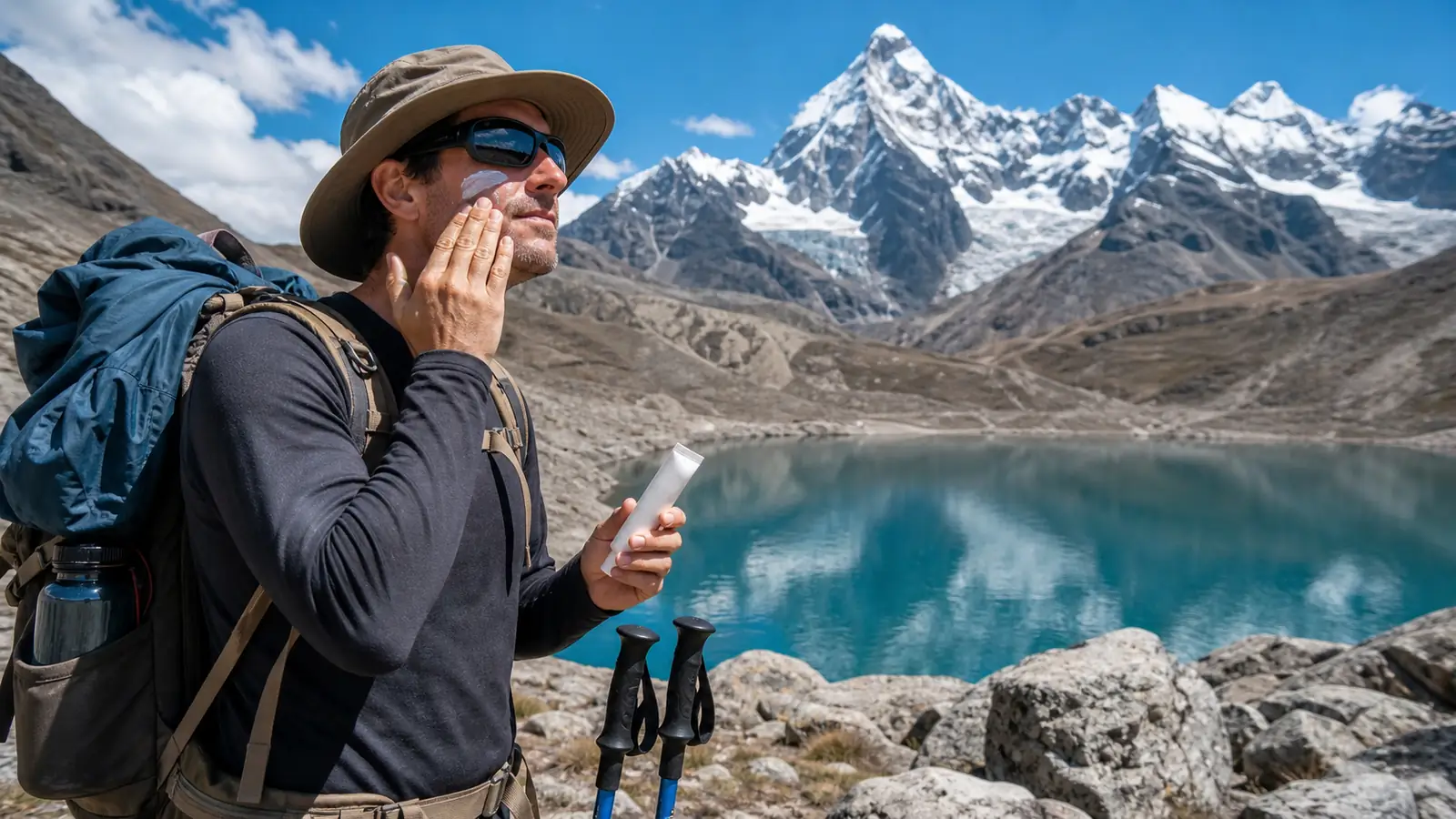
High elevation increases ultraviolet exposure, and snow, water and pale rock reflect light. The CDC advises travelers to combine sunscreen with protective clothing and shade rather than depending on one product. Clouds and cool air do not eliminate UV risk.
- UV-protective sunglasses with secure fit and good side coverage.
- Broad-brimmed sun hat or cap with neck protection.
- Broad-spectrum sunscreen suited to your skin and activity.
- SPF lip balm.
- Lightweight long sleeves for extended exposure.
Carry sunscreen in the daypack and reapply according to its label, especially after sweating. A small accessible container is more useful than a large bottle buried in the duffel.
Warm accessories
Pack a warm beanie, neck gaiter and two levels of hand protection: light gloves for walking and warmer gloves or mittens for cold mornings and camp. Small accessories deliver substantial comfort for little weight. Keep at least one pair of gloves dry.
A sun hat and warm hat serve different jobs. Do not expect one cap to protect against cold wind or one wool hat to provide adequate midday shade.
Water bottles and hydration
Supported Explora el Peru routes currently include purified drinking water. Bring enough reusable capacity for the longest stage—commonly two liters or more depending on conditions and operator guidance. Two separate containers provide redundancy if one leaks.
Hydration bladders make frequent drinking easy but hoses can leak or become difficult in freezing mornings. A bottle remains a useful backup. Independent hikers need a reliable treatment method and enough fuel if boiling is part of the plan. The future Huayhuash food and water guide will cover treatment and meal logistics.
Trekking poles
Poles help many hikers control long descents, maintain balance on loose surfaces and establish a steady uphill rhythm. They are currently listed as optional rentals rather than standard equipment on the eight-day tour. Practice before the expedition so pole length, straps and technique are familiar.
Choose adjustable poles that pack securely for transport. Rubber tips may be useful on sensitive surfaces, while baskets can help in soft ground. Poles support balance; they do not replace careful foot placement.
Headlamp, batteries and electronics
Bring a headlamp rather than relying on a phone flashlight. Early starts, nighttime toilet trips and an unexpected late arrival require hands-free light. Carry spare batteries or confirm how a rechargeable model will be powered.
There is generally no dependable electricity at remote camps. Use airplane mode, keep devices warm at night and bring a power bank sized for the trip. Cold reduces battery performance. Store electronics in a waterproof pouch and do not assume mobile signal.
Personal first aid and medication
The supported tours list a group first-aid kit and emergency oxygen, but each traveler should carry personal prescriptions, blister supplies and any clinician-recommended medication. Keep essential medication in the daypack, not the transported duffel, and carry enough for delays.
Do not self-prescribe altitude medication from a packing checklist. Discuss health conditions, allergies and suitable medicines with a qualified professional before travel. Read the altitude and acclimatization guide and tell the guide about relevant needs privately.
Toiletries and campsite hygiene
- Small toothbrush and toothpaste.
- Biodegradable soap used away from natural water sources.
- Hand sanitizer.
- Toilet paper in a waterproof bag.
- Personal waste bags as required by the operator.
- Quick-dry travel towel.
- Menstrual products and a secure waste plan.
- Minimal unscented moisturizer for dry conditions.
Wet wipes are convenient but do not disappear in the environment; pack them out. Ask about toilet arrangements before departure. The future Huayhuash campsites guide will explain facilities and camp routines.
Documents, cash and valuables
Carry passport identification, insurance information, emergency contacts and booking details in a waterproof pouch. Keep some Peruvian soles in small denominations for personal purchases, tips or payments not included in your service. Do not display large amounts of cash.
Back up important documents securely before the trip. Leave unnecessary jewelry and irreplaceable valuables at the Huaraz hotel.
Camera equipment
Huayhuash rewards photography, but cameras and lenses quickly increase daypack weight. Choose one versatile setup, protect it from rain and dust, and secure it while using poles. Bring spare batteries because charging is limited.
A phone can be enough for many travelers. The best camera is not the heaviest system; it is the one you can access without delaying the group or standing in an exposed place.
What the guided tours currently provide
The current five- and eight-day listings include shared participant tents, dining and kitchen tents, a sleeping pad, duffel bag, purified water, daily meals and snacks, pack-animal transport, first-aid supplies and emergency oxygen. The eight-day page lists sleeping bag, trekking poles and a single tent as optional extras.
Inclusions change, so request a dated checklist before packing. Never assume a “camping equipment included” label covers the sleeping bag, pillow, towel or personal water bottle. The Huayhuash Trek cost guide explains how rentals affect the total budget.
Independent trekking additions
Self-supported hikers need a shelter capable of handling mountain wind and rain, cooking system and fuel, repair kit, complete food plan, water treatment, route information, communication device and emergency strategy. These are not optional additions to a guided list; they form a different logistics system.
Pack weight becomes much higher, which changes footwear, training and daily pace. Only hikers with relevant remote multi-day experience should treat the independent route as a simple way to save money.
Common packing mistakes
- Bringing new boots or an untested backpack.
- Using cotton as the main cold-weather layer.
- Putting rain gear or medication in the transported duffel.
- Choosing a sleeping bag by extreme rating instead of comfort rating.
- Carrying too many duplicate clothes and toiletries.
- Forgetting waterproof liners because the duffel looks water resistant.
- Depending entirely on one water container or phone battery.
- Buying technical climbing equipment for a standard nontechnical trek.
- Ignoring operator inclusions and paying for unnecessary duplicates.
Final 24-hour packing check
- Weigh the duffel and daypack separately.
- Walk for thirty minutes with the fully loaded daypack.
- Confirm the sleeping bag and pad arrangement.
- Test the headlamp, power bank and spare batteries.
- Fill both water containers and check for leaks.
- Place shell, insulation and medication where they can be reached quickly.
- Review the latest route and Huayhuash itinerary with the operator.
- Remove anything that does not improve safety, warmth or daily function.
Final recommendation
Pack systems rather than isolated products: layers that work together, redundant waterproof protection, a complete sleep setup and a daypack that remains manageable at altitude. Test everything before the trek and use the operator’s current inclusion list as the final authority.
Browse the Huayhuash trekking collection and use the future complete Huayhuash Trek guide as the central planning resource. If a piece of gear has not been tested, solve that problem in Huaraz—not at the first high camp.
Frequently asked questions
What size daypack do I need?
Approximately 20–35 liters is suitable for most supported itineraries. It must hold water, food, weather layers, sun protection, medication and personal essentials.
How cold should my sleeping bag be rated?
Choose by standardized comfort rating and operator guidance. Many travelers consider roughly -10°C to -15°C comfort appropriate, but season and individual sensitivity vary.
Are tents included?
Shared participant tents are currently included on Explora el Peru’s five- and eight-day routes. Confirm occupancy and whether a single tent costs extra.
Do I carry all my luggage?
Not on the supported routes described here. Pack animals carry the duffel and expedition equipment while guests carry a daypack.
Can I rent equipment in Huaraz?
Sleeping bags and poles can generally be arranged locally or through the operator. Reserve suitable equipment early and inspect condition and rating.
Do I need technical climbing gear?
Not for the standard trekking circuit. Special summits or technical variations are separate activities and require different equipment and expertise.
Should I bring waterproof trousers in the dry season?
Yes. Mountain weather can change in any month, and waterproof trousers also provide wind protection at exposed passes.
Source and equipment note
Tour-specific inclusions were checked against Explora el Peru’s current five- and eight-day listings. Layering principles were reviewed using National Park Service cold-weather guidance, and sun-protection advice was checked against the CDC Yellow Book. Equipment needs vary by season, operator and traveler; confirm the final list before purchasing or renting gear.