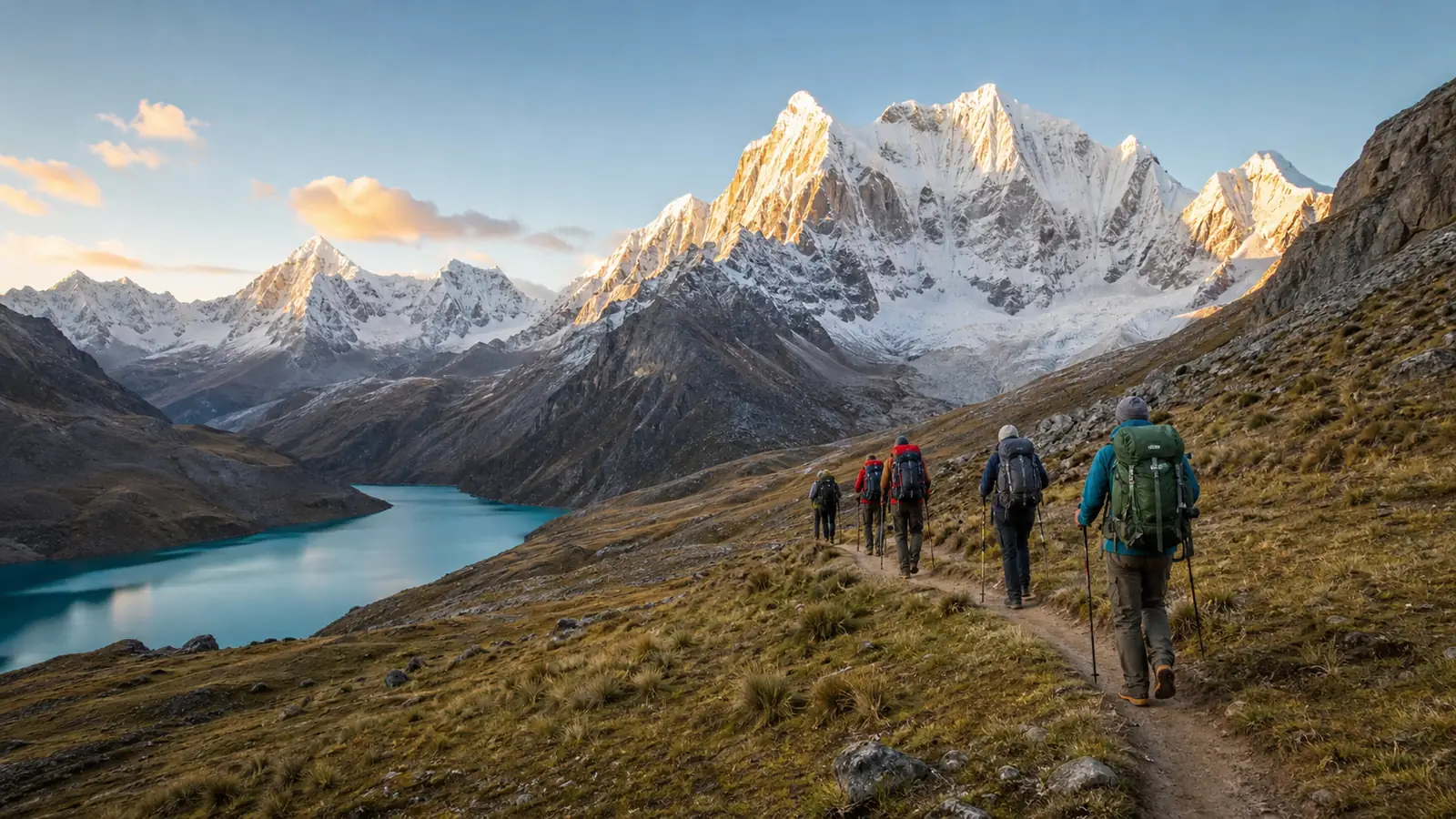

The best Huayhuash Trek itinerary is not simply the shortest or the longest route. It is the one that matches your acclimatization, experience, available days and priorities while preserving flexibility for weather and health. A five-day route can deliver remarkable scenery in a concentrated expedition; eight to ten days can cover a broader circuit; and a slower ten- to twelve-day plan creates more room for recovery and side trips.
Huayhuash itinerary options at a glance
The Cordillera Huayhuash is a compact range, yet route design is surprisingly flexible. Trailheads can include areas near Cuartelhuain, Llamac or Queropalca, and camps are selected according to transport, community access, weather and the direction of travel. Names and spellings also vary between maps and operators.
| Route length | Typical character | Best for | Main trade-off |
|---|---|---|---|
| 4–6 days | Concentrated section with several major highlights | Acclimatized, experienced hikers with limited time | Less recovery and fewer circuit sections |
| Approximately 8 days | Efficient classic-style circuit | Strong trekkers seeking breadth without a two-week trip | Regular long stages and repeated passes |
| 10–12 days | More complete or extended circuit | Travelers prioritizing pace, side trips and immersion | Greater total fatigue and expedition commitment |
These categories are planning tools, not standardized products. Two trips advertised as “eight days” may use different trailheads, camps and pass variations. Compare the actual day-by-day route rather than purchasing by duration alone.
Start with acclimatization, not Day 1
Your itinerary begins before the vehicle leaves Huaraz. The city sits at significant elevation, but many Huayhuash camps are much higher. Travelers arriving from sea level should use several days for gradual acclimatization walks and recovery instead of treating Huaraz as a one-night transfer point.
Our Huayhuash Trek altitude and acclimatization guide explains sleeping elevation, symptoms and conservative ascent planning. Build those days into the same calendar as the expedition. A five-day trek plus four preparation days is a nine-day highland commitment, not a five-day holiday.
Also leave a free day after the expected return. Mountain weather, road conditions and group health can shift arrival time. Booking an inflexible flight from Lima immediately after the trek creates pressure to ignore sensible route changes.
Sample five-day Huayhuash route
Explora el Peru’s current five-day program is a focused route for hikers who already have suitable fitness and altitude preparation. It uses pack-animal support and camps on the eastern and southern side of the range while connecting several celebrated lakes and passes.
Day 1: Huaraz, Llamac and Cuartelhuain to Mitucocha
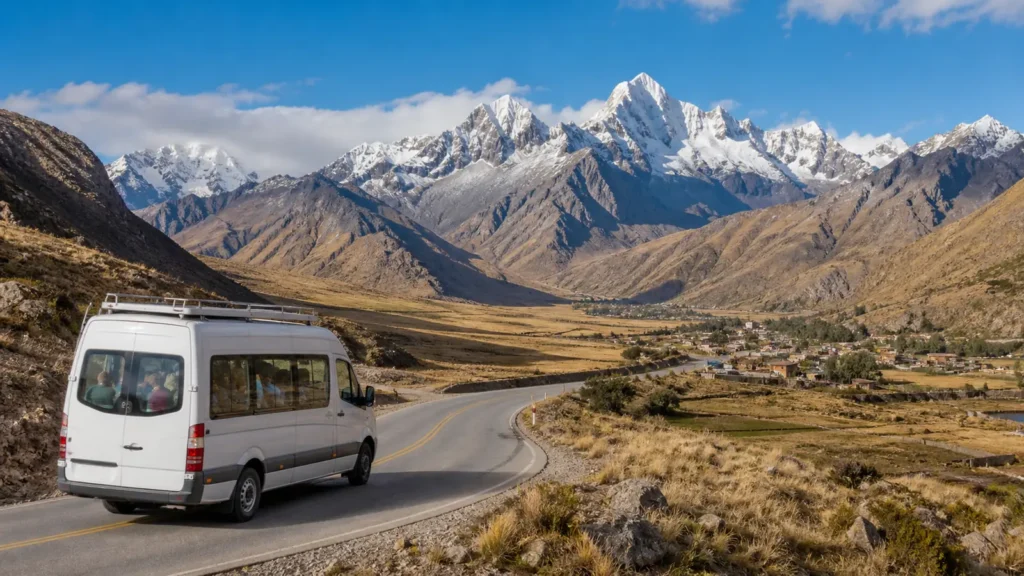
The expedition leaves Huaraz early and travels through Andean communities toward the trailhead. After equipment is organized at Cuartelhuain, the walking stage crosses the first high terrain toward Mitucocha. The important challenge is not just distance: this is an immediate transition from road travel to a high pass and a high sleeping environment.
Begin more slowly than enthusiasm suggests. The first camp beside Mitucocha introduces the expedition routine: warm layers before sunset, an early meal, hydration and an honest check of altitude symptoms.
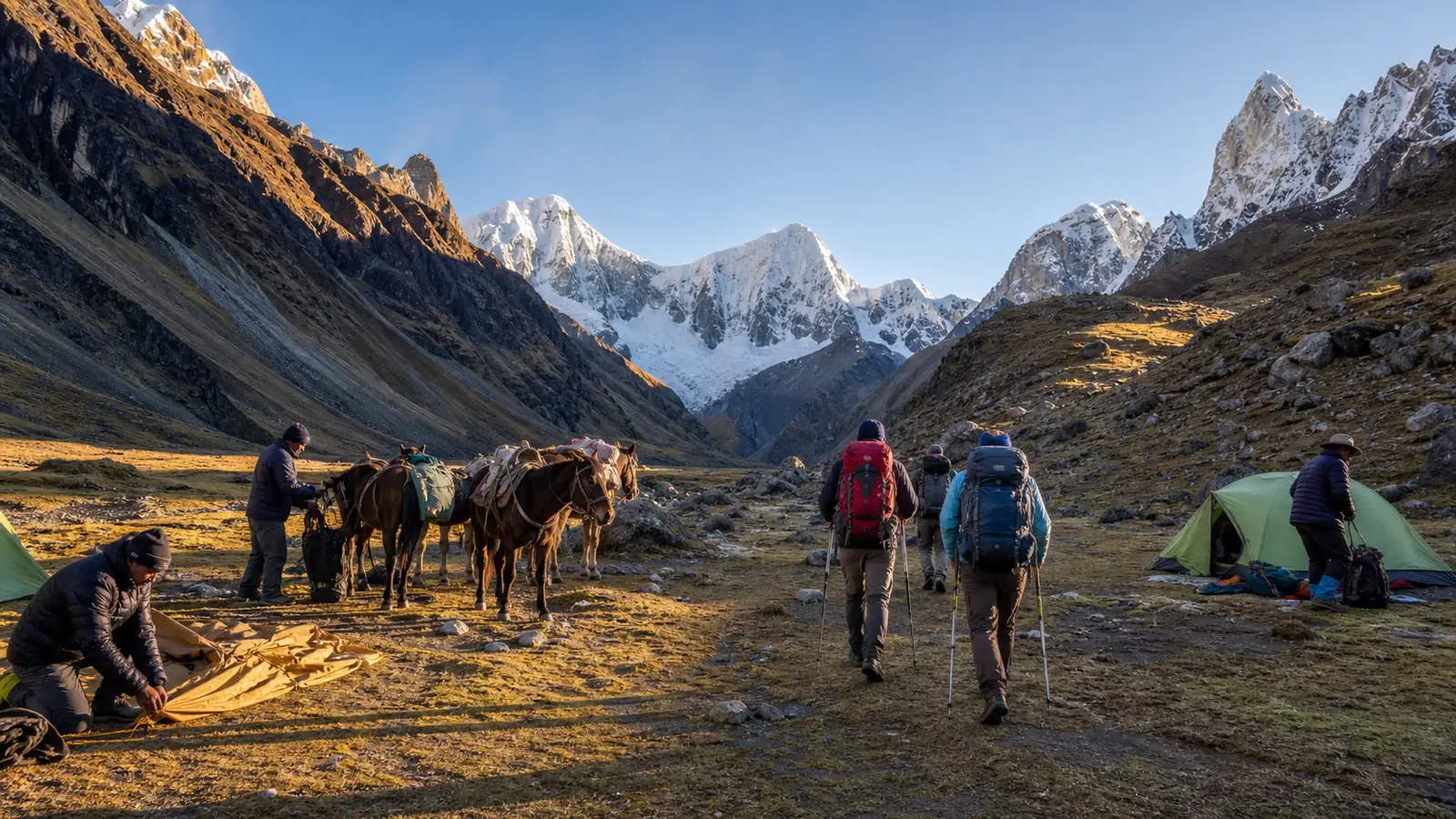
Day 2: Mitucocha via Carhuac Pass to Carhuacocha
The route leaves Mitucocha and climbs toward Carhuac Pass before descending to Carhuacocha. Views open toward glaciated peaks as the group gains elevation. The destination is one of the range’s signature camps, beside a large turquoise lake with a dramatic wall of mountains across the water.
This stage demonstrates why daily profiles matter. Hikers climb, cross a pass and descend, then need enough energy to eat, recover and repeat the pattern. Carhuacocha is not merely a place to sleep; good schedules preserve some daylight to appreciate it.
Day 3: Carhuacocha via the Siula route to Huayhuash Camp
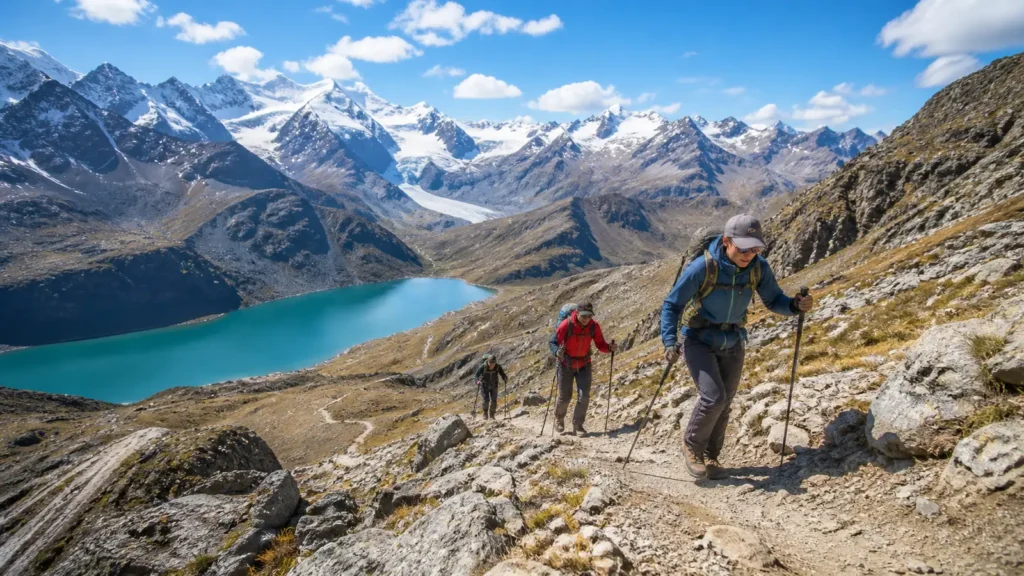
For many travelers, this is the visual centerpiece. The higher trail reveals a sequence of glacial lakes beneath the peaks and approaches the Siula Pass area before continuing toward Huayhuash Camp. The day can be demanding because the photogenic viewpoints do not remove the sustained ascent.
Weather and trail conditions influence which variation is appropriate. A responsible guide may choose a safer line or reduce time at exposed viewpoints. The itinerary should describe an objective, not promise that every group will follow one exact track regardless of conditions.
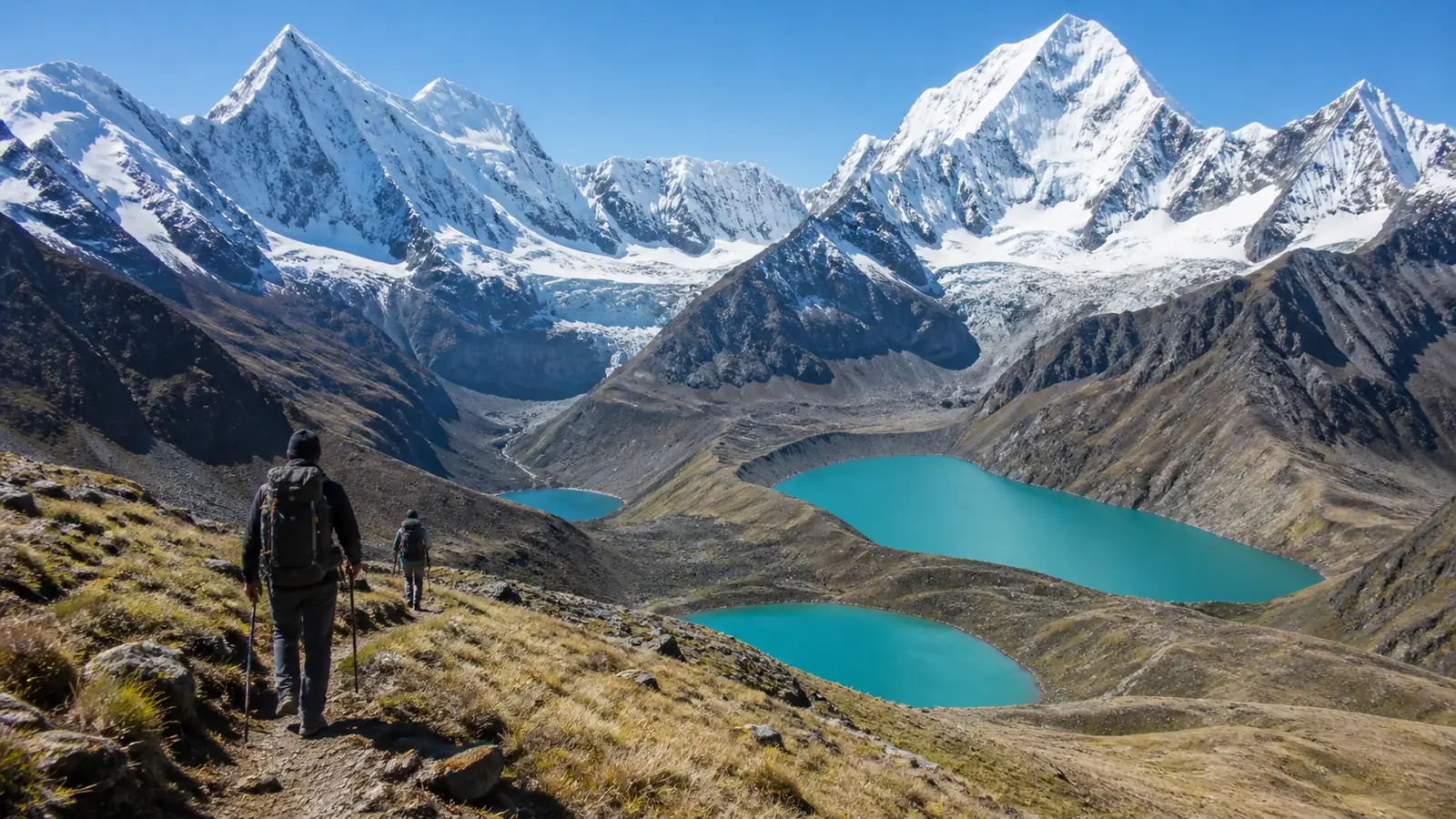
Day 4: Huayhuash Camp to Viconga
The group continues through broad high-Andean terrain, crosses the Portachuelo area and descends toward Viconga. Natural hot springs can provide a welcome recovery opportunity when access and operating conditions permit. Warm water feels restorative, but hikers still need food, dry clothing and sleep before departure.
Viconga is also a useful reminder that scenery is not the only itinerary criterion. A strategically placed camp can break up elevation, support recovery and provide an alternate exit or road connection.
Day 5: Viconga to Huaraz
The final day transitions out of the mountain environment and returns through Andean communities to Huaraz. Depending on the precise operating plan, part of the day may involve vehicle travel rather than a final full hiking stage. Confirm the expected pickup point, road time, meals and arrival window before booking onward transport.
Review the complete, current inclusions and operating details on the Huayhuash Trek 5 Days tour page. It is a concentrated option, not a substitute for the entire classic circuit.
What an eight-day Huayhuash itinerary adds
An eight-day route can connect more of the circuit and create a more continuous journey around the massif. It commonly retains the eastern highlights near Mitucocha and Carhuacocha, then continues across additional southern and western sections rather than exiting after Viconga.
The advantage is breadth: more valleys, changing perspectives and a stronger sense of circling the range. The cost is sustained workload. Eight days still demands efficient stage design, and adding days does not automatically create rest. Examine whether each extra day adds a pass, a recovery-friendly stage or simply more distance.
Explora el Peru also lists a current Huayhuash Trek 8 Days expedition. Compare its exact itinerary, luggage allowance and support with the five-day program rather than assuming they differ only by three nights.
Ten- to twelve-day classic and extended circuits
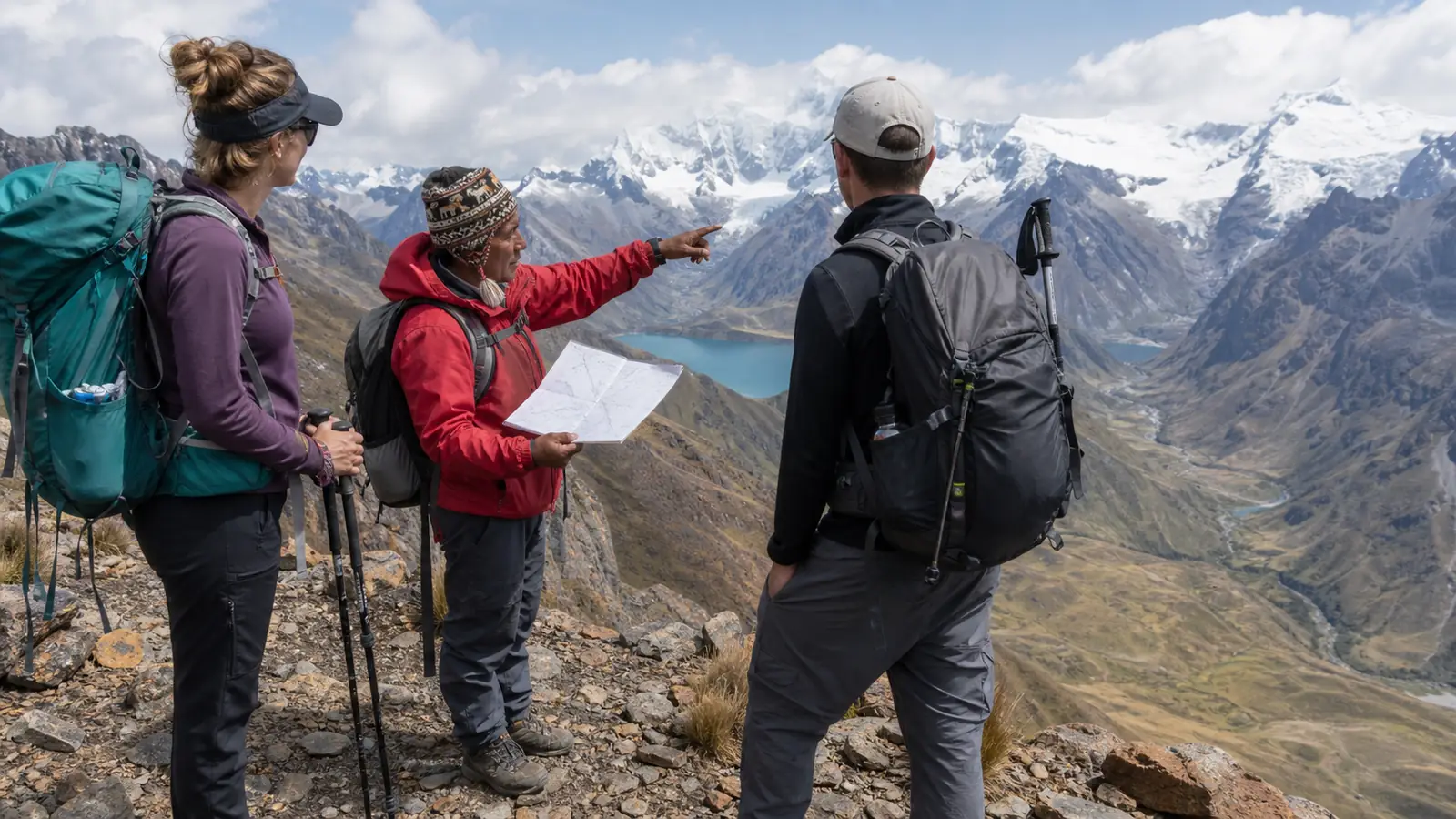
Longer circuits are suited to hikers who want a more complete mountain journey. They may include western-side camps such as areas around Jahuacocha, additional pass variations, rest opportunities or side trips. Some schedules use the extra days to reduce stage pressure; others use them to add harder alternatives.
The best extended plan does not fill every day with the highest possible pass. It distributes effort, preserves time at major camps and keeps optional objectives genuinely optional. A slower itinerary can improve enjoyment, but total exposure to cold nights and cumulative fatigue remains greater than on a short route.
Ask which days can be shortened, where a rest day could be inserted and whether pack animals can use every selected variation. A route that looks elegant on a digital track may not work for the expedition logistics supporting it.
Clockwise or counterclockwise?
Huayhuash can be approached in more than one direction. The choice affects the order of passes, how quickly the route reaches high sleeping elevations, the timing of famous viewpoints and the practicality of animal support. There is no universally superior direction.
A good operator chooses direction according to acclimatization, trail conditions, community access and the complete route. Ask why the itinerary uses its direction and how the first two nights manage elevation. A convincing answer should refer to the actual group and season, not only tradition.
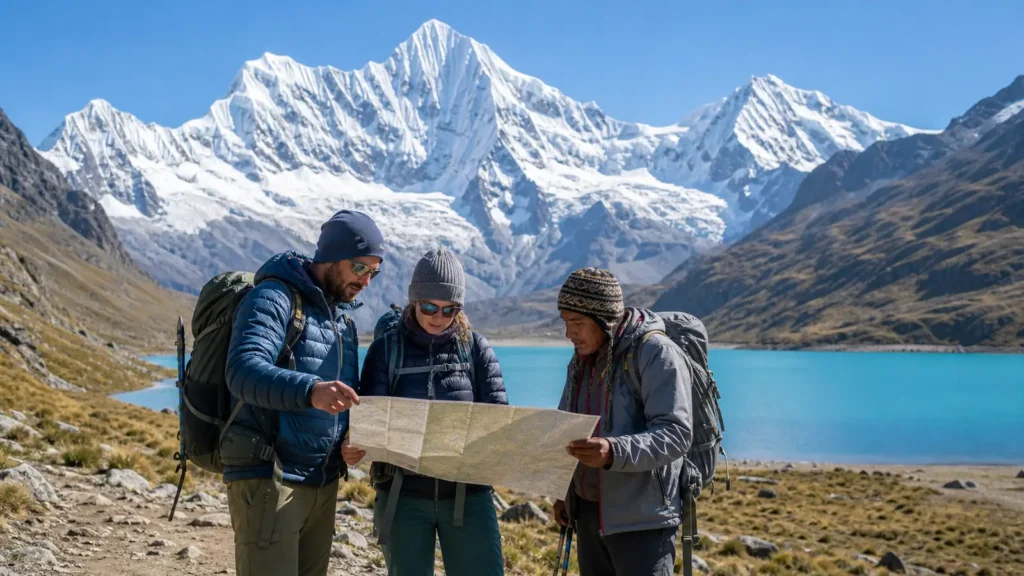
How to read a day-by-day itinerary
Marketing summaries often list only the start, pass and camp. For a meaningful comparison, request the following for every stage:
- Starting and sleeping elevation.
- Highest point and approximate time above exposed terrain.
- Estimated distance, ascent and descent.
- Typical walking time for a steady group.
- Trail surface and any seasonal stream crossings.
- Water and lunch arrangements.
- Shortening, descent or evacuation options.
- Whether the luggage team follows the same route.
Figures will vary between GPS devices and campsite choices. Treat them as a planning range, not a race target. The future Huayhuash Trek map and route guide will explain those variations more deeply.
Walking time is not the whole day
Six hours of walking may become a ten-hour expedition day after breakfast, packing, pass breaks, lunch, weather delays and camp routines. Sunrise, afternoon cloud development and temperature changes can encourage early starts. A group’s pace also depends on altitude and the slowest safe traveler.
Do not choose a route solely because the advertised daily kilometers seem low. Read our Huayhuash Trek difficulty assessment for the combined effect of passes, descents, terrain and recovery. A shorter distance at high elevation can demand more than a longer hike at home.
Build flexibility into every route
A mountain itinerary is a decision framework, not a contract with the weather. Snow, heavy rain, swollen streams, road disruption, animal welfare or a participant’s health may require a different pass, camp or exit. The guide should have authority to change the plan before the group becomes trapped by a schedule.
Ask which highlight is most likely to be altered in poor conditions and what the alternative provides. Flexibility is easier when the trip includes contingency food, communication equipment and realistic transport arrangements. The future Huayhuash Trek safety guide will cover these systems.
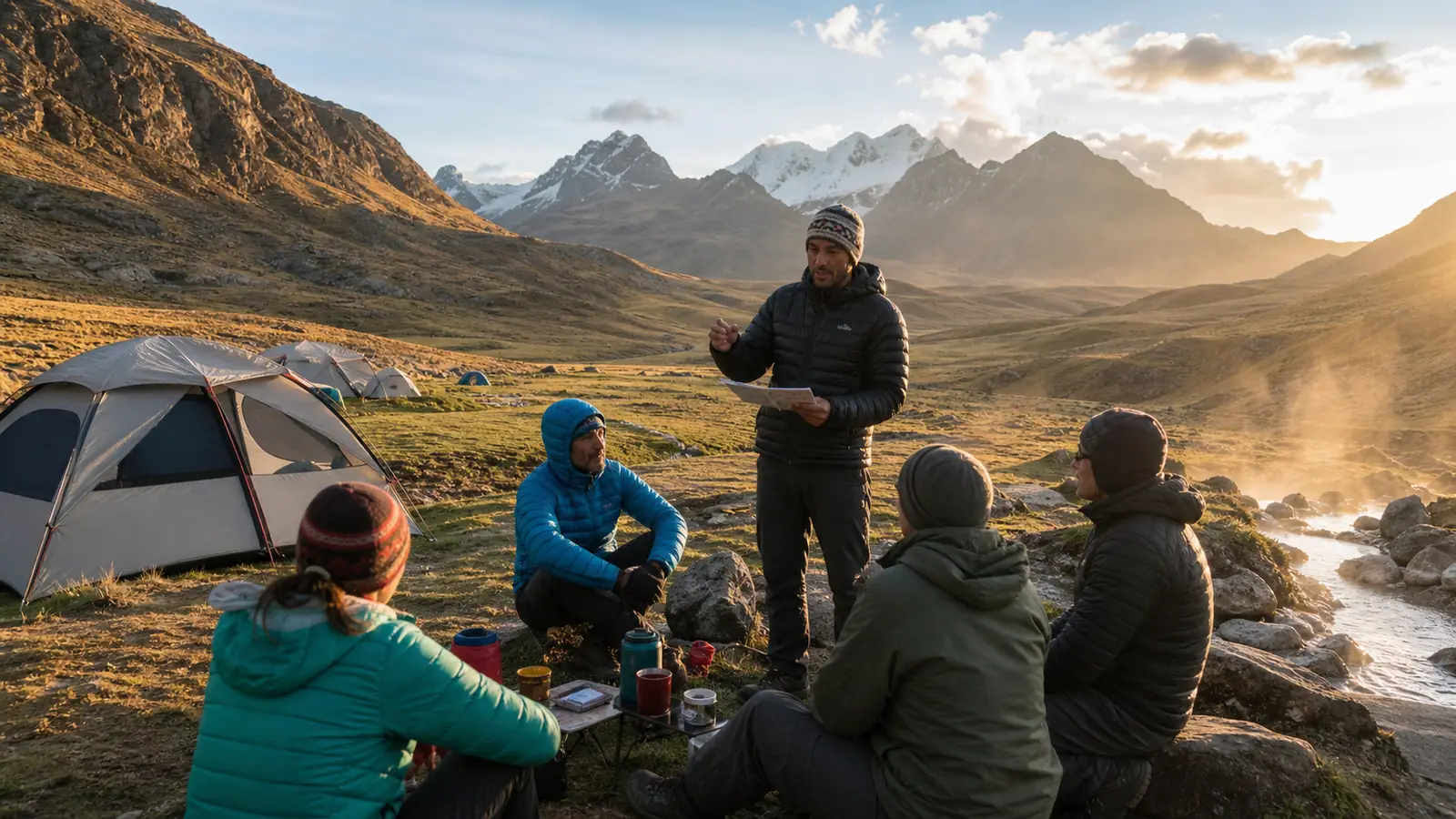
Match the route to your experience
A five-day version suits hikers who have already acclimatized and can handle consecutive high passes without using the first trekking days as training. An eight-day version suits strong multi-day trekkers seeking a broader circuit. Ten to twelve days can suit travelers who value immersion and recovery, provided they are comfortable camping for longer.
Previous back-to-back hiking experience is more useful than an abstract label such as “fit.” Before booking, complete a realistic training weekend and note how your feet, knees, appetite and sleep respond. Our future Huayhuash Trek training guide will turn this assessment into a progression.
Choose camps for recovery as well as views
Carhuacocha, Mitucocha, Huayhuash and Jahuacocha are celebrated for scenery, but a camp’s practical value includes elevation, wind exposure, water access, toilet arrangements and relation to the next pass. Community rules and designated areas can also affect the final location.
Ask whether the itinerary promises a general camp area or a precise lakeside position. Small changes can alter distance and exposure. Respect local instructions, use toilets correctly and avoid treating communal land as an unrestricted wilderness campground.
Pack-animal support changes route design
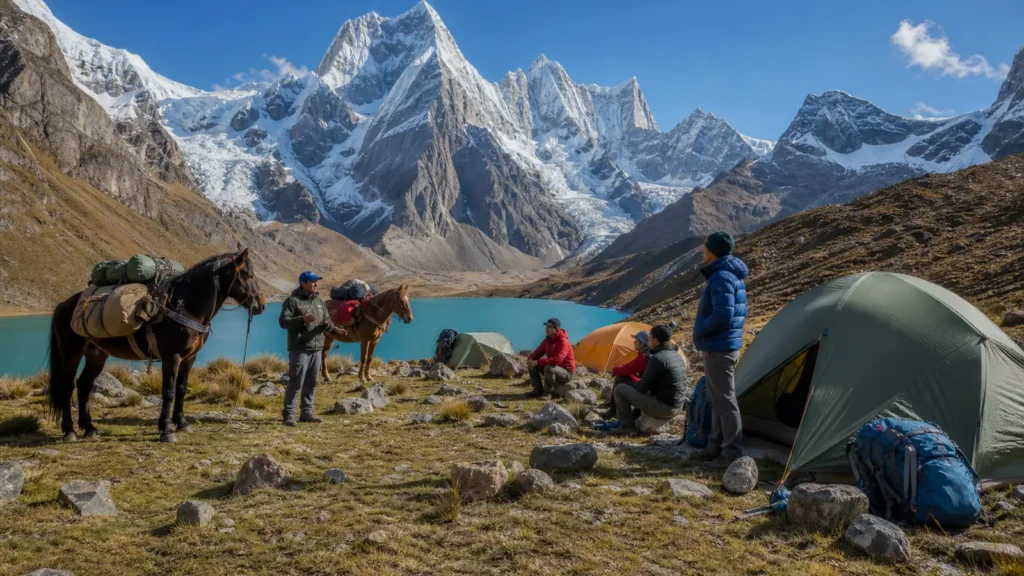
On supported expeditions, horses or donkeys carry tents, kitchen equipment, food and limited personal luggage. This allows hikers to use a daypack, but the animals and staff may need a different trail or an earlier departure. Technical-looking shortcuts appropriate for hikers may not be suitable for the logistics team.
Confirm the duffel allowance and which equipment must stay with you all day. Rain protection, insulation, water, sun protection, medication and essential valuables belong in the daypack. The future Huayhuash Trek packing list will separate daily essentials from transported luggage.
Weather and season influence the schedule
The main dry-season months generally offer more stable trekking probabilities, but no date guarantees clear passes. Wind, frost and intense sun remain possible, and shoulder-season departures require more flexibility. Review the Huayhuash Trek weather guide and our best time to hike Huayhuash comparison before selecting dates.
Itinerary quality matters more than squeezing the route into a supposedly perfect week. If a schedule has no allowance for a storm or road delay, the calendar itself becomes a risk.
Guided versus independent itineraries
Independent trekking offers control over pace and camps but transfers navigation, permits, food, fuel, emergency communication and transport planning to the hiker. The circuit crosses communal land rather than a single park entrance, so local access arrangements should not be treated as optional.
A guided itinerary provides local route knowledge and coordinated logistics, but services differ. Verify guide experience, staff conditions, animal management, group size, emergency systems and what happens when one person must descend. The future Huayhuash Trek cost guide will explain how support level affects price.
Questions to ask before choosing
- Is this a complete circuit, a partial circuit or a point-to-point section?
- Which camps and passes are included, and which are optional?
- What are the daily ascent, descent and sleeping elevations?
- How many acclimatization days are expected before departure?
- What route is used if the Siula-area variation is unsafe?
- Where can a participant descend or meet road transport?
- How much luggage do pack animals carry per guest?
- What communication and emergency equipment travels with the group?
- Are community access payments included?
- What is the realistic return window to Huaraz?
Final recommendation
Choose the shortest itinerary that still respects your acclimatization and the longest itinerary you can complete without rushing onward travel. For limited time and strong preparation, the five-day route offers a concentrated sequence of eastern and southern highlights. For greater breadth, approximately eight days is a compelling balance. For a deeper circuit with more recovery and optional exploration, consider ten to twelve days.
Use the future complete Huayhuash Trek guide as the central planning page and browse the current Huayhuash trekking collection to compare available departures.
Frequently asked questions
How many days do you need for the Huayhuash Trek?
Five days can cover a concentrated section, approximately eight days can deliver a broader classic-style route, and ten to twelve days allows a more complete or extended circuit. Add acclimatization and contingency days outside the trek itself.
Is the five-day Huayhuash route a full circuit?
No. It is a shorter expedition through selected highlights. Check the precise start, camps and exit because short programs differ between operators.
Is eight days enough for Huayhuash?
For well-prepared hikers, an efficient eight-day program can cover a substantial circuit. It still involves demanding consecutive stages and should not replace acclimatization.
Should I choose a twelve-day itinerary?
Choose it if you want more immersion, route variations or recovery time and are comfortable with a longer camping expedition. More days do not automatically mean easier days.
Can the itinerary change during the trek?
Yes. Weather, trail conditions, health and logistics may require changes. A responsible operator should explain alternatives before departure.
Where does the Huayhuash Trek start?
Common access points include areas near Llamac, Cuartelhuain and Queropalca. The correct trailhead depends on route direction and duration.
Do I need a rest day on the circuit?
Not every route includes one, but longer itineraries can use a rest or shorter stage effectively. Pre-trek acclimatization remains essential even when a circuit has a rest day.
Source and accuracy note
The featured five-day sequence was checked against Explora el Peru’s current tour itinerary. Geographic context was reviewed using the official SERNANP profile for the Cordillera Huayhuash Reserved Zone. Routes, community access, campsite use and operating conditions can change; confirm the final program directly before travel.