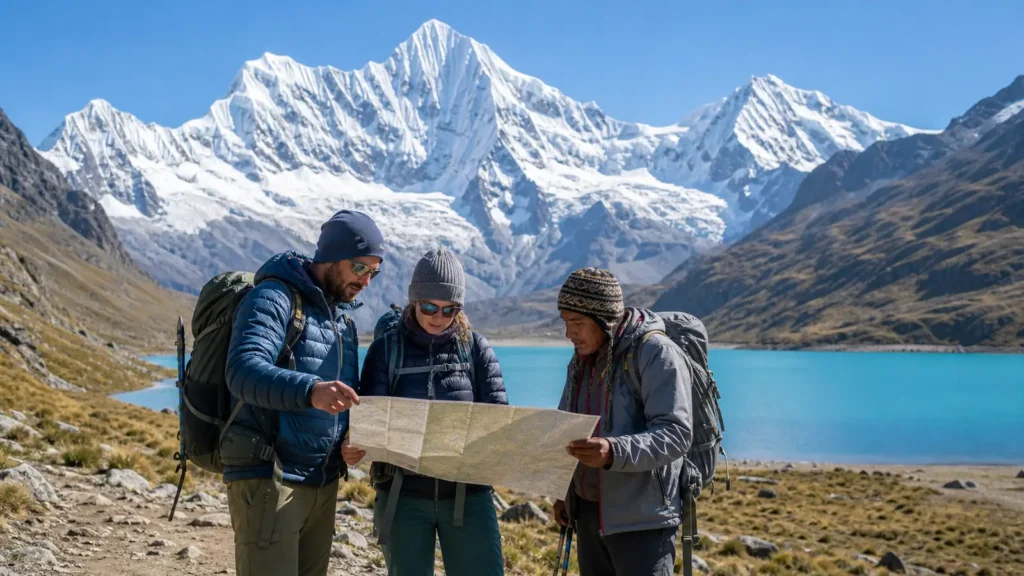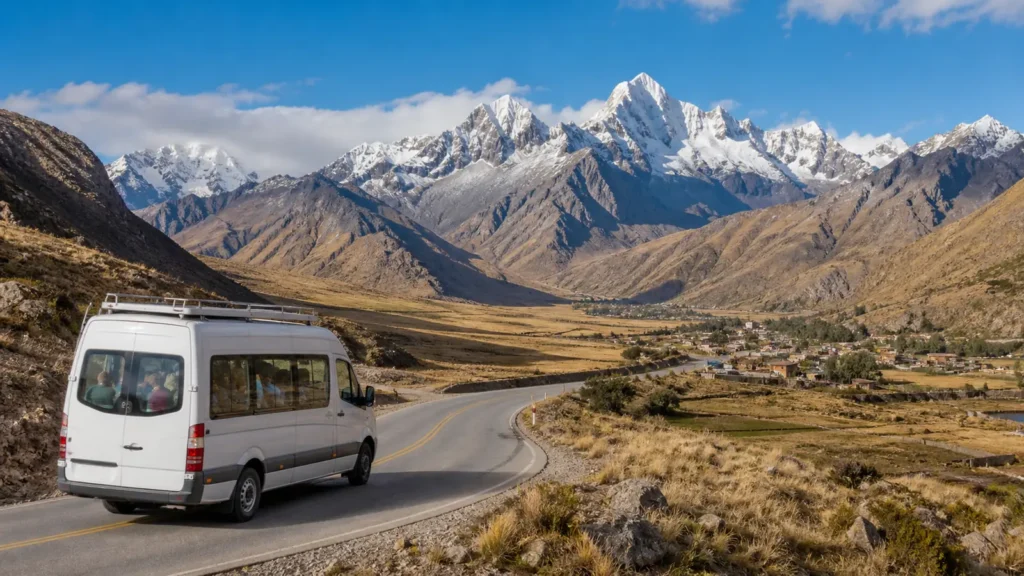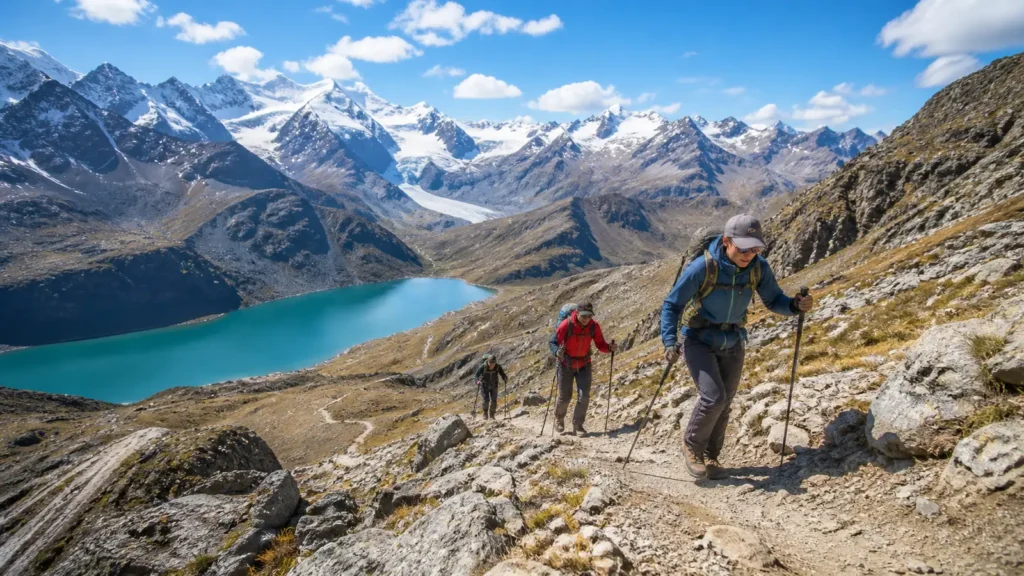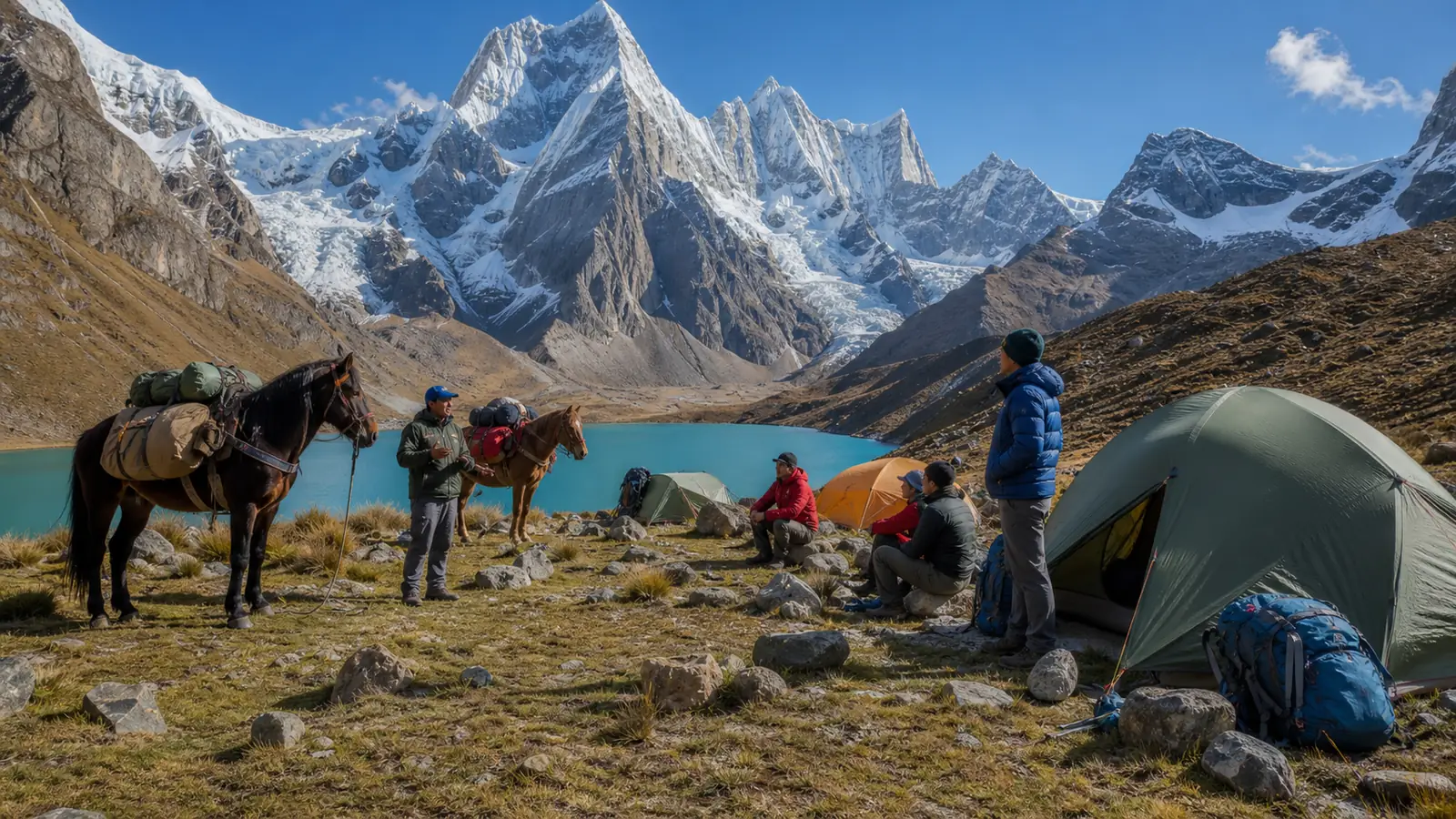

Huayhuash Trek cost can range from a few hundred dollars for a carefully planned independent journey to well over a thousand dollars for a private, fully supported expedition. The useful question is not only “How much?” but “What does that price include?” Transport, community access, meals, guide experience, camping equipment, staff, pack animals and emergency systems can turn two apparently similar quotes into completely different products.
Huayhuash Trek prices at a glance
| Travel style | Broad planning range | What usually drives the total |
|---|---|---|
| Independent | About US$300–600 | Transport, food, fuel, community payments, rentals and personal equipment |
| Shared group service | About US$700–1,200 | Fixed departure, guide, staff, meals, camping logistics and pack animals |
| Private supported trek | Often US$1,500+ | Dedicated crew and transport divided among fewer travelers |
Use these figures to set an initial budget, then request a current written proposal for your dates. Prices can change with fuel, food, wages, community access arrangements, exchange rates and group size. Avoid treating an old forum post or an operator’s “from” price as a guaranteed total.
Why Huayhuash prices vary so much
Huayhuash is a remote camping expedition rather than a hotel-to-hotel walk. Every tent, meal, gas cylinder and safety item must reach the camps. A guided service also supports people whose work begins before hikers wake and continues after they arrive: guides, cooks, horse handlers, drivers and logistics coordinators.
Price changes primarily with trip duration, private versus shared service, the number of paying guests, support level, equipment standard and the exact route. A five-day section uses fewer meals and staff days than a ten-day circuit, but its transport and expedition setup are still significant. Read the Huayhuash Trek itinerary comparison before comparing totals.
What a full-service guided price should include
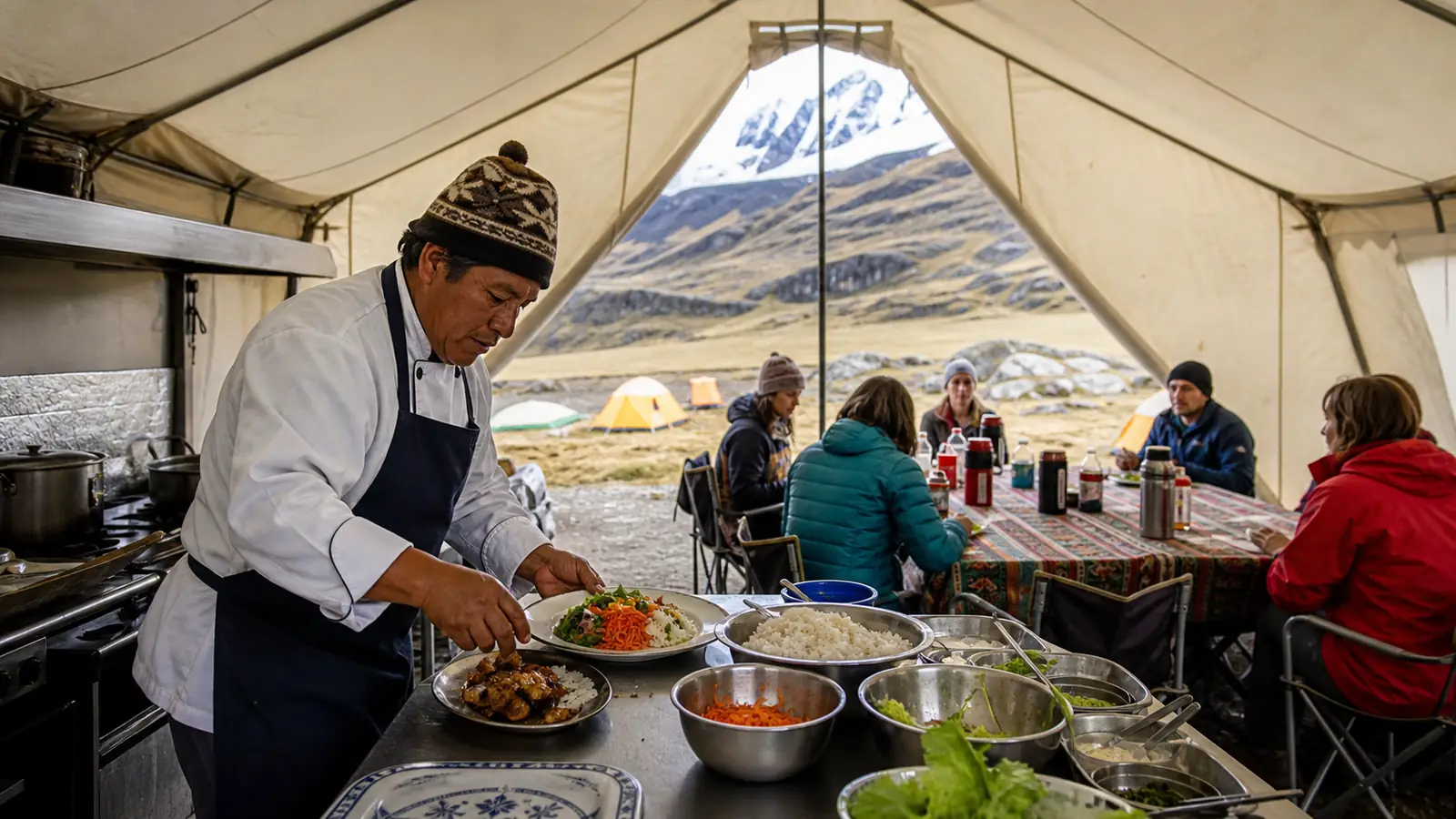
A strong proposal makes inclusions specific. Explora el Peru’s current five- and eight-day programs list round-trip tourist transport from Huaraz, a professional bilingual guide, full-board expedition meals, purified water, snacks, camping nights, shared tents, dining and kitchen tents, a professional cook, pack horses, a personal duffel allowance, first-aid equipment and emergency oxygen.
They also list community access and entrance payments among the inclusions. That matters because the circuit crosses lands managed by different communities rather than passing through a single national-park gate. A cheaper quote that excludes these payments may only move the cost to the trail.
Ask whether “meals included” begins with breakfast before the first hike and ends with lunch on the final day. Confirm dietary needs in advance, how drinking water is treated, whether snacks are personal or supplied and whether the dining tent has enough space for the advertised group.
Five-day versus eight-day cost
The Huayhuash Trek 5 Days is a concentrated private service from Huaraz through Mitucocha, Carhuacocha, the Siula area, Huayhuash and Viconga. Its shorter duration reduces camping nights and crew days, but transport, horses, guide, cook and group equipment remain part of the operation.
The Huayhuash Trek 8 Days adds three expedition days and a broader circuit. The listed service includes seven camping nights, meals throughout the route, a 10-kilogram personal duffel allowance and the same core support structure. Its total price should be higher, but the cost per trekking day may be competitive because fixed transport and setup are spread across a longer journey.
Compare value by dividing the total only after checking inclusions. A low daily figure is meaningless if the trip omits community payments, equipment rentals or return transport.
Group size has a major effect
Private transport, guide time, kitchen equipment and emergency supplies are partly fixed costs. When two travelers book privately, those costs are shared by two. When six compatible hikers join a scheduled departure, the cost per person can fall even though the staff and service remain strong.
Ask for the confirmed price at your actual group size and what happens if another traveler cancels. Some departures require a minimum number; others operate privately at a revised rate. Never assume an advertised group price applies to a solo booking.
Private trek: what the premium buys
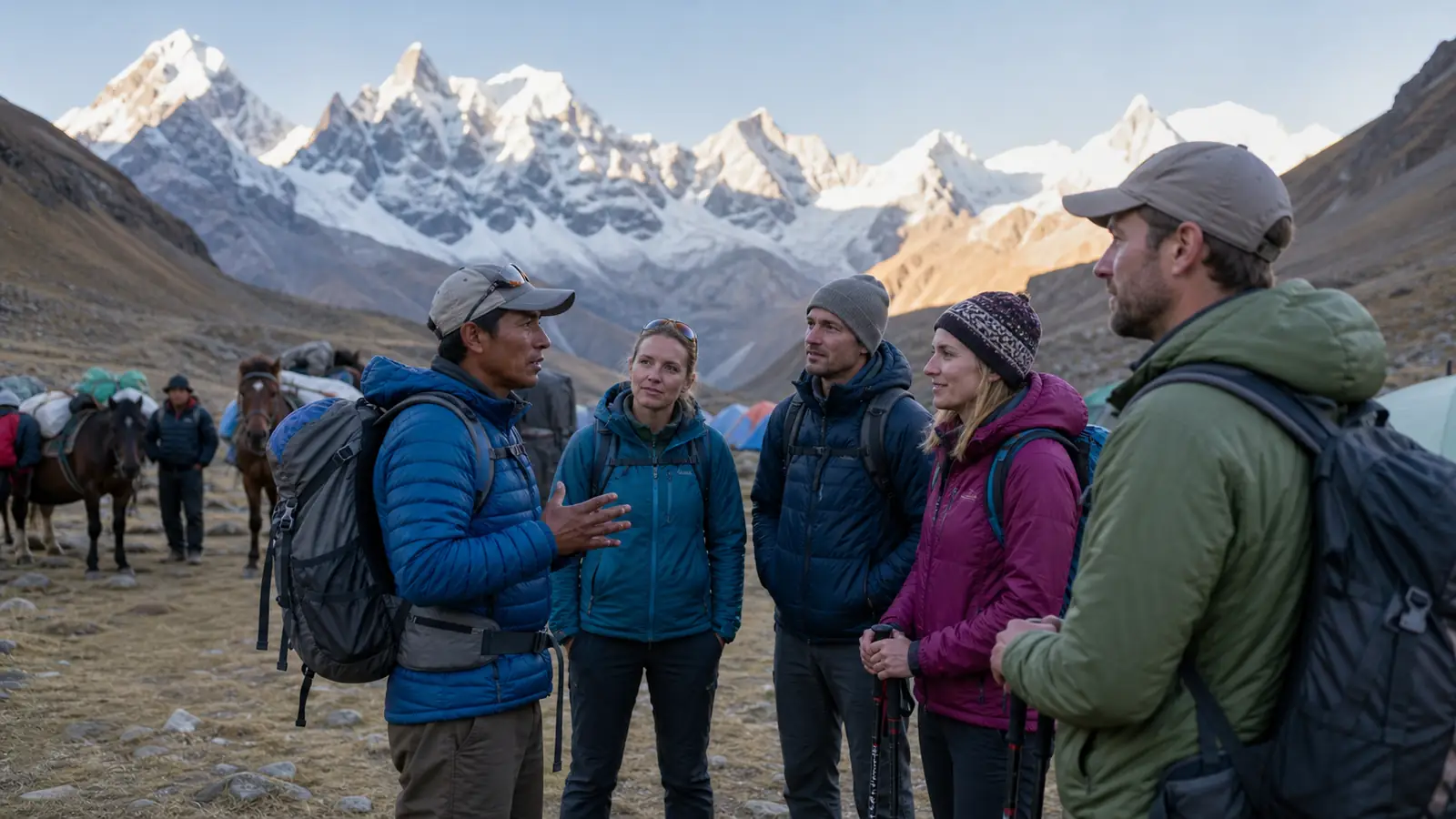
A private service can provide a dedicated guide, flexible pace, chosen departure date and logistics built around one party. It may also make dietary arrangements and pre-trek communication simpler. The higher price is not necessarily for luxury; much of it reflects a complete crew and vehicle serving fewer guests.
Flexibility still has limits. Weather, community rules, animal welfare and safety determine what is possible. Paying for private service does not guarantee that a guide will cross an unsafe pass or ignore worsening altitude symptoms. Review the Huayhuash altitude guide before interpreting flexibility as control.
Independent trekking budget
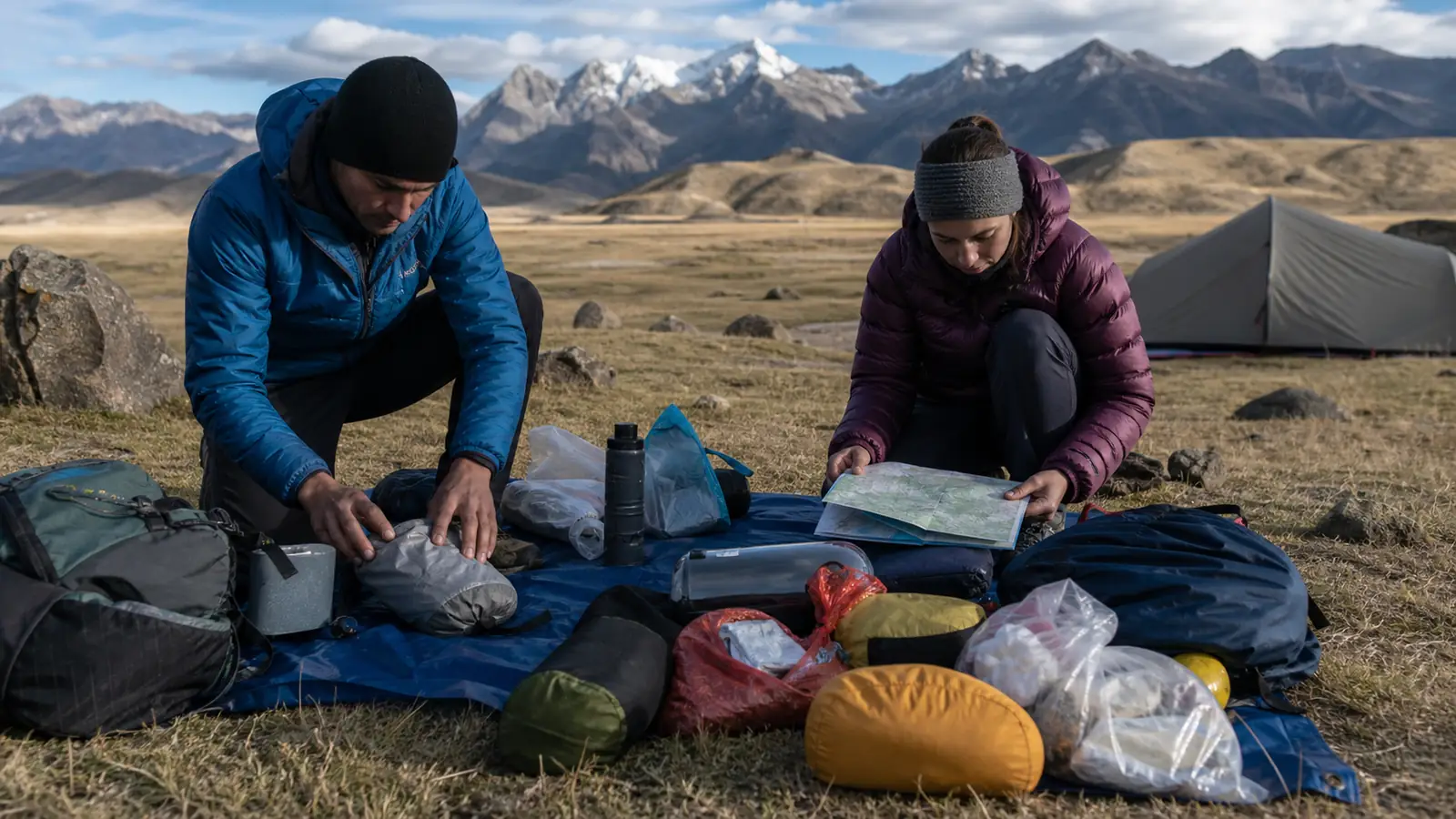
Experienced backpackers can reduce direct expenditure by carrying equipment, buying food and organizing transport themselves. The apparent saving must be measured against everything they already own and every task they assume. A tent, sleeping system, stove, fuel, navigation tools, water treatment and emergency communication are real costs even if purchased for previous trips.
An independent budget should include:
- Travel between Lima and Huaraz.
- Accommodation and food during acclimatization.
- Transport from Huaraz to the chosen trailhead and return from the exit.
- Community access and campsite payments.
- Expedition food, fuel and safe water treatment.
- Equipment purchase or rental.
- Maps, navigation and emergency communication.
- Travel insurance that covers the route elevation.
- Contingency cash for route or transport changes.
Lower cost comes with greater responsibility, pack weight and exposure to logistical mistakes. Our future independent Huayhuash Trek guide will assess who should consider this option.
Community fees and campsite payments
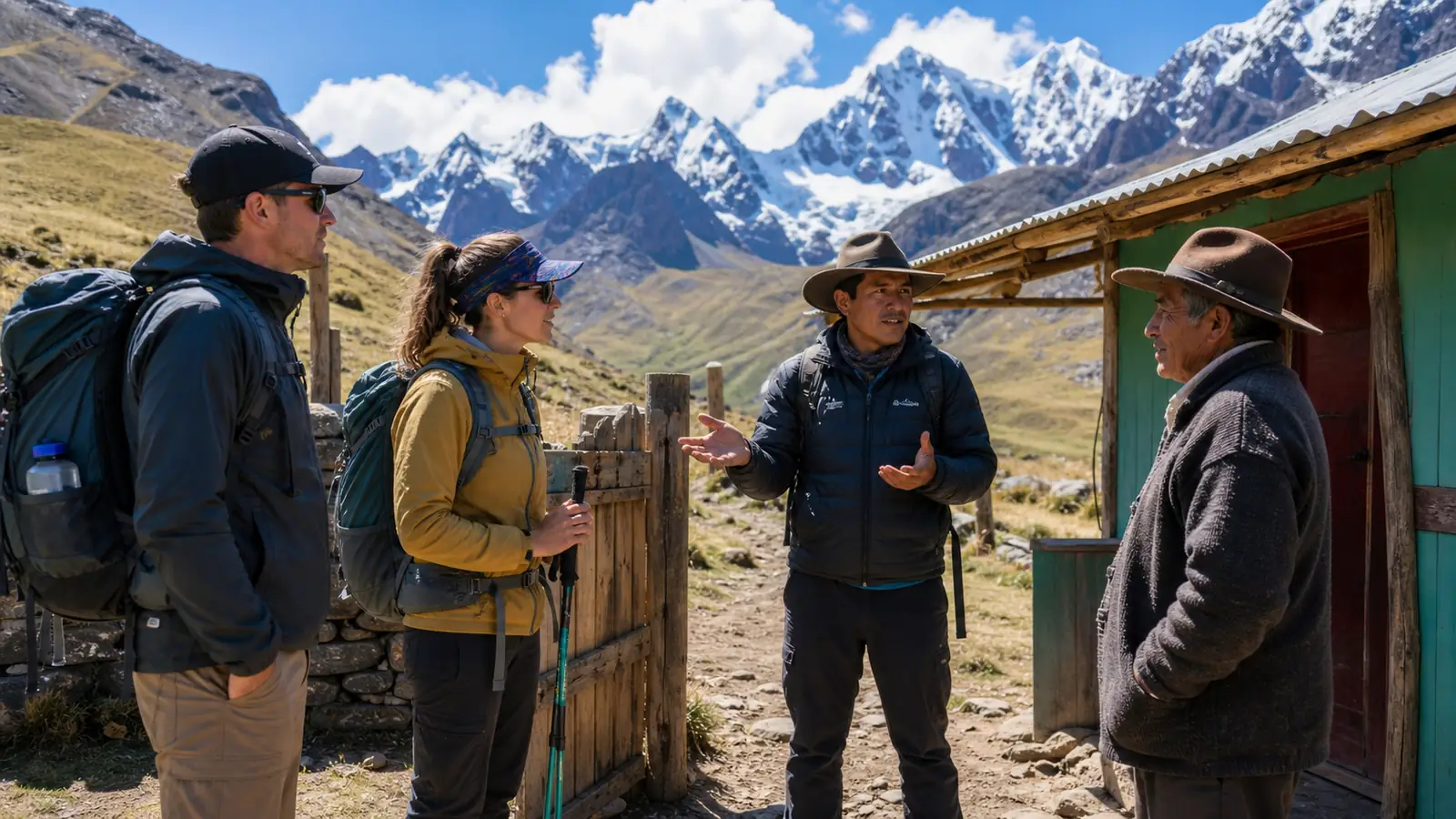
The Cordillera Huayhuash spans communal territories in several regions. Local communities manage access points and camping areas and may collect separate payments. The total depends on the exact route and can change, so there is no universal “Huayhuash permit” covering every itinerary.
Ask an operator to state in writing whether all current community payments are included. Independent hikers should carry Peruvian soles in small denominations and request receipts where available. Respectful payment supports local management and should not be treated as an optional obstacle to avoid.
The future Huayhuash permits and community fees guide will document the structure without pretending that one timeless figure applies to every circuit.
Transport costs before and after the trail
Most international travelers reach Huaraz from Lima, then use private or shared transport to the Huayhuash trailhead. Guided packages often include the mountain transfer but not the Lima–Huaraz journey. The current eight-day tour also excludes accommodation in Huaraz before and after the expedition.
Include several acclimatization nights, not just one pre-departure bed. Hotel, meals and local acclimatization hikes form part of the real trip budget. An itinerary that appears cheaper because it ignores preparation days is not a fair comparison.
Equipment rentals and personal gear
Shared tents and a sleeping pad may be included while a sleeping bag and trekking poles remain optional rentals. A single tent can carry a supplement. Confirm sleeping-bag temperature rating, pad type, tent occupancy and whether damaged rental equipment has a deposit.
Personal boots, waterproof layers, insulation, daypack and sun protection are rarely included. Buying everything at the last minute can add substantially to the expedition total. The future Huayhuash Trek packing list will separate essential gear from optional comfort items.
Food and water costs
On a supported trek, full board reflects more than ingredients. The price includes planning, shopping, transport, cooking fuel, kitchen equipment, staff work and waste management. Special dietary requests may be included when declared early or may require adjustments.
Independent travelers should calculate calories by day and add a reserve rather than shopping only by price. Food that is cheap but difficult to prepare, unfamiliar at altitude or too bulky can create a false economy. The future Huayhuash food and water guide will provide a practical framework.
Guide, cook and pack-animal costs
Professional staff are a central part of the service, not a hidden overhead to remove. Guides manage pace, route choices, communication and group decisions. Cooks maintain nutrition and camp hygiene. Horse handlers coordinate equipment movement and care for animals across difficult terrain.
Ask how many staff and animals support the group, whether an emergency horse is included and what luggage limit applies. A responsible company protects load limits and working conditions. An unusually cheap proposal may be saving money through understaffing or excessive animal loads rather than efficiency.
Safety and insurance are separate budget lines
First-aid supplies and emergency oxygen are listed on Explora el Peru’s supported routes, but these do not replace personal travel insurance. Policies vary in their maximum trekking elevation, search-and-rescue terms, evacuation process and exclusions for pre-existing conditions.
Read the policy wording instead of relying on a general “adventure covered” label. Budget for suitable coverage from the beginning. The future Huayhuash travel insurance guide will explain the questions to ask without recommending one universal policy.
Costs commonly excluded from a guided quote
- International or domestic flights.
- Bus or private transport between Lima and Huaraz.
- Hotels and meals in Huaraz.
- Acclimatization day trips.
- Travel insurance.
- Sleeping-bag or trekking-pole rental.
- Single-tent supplement.
- Personal snacks, drinks and purchases.
- Tips for the expedition team.
- Extra transport caused by personal itinerary changes.
Create a door-to-door budget instead of comparing only the trek invoice. A realistic spreadsheet should begin when you leave Lima—or home—and end after returning from Huaraz.
Tipping the expedition team
Tips are generally not included and should remain voluntary. Ask the operator for current local guidance, how tips are normally shared and whether travelers give one group contribution or individual amounts. Do not use an old online percentage as a fixed rule.
Plan some cash without allowing tipping expectations to hide the actual wages and service structure. A transparent operator should explain the practice before departure.
Deposit, payment and cancellation conditions
Check the deposit amount, whether it is refundable, the balance deadline, accepted currency, card fees and exchange-rate policy. Explora el Peru’s booking flow offers a deposit or full-payment choice; the exact conditions should be read before confirming.
Mountain trips can change due to weather or safety without being “cancelled.” Ask what happens financially when the route changes, a traveler leaves early, the minimum group is not reached or transport is disrupted. Travel insurance may cover some events, but only under the policy’s written terms.
How to compare two Huayhuash quotes
Put both proposals into the same table and compare line by line:
- Exact route, trekking days and camping nights.
- Confirmed group size and guide ratio.
- Private or shared transport from Huaraz.
- Meals, snacks and treated water.
- Tents, sleeping pad, duffel and weight allowance.
- Cook, horse handler, pack animals and emergency horse.
- Community access and campsite payments.
- First-aid, oxygen and communication equipment.
- Rentals, hotels, insurance and tips.
- Taxes, card fees, cancellation and route-change terms.
Then compare the final expected total, not the headline. Our future guided versus independent Huayhuash guide will extend this decision beyond price.
Red flags in a very cheap offer
- No written day-by-day itinerary or sleeping elevations.
- Community payments described vaguely or excluded without an estimate.
- No explanation of staff numbers, animal loads or emergency systems.
- Meals listed without water treatment or dietary planning.
- No return transport plan from the trail exit.
- Pressure to pay immediately by an untraceable method.
- A promise that weather can never alter the route.
Price alone does not prove quality, but transparency is a strong signal. Ask for answers in writing and confirm the company identity before sending money.
Ways to save without cutting safety
- Join a confirmed small-group departure rather than requesting a private trek for one person.
- Choose the route length that fits your priorities instead of automatically booking the longest circuit.
- Bring tested personal clothing and boots rather than buying emergency replacements in Huaraz.
- Compare total inclusions and avoid paying twice for rentals or transport.
- Reserve enough acclimatization time so a rushed schedule does not ruin the expedition.
- Keep a contingency fund rather than choosing a service with no operational margin.
Do not save by removing insurance, safe food, trained staff, appropriate shelter or altitude preparation. The difficulty guide and weather guide explain why those systems matter.
Is the Huayhuash Trek worth the cost?
For prepared hikers, Huayhuash offers multiple days among glaciated peaks, turquoise lakes and remote valleys rather than a single viewpoint. The expedition structure makes it more expensive than an ordinary day hike, but it also includes transport and support for a moving high-altitude camp.
Value depends on choosing the right route and service. A shorter, well-run trek can be better value than a cheap long circuit that rushes camps or omits essentials. Use the best time to hike Huayhuash and itinerary guides to define what you actually want before requesting a quote.
Final budget recommendation
Start with the broad range for your travel style, add all pre- and post-trek expenses, then include a contingency reserve. Request a dated, itemized proposal and confirm community payments, rentals, group size and return transport. If two quotes remain far apart, ask what operational difference explains the gap.
Browse the Huayhuash trekking collection and use the future complete Huayhuash Trek guide as the central planning resource.
Frequently asked questions
How much does an independent Huayhuash trek cost?
A broad planning range is approximately US$300–600, excluding major personal gear purchases and international travel. Transport, food, community access, rentals and insurance determine the real total.
How much is a guided group trek?
Shared services often fall around US$700–1,200 as an initial benchmark. Obtain a current quote because duration, departure size and inclusions vary.
Why is a private trek more expensive?
A dedicated guide, vehicle, cook, equipment and logistics are divided among fewer guests. Private service frequently begins around US$1,500 per person and can rise with duration and group size.
Are community fees included?
They are included in Explora el Peru’s current five- and eight-day listings, but not every operator includes them. Confirm in writing for the exact route.
Is camping equipment included?
Supported trips commonly include shared tents, dining and kitchen tents and a sleeping pad. Sleeping bags, poles and single tents may cost extra.
Should I choose the cheapest operator?
Choose the clearest complete proposal, not automatically the lowest headline. Missing transport, staff, meals, fees or safety systems can make a cheap quote expensive or unsafe.
When should I request a current price?
Request a dated quote when your travel dates and group size are known, then reconfirm payment and cancellation terms before sending a deposit.
Price and editorial note
Planning ranges were reviewed in September 2026 and are not binding offers. Current inclusions were checked against Explora el Peru’s five- and eight-day tour pages. Geographic and communal-land context was reviewed using the official SERNANP Cordillera Huayhuash profile. Always request a current written quotation for your route, dates and group size.