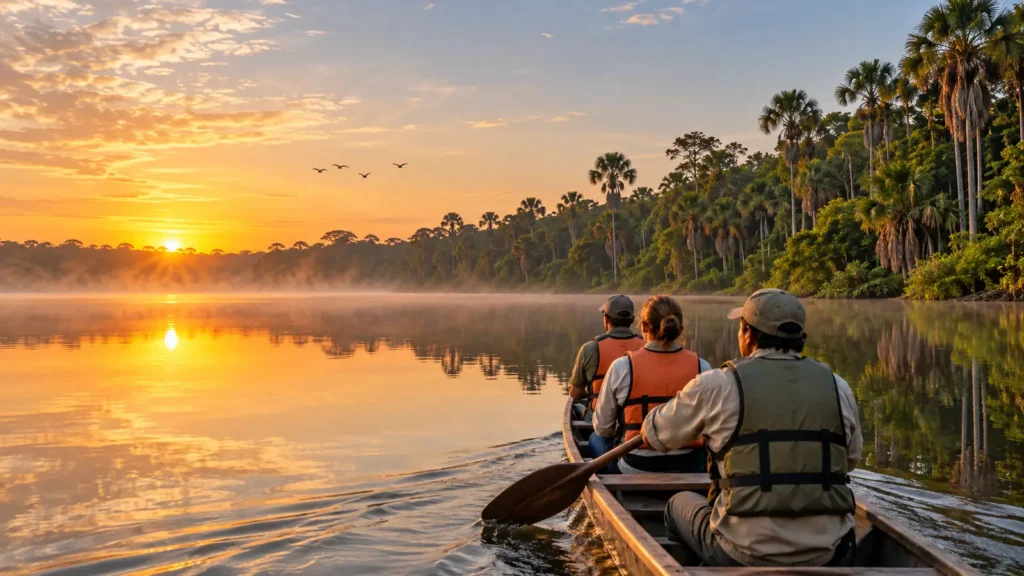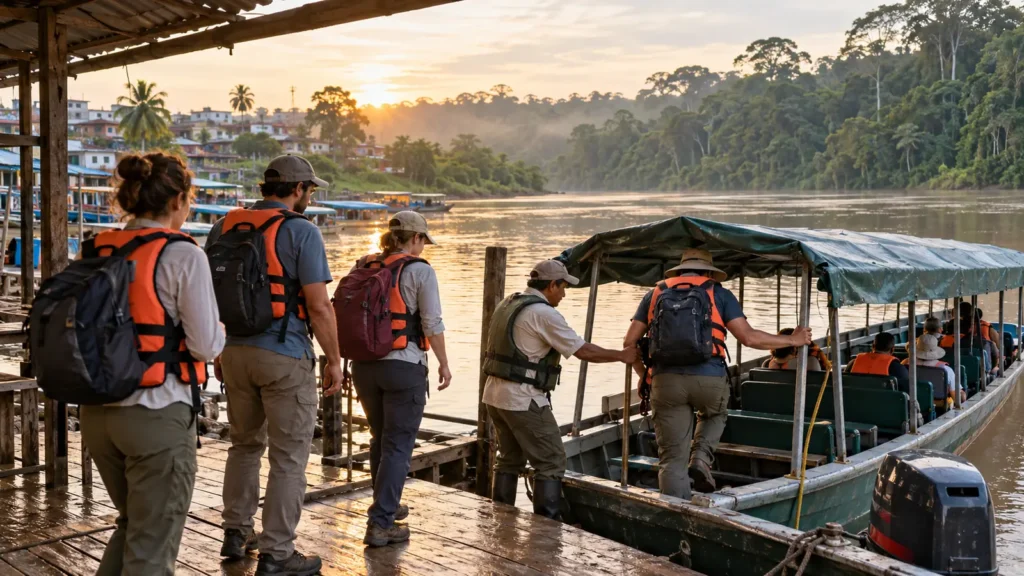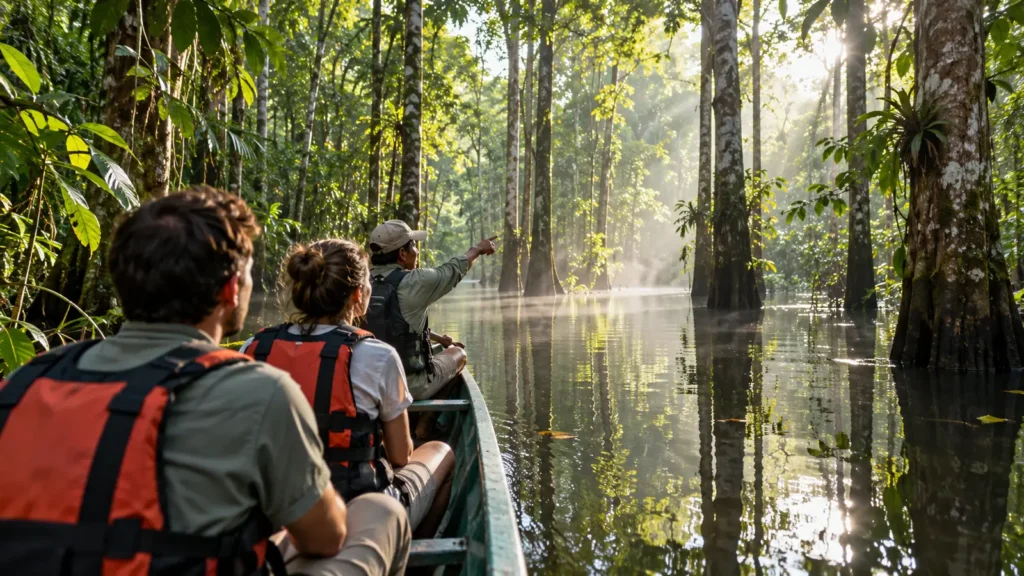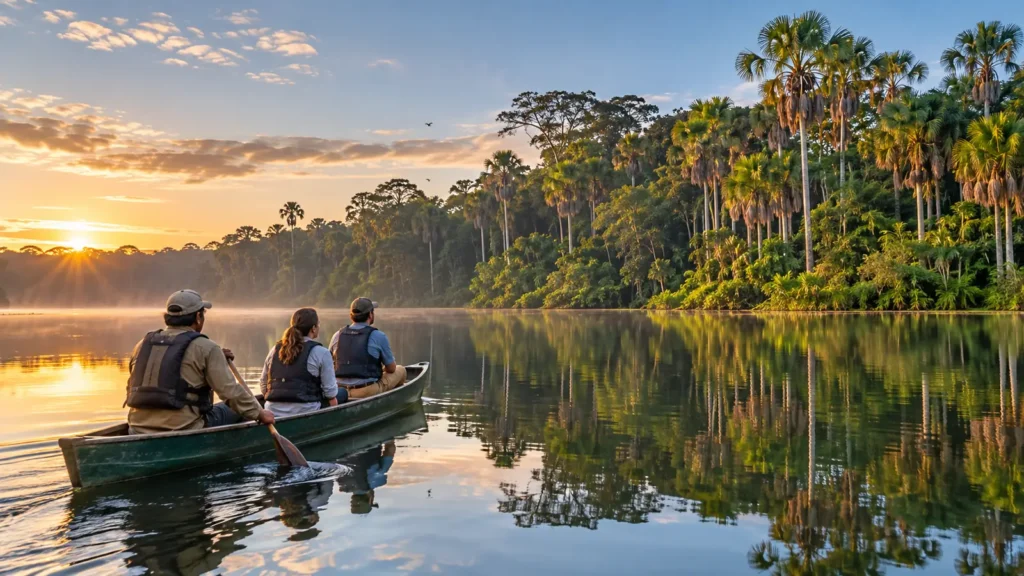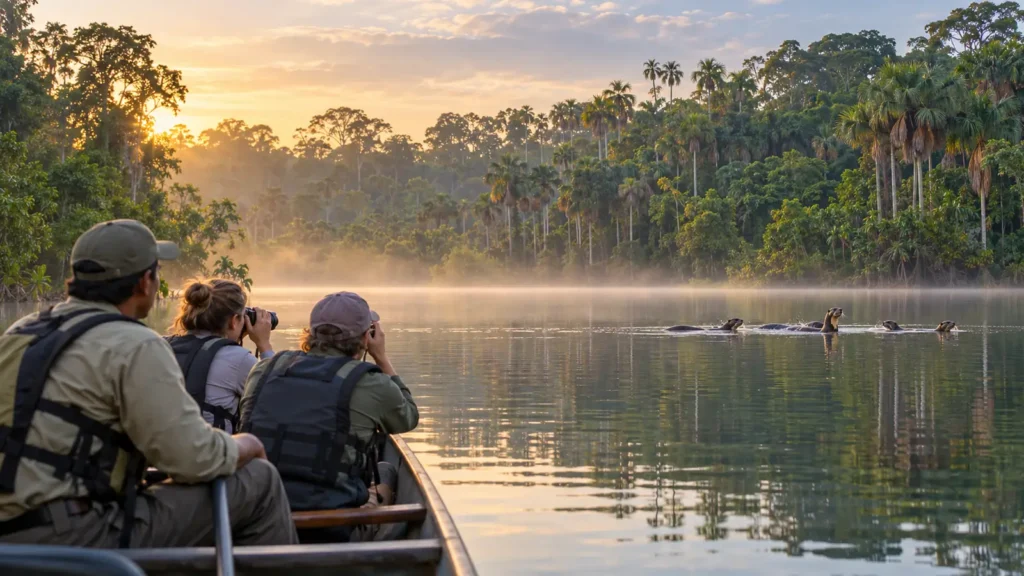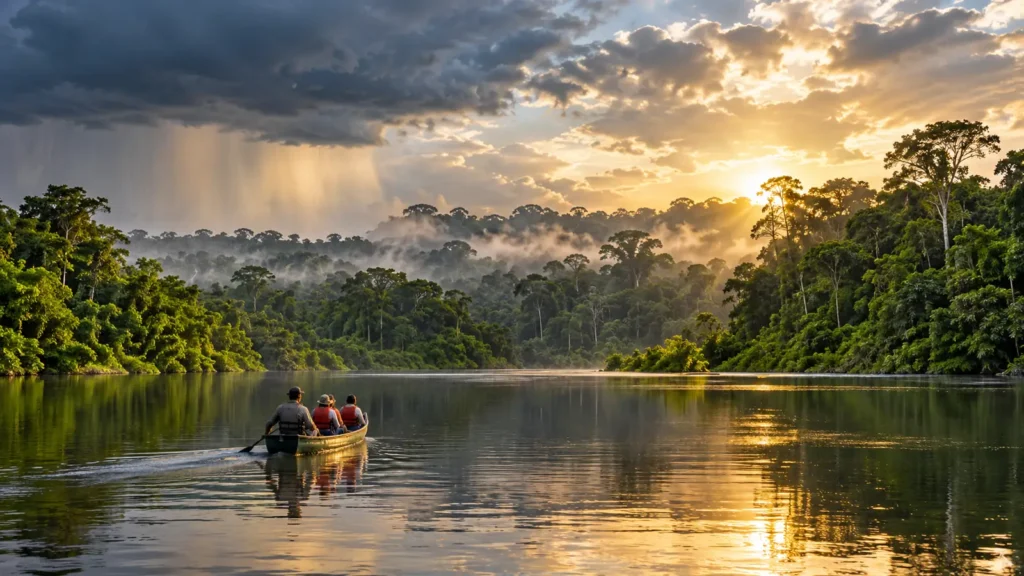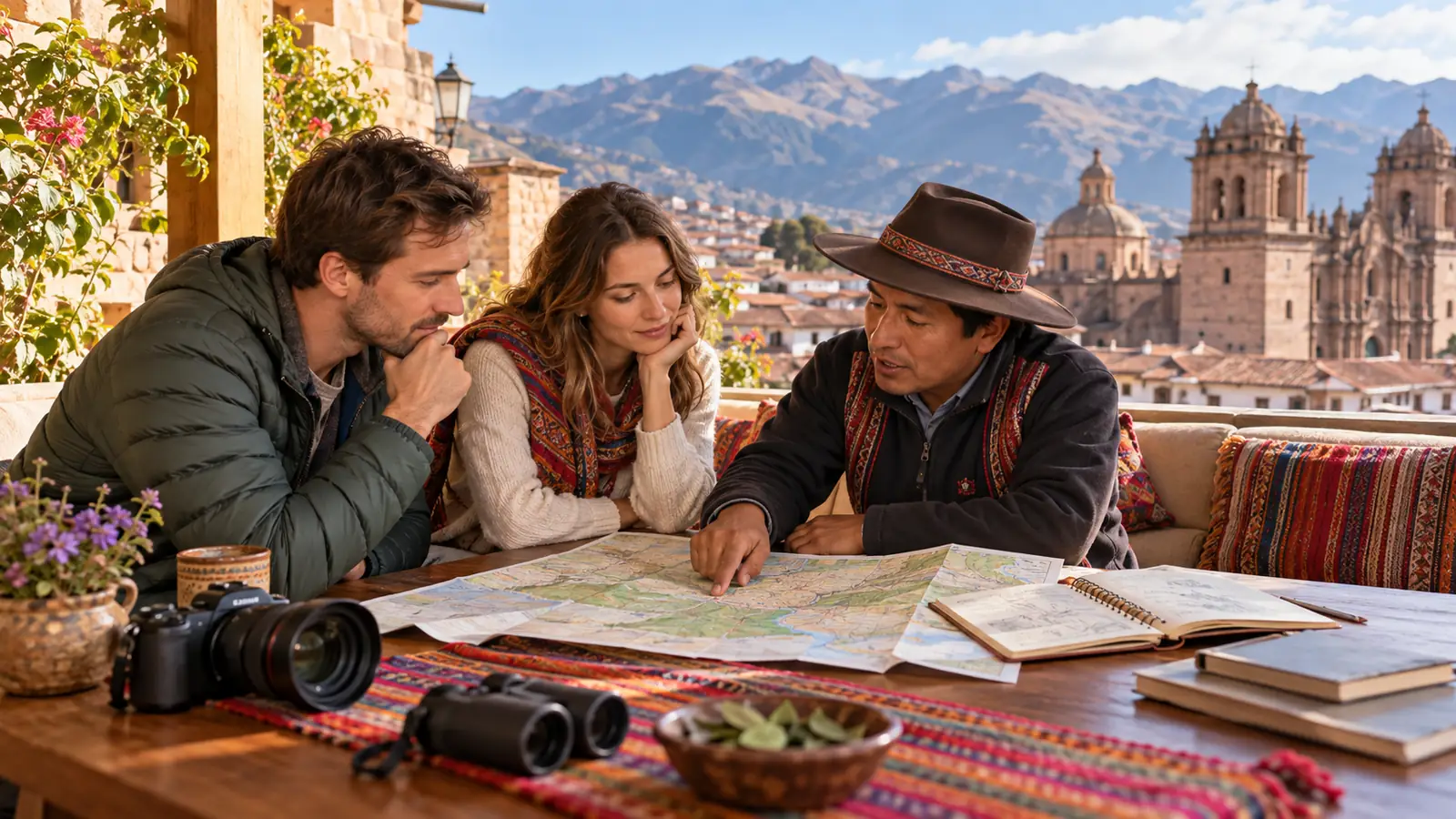

A Machu Picchu and Amazon itinerary works best when it is planned as one connected journey, not as two tours placed side by side. Secure the date-specific Machu Picchu entry first, allow time to adjust to the Andes, choose one Amazon gateway, and protect the transition with enough time for rail, road and flight changes. For many first-time visitors, Cusco, the Sacred Valley and Machu Picchu followed by Puerto Maldonado create the most natural geographic sequence. Iquitos is equally rewarding, but its flight pattern often requires a different connection plan.
Can you combine Machu Picchu and the Amazon?
Yes. The contrast is one of Peru’s strongest travel experiences: high Andean landscapes, Inca engineering and cloud forest are followed by tropical rivers, humid lowland forest and naturalist-led wildlife outings. The two regions also demand different clothing, transport and pacing, so the order matters.
The most efficient plan usually concentrates on one rainforest region. The Iquitos or Tambopata comparison explains their differences. Puerto Maldonado and Tambopata are the southern Amazon gateways most often paired with Cusco. Iquitos opens the northern Amazon and broad river environments, but travelers should build the trip around the actual flights available on their date rather than assuming a permanent direct route.
Which destination should come first?
For a typical international arrival through Lima, we usually favor the Andes first and the Amazon second. Machu Picchu entry is tied to a selected date, time and circuit, so it provides the fixed point around which the rest of the journey can be arranged. After the cultural and walking portion, the rainforest creates a slower final chapter before departure.
This order also works well when choosing Puerto Maldonado: Cusco and the southern Amazon can often be connected without returning to northern Peru, subject to the live schedule. Do not place an irreplaceable lodge transfer immediately after a tight rail or flight connection. A night in Cusco or a properly timed transfer is worth more than an itinerary that works only if every segment is exact.
Amazon first can still be sensible when the best international and domestic connections lead through Lima to Iquitos, or when Machu Picchu availability dictates later dates. If you begin in the rainforest, keep enough recovery time before hiking or climbing stairs in the Andes. Neither order removes the need to acclimatize after reaching elevation.
Choose your Amazon region before buying transport
| Region | Best fit in a combined trip | Planning point |
|---|---|---|
| Puerto Maldonado | Efficient southern Peru sequence after Cusco | Compare lodge distance, road and river transfer timing |
| Tambopata | Travelers prioritizing protected forest and deeper access | Longer river access can reduce usable time on short trips |
| Iquitos | Travelers wanting the northern Amazon and major river setting | Build around live air connections, often via Lima |
The gateway name alone does not describe the experience. A lodge close to Puerto Maldonado differs from one several hours into Tambopata, just as a lodge near Iquitos differs from a deeper river program. Read the complete Peruvian Amazon rainforest guide before selecting a region.
Book Machu Picchu before the Amazon lodge
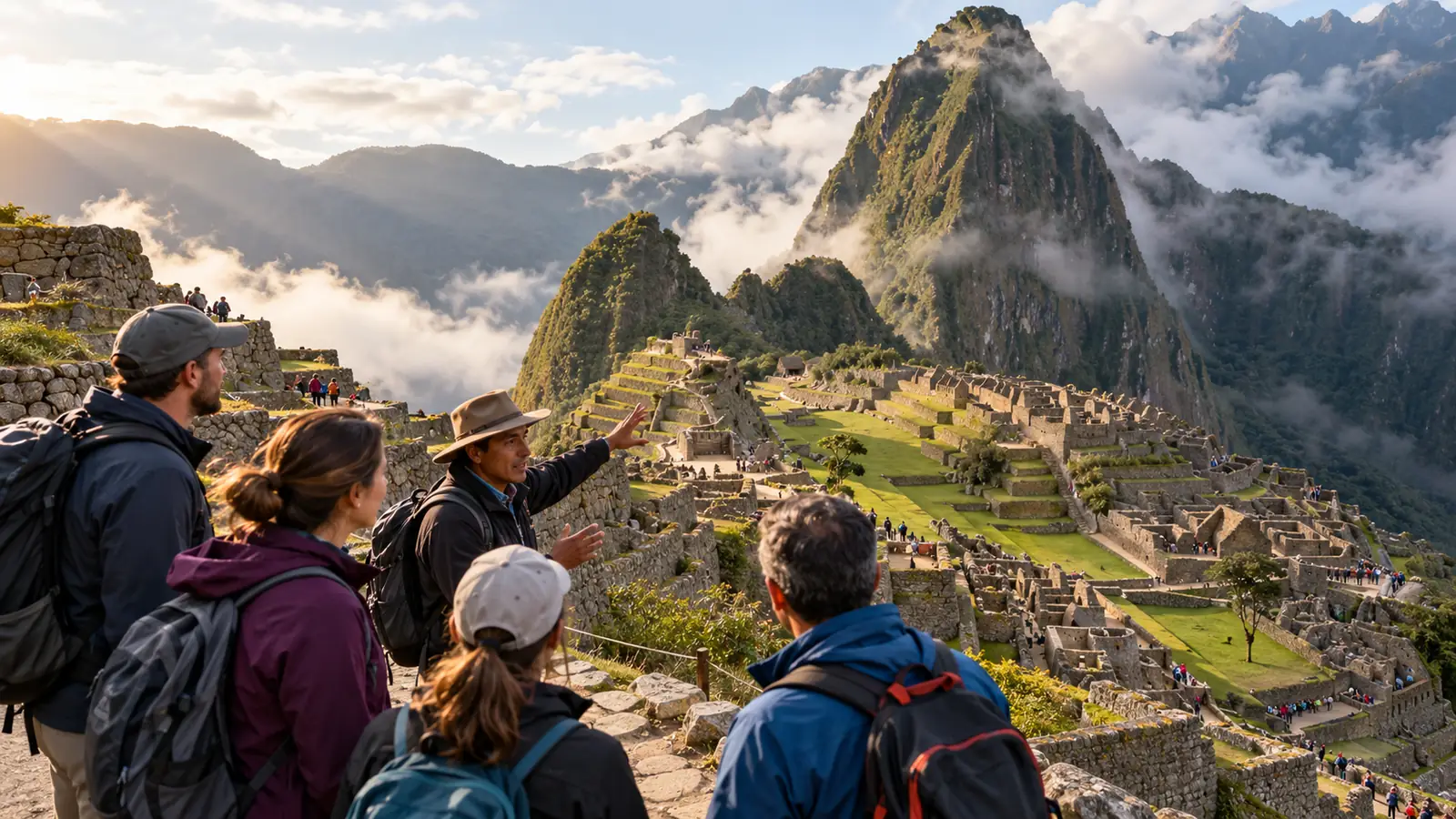
Machu Picchu should usually be the first limited-capacity element secured. Entry tickets are sold for a specific date, time and circuit. Use the official government platform, confirm that every traveler’s details match the passport that will be carried, and read the conditions for the selected route before buying rail, hotel and lodge services.
Popular dates can sell well ahead, and the Ministry of Culture opens sales on an announced calendar. Do not depend on last-minute availability or unofficial sellers. If the preferred circuit is unavailable, evaluate the remaining route carefully rather than assuming every ticket produces the same visit.
A well-paced Sacred Valley and Machu Picchu two-day tour uses the Sacred Valley and Aguas Calientes as part of the route instead of forcing a very long same-day return from Cusco. Active travelers can consider the two-day Inca Trail, but permits and physical preparation add another fixed element to the itinerary.
Allow time to adjust to altitude
Cusco is at high elevation, and travelers react differently. Keep the first day light, hydrate normally, eat modest meals and avoid scheduling a demanding hike immediately after arrival. The Sacred Valley sits lower than Cusco and can be a comfortable place to begin, but it is still an Andean environment.
Anyone with a heart, lung or other relevant medical condition should obtain individualized advice before travel. Seek local medical care for severe or worsening symptoms. A jungle stay after Machu Picchu does not compensate for rushing the first days at altitude.
A balanced 9-day Machu Picchu and Amazon itinerary
This is a planning framework, not a promise of transport times. Confirm every connection for the actual date.
- Day 1 – Arrive in Cusco or the Sacred Valley: Transfer, rest and keep activity gentle.
- Day 2 – Sacred Valley: Explore at a moderate pace and prepare a small overnight bag.
- Day 3 – Travel toward Machu Picchu: Visit the valley en route, take the train and stay in Aguas Calientes.
- Day 4 – Machu Picchu: Enter at the reserved time with the correct ticket and return toward the Sacred Valley or Cusco.
- Day 5 – Buffer and transition: Rest, reorganize luggage and position for the flight or overland connection.
- Day 6 – Amazon gateway and lodge: Fly or transfer to Puerto Maldonado, then continue by road and river according to the lodge schedule.
- Days 7–8 – Rainforest: Join dawn, daytime and evening activities with a naturalist guide.
- Day 9 – Return: Leave the lodge for the gateway and continue only on a connection with a safe margin.
This version is compact. It works best with Puerto Maldonado and a lodge whose scheduled transfer matches the flight. It leaves little room for international arrival disruption, so add a Lima night or another buffer when tickets are separate or the onward flight is critical.
A more comfortable 11- or 12-day plan
Extra days improve the trip more than filling every day with another attraction:
- Days 1–3: Cusco and the Sacred Valley with gradual acclimatization.
- Days 4–5: Aguas Calientes and Machu Picchu without a rushed round trip.
- Day 6: Flexible Cusco day for weather, laundry, luggage and connection protection.
- Days 7–10: Four-day Amazon program with three lodge nights.
- Days 11–12: Return through Lima, with a final buffer before the international departure if needed.
Four Amazon days normally provide a better balance than a compressed two-night stay because the access journey consumes part of the first and last days. The guide to how many days to spend in the Peruvian Amazon compares realistic activity time.
Plan the Andes-to-Amazon transition carefully
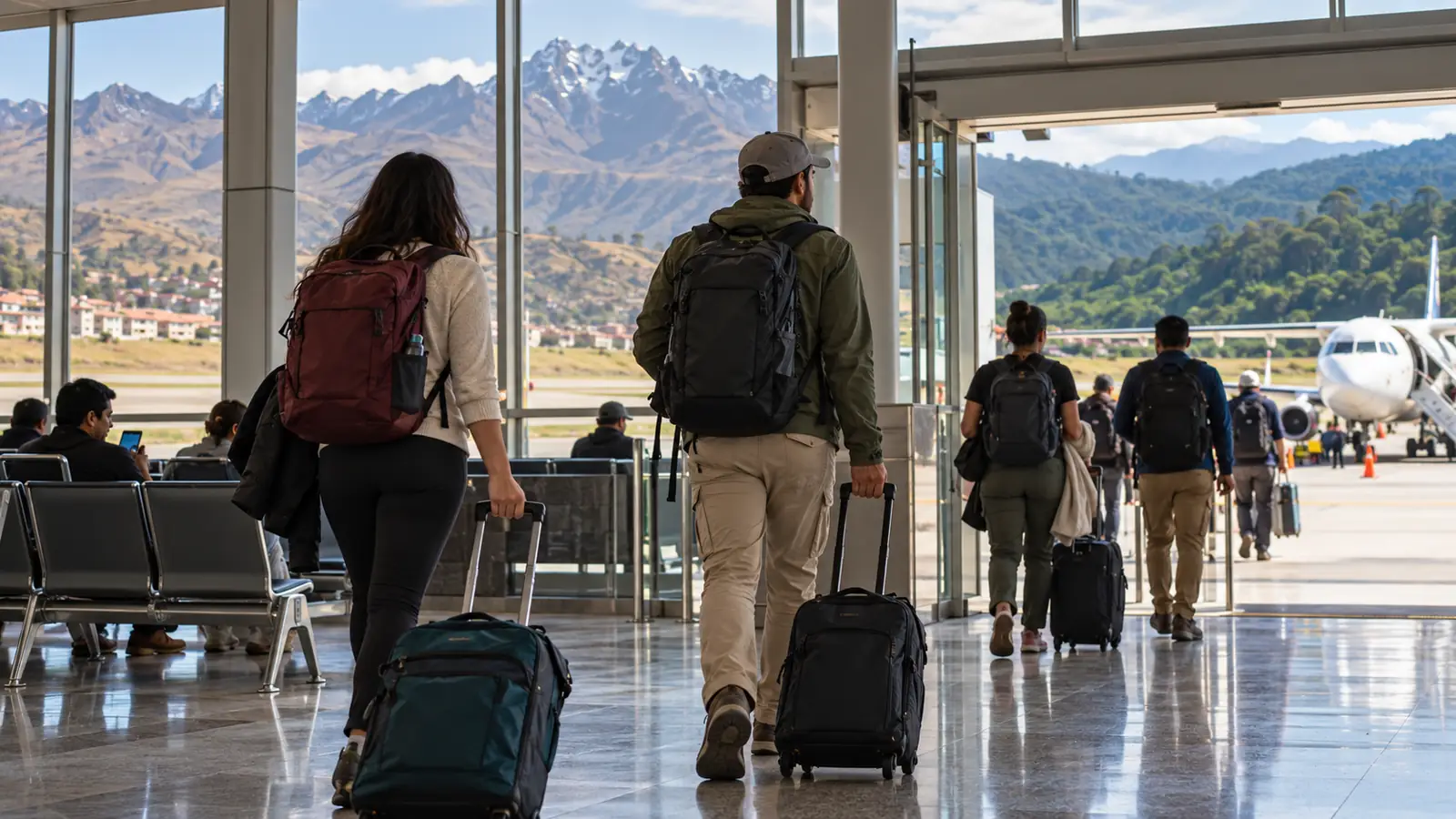
The transition day is the weakest point in many combined itineraries. Machu Picchu involves a chain of bus, train and road segments before reaching Cusco or the Sacred Valley. An Amazon lodge may use one scheduled boat that waits for specific arrivals. Placing both chains on the same day creates multiple failure points.
For Puerto Maldonado, check whether the live flight and lodge pickup allow a protected connection from Cusco. If not, stay overnight and depart the following day. For Iquitos, search the complete route for the date; a connection through Lima may be necessary. Airlines change frequencies, so a timetable copied months earlier is not reliable.
Ask the lodge where pickup begins, the latest acceptable arrival, and what happens after a delay. Also confirm whether the final-day transfer reaches the airport early enough for the chosen flight. Buy separate tickets only after considering baggage collection, terminal procedures and the fact that one supplier may not protect the next segment.
Puerto Maldonado and Tambopata after Machu Picchu
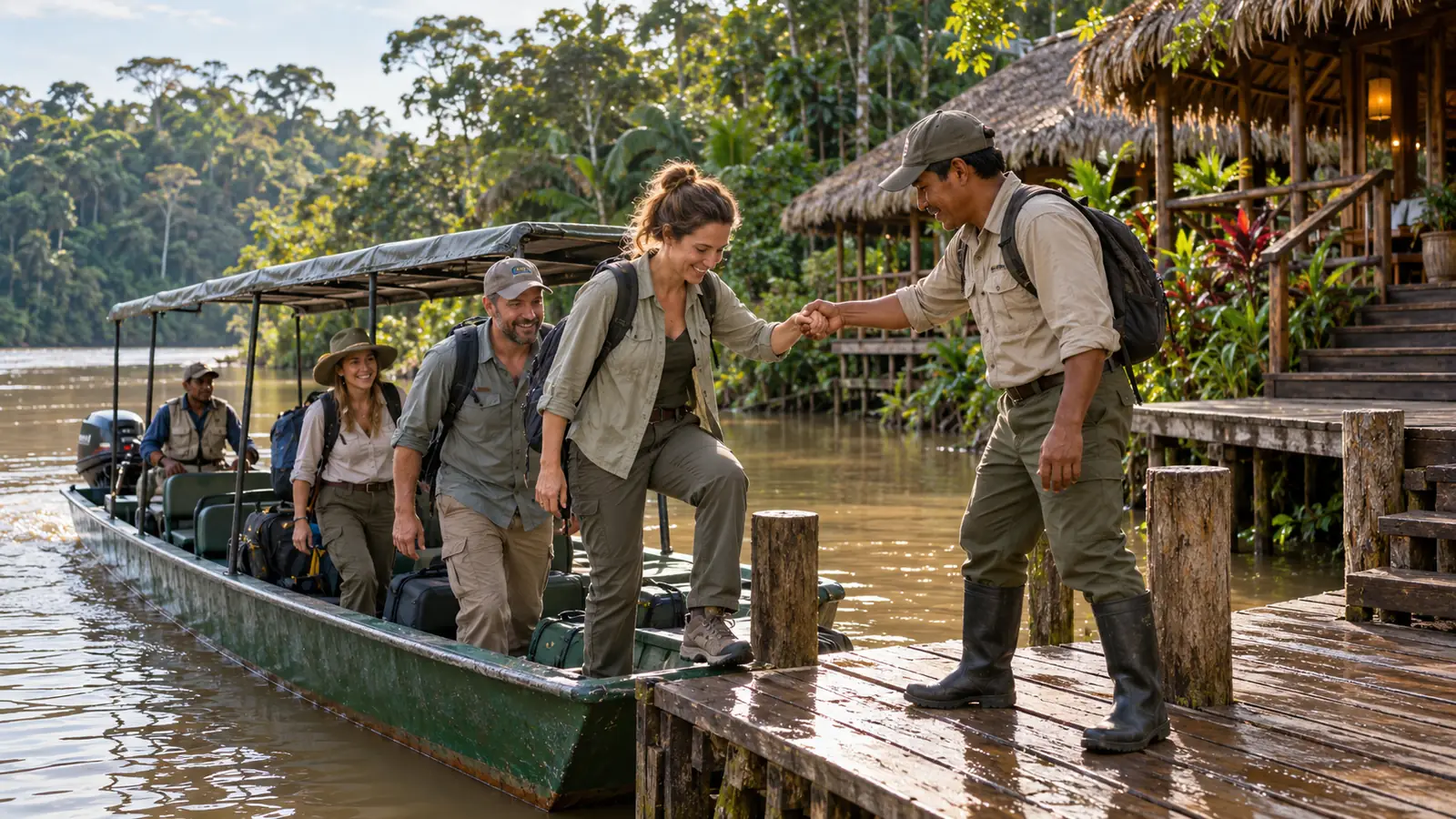
This is the simplest geographic pairing for many travelers. After returning from Machu Picchu, spend a night in Cusco, take a date-appropriate flight or planned land connection to Puerto Maldonado, and meet the lodge team. Depending on the property, the remaining route can include road travel and a motorized riverboat.
The Ecological Puerto Maldonado three-day tour offers a compact introduction with transfers, bungalow accommodation, meals and guided activities described on its current page. The Tambopata National Reserve three-day tour is oriented toward reserve access and includes land and river logistics according to its current itinerary.
Choose by habitat, access time, group size and excursion style rather than by the word “eco” alone. Wildlife remains wild; no responsible operator can guarantee a particular species. The Peruvian Amazon wildlife guide explains what affects sightings.
Iquitos after Machu Picchu

Iquitos delivers a distinct northern Amazon setting and access by river rather than road from the rest of Peru. It can be combined with Machu Picchu, but the air journey often determines whether it fits comfortably. Search Cusco–Lima–Iquitos and other available combinations as one dated trip, and allow a buffer if separate tickets are used.
The Amazonas Sinchicuy Lodge three-day tour currently combines Iquitos-area transfers, river transport, lodge nights, meals, a guide and programmed excursions. It suits travelers whose priority is the Iquitos river environment and who accept the additional positioning required from southern Peru.
Do not add Iquitos merely to collect another destination. If the trip is under ten days, one well-chosen southern lodge generally protects more time for nature. Iquitos becomes more compelling with sufficient days or a wider northern Peru route.
Pack for two climates without carrying two suitcases
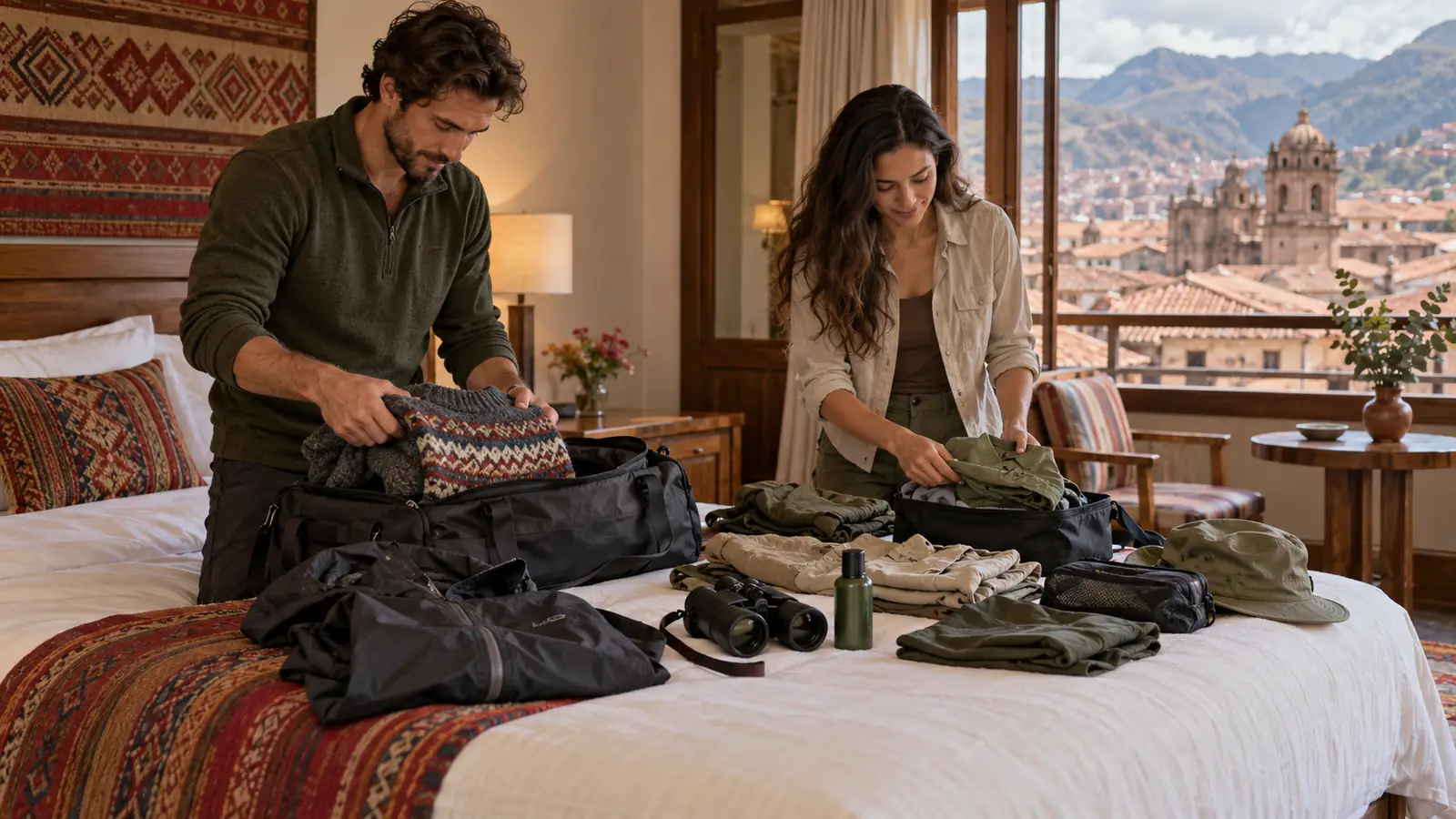
Andean mornings can be cool, while the lowland rainforest is warm, humid and wet. Use layers rather than bulky single-purpose clothing. A breathable base, fleece or light insulating layer, rain shell, sun protection and comfortable walking shoes cover the Andes. For the Amazon, add quick-drying long sleeves and trousers, insect protection, a brimmed hat and a dry solution for electronics.
Many rail services and lodge transfers have practical luggage restrictions. Leave the main suitcase securely at the Cusco hotel when permitted and use a compact soft bag for Machu Picchu. Repack before the jungle section rather than carrying unnecessary cold-weather gear into the forest. Confirm each operator’s current baggage rules; they are not identical.
Use the complete Peruvian Amazon packing list for clothing, medicines, documents and electronics. Carry essential medicine and one change of lightweight clothing in hand luggage in case a checked bag is delayed.
When is the best time for both destinations?
There is no month that guarantees clear Machu Picchu views and dry Amazon weather. The Andes and rainforest have different local conditions, and rain is possible in every season. Drier Andean months are popular and can mean stronger demand for Machu Picchu, trains and lodges. Wetter periods can bring greener landscapes and changing river or trail access.
Choose dates around the activity most sensitive to conditions, then accept normal tropical variability. The best time to visit the Peruvian Amazon explains rainfall, river levels, heat and wildlife behavior without labeling one season universally best.
How much should you budget?
Price the journey in modules: international arrival, Lima buffer if needed, Cusco hotels, Sacred Valley services, Machu Picchu ticket, rail and bus, Amazon flight, lodge package, insurance and final connection. A lodge quote may include meals, guides and river transport but exclude flights, tips, bar drinks and personal expenses.
Compare like with like. A remote lodge can cost more because it requires longer boat travel and more complex operations. A cheaper headline rate may exclude entrance or transfers. The Peruvian Amazon trip cost guide provides a durable worksheet instead of a price that will soon be outdated.
Health, safety and responsible planning
Discuss vaccines, mosquito-borne disease prevention and personal medication with a qualified travel-health professional early enough for recommendations to take effect. Advice varies by region, season, age and medical history. Use repellent as directed, wear protective clothing and follow lodge guidance.
Travel with an authorized operator, keep valuables discreet, use provided flotation equipment and never approach or feed wildlife. Tell the guide about allergies, mobility limits and relevant health concerns. Review the Peruvian Amazon safety guide for transport, insects, food, water and emergency preparation.
Common planning mistakes
- Buying flights before confirming Machu Picchu entry and circuit.
- Assuming a direct flight operates every day or throughout the year.
- Returning from Machu Picchu and joining a lodge boat on the same tight day.
- Choosing two Amazon regions in a short trip instead of one stronger stay.
- Ignoring lodge transfer times when counting rainforest days.
- Packing a rigid large suitcase for rail and boat segments.
- Scheduling strenuous activity immediately after reaching Cusco.
- Connecting from a remote lodge directly to an international departure.
Booking checklist
- Choose the Amazon region and realistic total trip length.
- Check passport validity and entry requirements for your nationality.
- Secure the official Machu Picchu date, time and circuit.
- Confirm rail, hotels and guided arrangements around that entry.
- Search live flights and match them to the lodge’s scheduled transfers.
- Obtain written inclusions, exclusions and cancellation terms.
- Add transition and international-departure buffers.
- Arrange insurance and personalized health advice.
- Recheck all schedules shortly before travel.
Frequently asked questions
How many days do I need for Machu Picchu and the Amazon?
Nine days is a compact minimum for a sensible two-day Machu Picchu section and a three-day Amazon program. Eleven or twelve days allow better acclimatization, a four-day lodge stay and safer transport buffers.
Is Puerto Maldonado or Iquitos easier after Cusco?
Puerto Maldonado usually creates the simpler southern Peru sequence, subject to the flight operating on your date. Iquitos offers a different northern river experience but often requires positioning through Lima.
Can I fly directly from Cusco to the Amazon?
Routes vary by date and season. Search a live airline or booking system for the exact travel day and coordinate the result with the lodge transfer. Do not build the trip around an undated timetable.
Should I visit the Amazon before Machu Picchu?
You can, especially if flight availability favors Iquitos first. Machu Picchu first is often easier because its entry is the fixed reservation and the southern Amazon follows naturally from Cusco.
Can I do both in one week?
It is technically possible only with ideal connections, but it sacrifices acclimatization, usable rainforest time and disruption protection. Add days or choose one region for a better trip.
Do I need separate bags?
A compact soft bag is useful for Machu Picchu and lodge transfers. Store the main suitcase at an agreed hotel when possible and verify current rail, airline and lodge baggage limits.
Which part should I book first?
Start with official Machu Picchu availability, then align rail and accommodation, and finally confirm the Amazon package and flights as one protected sequence.
Editorial sources
Machu Picchu ticket guidance was checked against the official Machu Picchu ticket platform and the Peruvian Ministry of Culture’s 2026 sales announcement. Tour structures and inclusions were checked against current Explora el Peru Machu Picchu, Iquitos, Puerto Maldonado and Tambopata pages. Transport schedules and inclusions can change; verify the live booking documents for the actual travel date.