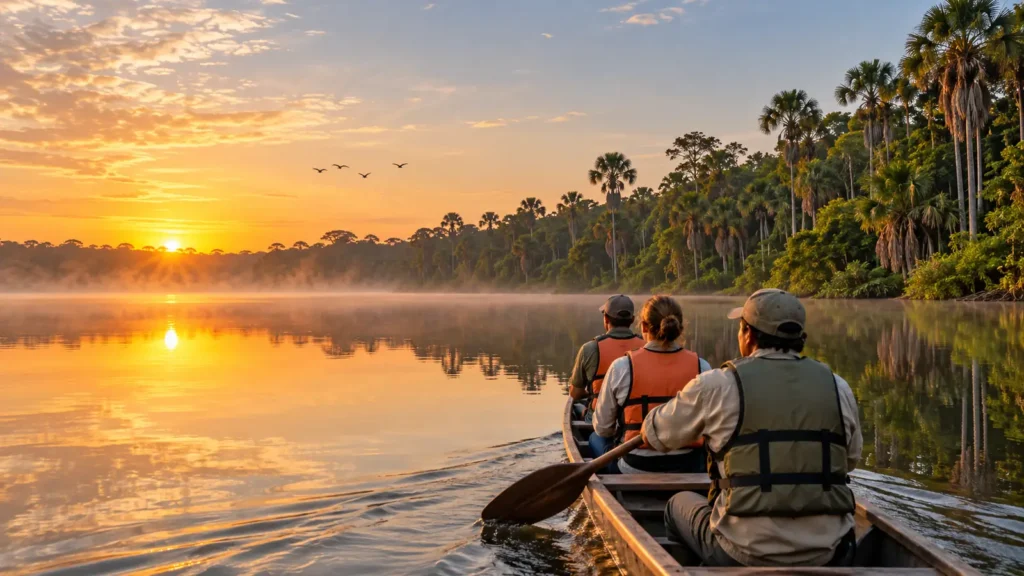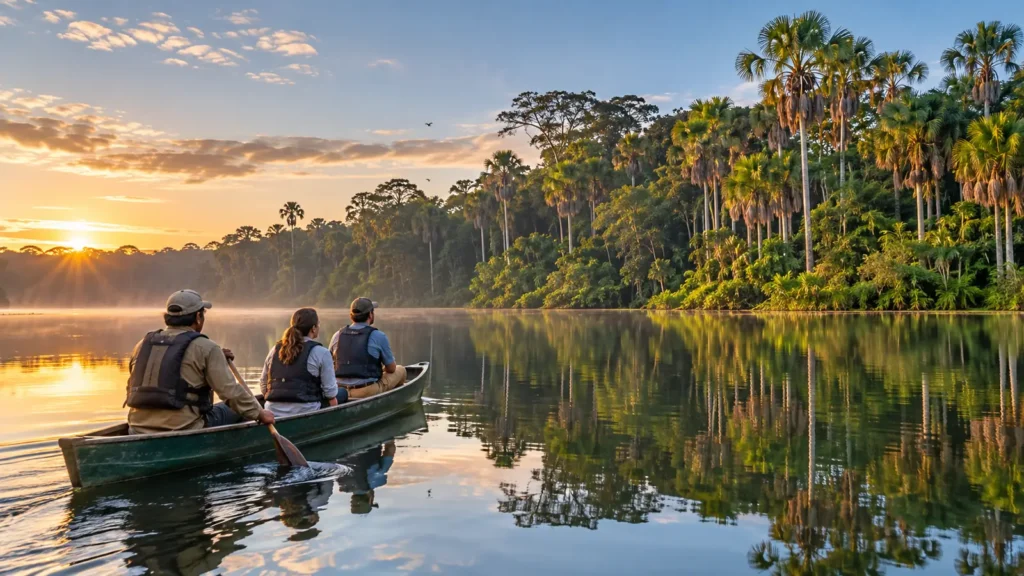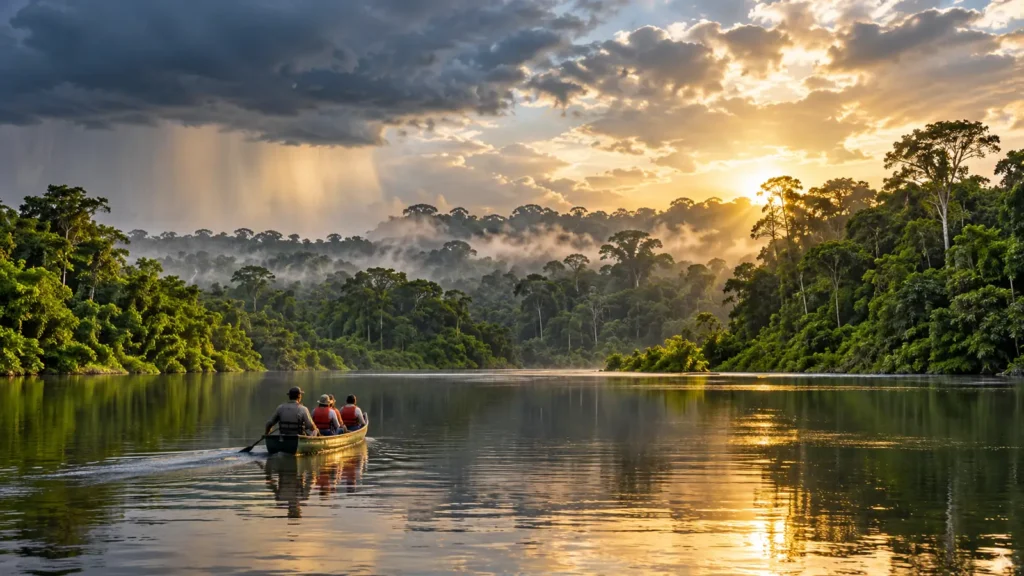

The choice between Iquitos high water vs low water is not about a good season and a bad season. High water favors canoe access through flooded forest and a viewpoint closer to mid-level branches. Low water exposes beaches and riverbanks, opens more ground for walking and concentrates some activity around remaining channels. Wildlife exists year-round, but the routes, habitats and viewing angles change.
High water and rainy season are related, not identical
Rain in Iquitos contributes to changing rivers, but the level beside a lodge reflects water moving through a much larger basin. A storm does not instantly create high water, and a sunny week does not instantly create low water. Main rivers, tributaries, oxbow lakes and floodplain forest can also rise or fall at different rates.
For trip planning, use four flexible phases: rising, higher, falling and lower water. Calendar labels are only a first filter. The best time to visit the Iquitos Amazon explains the broader month-by-month weather pattern; this guide focuses on the experience you receive at each water level.
Iquitos high water vs low water at a glance
| Decision factor | High water | Low water |
|---|---|---|
| Signature experience | Paddling among flooded trees | Walking exposed banks, beaches and longer trails |
| Forest access | More water-only channels may open | Some shallow channels may close |
| Walking | Some trails are shortened or submerged | More ground is often available, though mud remains |
| Viewing perspective | Boat can sit closer to branches above the flooded floor | Observation from trails, sandbars and river edges |
| Weather tendency | Often wetter, but not continuous rain | Often relatively drier, never rain-free |
| Best fit | Canoe lovers, families favoring less walking, flooded-forest photography | Hikers, beach scenery, riverbank birding and terrestrial exploration |
What high-water season feels like

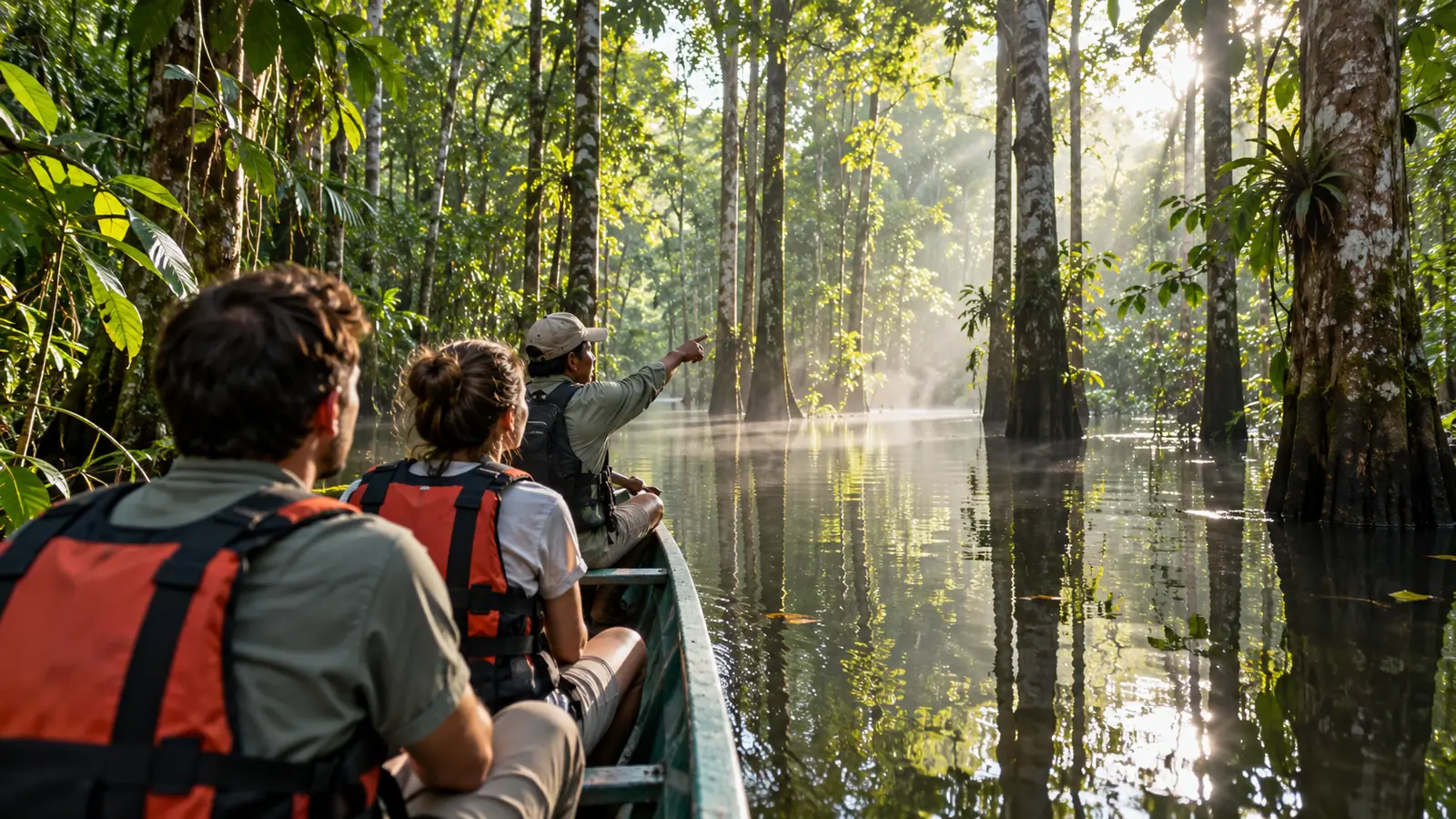
During high water, rivers spread into low floodplain forest. Guides can paddle between trunks and follow channels that are inaccessible when the river falls. The water raises the boat closer to foliage, giving travelers a different perspective on epiphytes, birds and movement in the mid-level forest.
Excursions tend to be more boat- or canoe-focused. Walking does not disappear, but the lodge may use higher trails, boardwalks or alternative sites. Travelers should be comfortable stepping into small craft, remaining seated and wearing a life jacket. A dry bag becomes more useful than a traditional daypack.
High water does not guarantee calm navigation. Current, floating debris, heavy rain and visibility influence route choice. Nor does it guarantee a wildlife sighting: habitat access improves in some places while animals may be dispersed across a larger flooded area.
What low-water season feels like
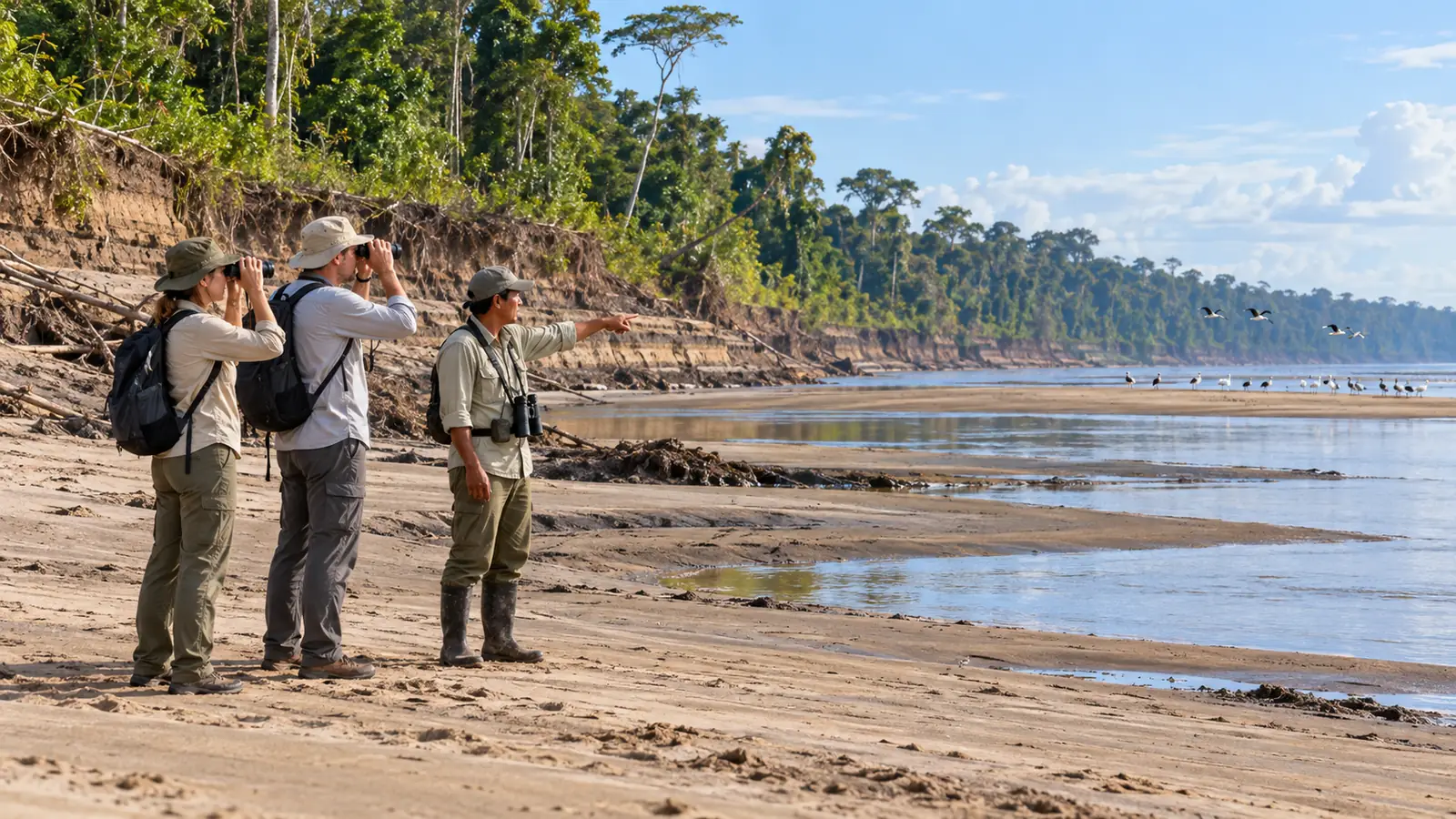
As the river recedes, sandbars, beaches and steep layers of riverbank appear. More terrestrial routes may become usable, allowing longer walks through forest that was previously reached by canoe. Open banks can create useful sightlines for waterbirds and reptiles when observed from a respectful distance.
Low water may require boats to stay within deeper channels. A creek or lake shown in a sample itinerary can become too shallow, so the guide may substitute a trail or different waterway. Stronger sun exposure on open sand and water makes a hat, drinking water and sunscreen important.
“Low water” does not mean dry ground everywhere. Rain still falls, humidity remains high and shaded trails can be muddy. The useful distinction is that more land is exposed—not that the rainforest becomes a dry destination.
Which season is better for wildlife?
Neither season wins for every species. Water level changes where animals feed, rest and travel, and it changes how visitors can reach them. Guide quality, habitat variety, group size, observation time and luck often matter more than a calendar label.
High water can improve access to flooded habitat and move boats closer to canopy-level branches. Low water can expose banks, concentrate fish in reduced channels and create open spaces used by birds. Monkeys, sloths, caimans, dolphins and macaws remain wild; responsible operators do not guarantee them.
Use the Peruvian Amazon wildlife guide to match animals with habitats rather than expecting a checklist from one excursion.
River dolphins in high and low water
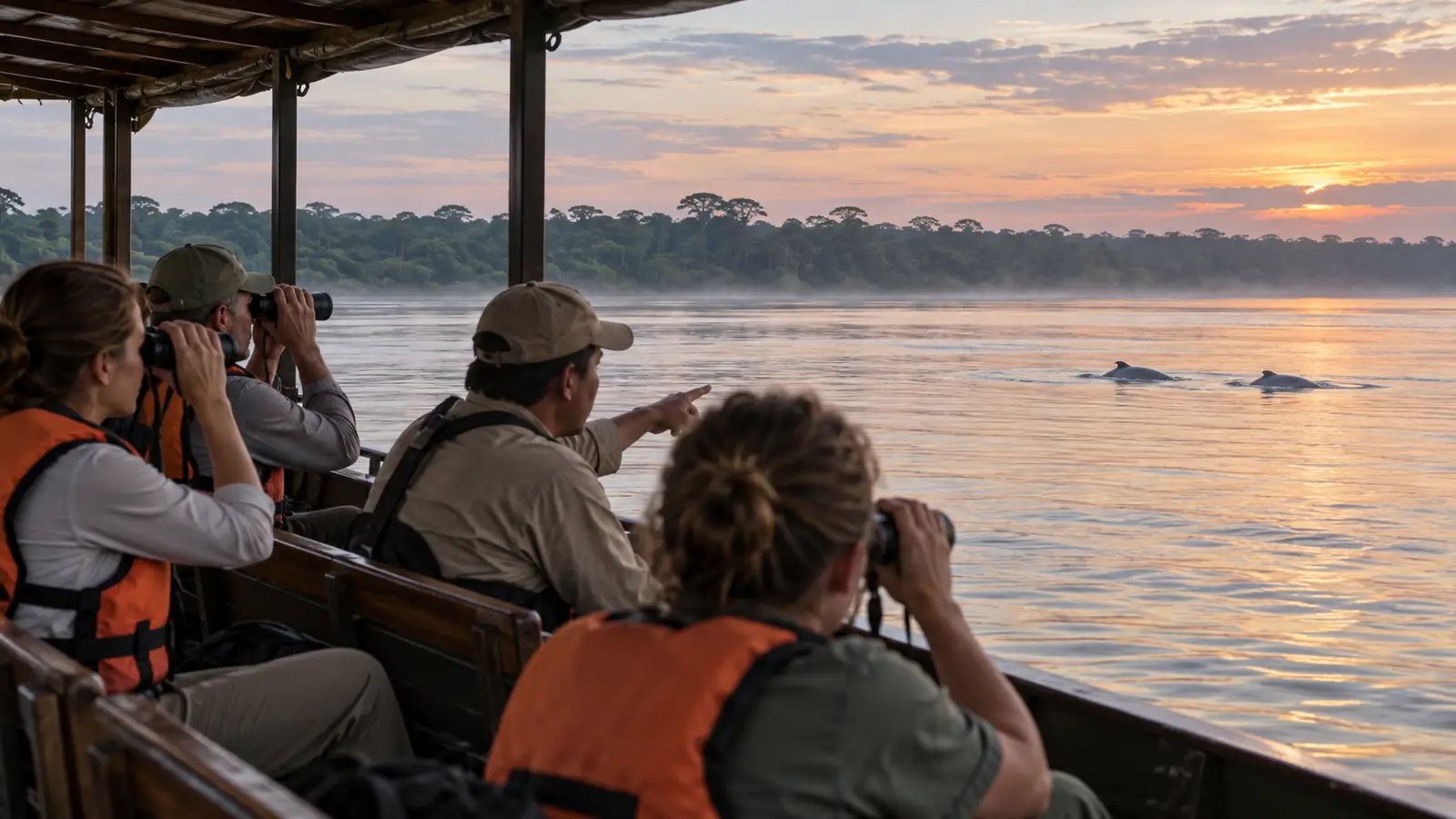
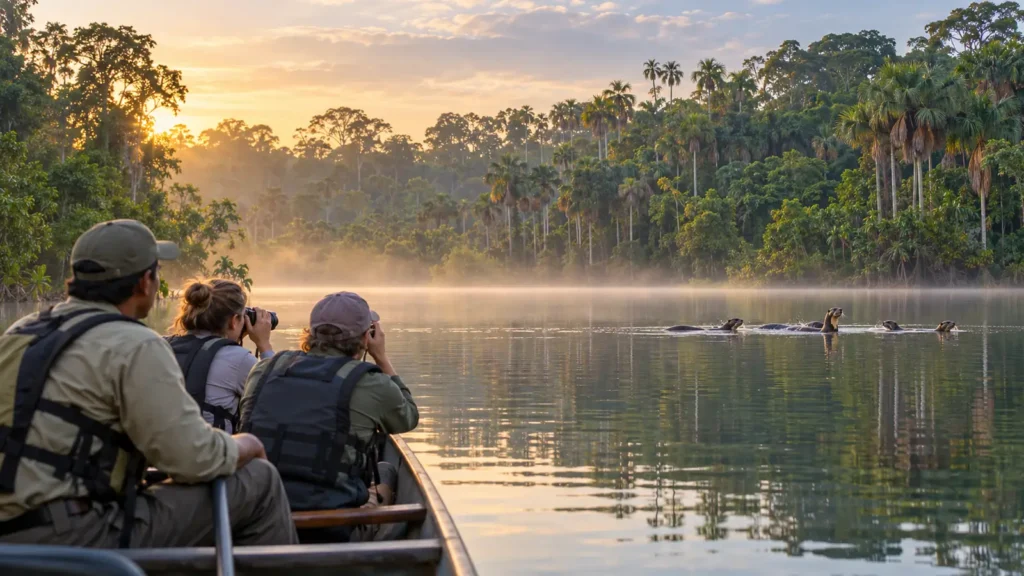
Pink and gray river dolphins can occur around Iquitos throughout the year. During high water they may spread into connected channels and flooded areas. During lower water, movement may be more concentrated along navigable rivers and confluences. These tendencies do not create a guaranteed viewing month.
The best encounter is calm and distant. Remain seated, let the guide choose a safe position and avoid feeding, swimming toward or surrounding dolphins. Photographers should use a moderate telephoto lens and anticipate brief surfacing rather than asking a boat to chase animals.
Which level is better for walking?

Low or falling water generally offers more ground-based possibilities. Trails can extend farther, exposed banks connect landing points and guides may explore habitats unavailable at the water peak. This suits active travelers who want plant interpretation, tracking and longer forest walks.
High water suits travelers who prefer to explore by canoe, but it is not automatically easier. Boarding small boats requires balance, docks can be steep and long periods seated may affect backs or knees. Discuss mobility needs with the lodge instead of assuming one season is accessible for everyone.
Which level is better for photography?
High water provides reflections, flooded trunks and a boat-level view into leafy branches. It is excellent for atmospheric forest compositions, although humidity and frequent showers demand careful equipment protection. A stable canoe and small group matter.
Low water provides layered banks, beaches, wider views and potential bird activity along open edges. Midday contrast can be harsh, so dawn and late afternoon are valuable. Dust, sand and sudden rain can coexist; keep equipment protected in either season.
Choose based on desired perspective, not a promise of more animals. Add enough nights to create several dawn and evening windows.
Rain, heat and insects
Both seasons are warm and humid. Higher water often overlaps with wetter conditions, while lower water often overlaps with relatively drier months. Neither removes tropical rain. Short intense showers can occur during a supposedly dry period, and bright intervals can appear in the wetter months.
Mosquito pressure varies with habitat, time of day, recent weather and local conditions. Do not rely on the idea that one water level is mosquito-free. Wear light long clothing when practical and use repellent according to its instructions. Consult a qualified travel-health professional about personal prevention.
How water level affects lodge transfers
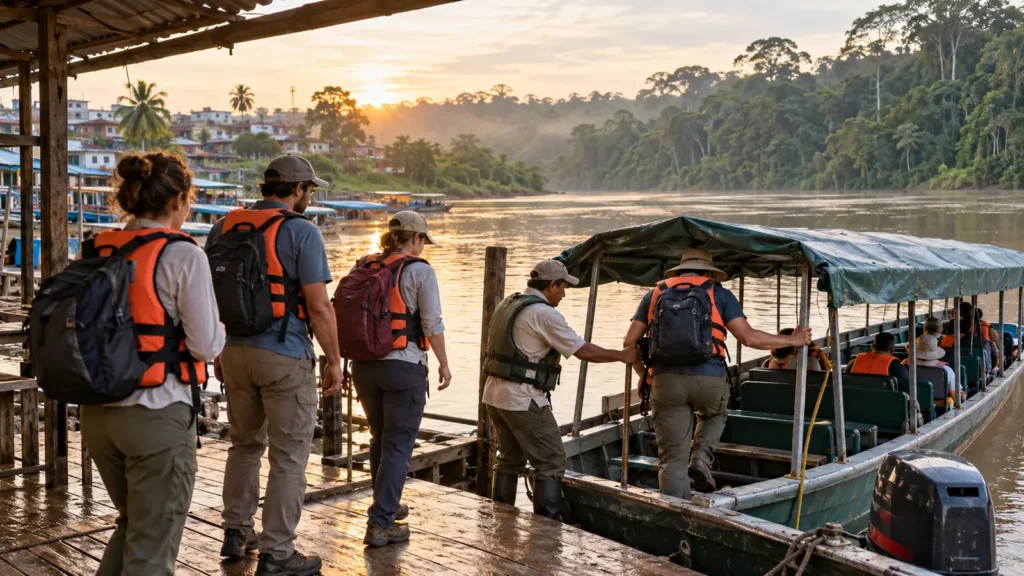
Higher water may open tributaries and move landing points closer to the forest. Lower water can expose steps, steep banks or shallow approaches and may require a different dock. On the main river, current and weather still affect journey time.
Ask for the current—not only typical—route. The guide on how to get to Iquitos and reach an Amazon lodge explains how to coordinate flights, ports and boats without risking a tight onward connection.
Pacaya Samiria: apply the comparison to the exact basin
SERNANP identifies October through April as the reserve’s rainy season and May through September as its recommended visiting period. That official framework is useful, but Pacaya Samiria covers an immense wetland landscape. Water conditions and access differ among the Yanayacu Pucate, Samiria and Pacaya sectors.
High water emphasizes flooded-forest navigation; falling and lower water expose different banks and walking areas. Ask the authorized operator which basin, checkpoint and habitats the itinerary uses. A general promise about “Pacaya Samiria in August” is less informative than a current report from the actual route.
Transition periods may offer the most variety
Rising and falling phases can combine features of both extremes. A channel may still be navigable while an exposed bank has begun to form, or a trail may reopen while water remains high enough for canoe access. This can create diverse days.
The tradeoff is uncertainty. Routes can change quickly, and a sample itinerary may require substitutions. Flexible travelers often enjoy these periods; travelers with one non-negotiable activity should obtain a recent operational update.
Best choice by traveler type
- First-time visitor: either level works; prioritize a good guide, varied habitats and enough nights.
- Canoe enthusiast: choose high water and verify that flooded-forest channels are part of the lodge’s route.
- Hiker: choose falling or low water for a better chance of longer terrestrial outings.
- Family: compare boat length, child-sized life jackets, activity flexibility and room screening before season.
- Birder: decide between canopy access at high water and open-bank observation at low water; request a specialist guide.
- Photographer: choose reflections and flooded forest at high water or exposed landscapes at low water, then keep the group small.
- Traveler with limited mobility: ask about docks, steps, boat entry and trail surfaces for the current level.
What to pack for each water level
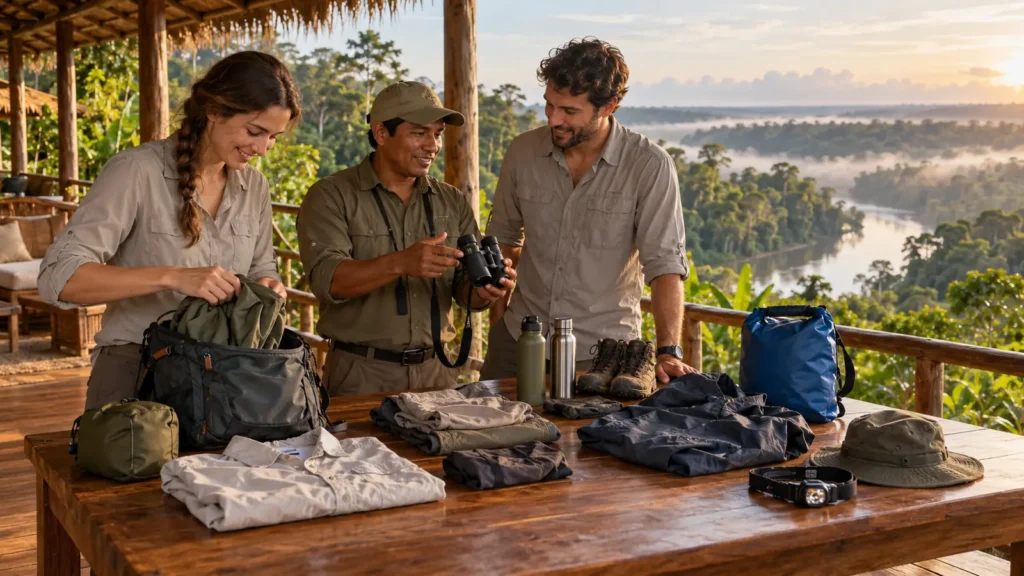
For high water, prioritize a reliable dry bag, rain shell or poncho, quick-drying clothing and shoes that can handle wet landings. For low water, add strong sun protection, a refillable bottle and footwear suited to sand, roots and residual mud.
In both cases bring long sleeves and trousers, insect repellent, hat, headlamp, binoculars and waterproof protection for documents and electronics. Review the complete Peruvian Amazon packing list instead of packing only for the season label.
Plan for changes, not a fixed wildlife script
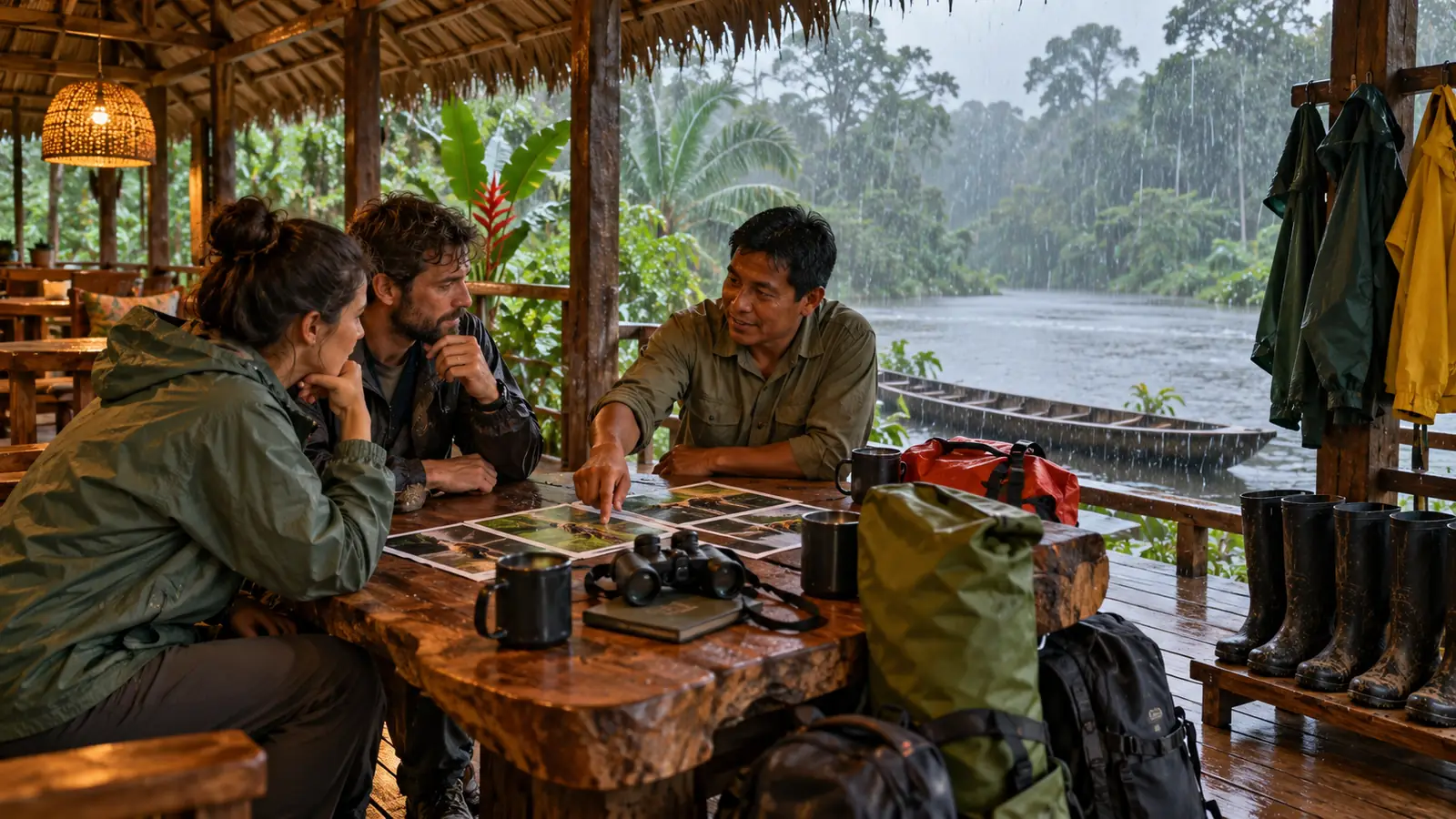
A strong lodge adapts to the river each day. A guide may replace a shallow creek with a forest walk, delay a canoe outing during lightning or move wildlife observation to a productive confluence. Safe substitution is expertise, not a failed itinerary.
Ask what alternatives exist if the featured route is unavailable. On a short stay, one storm or transfer delay has more impact; compare the three-day Iquitos itinerary option with the guide to how many days you need in the Amazon.
Current Iquitos lodge option
The Amazonas Sinchicuy Lodge three-day tour starts and ends in Iquitos and includes land-and-river transfers, two lodge nights, meals and guided activities. Its live itinerary notes that the Yaguacocha Lake visit depends on season. Confirm which canoe routes, walks and waterways are operating for your dates rather than expecting every listed stop.
For a wider comparison of northern and southern rainforest travel, read Iquitos or Tambopata. The complete Iquitos travel guide and the main Peruvian Amazon rainforest guide connect the rest of the cluster.
Questions to ask before booking
- What is the river level doing now: rising, high, falling or low?
- Which channels, lakes and trails operated during the previous week?
- How much daily time is by canoe, motorboat and on foot?
- What activity replaces the main route if depth or weather makes it unsafe?
- Are life jackets available in the correct sizes?
- How are cameras and luggage kept dry?
- Does the itinerary enter a protected area, and is the operator authorized?
Compare inclusions and seasonal logistics with the Peruvian Amazon trip cost guide, and review the practical precautions in is the Peruvian Amazon safe?
Frequently asked questions
What months are high water in Iquitos?
Higher water is generally associated with the wetter first part of the year, but the peak shifts by year, river and tributary. Ask the lodge for current conditions rather than relying on one fixed month.
What months are low water?
Lower water commonly develops during the relatively drier middle and later part of the year. Timing and severity vary, and rain remains possible.
Is high water dangerous?
Not inherently when a qualified operator uses suitable boats, flotation equipment and conservative decisions. Current, storms and debris still require professional judgment.
Is low water better for mosquitoes?
Not reliably. Insect activity depends on local habitat, weather and time of day. Use protection during every season.
Can I see pink dolphins in both seasons?
Yes, dolphins may occur year-round, but their distribution and the boat’s access change. No ethical operator can guarantee a sighting.
Will low water cancel my lodge trip?
Usually it changes the landing, channel or activity rather than canceling the entire stay. Extreme conditions can cause larger disruptions, so confirm the contingency plan.
Which is better for a first Amazon trip?
Choose high water for flooded-forest canoeing or low water for more walking. If neither preference is strong, book the dates that allow a better lodge, guide and longer stay.
Editorial sources
Protected-area seasonality was checked against the official SERNANP Pacaya Samiria visitor page. Current product details were checked against Explora el Peru’s live Sinchicuy Lodge page. Water levels, routes and wildlife activity vary by basin and date; confirm actual conditions with the operator.