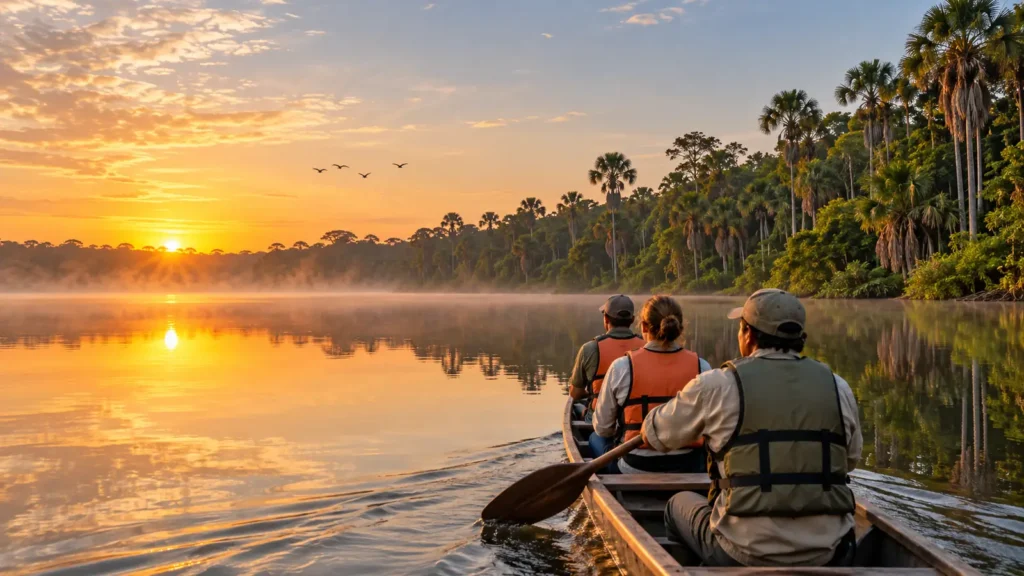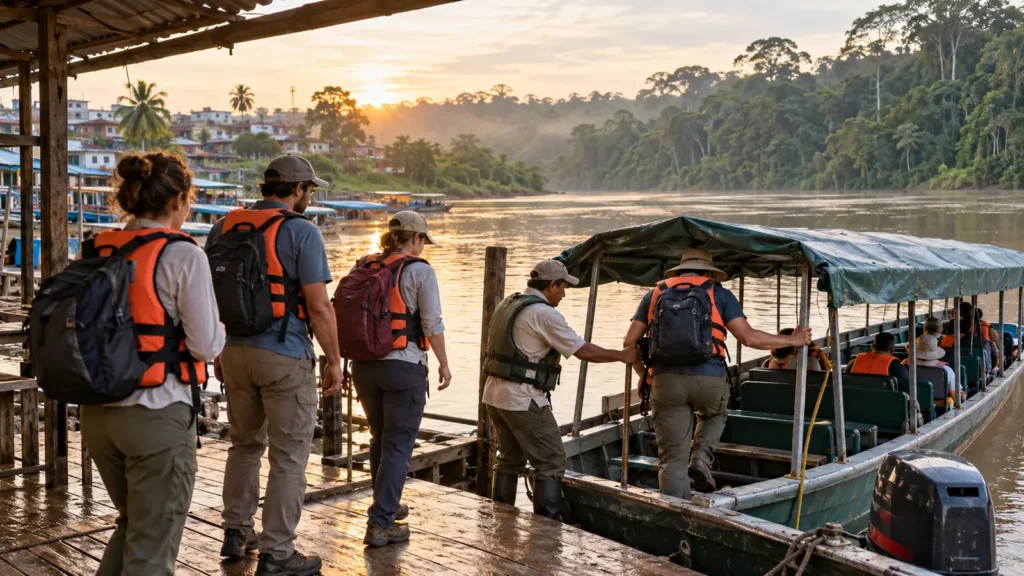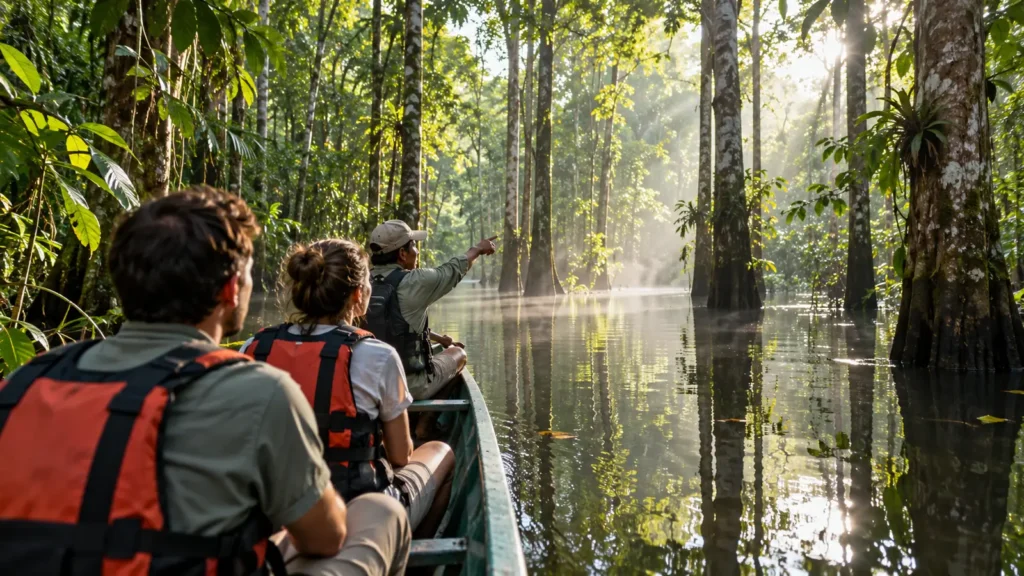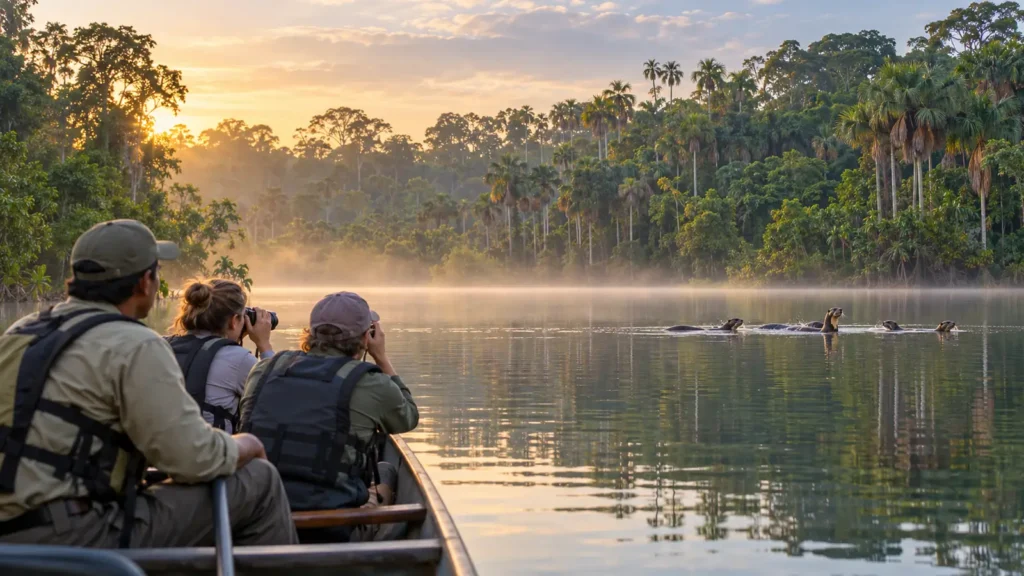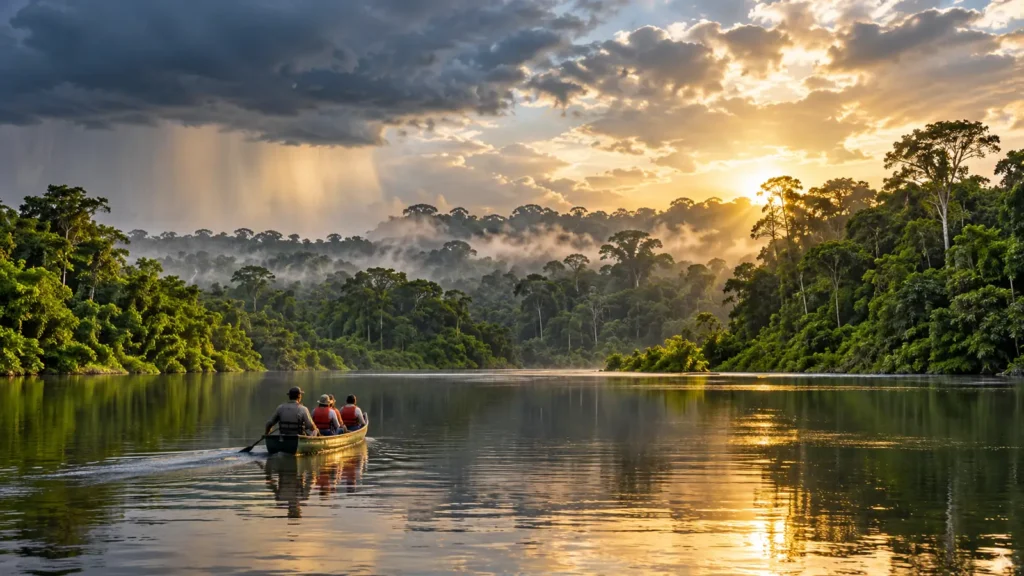
The best time to visit Tambopata for easier trails and a lower chance of prolonged rain is generally May through October. Tambopata National Reserve lists these months as its recommended season and identifies December through March as the rainy season. However, the rainforest remains humid all year, wildlife is never guaranteed, and the wetter months can reward flexible travelers with lush scenery, active waterways and fewer visitors.
Tambopata weather is tropical all year
Tambopata lies in Madre de Dios in southeastern Peru. Conditions are normally warm and humid, with rain possible in every month. “Dry season” means relatively less rain; it does not mean cloudless days, dust-free trails or zero storms.
The official reserve page describes a broad temperature range and an annual average around 26°C. Travelers should prepare for heat during open-river travel, humidity on forest walks and occasional cool spells. The complete Tambopata travel guide explains how the reserve’s sectors, rivers, lakes and lodges shape the experience.
Dry season vs rainy season at a glance
| Travel factor | Relatively dry season | Rainy season |
|---|---|---|
| Typical period | May–October | December–March |
| Trails | Often firmer and easier to walk | Muddier, slippery and sometimes rerouted |
| Rain | Still possible, including heavy showers | More frequent and sometimes prolonged |
| River travel | Lower levels may alter landings or shallow routes | Higher water can change current and access |
| Landscape | Clearer intervals and easier hiking | Very green vegetation and dramatic clouds |
| Best fit | First visits, hikers, short itineraries, photographers seeking more clear mornings | Flexible travelers, repeat visitors and people comfortable with rain |
May to October: the recommended travel window
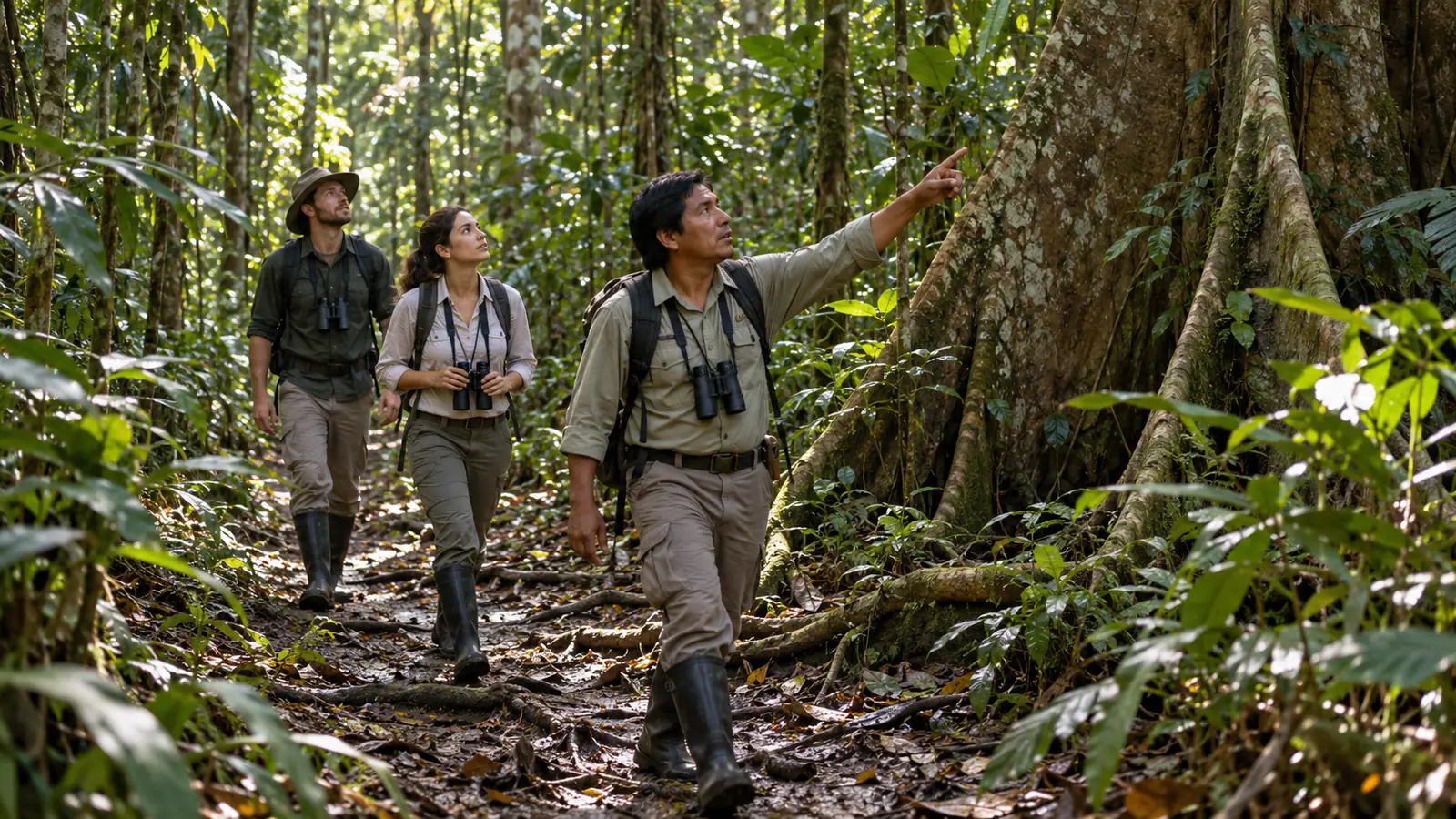
SERNANP identifies May through October as Tambopata’s recommended visiting season. Rainfall generally eases compared with the wettest months, and trails often become more manageable. This benefits itineraries built around forest walks, canopy structures, oxbow-lake access and early departures.
These months are not uniform. May can retain moisture from the rainy period, while September and October may become hotter as the next wet cycle approaches. A storm can still arrive at any time. Pack rain protection even when forecasts show several clear days.
Availability may tighten during international vacation periods and Peru’s busier travel season. Reserve preferred lodges and specialist guides early, especially if the itinerary includes a remote clay lick or private wildlife guiding.
December to March: wetter, greener and less predictable
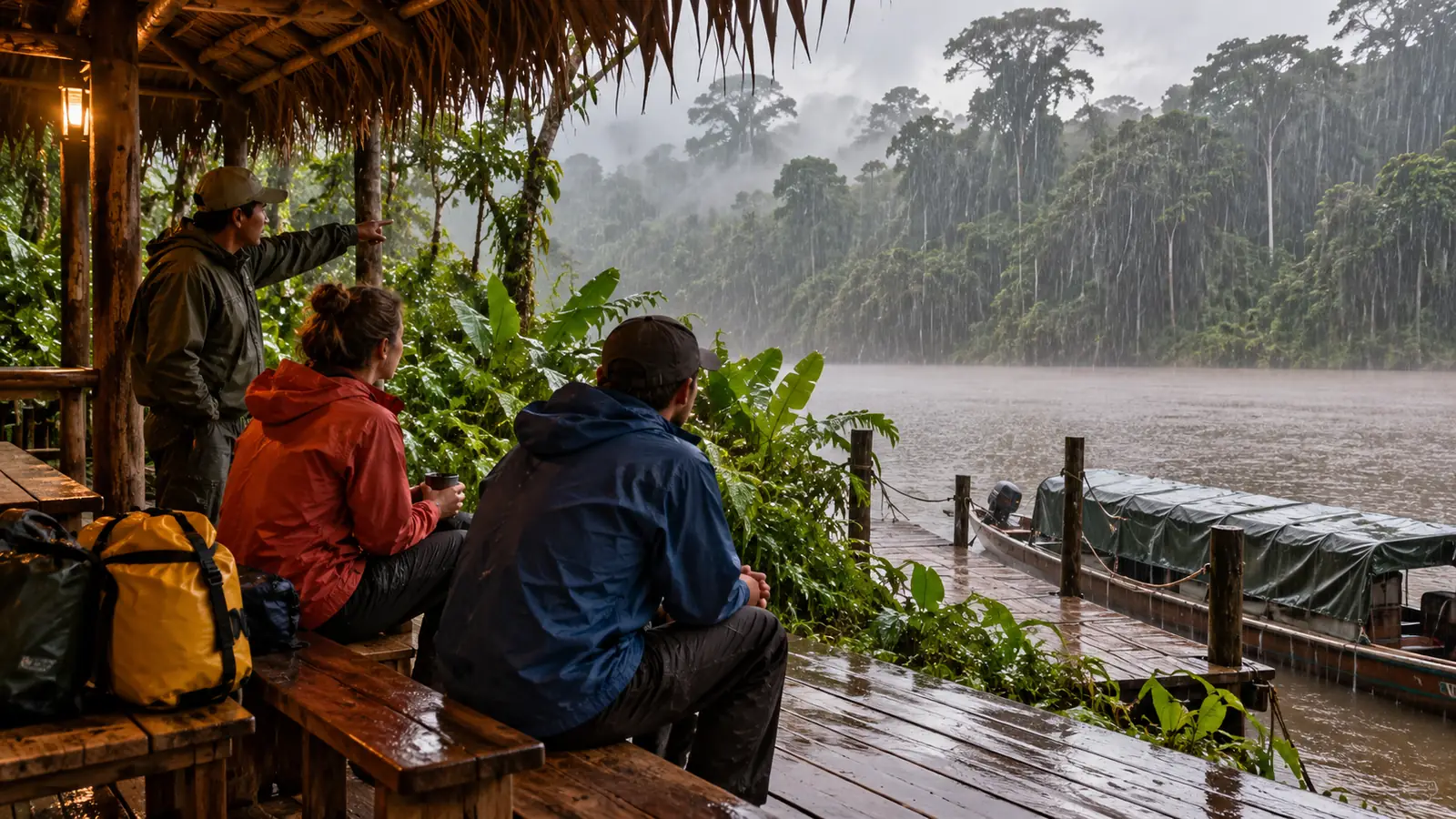
The main rainy season brings frequent showers, high humidity and a greater chance of muddy trails. Rain may fall in short intense bursts or occupy a larger part of the day. Guides adapt by changing departure times, selecting safer paths or substituting activities when lightning, current or visibility make the original plan unsuitable.
The forest can look exceptionally lush, streams and wetlands feel dynamic, and there may be fewer visitors on some routes. The cost is operational uncertainty. A short itinerary has fewer alternative mornings if rain affects its key lake, canopy or clay-lick excursion.
Travelers who choose this period should value the rainforest itself rather than one fixed wildlife event. Quick-drying clothing, dry bags and patient expectations are essential.
April and November: transition months
April commonly marks a shift away from the wettest pattern, while November often brings increasing rain before the core rainy season. Transition months can combine green scenery with improved walking windows, but conditions vary from year to year.
Ask the lodge what happened during the previous week: which trail is open, whether the lake access is working, what time rain has recently developed and whether the river landing changed. A current local report is more useful than a rigid monthly promise.
Tambopata month-by-month planning
| Months | Likely pattern | Planning priority |
|---|---|---|
| January–March | Core rainy period, humid and muddy | Add flexibility, waterproof gear and enough nights |
| April | Wet-to-drier transition | Ask for current trail and river reports |
| May–June | Rain generally easing, trails improving | Prepare for possible cool spells |
| July–August | Relatively dry and popular | Book early and pack a warm layer for friajes |
| September–October | Often dry but increasingly hot before rains | Hydration, sun protection and early activities |
| November | Rising rain and transition | Expect mixed conditions and itinerary adaptation |
| December | Rainy season establishing | Protect connections and sensitive equipment |
These are broad tendencies rather than a forecast. Check short-term weather close to departure and accept that tropical systems can differ from monthly averages.
Friajes: sudden cool spells in the southern Amazon
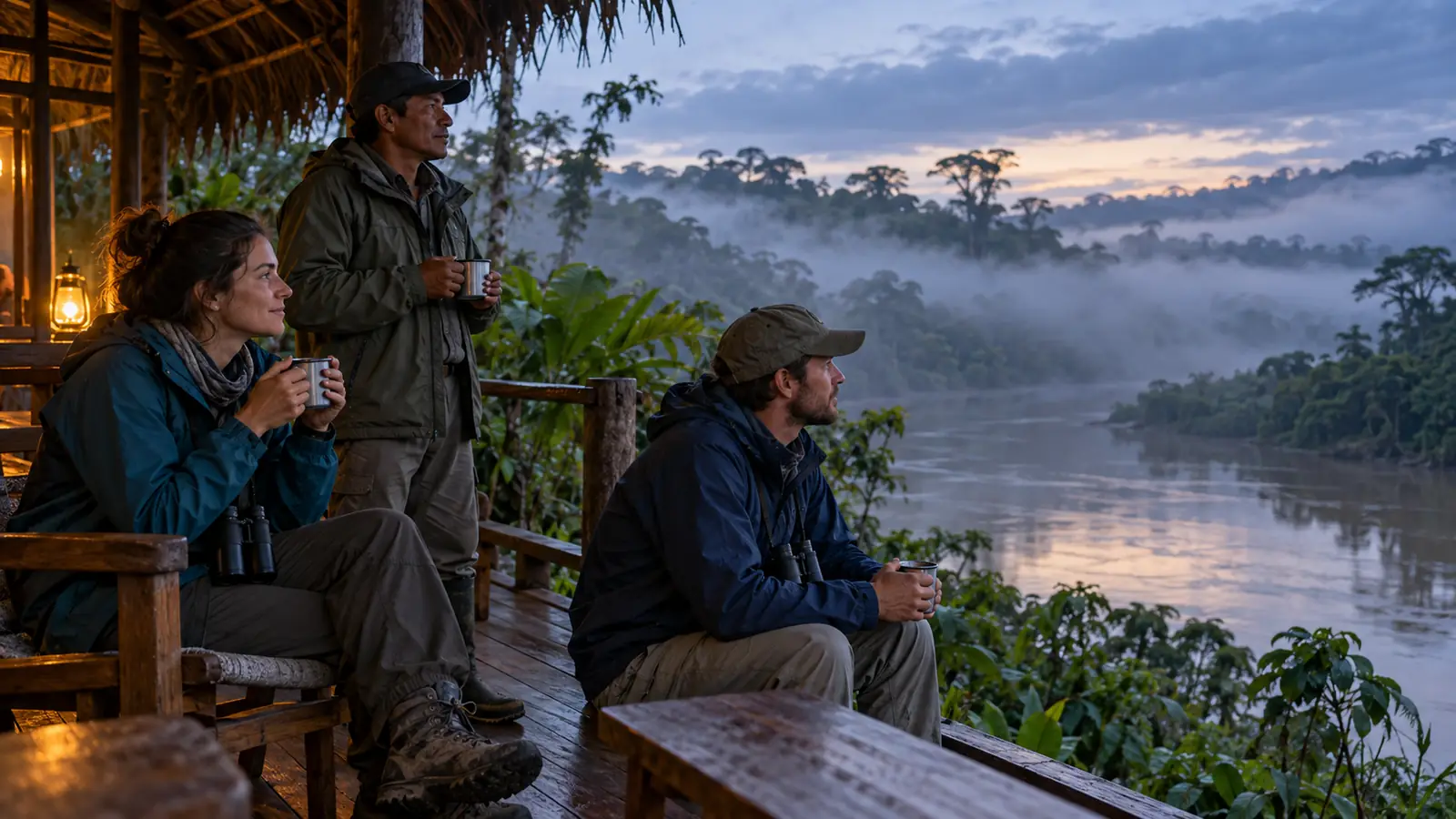
Tambopata can experience friajes, temporary incursions of cooler air from the south. Temperatures may fall sharply compared with normal tropical conditions, particularly overnight and before dawn. These events can occur during the drier part of the year and may last for several days.
A light fleece, long trousers and a rain shell make early boat trips and open-sided lodge rooms more comfortable. Friaje does not mean snow or a conventional winter; it means an unexpectedly cool, damp interval in an otherwise warm region.
Best time for Lake Sandoval
Lake Sandoval combines a forest approach with quiet-water navigation. Relatively drier months often make the walking section easier, while rainier conditions can increase mud and require more time. Wildlife activity still varies by hour, weather, group noise and chance.
Early morning normally offers softer light and cooler conditions. Use a qualified guide, remain quiet and give giant otters and other wildlife space. The dedicated Lake Sandoval guide covers access, walking, boats and responsible viewing in detail.
Best time for macaw clay licks
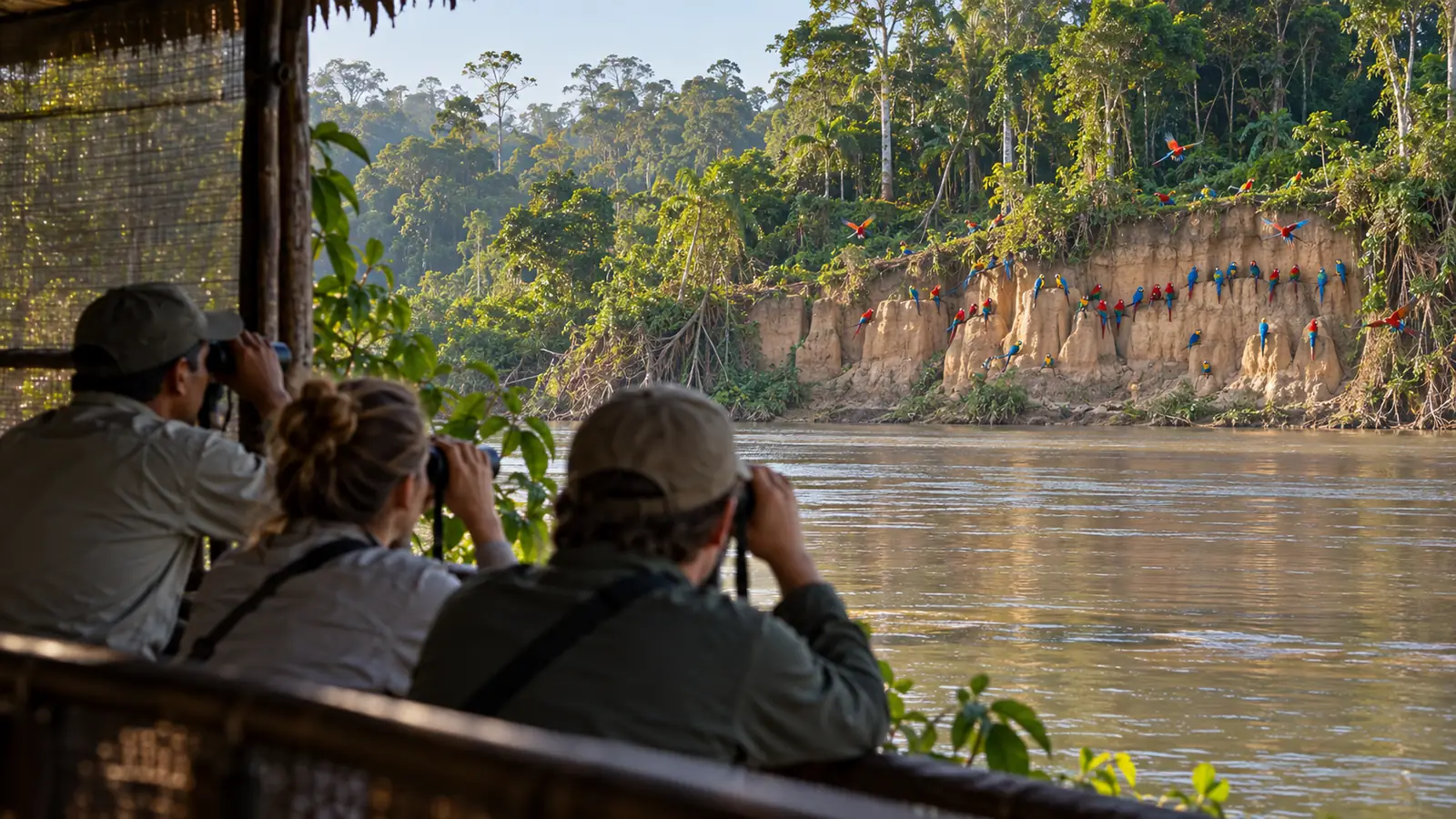
Clay-lick activity is influenced by weather, season, food cycles and breeding behavior. SERNANP notes that the famous gatherings occur in the morning when good weather allows. Rain or heavy cloud can reduce, delay or disperse activity, so no date guarantees a large spectacle.
The relatively dry season often gives travelers a better chance of a clear dawn, but habitat and the exact clay lick matter. Remote sites also require longer boat travel. Choose an operator that uses the designated observation area, controls noise and keeps an appropriate distance.
Best time for wildlife watching
Tambopata wildlife is present year-round. Seasonal conditions change access and behavior, not whether the forest has animals. Drier trails can improve ground coverage and tracking, while wetter months may bring abundant amphibian activity and productive aquatic habitats.
Do not select a month solely for jaguars, giant otters, tapirs or macaws. Sightings depend on habitat, recent disturbance, weather, guide skill and time in the field. Increase the odds ethically by staying longer, starting early, moving quietly and visiting multiple habitats.
The Peruvian Amazon wildlife overview explains responsible expectations, while the upcoming Tambopata wildlife guide will examine the reserve’s specific habitats and species.
Best time for hiking and canopy activities
May through October is usually preferable for travelers whose priority is walking. Trails tend to be firmer, although roots, slopes and shaded mud remain. Rubber boots supplied or recommended by the lodge often provide better protection than ordinary sneakers.
Canopy towers and hanging bridges may close temporarily during lightning, strong wind or heavy rain. Treat these decisions as safety management. Read is the Peruvian Amazon safe? for practical guidance on guides, boats, trails and health preparation.
River levels and lodge access
Rain affects the Madre de Dios and Tambopata rivers, tributaries and landing points. Higher water can change current and dock height; lower water can expose banks or require a different approach. A lodge’s transfer time is always an operational estimate.
Before buying flights, confirm the pickup window and return time with the operator. The forthcoming Puerto Maldonado travel guide will cover airport, city and lodge connections, while the Tambopata guide compares reserve sectors.
Photography by season
The dry season can provide clearer dawns, easier equipment movement and more reliable trail access. Bright midday light may be harsh, so prioritize early and late outings. Dust and humidity still require care.
The rainy season offers saturated foliage, reflections, mist and dramatic skies. Protect cameras inside a roll-top dry bag and allow equipment to acclimatize before exposing it to humid air. Never compromise boat stability or leave a marked trail for an image.
Crowds, availability and trip cost
The recommended season overlaps with popular travel months in Peru. Desired lodges, room types, private guides and flights can fill earlier. Wet-season promotions may exist, but compare what is actually included and how cancellations or weather substitutions work.
A cheaper three-day package can provide less field time if arrival and departure consume most of two days. Use the Peruvian Amazon trip cost guide and the guide to how many days you need in the Amazon to compare value rather than headline price.
Best season by traveler type
- First-time Amazon visitor: May–October for easier logistics and walking.
- Flexible repeat traveler: wet or transition months for a different forest atmosphere.
- Birder: prioritize specialist guiding, dawn access and habitat over a single month.
- Family: choose shorter transfers, flexible excursions and good lodge infrastructure before season.
- Hiker: favor the recommended drier period, while expecting mud.
- Photographer: choose clearer dry-season windows or rainy-season mood according to the desired images.
- Short itinerary: favor more predictable months because there is less recovery time after a weather change.
What to pack in every month
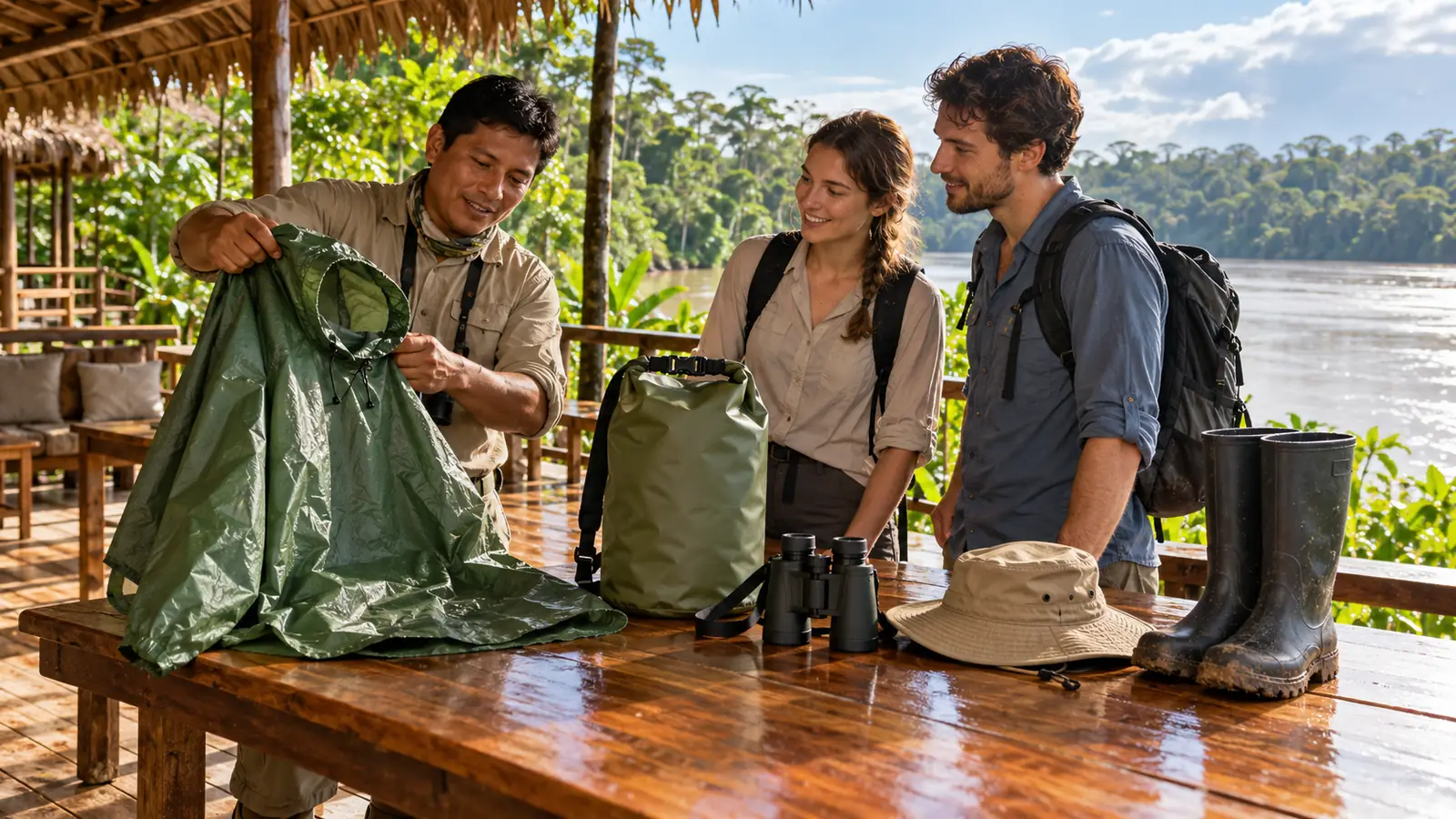
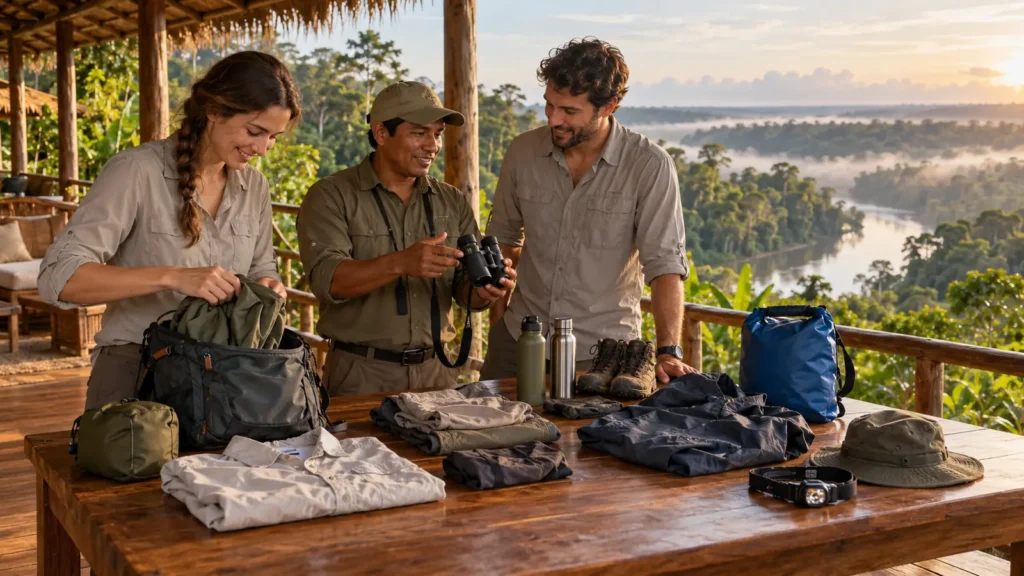
Bring lightweight long sleeves and trousers, rain shell or poncho, hat, sunscreen, insect repellent, refillable bottle, headlamp, binoculars and waterproof protection for documents and electronics. Include a light warm layer for possible friajes.
Use closed footwear appropriate for roots and mud, and ask whether the lodge provides rubber boots. The complete Peruvian Amazon packing list includes clothing, health items and camera protection for both seasons.
Build a weather-resilient itinerary
- Choose the habitat and activity before choosing the month.
- Stay at least three nights when wildlife is a priority.
- Ask which routes worked during the previous week.
- Keep rain gear and dry bags accessible on every outing.
- Allow time between the lodge return and the next important flight.
- Accept safe route changes recommended by the guide.
For short-trip tradeoffs, compare the three-day Iquitos and Tambopata itinerary options. For a broader regional decision, read Iquitos or Tambopata and the main Peruvian Amazon rainforest guide.
Current Explora el Peru Tambopata tours
The Tambopata National Reserve three-day tour currently starts and ends in Puerto Maldonado and includes lodge accommodation, guided activities, river transport and reserve entry according to its live page. Its itinerary includes Lake Sandoval, forest walks and river activities, all subject to current conditions.
The Puerto Maldonado ecological three-day tour provides another lodge-based option. Confirm the exact lodge, reserve sectors, activity order, pickup time and seasonal substitutions before booking.
Frequently asked questions
What is the driest month in Tambopata?
No month is reliably rain-free. Relatively drier conditions are common from May through October, but short-term weather varies and heavy showers remain possible.
Is Tambopata worth visiting in rainy season?
Yes for flexible travelers who accept mud, rain and changed routes. The landscape is lush, but a longer stay is helpful if one key outing is delayed.
When is the best time for macaws?
Clear mornings can support clay-lick activity, but weather, food cycles and location matter. Choose a responsible operator and avoid any guaranteed-sighting claim.
Are there fewer mosquitoes in dry season?
Insect pressure varies locally and continues throughout the year. Use long clothing and repellent in every season.
Can friajes happen during dry season?
Yes. Cool southern-air events can reach Madre de Dios, making mornings and nights unexpectedly chilly for a tropical destination.
How many days should I stay?
Three days provides an introduction, while four or five days create more dawns, habitats and weather alternatives. Remote clay-lick routes may justify longer.
Does rain cancel every activity?
No. Guides often adjust timing or substitute a safer route. Lightning, strong wind, high current or poor visibility can require a cancellation.
Editorial sources
Season, climate and reserve-access context were checked against the official SERNANP Tambopata National Reserve visitor page. Current tour inclusions and seasonal notes were checked against Explora el Peru’s live Tambopata pages. Weather, routes and wildlife behavior vary; confirm conditions for the actual travel dates.