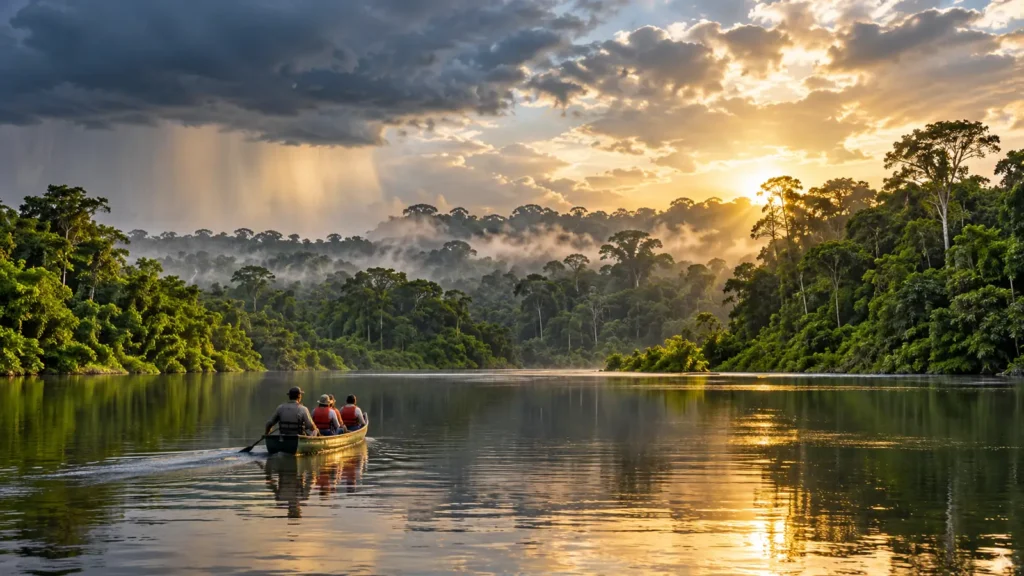

Puerto Maldonado is the main gateway to the rainforests of southeastern Peru, but the city is only the starting point. The best trip depends on what happens after arrival: which river or road corridor you use, how far the lodge is from town, which protected sector the itinerary enters and how many daylight hours remain for activities.
Where is Puerto Maldonado?
Puerto Maldonado is the capital of Peru’s Madre de Dios region, in the country’s southeastern lowlands near the confluence of the Tambopata and Madre de Dios rivers. Flights and roads connect the city with Lima and Cusco, while motorboats and local roads connect it with lodges, oxbow lakes, community areas and reserve access points.
The city is not itself a remote rainforest lodge. It is a transport and supply hub where travelers meet guides, repack luggage and continue into the forest. That distinction matters: two tours marketed from Puerto Maldonado can spend very different amounts of time in transit and visit different ecosystems.
If you are still comparing southern Peru with the northern Amazon, read Iquitos or Tambopata. The broader Peruvian Amazon rainforest guide explains how each gateway fits into a Peru itinerary.
Why use Puerto Maldonado as an Amazon gateway?
Puerto Maldonado works especially well for travelers combining the rainforest with Cusco, the Sacred Valley or Machu Picchu. It offers access to lowland rainforest, river habitats, oxbow lakes and parts of Tambopata National Reserve without routing through Lima for every connection.
Its main strength is choice. A short lodge transfer can suit a compact trip, while longer river journeys reach quieter sectors and specialized experiences. The tradeoff is that the destination name alone tells you little. You need the actual lodge location, transfer sequence and daily itinerary before judging value.
Arrival: airport pickup and first-day logistics

Most organized programs begin with a pickup at Padre Aldamiz International Airport or a prearranged city location. The operator may take guests to an office to store large luggage, distribute duffel bags, brief the group and continue by vehicle, boat or both.
Do not assume a flight arrival means an immediate wildlife excursion. Baggage collection, group assembly, road traffic, port formalities, river conditions and daylight can all affect the schedule. Ask for the latest acceptable arrival time and what happens if a flight is delayed.
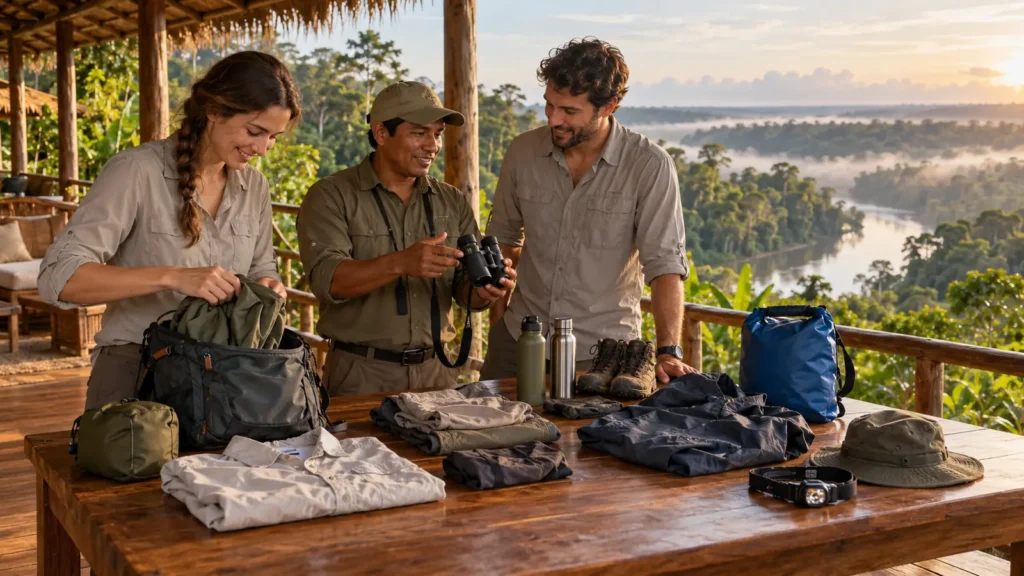
Carry medication, documents, rain protection and one change of clothes in your personal bag. Anything essential should remain with you rather than in stored luggage. The complete Peruvian Amazon packing list explains how to prepare a compact lodge bag.
How lodge transfers work
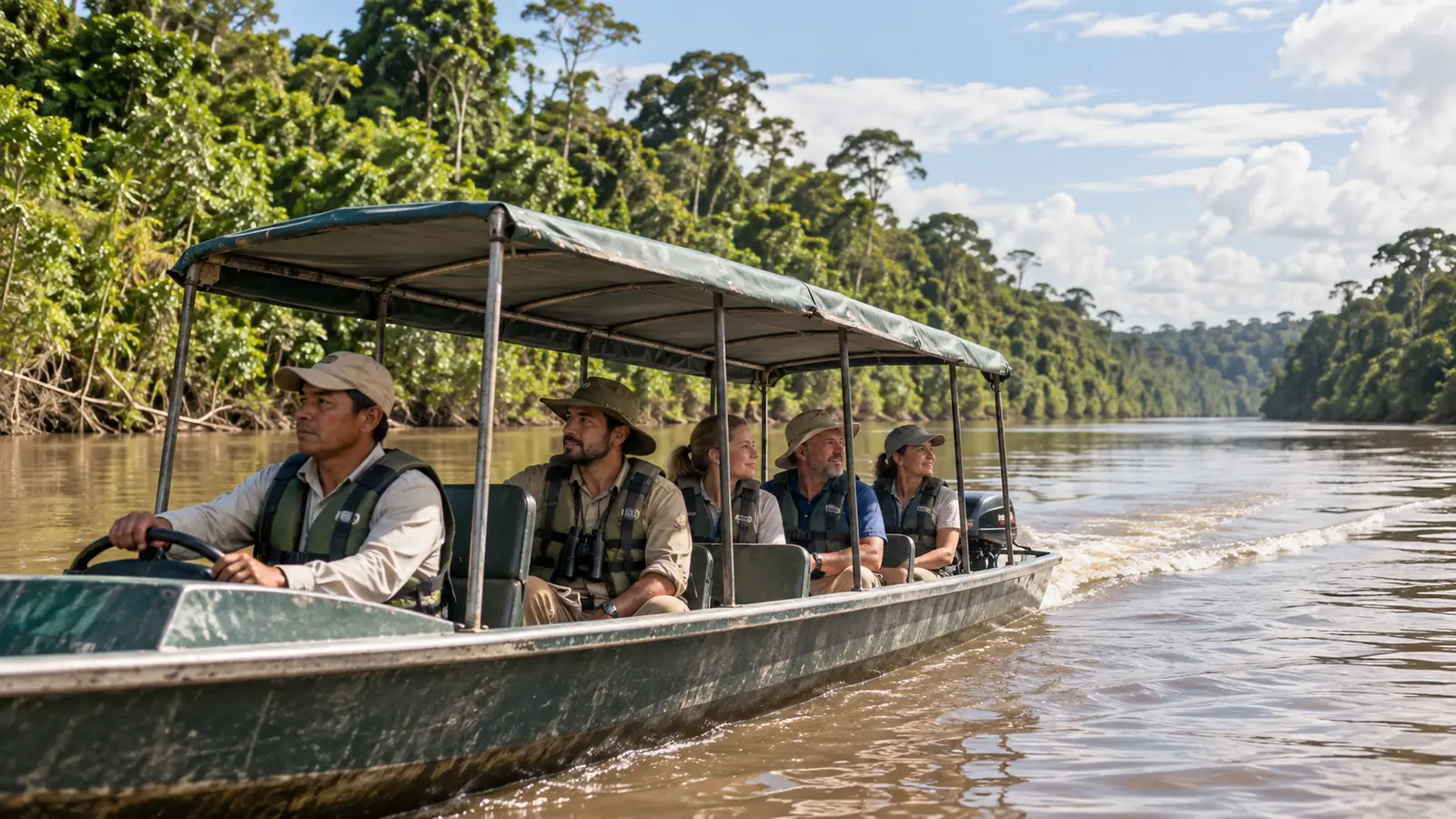
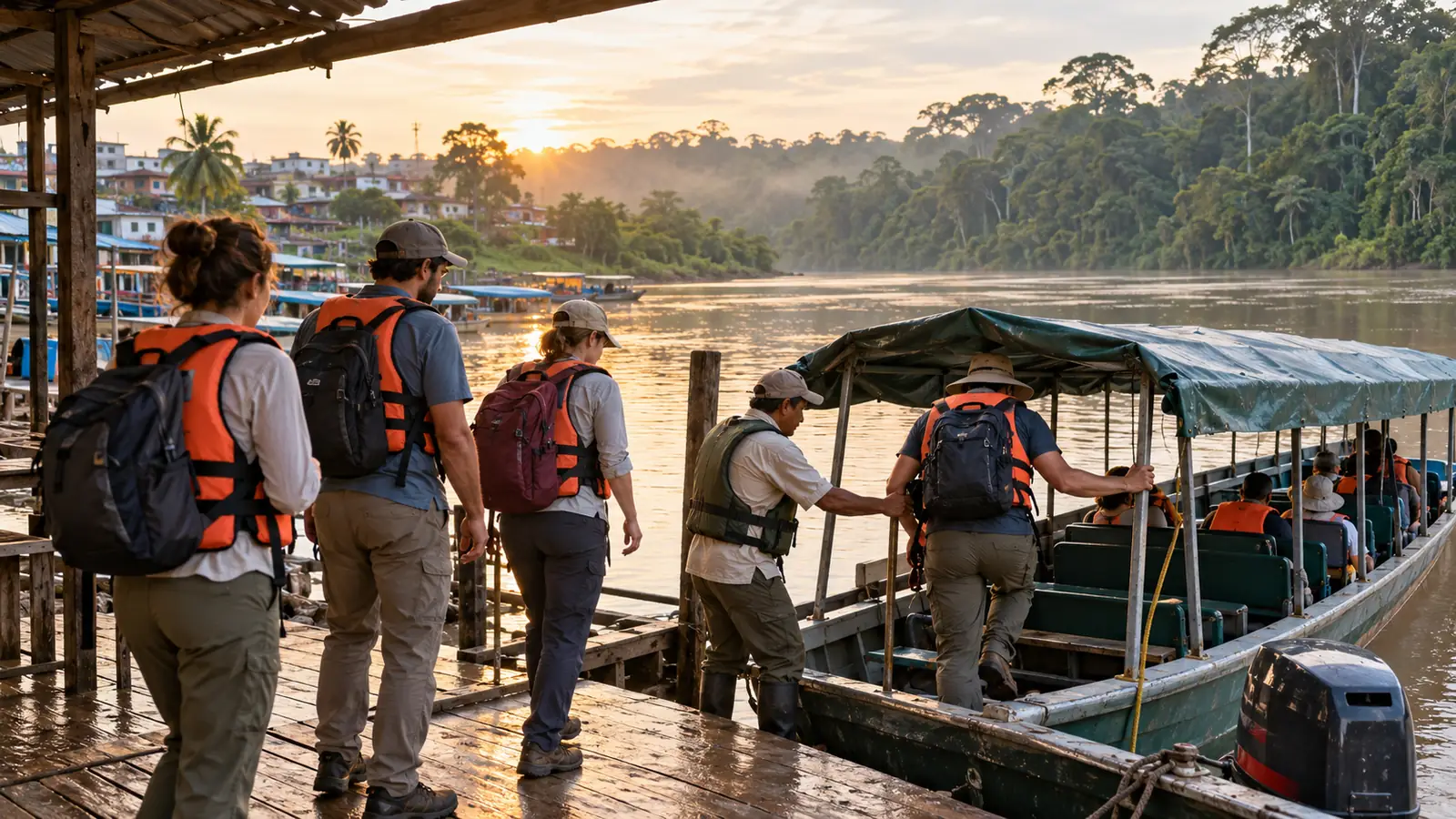
A lodge transfer may combine an airport van, a city office, a river port and a covered motorboat. Other properties use a road transfer followed by a shorter boat stage. The exact chain depends on the lodge and river corridor.
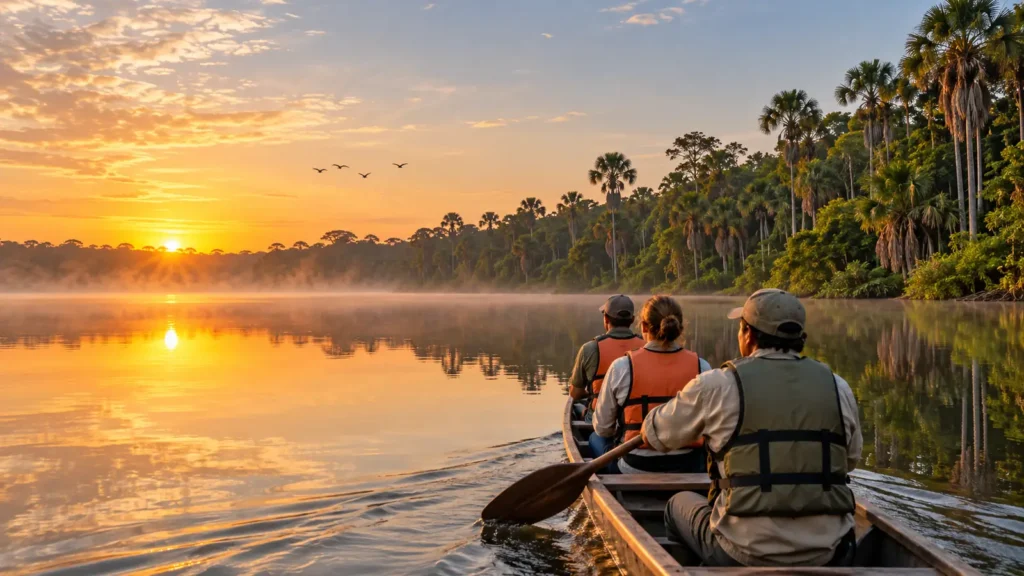
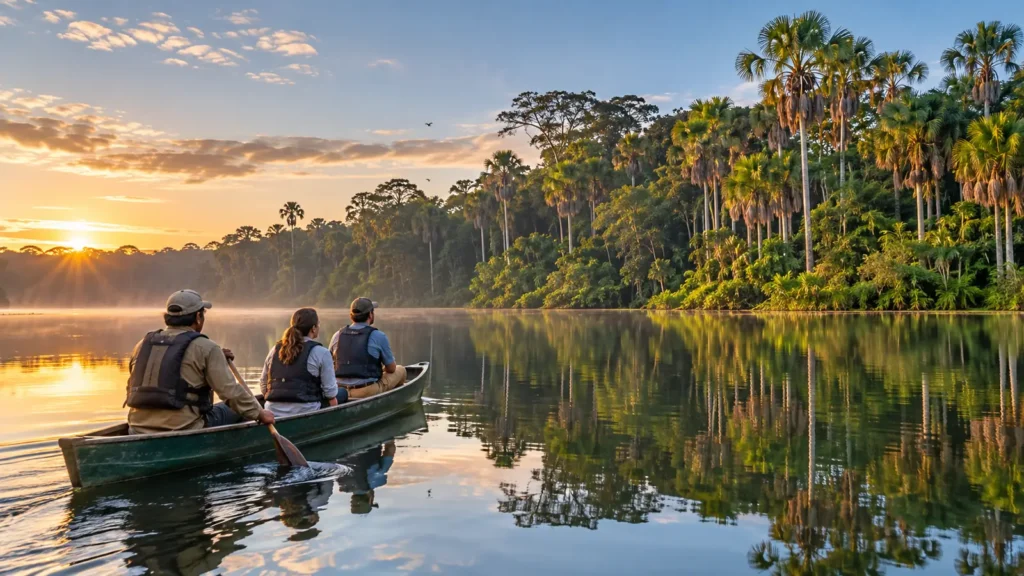
For every boat segment, use the supplied life jacket, remain seated while underway and keep electronics in waterproof protection. Covered boats reduce sun and rain exposure but do not eliminate spray. At basic river landings, wait for the crew’s instructions before stepping between boat and shore.
A longer transfer is not automatically better or worse. It can reach more remote habitat, but it also consumes time on arrival and departure days. Compare the total door-to-lodge journey with the number of usable activity hours.
Understand the main zones before booking
| Zone | Typical appeal | Planning implication |
|---|---|---|
| Madre de Dios River corridor | Accessible lodges, river scenery and short programs | Confirm whether reserve entry is included or activities occur on private land |
| Sandoval sector | Lake Sandoval, palm forest and aquatic wildlife | SERNANP describes about 30 minutes by river plus a 3 km approach |
| Middle Tambopata | Oxbow lakes, trails and deeper forest access | Official guidance indicates a substantially longer river journey |
| High Tambopata | Remote clay-lick routes and longer expeditions | Requires more transfer time and careful flight scheduling |
SERNANP’s official access references are useful for comparing sectors, but they are not guaranteed pickup-to-room durations. Water level, boat type, weather and checkpoint procedures can change the journey. The Tambopata travel guide gives a fuller sector-by-sector comparison.
Lake Sandoval from Puerto Maldonado
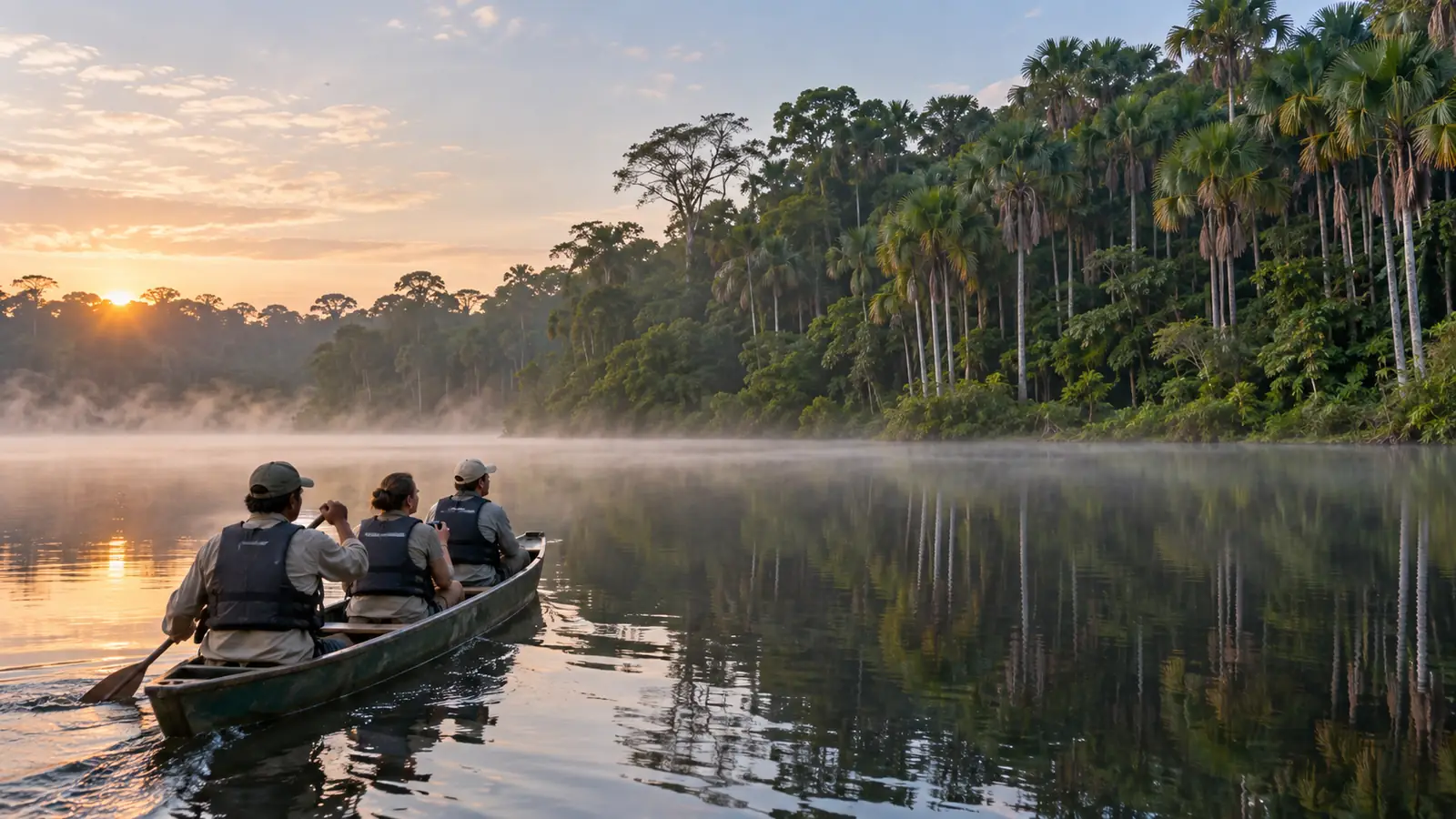
Lake Sandoval is one of the best-known protected-area visits near Puerto Maldonado. The standard route combines a river journey, registration, an approximately 3-kilometer forest approach and quiet navigation on the oxbow lake. SERNANP describes the route as suitable for a half-day or full-day visit.
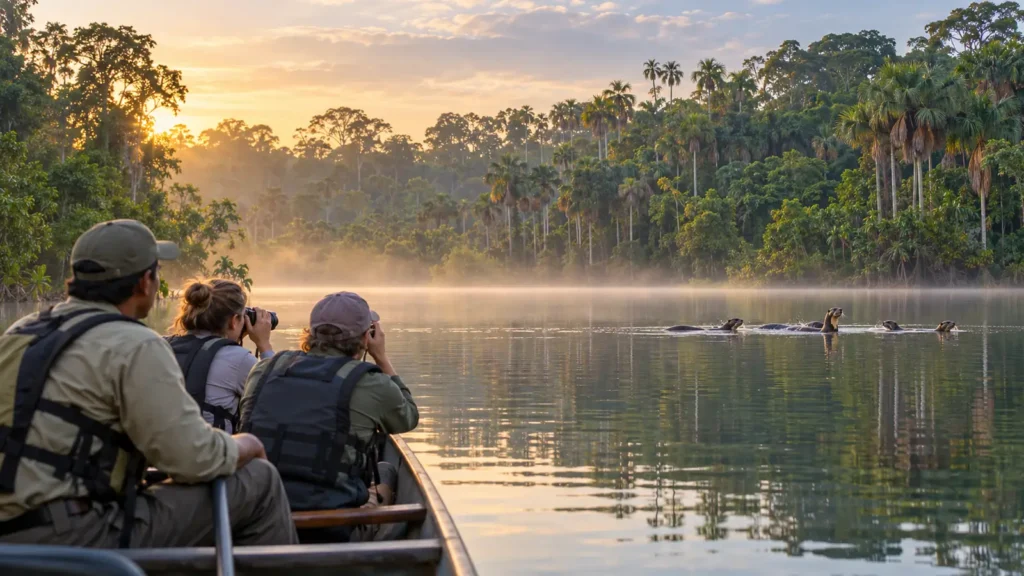
The lake supports a permanent giant river otter population and diverse birdlife, but no species is guaranteed. Early departures may offer cooler walking and a quieter atmosphere. Review the dedicated Lake Sandoval guide for trail conditions, responsible wildlife viewing and what to bring.
How to choose a lodge location
Start with habitat and travel time, not room photographs. Ask the lodge for a map pin, the named river or road corridor, the normal transfer sequence and the excursions included in your specific rate. “Near Puerto Maldonado” can mean a short vehicle ride or a multi-stage journey.
Then examine the daily rhythm. Strong nature programs use early morning and late afternoon, when heat is lower and wildlife can be more active. A lodge that requires repeated long transfers may leave less time on trails or lakes.
- For a short trip: prioritize a reliable transfer and two or three well-chosen habitats.
- For wildlife: prioritize small groups, skilled naturalist guides and unhurried observation.
- For comfort: confirm private bathroom, mosquito screening, electricity hours, fans and emergency communication.
- For photography: ask about boat stability, group pace, dawn departures and luggage limits.
- For families: verify child-sized life jackets, walk lengths, flexible meals and medical plans.
City night or same-day lodge transfer?
A same-day transfer is efficient when the flight arrives within the operator’s connection window and the lodge can be reached safely in daylight. It puts you in the forest sooner and may make the first evening available for a short walk or briefing.
A city night provides buffer when arriving late, connecting from an unpredictable overland trip or traveling with children. It can also help before an early flight after the lodge stay. The downside is losing one night in the forest.
Do not book the decision independently of the lodge. Some programs operate only one coordinated boat departure, while others offer flexible transfers at extra cost. Obtain the connection rule in writing before purchasing separate flights.
How many days do you need?
Three days and two nights is a practical minimum for many first-time travelers. It normally provides one arrival activity, one fuller exploration day and a departure morning. Four days allows more weather resilience and a better mix of lake, trail and river habitats.
Five or more days makes sense for birding, photography, a remote clay lick or a slower pace. Count actual field sessions rather than calendar labels: a “three-day” tour with a late arrival and early departure can contain little more than one full day.
Use the detailed guide to how many days you need in the Peruvian Amazon and the sample three-day Amazon itineraries to compare realistic schedules.
Best time to visit Puerto Maldonado
Puerto Maldonado is hot, humid and rainy at any time of year. SERNANP generally recommends May through October for Tambopata, while December through March is the wetter period. A “dry season” visit can still include heavy rain, and wet months can include clear mornings.
Lower rainfall can make some trails easier, but water levels, wildlife movement and temperatures vary. Rainy conditions bring lush vegetation and fuller waterways, with more mud and a higher chance of schedule changes. The best time to visit Tambopata explains the tradeoffs month by month.
What are friajes?
Friajes are occasional cold fronts that push into southeastern Peru and can lower temperatures quickly. They can occur during the generally drier months and feel surprisingly cool in open boats or screened lodges.
Pack one light insulating layer and a rain shell even if the forecast looks tropical. Lodges may adjust departure times or activities when wind, rain or river conditions make the original plan unsafe.
Wildlife expectations
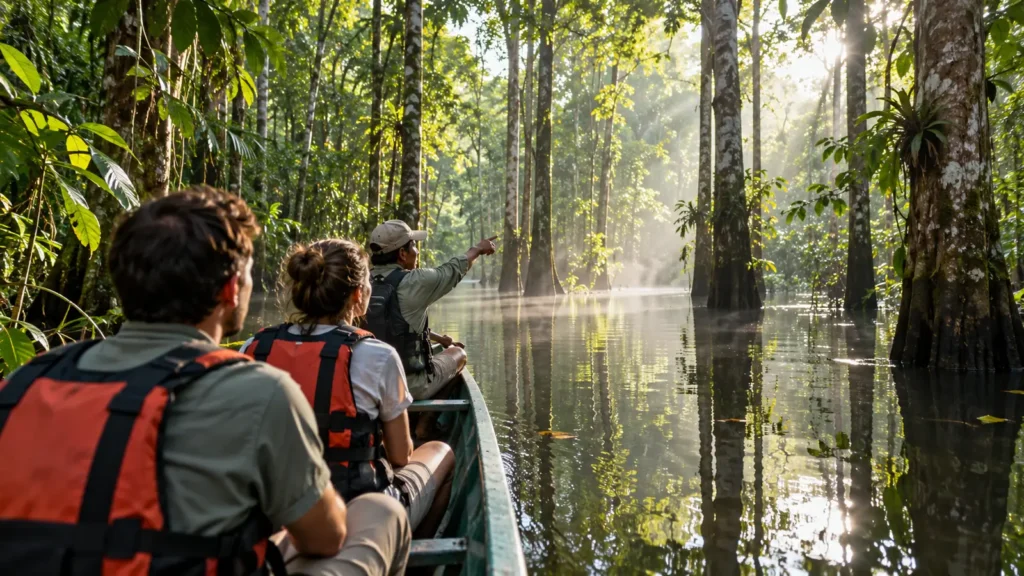
The Puerto Maldonado region supports monkeys, macaws, toucans, caimans, capybaras, giant river otters and many smaller birds, reptiles and insects. Jaguars, tapirs and harpy eagles occur in the wider landscape but are uncommon sightings and should never be advertised as routine.
Location, season, guide skill, group noise and chance all matter. A responsible operator describes possibilities rather than guarantees. Quiet observation of tracks, calls and habitat is part of the experience even when a headline animal remains hidden.
The Tambopata wildlife guide separates realistic sightings from rare encounters and explains the best habitat for different species.
A realistic first-day sequence

- Meet the guide at the airport or agreed city point.
- Store large luggage and repack into a small duffel if required.
- Travel by vehicle to the port or road access point.
- Complete the river or combined transfer with life jackets.
- Check in, receive a safety and schedule briefing, and settle into the room.
- Join a short trail, sunset boat outing or night walk if daylight and weather permit.
This is a planning model, not a promise. The live itinerary and arrival time control what is possible on day one.
What to pack for Puerto Maldonado
- Lightweight long sleeves and long trousers.
- Closed walking shoes plus dry footwear for the lodge.
- Breathable rain shell or poncho.
- Hat, sunscreen and refillable water bottle.
- Insect repellent used according to its label.
- Binoculars and waterproof protection for electronics.
- Small flashlight or headlamp.
- Personal medication and copies of travel documents.
Use soft-sided luggage because boats and lodge storage may be limited. Leave unnecessary valuables in secure storage and bring some small-denomination cash for tips or purchases where cards are unavailable.
Health and safety
Discuss routine vaccines, mosquito-borne disease prevention and personal medical needs with a qualified clinician before travel. Recommendations depend on health history and the exact route; a travel article cannot replace individual medical advice.
During the trip, hydrate, use sun and insect protection, wear a life jacket on boats and follow the guide on trails. Do not touch wildlife or plants. Tell the guide promptly about dizziness, allergic symptoms, gastrointestinal illness or an injury.
Check the operator’s emergency communication, first-aid capacity and evacuation process. The Peruvian Amazon safety guide covers boats, storms, night walks, food and health preparation in more depth.
Budget and what a lodge package should include
Package prices vary with lodge location, room standard, group size, private guiding, reserve fees and included activities. A lower headline price may exclude airport transfers, entrance charges, drinking water or the final city transfer.
Request a written list covering accommodation, meals, guides, river transport, activity equipment, boots, water, entrance fees and pickup points. Also ask about bar drinks, tips, insurance, domestic flights, single supplements and private transfers.
Compare inclusions with the Peruvian Amazon trip cost guide rather than relying on a price that may become outdated.
Sample itineraries
Three days: compact introduction
Day 1: early arrival, lodge transfer, briefing and an evening activity. Day 2: dawn wildlife session, forest trail or lake, midday rest and late-afternoon excursion. Day 3: short morning activity if timing allows, then return for the flight.
Four days: balanced first visit
Add a second full field day so the program can combine river edge, terra firme forest and an oxbow lake without rushing. This format is more resilient if one session is shortened by rain.
Five days: specialist or remote focus
Use the extra time for birding, photography, a more distant Tambopata sector or slower family pacing. Avoid filling every hour; heat and early starts make midday rest valuable.
Plan the trip before you arrive
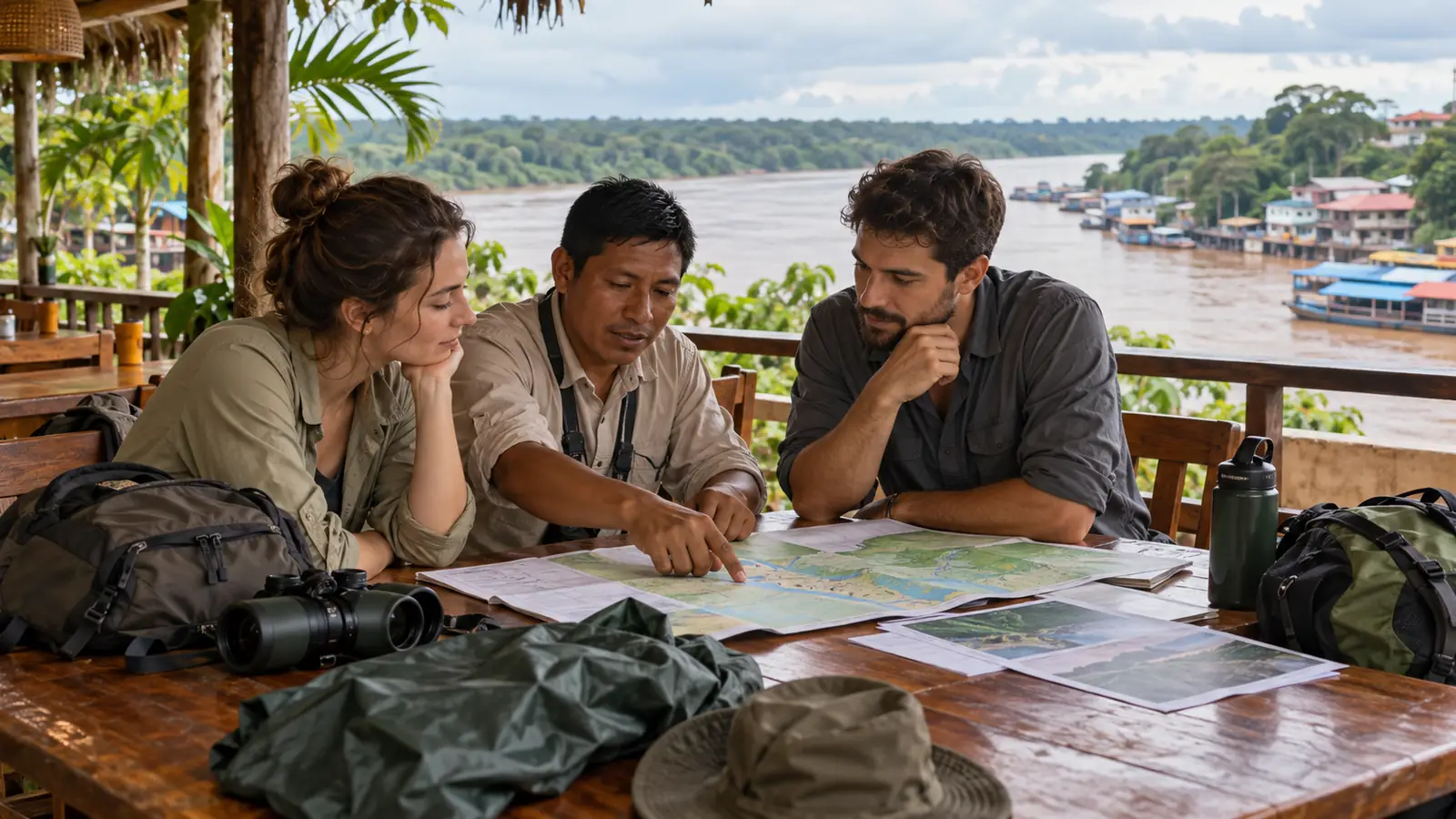
- Choose the habitat and experience you value most.
- Confirm the lodge’s exact location and transfer chain.
- Match flights to the operator’s connection window.
- Check what entrance fees and equipment are included.
- Pack a small lodge bag and waterproof essential items.
- Share dietary, mobility and medical needs in advance.
- Reconfirm pickup details shortly before travel.
Traveling from the Andes? The upcoming guide to Cusco to Puerto Maldonado compares flights, buses and tour connections.
Current Explora el Peru options
The three-day ecological Puerto Maldonado tour currently lists airport–lodge transfers, bungalow accommodation, meals and guided activities along the Madre de Dios corridor. Its live itinerary includes a lodge stay and lake and forest experiences.
The three-day Tambopata National Reserve tour currently presents Lake Sandoval and additional rainforest activities. Before booking either option, reconfirm the exact lodge, departure window, current inclusions, entrance fees, group size and return time because operational details can change.
Frequently asked questions
Is Puerto Maldonado worth visiting?
Yes, when used as the gateway to a well-chosen lodge or protected-area itinerary. A city-only stay does not represent the full rainforest experience.
Can I see the Amazon in three days?
Yes, but choose a program with efficient transfers and realistic field time. Four days offers more flexibility and habitat variety.
Do I need to sleep in Puerto Maldonado city?
Not always. Early arrivals can often transfer directly to a lodge. A city night is useful for late arrivals, early departures or uncertain overland connections.
Is Lake Sandoval close to Puerto Maldonado?
SERNANP gives an official reference of about 30 minutes by river followed by a 3-kilometer approach. Total door-to-lake time is longer after transfers and registration.
Can I enter Tambopata National Reserve independently?
SERNANP states that visitors must hire authorized tourism services for entry. Confirm the current operator and ticket arrangements before travel.
Are wildlife sightings guaranteed?
No. Guides improve detection and interpretation, but animals move freely. Treat rare-species guarantees as a warning sign.
Do lodges have electricity and internet?
Facilities vary. Some properties limit electricity to certain hours and connectivity may be weak or unavailable. Ask about charging, fans, hot water and emergency contact before booking.
Should I take a bus or fly from Cusco?
Flights save time, while buses can suit slower itineraries but require a large schedule buffer. Never plan a tight bus-to-boat connection without confirming it with the operator.
Editorial sources
Protected-area access, authorized-service requirements and sector travel references were checked against the official SERNANP Tambopata National Reserve page. Tour examples were checked against Explora el Peru’s live English tour pages. Flight schedules, river conditions, fees and itineraries can change, so reconfirm them for the travel date.