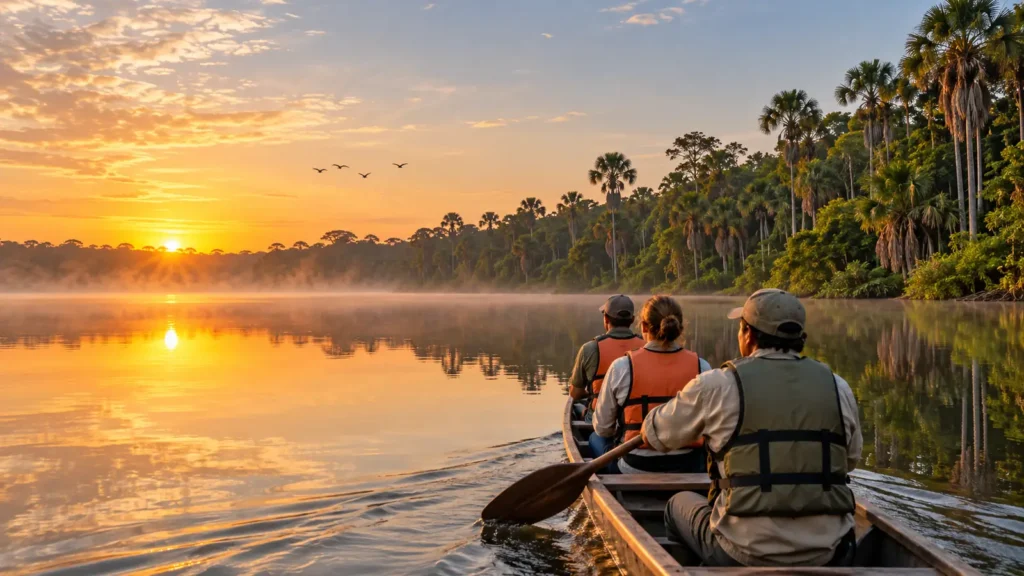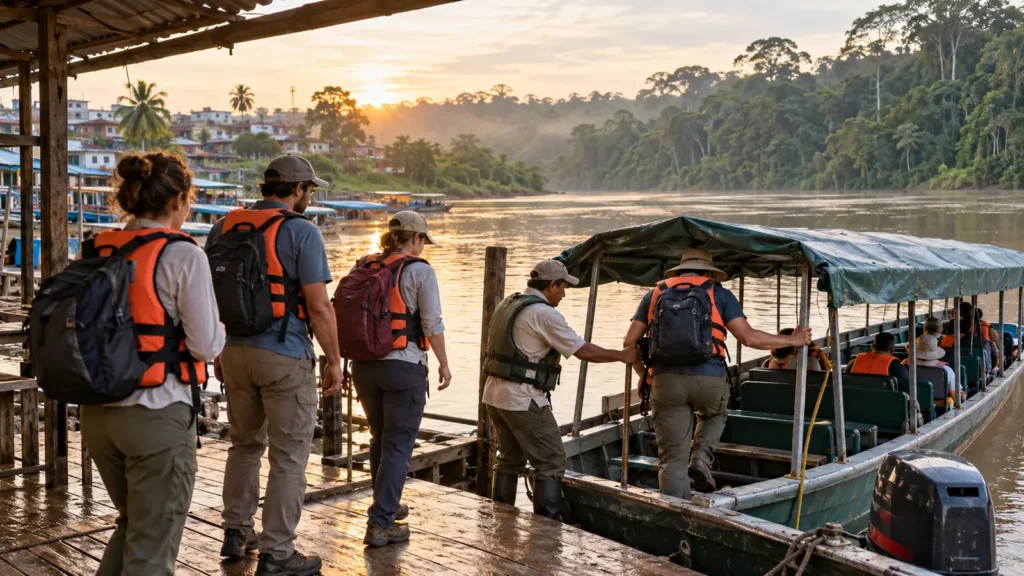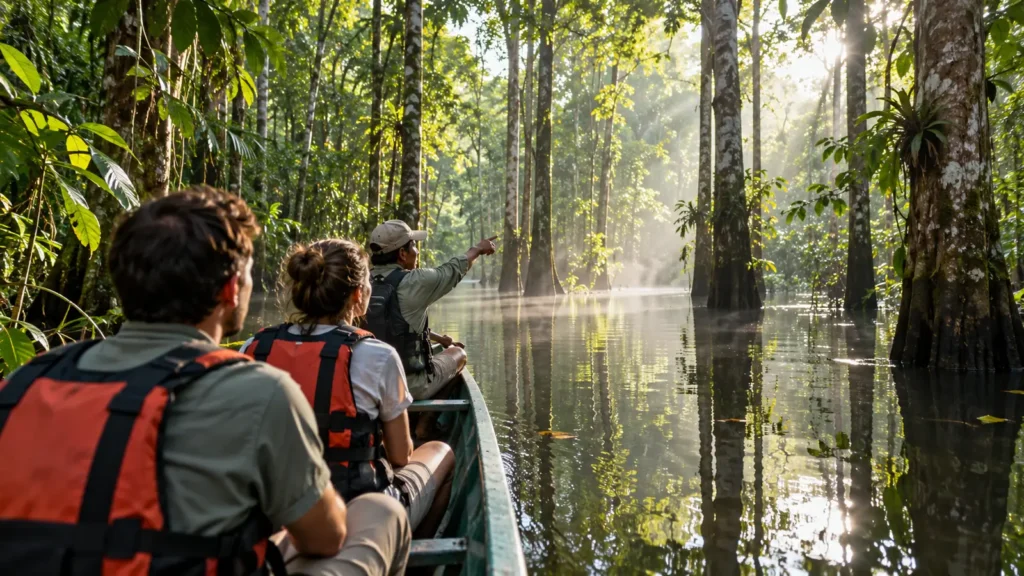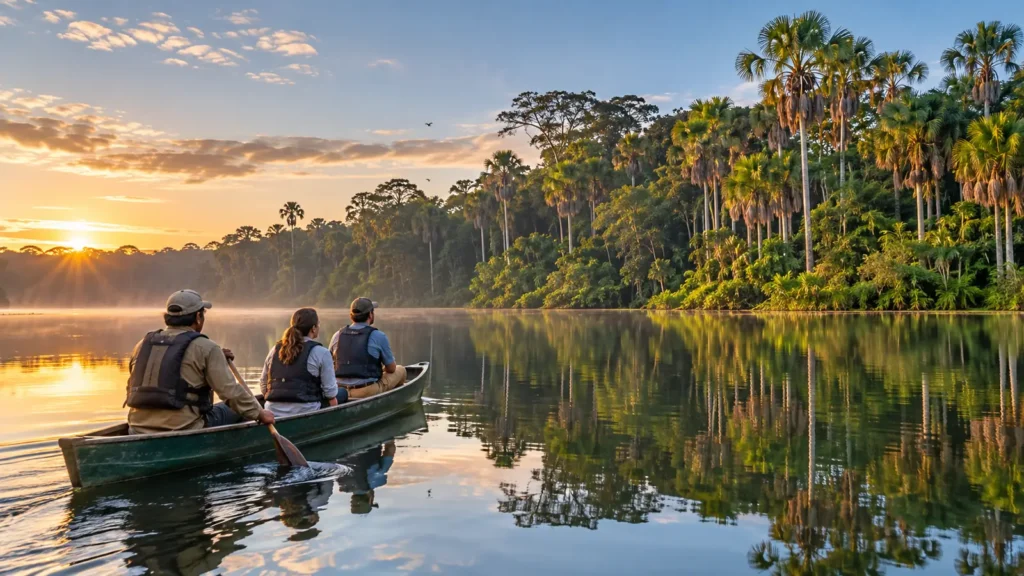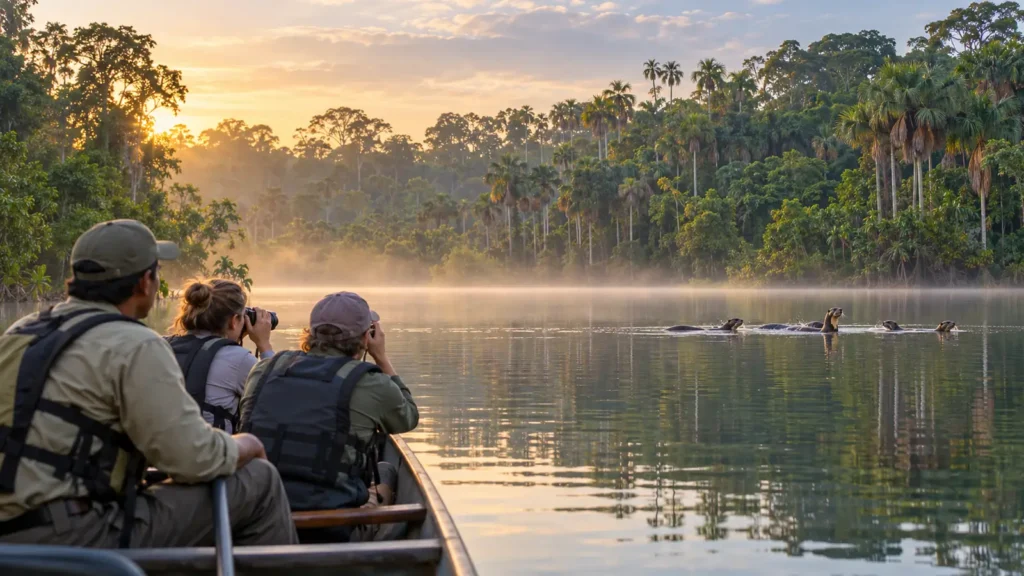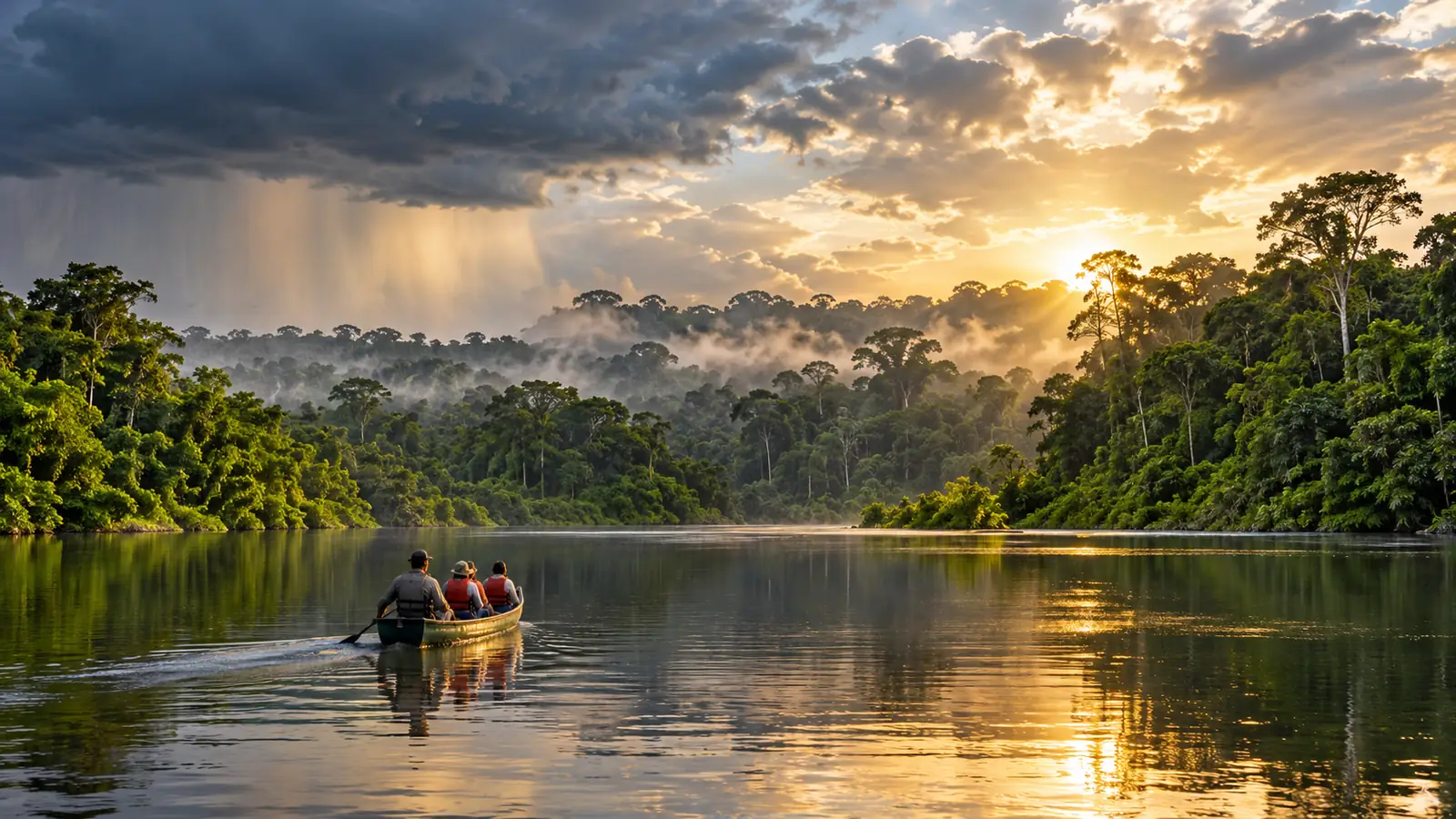

The best time to visit the Peruvian Amazon depends on where you are going and what you want to do. For Tambopata and Puerto Maldonado, May through October usually brings drier trail conditions and is the official recommended period for Tambopata National Reserve. Around Iquitos, every month is viable, but rising and falling river levels change whether excursions focus more on flooded-forest canoe routes, beaches or longer forest walks.
Peruvian Amazon seasonal calendar
| Period | Tambopata and Puerto Maldonado | Iquitos and northern Amazon | Best for |
|---|---|---|---|
| January–March | Rainiest general period; trails may be muddier and showers heavier | High or rising water commonly expands boat access into flooded areas | Green landscapes, river exploration and travelers comfortable with rain |
| April | Transition toward drier conditions | Water commonly remains high, with local variation | Shoulder-season flexibility |
| May–June | Start of the recommended Tambopata period; generally drier | Water may begin receding from high levels | Combining Cusco, Machu Picchu and the Amazon |
| July–August | Drier trails and popular travel months; occasional friajes | Lower-water trend; more exposed banks and walking opportunities | Families, hiking and wider Peru itineraries |
| September–October | Warm, often dry but increasingly transitional | Lower water may continue before levels begin rising | Photography, mixed boat and walking activities |
| November–December | Rain increases; December begins the official rainy period | Water generally rises, gradually changing access | Fewer visitors and travelers prioritizing lush conditions |
This calendar is a planning framework, not a forecast. Rainfall, river levels and cold fronts vary between years. Confirm current lodge access and the operational itinerary shortly before travel.
Why there is no single Amazon season
The Peruvian Amazon rainforest covers enormous distances and many habitats. Iquitos is in the north, while Puerto Maldonado and Tambopata are in southeastern Peru. Their river systems, rainfall patterns and visitor activities are not identical.
Three separate ideas are often compressed into “dry season”:
- Rainfall: how often and how intensely rain falls.
- River level: whether waterways are rising, high, receding or low.
- Trail condition: how muddy, flooded or accessible walking routes are.
A rainy month can still include brilliant mornings, while a drier month can deliver a powerful afternoon storm. A high river may improve canoe access but cover beaches; lower water may expose sandbanks but close some flooded-forest channels. The “best” period is therefore the one that supports your preferred experience.

Best time for Tambopata and Puerto Maldonado
SERNANP, Peru’s protected-area authority, identifies May through October as the recommended visiting period for Tambopata National Reserve and December through March as its rainy season. It describes the regional climate as humid and hot, with broad temperature variation possible.
May through October usually offers firmer forest trails, lower rainfall totals and good conditions for lake, river and canopy activities. These months also overlap with the busiest international travel season in Peru. Lodges and domestic flights can fill earlier, particularly around July and August.
November is transitional. December through March brings more frequent or prolonged rain, higher humidity and muddier ground. Tours still operate, and the forest can look exceptionally lush. The tradeoff is a greater chance that weather changes an activity’s timing or route.
April often acts as a bridge between wet and drier conditions. Travelers with flexible expectations can find a useful balance, but no shoulder month guarantees either empty lodges or dry trails.
What is a friaje?
A friaje is a surge of cool southern air that can reach Madre de Dios and sharply reduce temperatures for a short period. It is most associated with the southern winter months but should not be treated as a perfectly scheduled event. A light fleece or warm mid-layer belongs in the luggage even when the general forecast looks tropical.
Read the future best time to visit Tambopata guide for a destination-specific calendar.
Best time for Iquitos and the northern Amazon
Iquitos remains hot and humid throughout the year. For trip planning, water level is often as important as the number of rainy days. The surrounding rivers and floodplain forests expand and contract gradually, creating different routes rather than a simple open-or-closed season.
Higher-water conditions
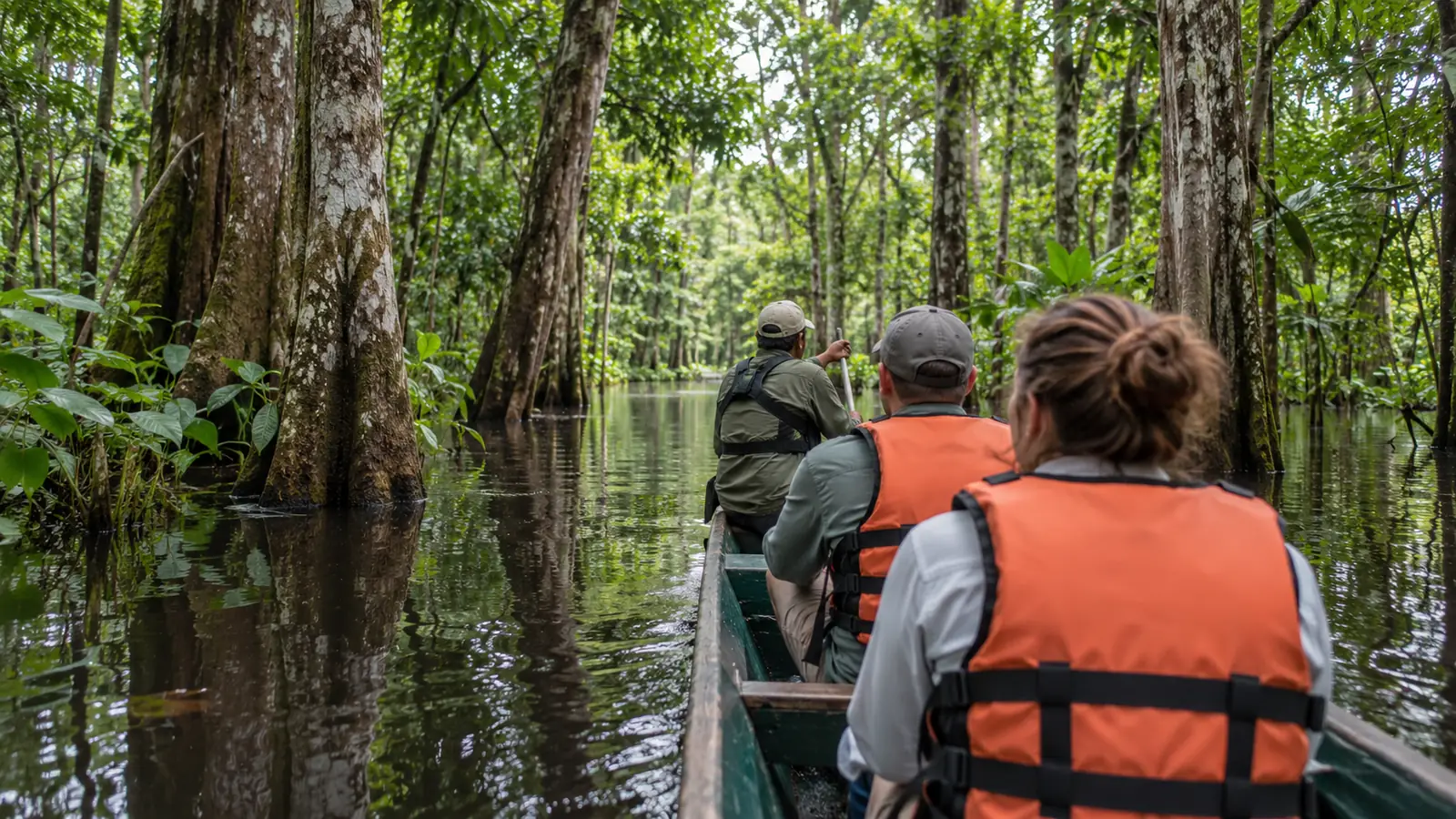
Higher water commonly occurs during the wetter part of the cycle. Small boats may enter flooded forest channels that are inaccessible at lower water, producing a close canopy-level perspective. Boat travel can become the dominant way to explore some areas.
Lower-water conditions
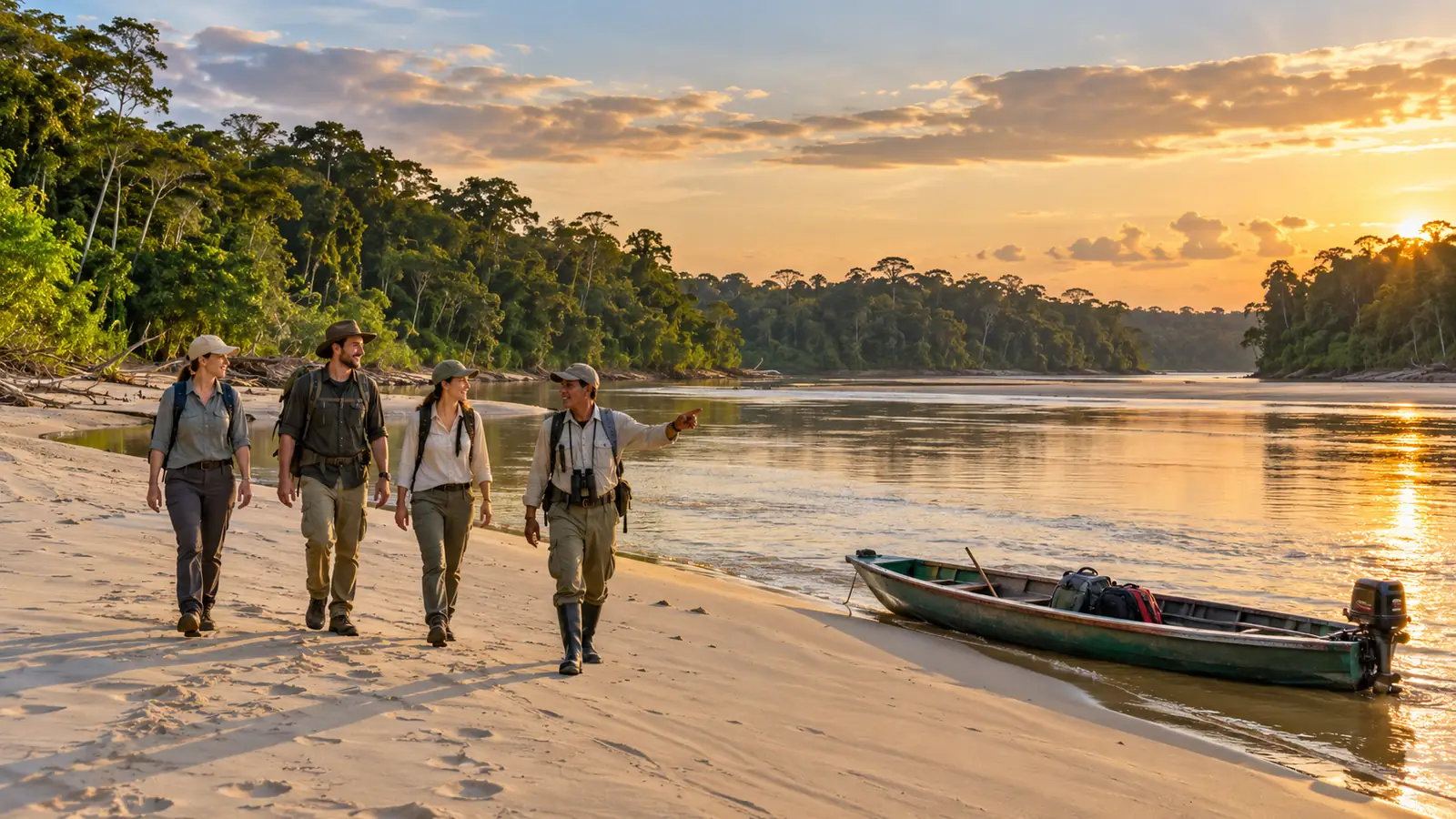
As water recedes, beaches and riverbanks can emerge, and some excursions involve more walking. Wildlife is not automatically easier or harder to see; its location and behavior change with food, water and habitat. Lower water should not be described as drought unless there is evidence of an abnormal event.
Transitions happen over weeks and vary by river. Ask the lodge which activities are normally available for your dates instead of relying on one generic chart. The future best time to visit the Iquitos Amazon guide and Iquitos high-water versus low-water comparison will examine these changes in detail.
Month-by-month guide
January
Tambopata is within its wetter period, so waterproof storage and flexible scheduling matter. Around Iquitos, higher-water conditions often support extensive boat travel. Expect heat, humidity and rain rather than all-day sunshine.
February
Rain remains a central planning factor. Forest vegetation is lush and amphibian activity can be noticeable, but trails may be muddy. Build buffer time into flight and boat connections.
March
The southern rainy season continues according to SERNANP’s general calendar. Northern river environments may remain high. Choose a lodge with clear wet-weather alternatives rather than expecting activities to proceed unchanged.
April
Tambopata begins transitioning toward drier months. Conditions can still be wet, while Iquitos waterways may remain high. April suits travelers who accept variability and want to combine regions outside peak winter demand.
May
May begins SERNANP’s recommended Tambopata period. Trails generally improve, though rain is still possible. It is a strong month for connecting a jungle program with the Andes before the busiest part of the season.
June
Drier conditions usually become more established in Madre de Dios. The forest does not become dry, and travelers still need rain protection. Cool southern air can occasionally affect early mornings and nights.
July
July is popular across Peru. Tambopata trails are often favorable, while Iquitos water may be receding. Reserve flights and lodge space earlier, especially when travel dates overlap with Peruvian national holidays.
August
August commonly continues the drier southern pattern. Daytime heat can feel intense on exposed river sections. Lower-water northern landscapes may reveal banks and increase walking components.
September
September can combine generally manageable Tambopata trails with warm weather. Rainfall may begin increasing toward the end of the dry cycle. It remains a strong all-round month when expectations stay flexible.
October
October is the final month in SERNANP’s recommended Tambopata period. It is transitional, so short storms and increasing humidity are normal possibilities. Northern rivers may still be relatively low before rising.
November
Rain becomes more frequent in southern Peru’s lowlands. Visitor numbers may be lower than in July or August. Lodge operations continue, but paths and activity order can change quickly.
December
December begins Tambopata’s official rainy period and holiday demand can affect flights. Around Iquitos, rising water gradually changes river access. Pack for rain from the start rather than treating showers as a surprise.
When is wildlife viewing best?
No month guarantees a species. Birds, monkeys, caimans and other animals respond to daily weather, food availability, water and human disturbance. Dawn and late afternoon often provide productive observation windows, while night walks reveal a different community of insects, amphibians and reptiles.
Drier trails can make walking easier in Tambopata, but rain may also activate frogs and other small wildlife. High water near Iquitos improves access to flooded forest; lower water changes feeding areas and exposes banks. Guide skill, quiet behavior and time in the field usually matter more than choosing a supposedly perfect week.
The future Peruvian Amazon wildlife guide will separate realistic possibilities from rare-animal marketing.
Best season by travel priority
| Priority | Consider | Important tradeoff |
|---|---|---|
| Easier Tambopata trails | May–October | Higher demand, especially July–August |
| Flooded-forest canoe routes near Iquitos | Higher-water months | Fewer beaches and less walking in some locations |
| River beaches and more walking near Iquitos | Lower-water months | Some small channels may be inaccessible |
| Combining with Machu Picchu | May–September | Book early because this is a popular Peru season |
| Fewer visitors | Selected wet or shoulder months | More rain and possible itinerary changes |
| Photography | Any month with time for varied light | Protect equipment from humidity and rain |
Rainy season: advantages and disadvantages
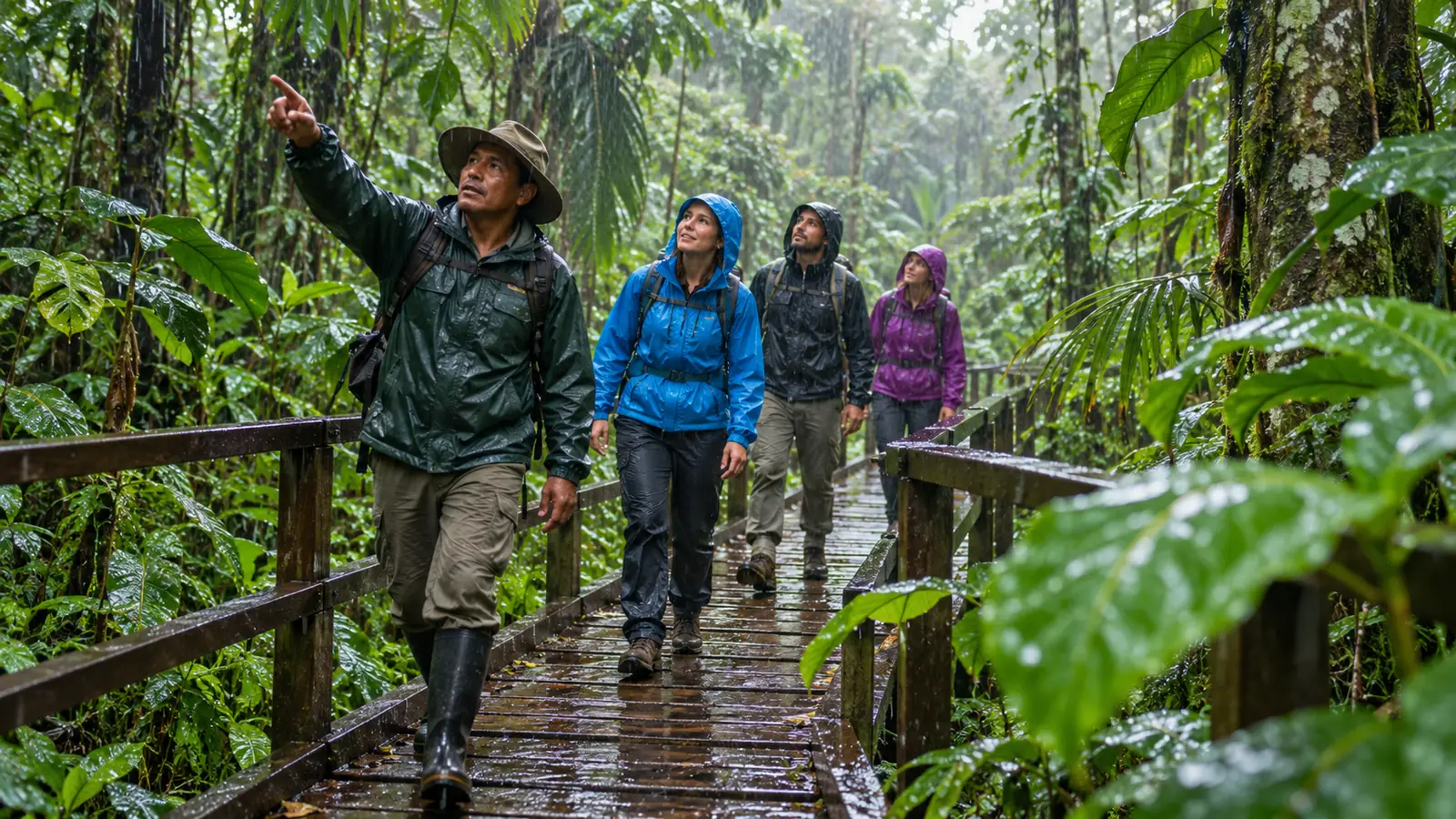
Rainy-season travel is not a failed version of the Amazon. Advantages can include dramatic skies, rich vegetation, active waterways and fewer visitors during some weeks. Rain can cool the air temporarily and create excellent atmosphere for photography.
Disadvantages include mud, slippery surfaces, wet clothing, reduced visibility during heavy showers and greater disruption risk. An experienced operator will adjust timing rather than forcing an unsafe activity. Travelers who dislike humidity or need predictable walking surfaces may prefer drier months.
What to pack for the season
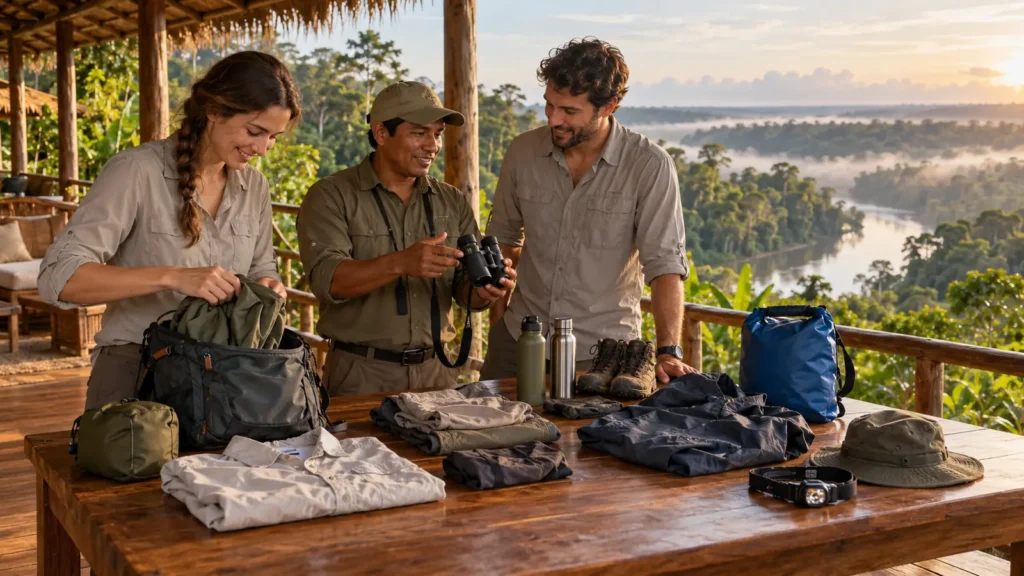
Every month requires lightweight long clothing, closed walking footwear, insect precautions, sun protection, rain protection and waterproof storage. During wetter months, add quick-drying changes and organize clothing inside separate dry bags. During drier months, do not remove the rain shell from the list.
For Tambopata between roughly June and August, pack a warm mid-layer for a possible friaje. For lower-water walking near Iquitos, prepare for sun exposure on open banks. Ask whether the lodge supplies rubber boots and what sizes are available.
The future Peruvian Amazon packing list will provide a complete checked system.
Choosing a current three-day tour
The Tambopata National Reserve 3-day tour includes Lake Sandoval, forest activities, a night walk, kayaking and canopy bridges. The Ecological Puerto Maldonado 3-day tour offers a separate lodge-based experience around the Madre de Dios gateway. Both are generally easiest to combine with Cusco.
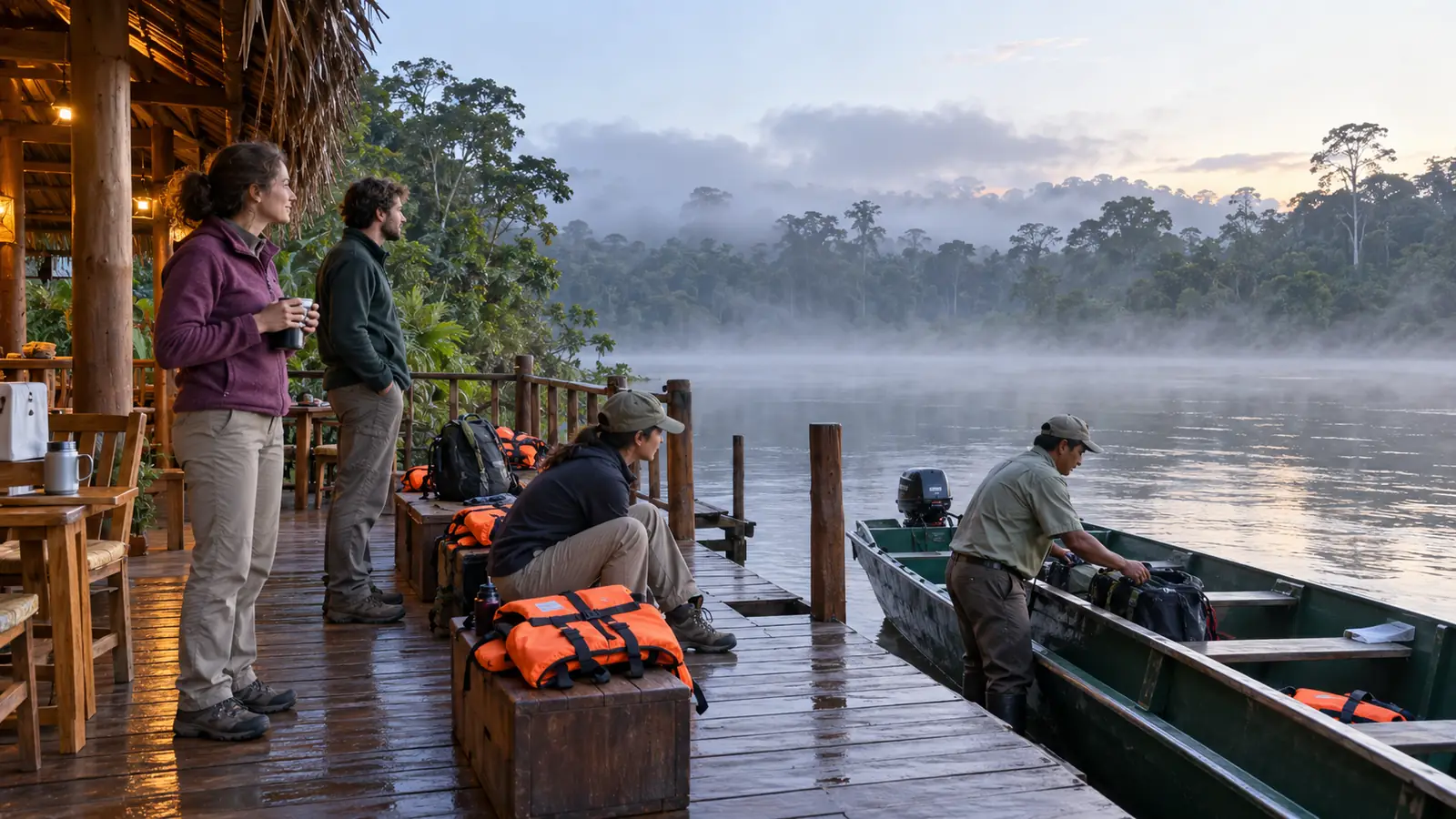
The Amazonas Sinchicuy Lodge 3-day tour begins from Iquitos and uses river transport to reach the lodge. Its seasonal character is connected more directly to northern river conditions.
Activity order may change with weather and water. Confirm the written itinerary for the actual departure and review the Iquitos or Tambopata comparison before selecting by month alone.
How season affects photography and daily comfort
For photography, the best conditions are often brief rather than seasonal. Dawn mist, post-rain light and late-afternoon reflections can occur in wet and drier months. Cloud softens harsh contrast inside the forest, while clear mornings improve broad river and canopy views. Carry a lens cloth, waterproof cover and sealed storage with moisture control; changing lenses in rain or a moving boat invites damage.
Heat and humidity affect comfort in every month. Drier weather may improve trails, but direct sun on rivers and lakes can feel intense. Wetter months may be cloudier yet demand more clothing changes. Select quick-drying fabric and pace activities rather than expecting one season to remove tropical conditions.
Common seasonal planning mistakes
- Assuming “dry” means rain-free: tropical showers remain possible and rain gear stays essential.
- Using an Iquitos water chart for Tambopata: the two regions have different rivers and visitor experiences.
- Booking a rare-animal trip: season may influence habitat access, but it cannot guarantee jaguars, otters or dolphins.
- Ignoring transfer logistics: a favorable month does not protect a tight flight-to-boat connection from delay.
- Choosing only by crowds: fewer visitors can coincide with wetter trails or fewer transport choices.
- Packing for the average: a short storm or friaje matters more on the day than a monthly climate average.
A strong plan combines seasonal tendencies with a recent operations update from the lodge. Ask which trails, lakes and channels have been used during the preceding week and what alternatives exist if conditions change.
Booking and planning tips
- Choose Iquitos or Tambopata before judging the season.
- Ask the lodge about current water and trail conditions.
- Keep domestic flight connections conservative.
- Book earlier for July, August and major holiday periods.
- Carry essential medication and one dry clothing set in hand luggage.
- Expect the guide to adjust activity order for safety and wildlife conditions.
- Use the Machu Picchu and Amazon itinerary when combining highlands and rainforest.
Frequently asked questions
What is the best month to visit the Peruvian Amazon?
There is no universal best month. May through October is the strongest general window for Tambopata, while Iquitos should be selected according to preferred water level and activities.
Does it rain in the dry season?
Yes. Rain can occur in every Amazon month. “Dry season” means a lower average tendency, not rain-free weather.
Is the rainy season worth visiting?
Yes for travelers comfortable with humidity, mud and itinerary flexibility. The forest remains active and beautiful, but waterproof organization becomes essential.
When are mosquitoes worst?
Mosquito exposure varies by location, rainfall, water and time of day. Use appropriate precautions in every month and seek personalized pre-travel health advice.
When is Tambopata least crowded?
Visitor levels are often lower outside the main May–October travel window, but individual lodges and holiday weeks vary. Lower crowds may come with wetter conditions.
What happens if it rains during a tour?
Short rain often does not stop activities. Heavy rain, river conditions or lightning may require a delay, shorter route or different activity. Safety and guide decisions take priority.
Can a friaje happen in the Amazon?
Yes, cool-air events can reach Madre de Dios and temporarily lower temperatures. They do not produce snow or mountain conditions, but a warm layer is useful.
Editorial accuracy note
Tambopata’s recommended and rainy seasons were checked against SERNANP’s official Tambopata National Reserve information. Northern habitat and receding-water observations were checked against SERNANP’s Pacaya Samiria visitor information. Seasonal boundaries are approximate and do not replace a short-range forecast or lodge operations report. Tour details were checked against Explora el Peru’s current Iquitos, Puerto Maldonado and Tambopata pages.