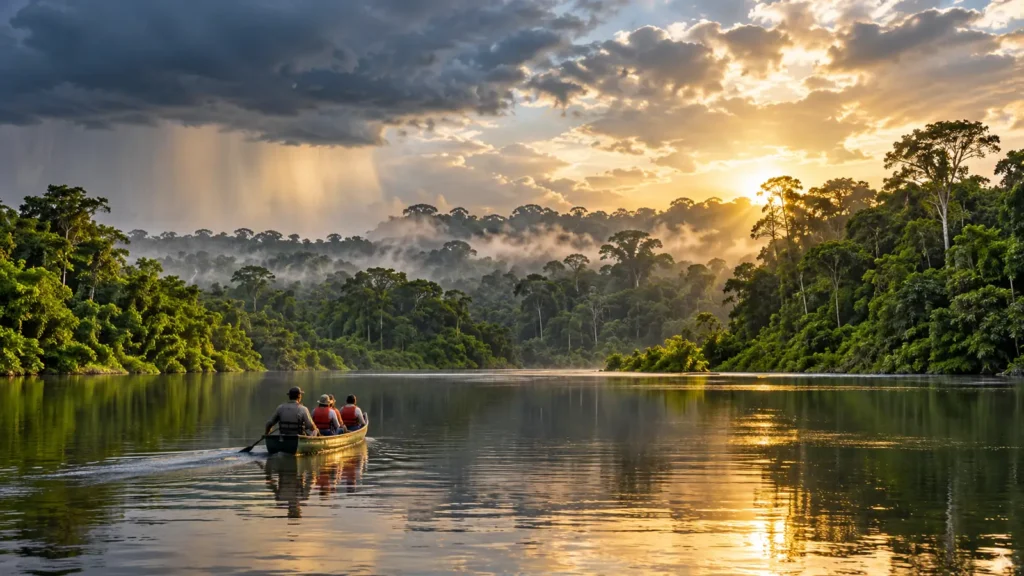

Lake Sandoval is one of the most accessible protected oxbow-lake experiences near Puerto Maldonado. A standard visit combines a motorboat ride on the Madre de Dios River, registration at the reserve checkpoint, an approximately 3-kilometer forest approach and quiet navigation on the lake. Its palm-fringed water supports birds, monkeys, caimans and a permanent population of giant river otters, but every animal remains wild and no sighting is guaranteed.
What is Lake Sandoval?
Lake Sandoval is a 127-hectare oxbow lake in the Sandoval sector of Tambopata National Reserve. It sits within the Madre de Dios River basin and is surrounded by aguaje palms and lowland rainforest. Oxbow lakes form when a river changes course and leaves an old channel separated from the main flow.
This calmer aquatic habitat differs from the fast, sediment-rich main river. The lake edge supports waterbirds, reptiles, monkeys and aquatic mammals, while the approach trail adds forest species and plant interpretation. The Tambopata travel guide explains how Sandoval compares with the more distant Middle and High Tambopata sectors.
Where is Lake Sandoval?
The lake is reached from Puerto Maldonado through the Madre de Dios River corridor. SERNANP describes access to the Sandoval sector as roughly 30 minutes by river followed by a 3-kilometer walk. Real travel time varies with departure port, lodge location, river conditions, group pace and checkpoint procedures.
Lake Sandoval is inside Tambopata National Reserve. Entry should be arranged through an authorized operator and visitors register at the Sandoval checkpoint. Do not confuse it with a roadside lake or assume an independent taxi can reach the shore.
Step-by-step: how a visit works
1. River transfer from Puerto Maldonado or your lodge

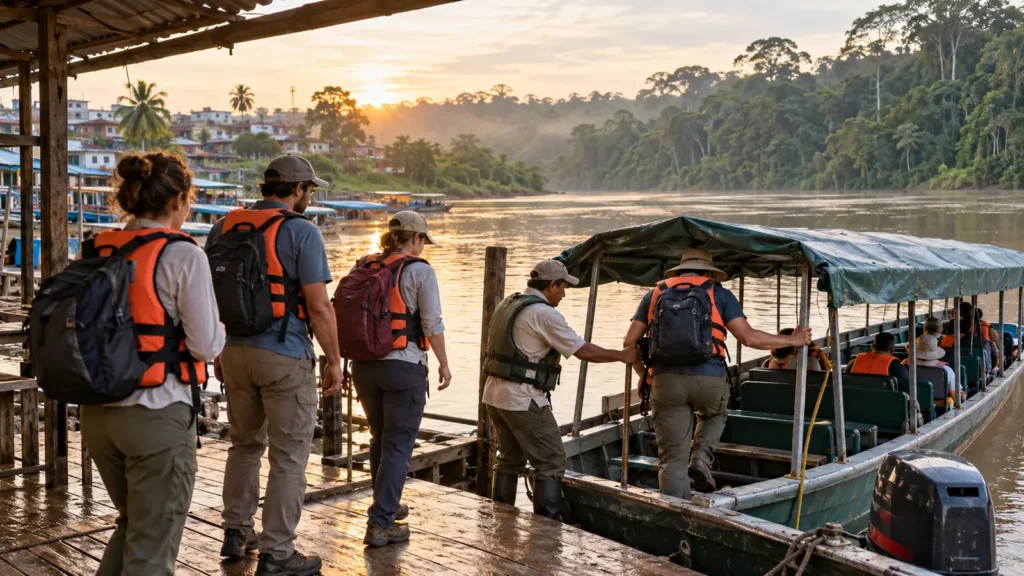
The day normally begins with a covered motorboat on the Madre de Dios River. Wear the provided life jacket and keep valuables inside a dry bag. Transfer duration depends on the actual starting point, so compare itineraries by named port or lodge rather than a generic “30 minutes.”
2. Registration and forest approach

After landing, the group registers according to reserve procedures and continues toward the lake. The official route is approximately 3 kilometers. Parts may include raised or improved trail, but travelers should still expect tropical heat, roots, insects and mud.
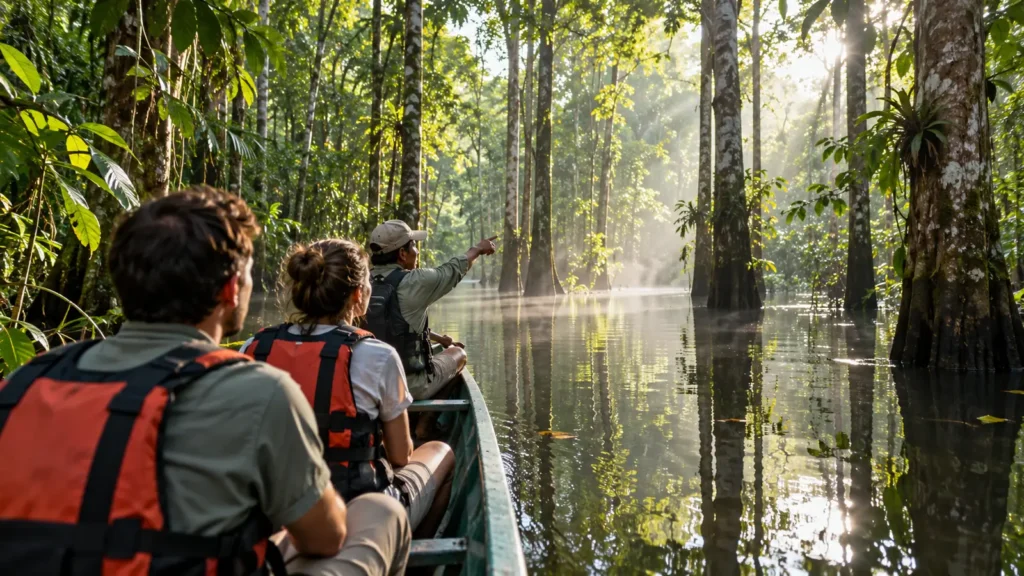
The walk is not dead time. Guides can interpret palms, buttress roots, insects, tracks and canopy sounds. Moving quietly improves the chance of noticing monkeys or birds before reaching the water.
3. Paddle boat or canoe on the lake
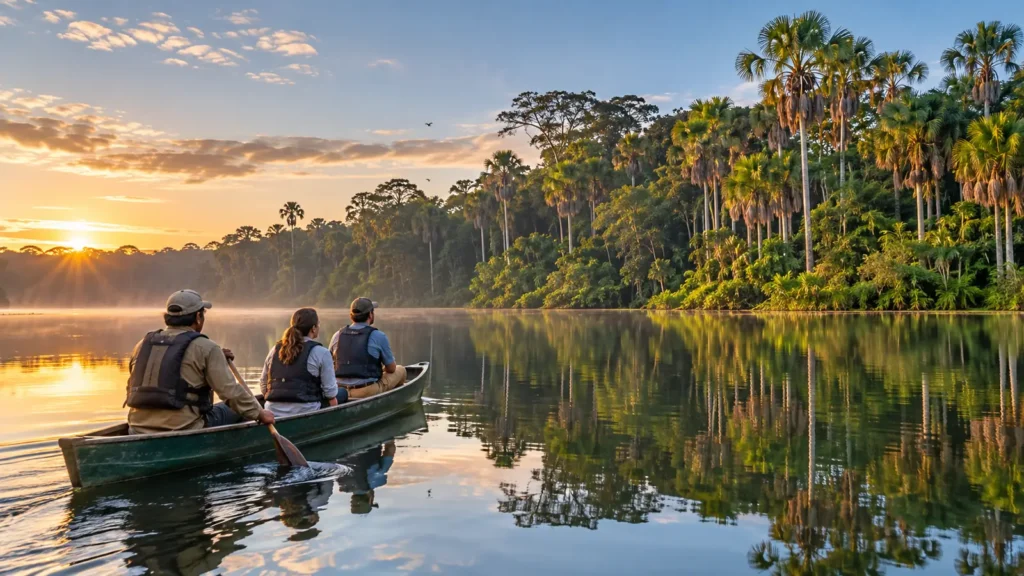
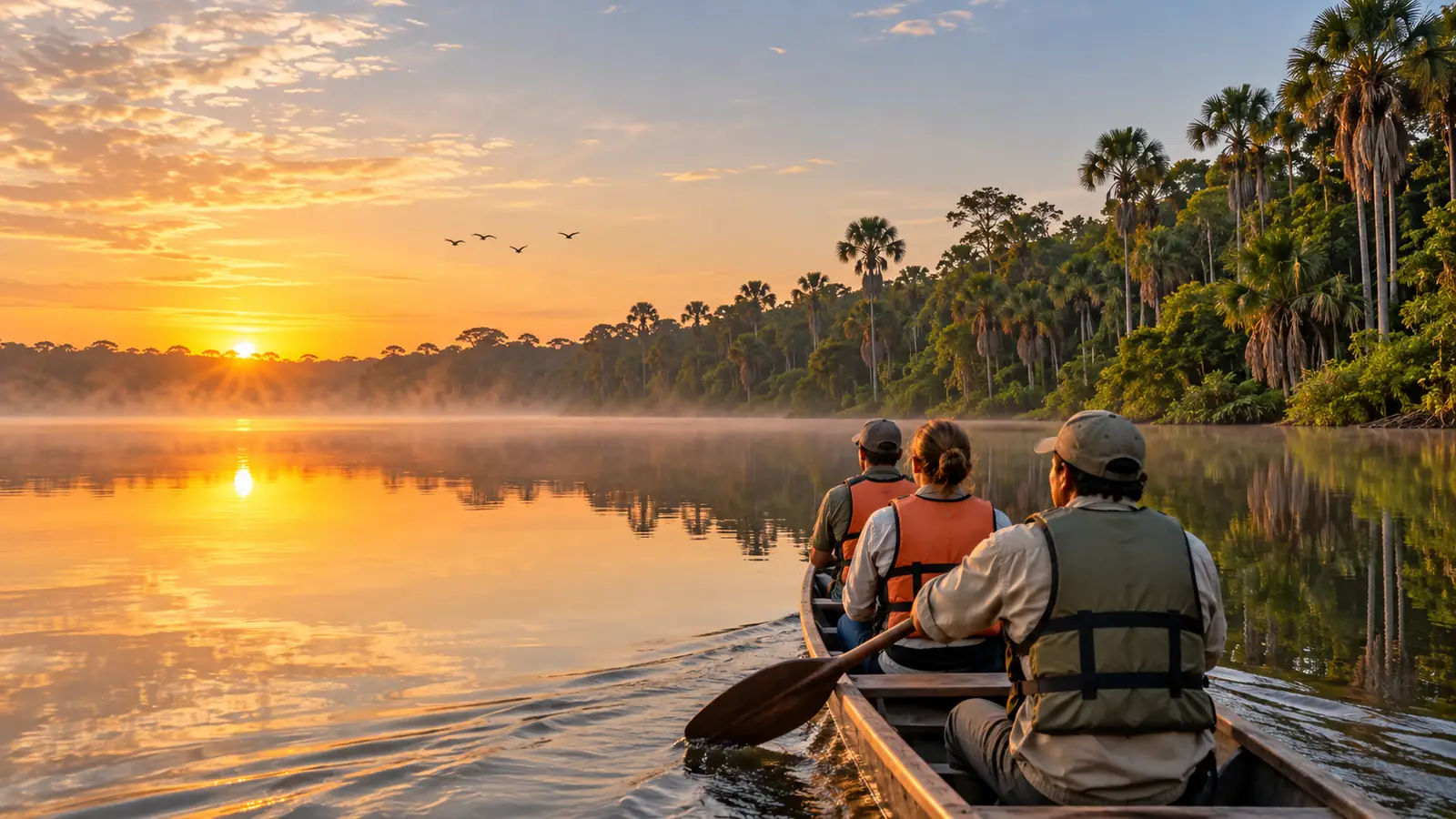
At the lake, visitors generally switch to a quieter paddle craft. Follow the guide when entering, distribute weight evenly and remain seated while moving. Motor noise is reduced, which makes it easier to hear birds and observe natural behavior.
4. Observation and return
The route explores lake margins and palm forest before returning along the same land-and-river chain. A half-day visit can feel rushed when wildlife activity, rain or walking pace changes. Ask how much time is genuinely spent on the water.
How difficult is the Lake Sandoval walk?
For an active traveler, the distance is moderate. The challenge comes from humidity, heat and surface conditions rather than elevation. Rain can make the path slippery, while dry periods can expose roots and uneven ground. Walk at a sustainable pace and hydrate before feeling thirsty.
SERNANP notes elevated trail infrastructure intended to improve accessibility for older adults and visitors with disabilities. That does not mean every transfer, landing or section is barrier-free. Travelers with mobility concerns should ask the operator about current boardwalk conditions, boat entry, handrails, rest points and assistance.
Wildlife you may see
Lake Sandoval supports an impressive range of wildlife, including giant river otters, hoatzins, herons, kingfishers, turtles, caimans, monkeys and macaws. Capybaras and other mammals may also use the lake or surrounding forest.
Possibility is not probability. Weather, water level, time of day, recent boat traffic and simple chance shape every visit. A quiet morning with a skilled guide generally offers better observation than a noisy group focused on reaching one animal.
The Tambopata wildlife guide distinguishes realistic sightings from rare species and explains the lake, riverbank, trail and clay-lick habitats.
Giant river otters: what responsible viewing looks like
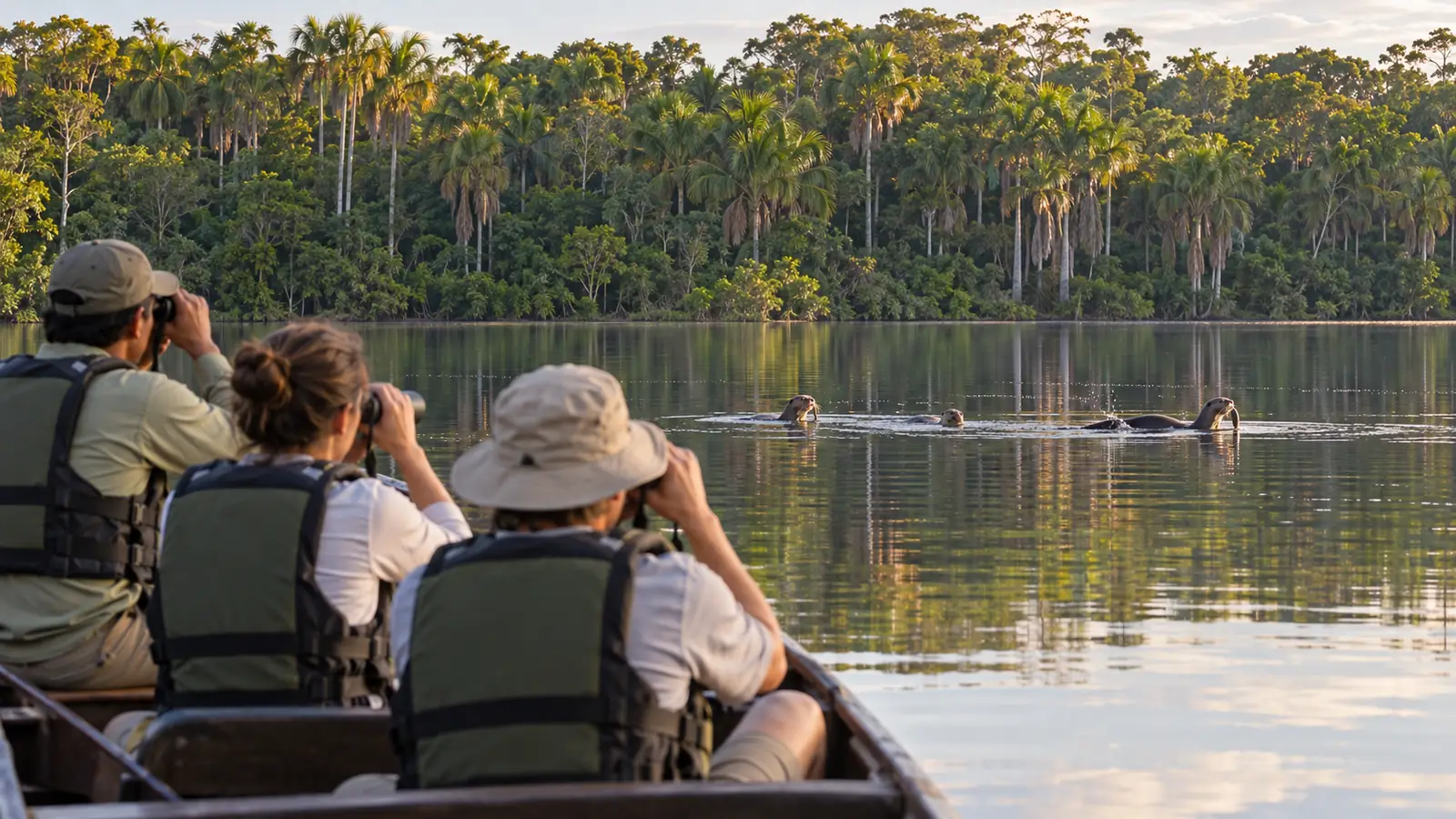
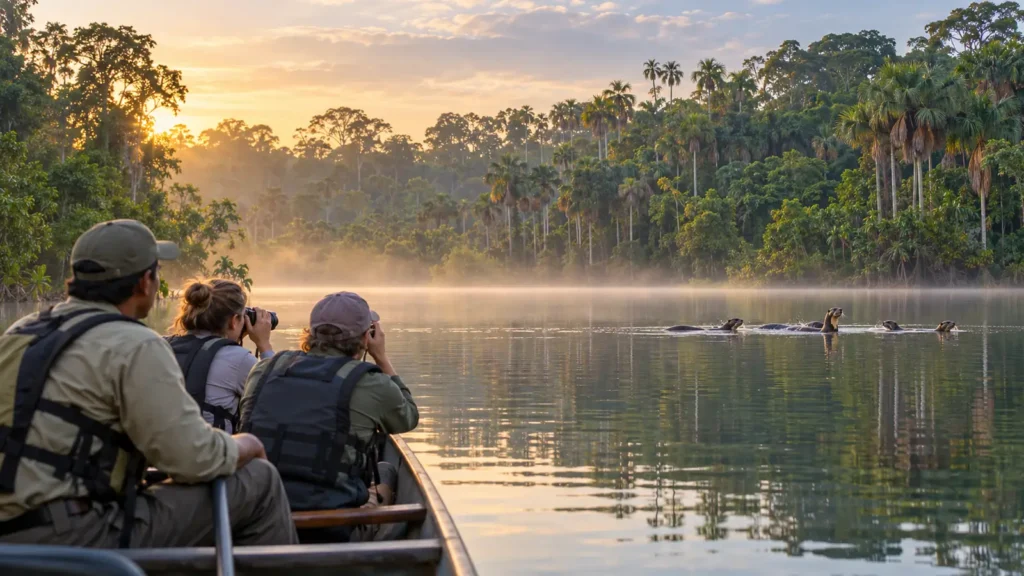
SERNANP identifies a permanent giant river otter population at Lake Sandoval. Family groups may be seen fishing, traveling, vocalizing or resting, particularly during quieter morning periods. Their known presence still does not guarantee an encounter.
If otters appear, the boat should avoid pursuing, surrounding or blocking them. Remain seated, keep voices low and use binoculars or a telephoto lens. The animals need room to fish and move between feeding and resting areas.
Never ask the guide to approach a den or feeding site. A distant view of natural behavior is a successful encounter.
Birdwatching at Lake Sandoval
Aguaje palms, open water and forest edges create productive bird habitat. Visitors may detect hoatzins, herons, kingfishers, jacamars, toucans, macaws and many smaller forest species. Dawn brings softer light and a stronger chorus, though the exact species vary.
Serious birders should request a specialist guide and a small or private boat. Tell the operator whether the priority is photography, identification or a general nature experience. Avoid routine playback, especially near nests or territorial birds.
Caimans, turtles and monkeys
Caimans may remain partly hidden along vegetated margins, while turtles can bask on logs when conditions allow. Monkeys move through the canopy around the lake and approach trail. Guides often detect calls or branch movement before travelers see the animals.
Do not feed monkeys or move the boat directly beneath them. Keep hands inside the craft near caiman habitat and allow the guide to choose distance. Wildlife photographs should come from patience, not manipulation.
The observation tower and interpretation center

SERNANP lists an interpretation center near the checkpoint and an observation tower offering a wider view of the lake landscape. Whether the tower is included depends on the itinerary, opening conditions and available time.
An elevated perspective reveals how the lake sits within palm swamp and forest. It is useful for landscape photography and scanning for distant birds, but it does not replace quiet time at water level. Ask the guide before climbing and follow capacity and railing rules.
Best time to visit Lake Sandoval
Tambopata’s recommended season is generally May through October, when rain is often less frequent and the approach trail may be easier. December through March is wetter, greener and muddier, with a greater chance of route or timing changes. Rain is possible in every month.
Water level also changes the lake edge and landing conditions. There is no single month that guarantees otters or other wildlife. Read the best time to visit Tambopata for month-by-month planning and information about temporary cool spells called friajes.
Morning, afternoon or full day?
An early visit normally offers cooler walking, calmer water and active birds. It can also improve the chance of observing otters fishing, although no schedule controls wildlife. Afternoon light can be attractive, but heat and developing storms may affect the experience.
A full-day plan creates more observation time and a less hurried walk. A half-day can work when the group starts close to the access point and accepts a narrower wildlife window. Confirm the reserve exit time and actual on-lake duration.
If photography is important, ask whether the group can pause without delaying other guests and whether the paddle boat carries enough people for a stable, quiet outing. A private guide may improve pacing, but it does not permit closer wildlife approaches or exceptions to reserve rules.
Day trip or lodge package?
| Option | Advantages | Tradeoffs |
|---|---|---|
| Day trip from Puerto Maldonado | Fits a city stay and focuses directly on the lake | Less flexibility if flights, rain or crowds delay departure |
| Nearby lodge package | Can support earlier starts and multiple forest activities | Quality and exact location vary; verify transfers |
| Three-day Amazon program | Combines Sandoval with night walks, rivers and other habitats | The lake may receive only one fixed time window |
Compare actual field time using the guide to how many days you need in the Peruvian Amazon and the three-day Iquitos and Tambopata itinerary options.
What to bring
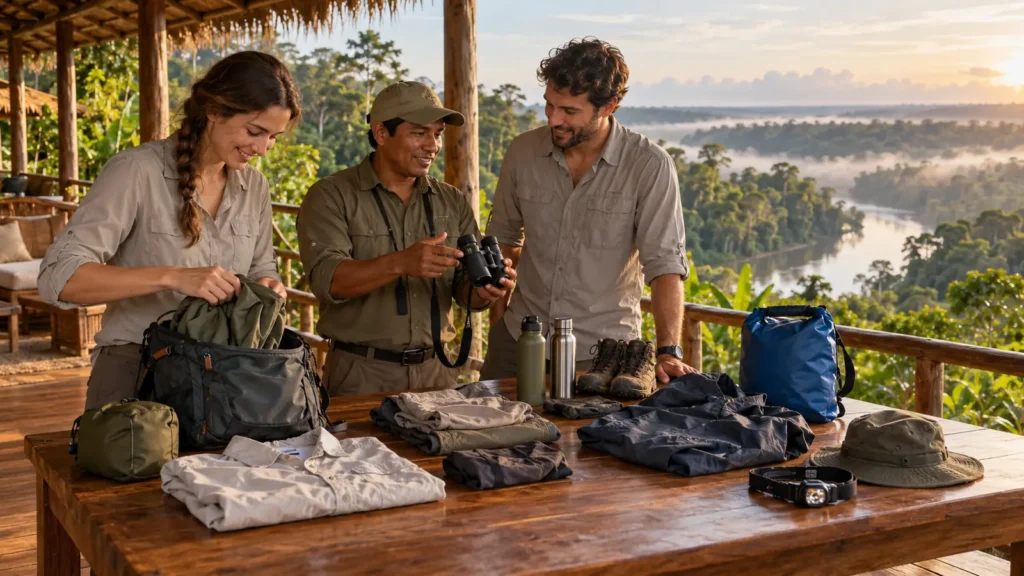
- Lightweight long-sleeve shirt and trousers.
- Closed walking shoes or rubber boots suitable for mud.
- Rain shell or poncho accessible during the excursion.
- Hat, sunscreen and refillable water bottle.
- Insect repellent used according to its instructions.
- Binoculars and a camera with waterproof protection.
- Small daypack or dry bag rather than a hard suitcase.
The complete Peruvian Amazon packing list covers weather, health items and electronics in more detail.
Safety on the trail and lake
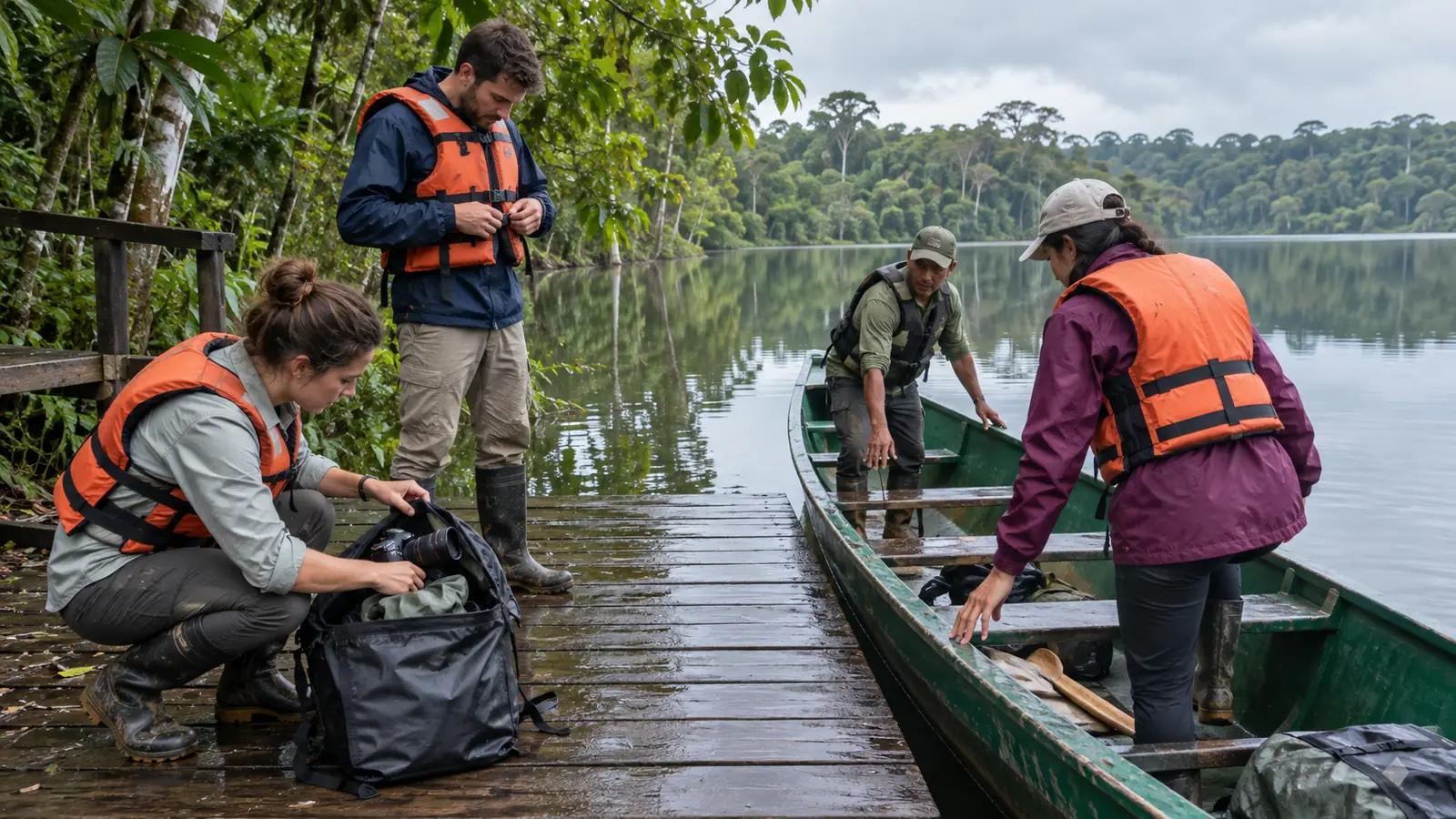
Use an authorized guide, stay on the marked route and follow checkpoint instructions. Wear a life jacket during motorboat and lake navigation. Step into small boats only when directed, keep hands clear between the hull and dock, and remain seated while underway.
On the trail, watch roots and slippery surfaces instead of walking while looking through a camera. Do not touch plants, insects or reptiles. The Peruvian Amazon safety guide explains health preparation, boats, storms and night activities.
Responsible visitor rules
- Keep voices low on the lake and trail.
- Never feed, touch, call or chase wildlife.
- Use binoculars instead of demanding a closer boat position.
- Stay within marked routes and designated landings.
- Take all waste out and avoid single-use plastics.
- Follow ranger and guide decisions when weather changes.
- Do not collect plants, feathers, shells or other natural material.
Photography tips
Use a quiet shutter and moderate telephoto lens. A small dry bag protects the camera during the river transfer and sudden rain. Keep the center of gravity low in the paddle boat and never stand without explicit permission.
Reflections, palms and mist are strong subjects even when animals remain hidden. Photographing the habitat produces a more honest record than pressuring the guide for a close encounter.
Current Explora el Peru tour option
The Tambopata National Reserve three-day tour currently includes a visit to Lake Sandoval, a forest approach and guided lake exploration according to its live itinerary. It also includes lodge accommodation, river transport and additional activities.
Before booking, confirm the exact departure time, walking distance, time on the lake, reserve entrance, group size and whether the visit occurs on arrival day. The Puerto Maldonado ecological tour is another lodge-based option, but its route should be compared separately.
Frequently asked questions
How far is Lake Sandoval from Puerto Maldonado?
SERNANP gives an access reference of about 30 minutes by river followed by a 3-kilometer walk. Door-to-lake time is longer once transfers, registration and group pace are included.
Can you drive directly to the lake?
No. The standard protected-area route combines river transport and a forest approach before boarding a lake boat.
Are giant river otters guaranteed?
No. A resident population uses the lake, but visibility depends on animal movement, weather, timing and disturbance.
Is the walk difficult?
It is moderate in distance but can feel harder because of heat, humidity and mud. Discuss mobility needs and current trail conditions with the operator.
Can children visit?
Many can when they tolerate the walk, boat stages and humidity. Confirm child-sized life jackets, pace, shade and emergency procedures.
Can I visit without a guide?
Tambopata National Reserve requires visitors to use authorized tourism services. A qualified guide is also essential for navigation, interpretation and responsible wildlife viewing.
Is Lake Sandoval better than a clay lick?
They are different habitats. Sandoval emphasizes lake, palm forest and aquatic wildlife; clay licks focus on seasonal bird or mammal behavior and often require longer travel.
Editorial sources
Lake size, access, visitor infrastructure and wildlife context were checked against the official SERNANP Tambopata National Reserve page. The package example was checked against Explora el Peru’s live Tambopata tour page. Conditions, entry procedures and wildlife activity can change; confirm them for the travel date.