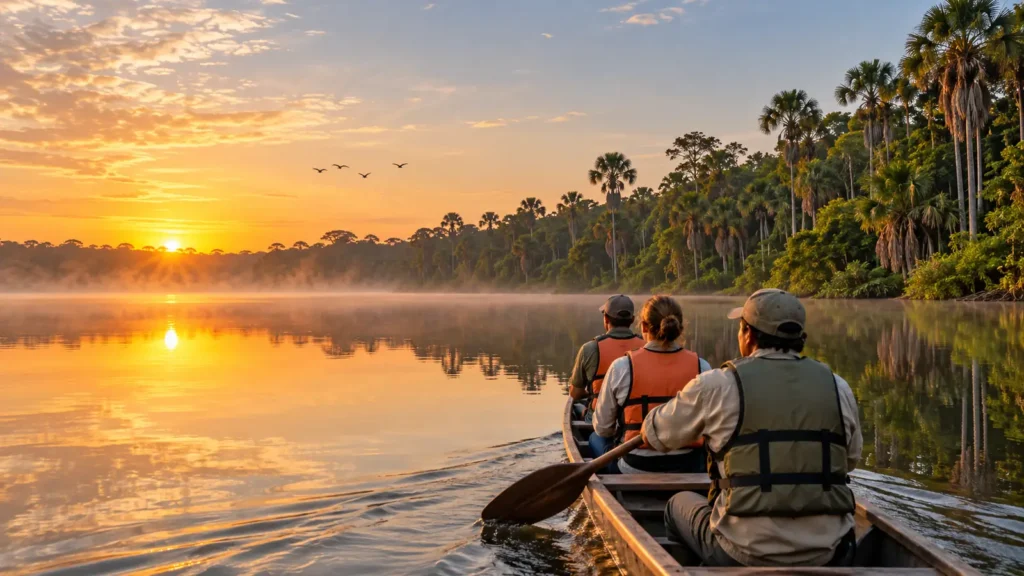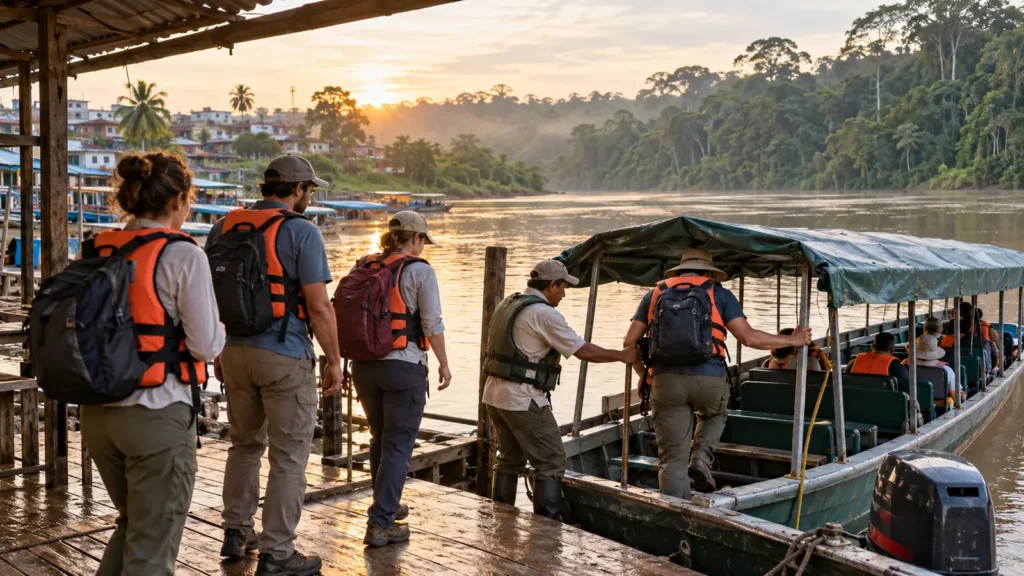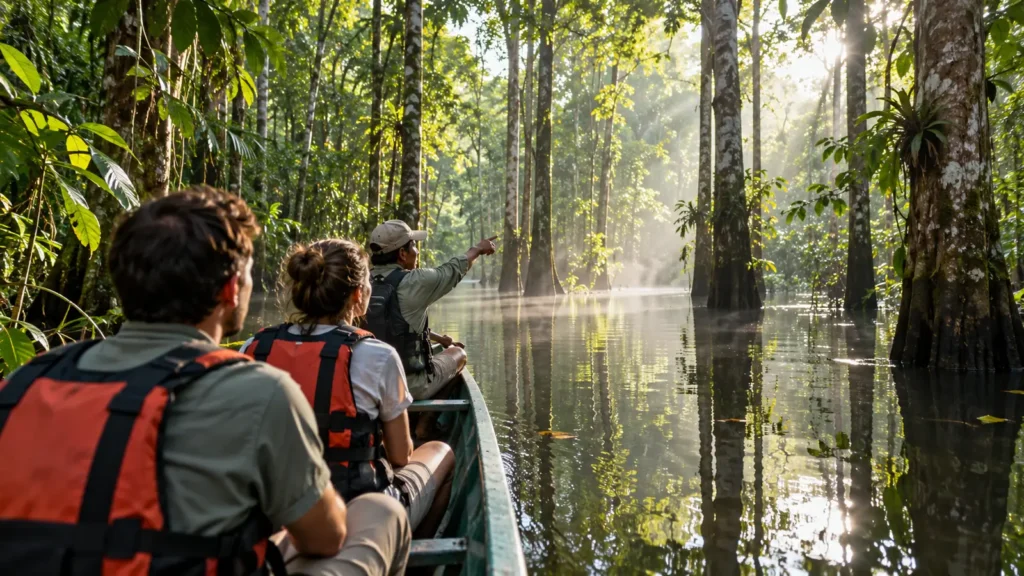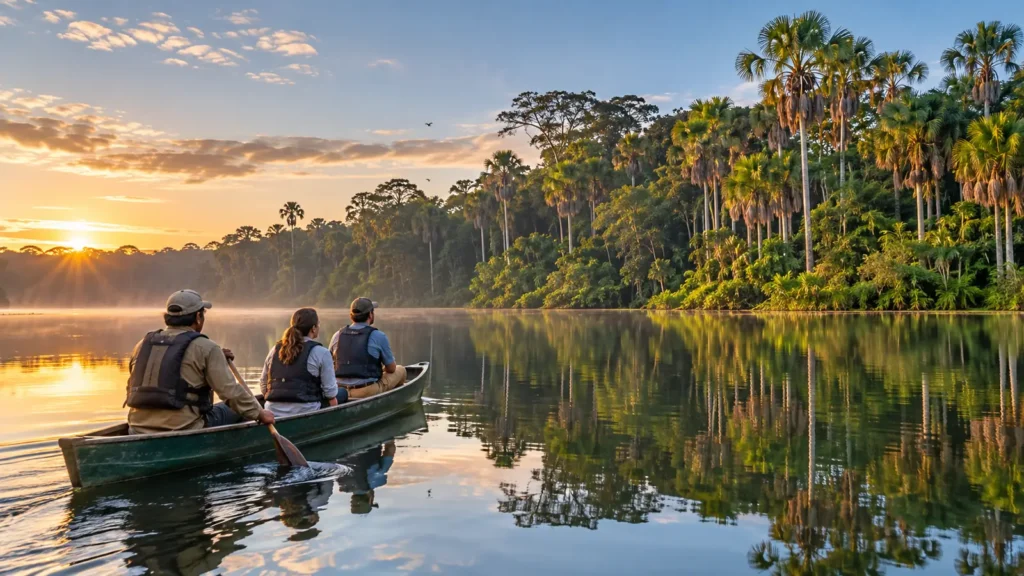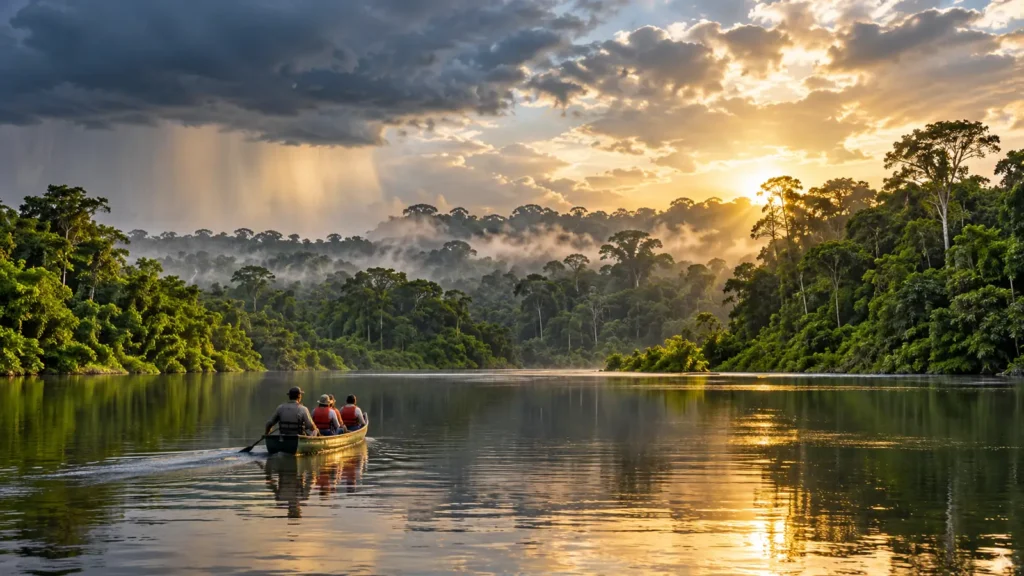
Tambopata wildlife is exceptionally diverse, but a successful trip depends on choosing habitats rather than chasing a promotional species list. Oxbow lakes offer possibilities for giant river otters and waterbirds; forest trails reveal monkeys, tracks, insects and plants; riverbanks support caimans and capybaras; and clay licks can attract parrots and macaws when conditions align. Jaguars, tapirs, anacondas and harpy eagles occur in the region but are difficult to see and should never be guaranteed.
Why Tambopata is a major wildlife destination
Tambopata National Reserve protects 274,690 hectares in Madre de Dios. SERNANP reports 600 bird species, 169 mammal species, 103 reptiles, 103 amphibians and 205 fish. Those numbers describe ecological richness, not what one traveler will see in three days.
The reserve includes rivers, oxbow lakes, palm swamps, bamboo, floodplain forest, terra firme forest and clay banks. Each habitat supports different behavior. The Tambopata travel guide explains the Sandoval, Middle Tambopata and High Tambopata sectors and why distance from Puerto Maldonado changes the trip.
What wildlife can you realistically see?
| Wildlife group | Useful habitat | Realistic expectation |
|---|---|---|
| Macaws and parrots | Canopy, river corridors and authorized clay licks | Calls and flyovers are common possibilities; large clay-lick gatherings depend on weather and route |
| Monkeys | Forest canopy, lake edges and fruiting trees | Several species are possible with quiet early walks |
| Giant river otters | Sandoval and selected oxbow lakes | Possible, never guaranteed; family groups require space |
| Caimans | Lake and river margins | Often searched for after dark by trained guides |
| Capybaras | Riverbanks and open edges | Possible during boat travel, especially in quieter stretches |
| Tapirs | Forest trails, palm swamps and mammal clay licks | Tracks are more likely than a direct sighting |
| Jaguars and ocelots | Large undisturbed territories | Rare, chance encounters; never a standard inclusion |
| Frogs, insects and spiders | Understory and wet microhabitats | Strong possibilities on guided night walks |
Giant river otters at oxbow lakes
Giant river otters are social, aquatic predators that use lakes and slow waterways. SERNANP identifies permanent family groups at Lake Sandoval and other reserve lakes, including Cocococha and Sachavacayoc. Their presence does not mean every boat sees them.
Guides look and listen from designated routes, often early in the day. If otters appear, the boat should remain calm and avoid blocking travel or fishing. Loud voices, pursuit and repeated repositioning can disrupt a family. A distant view of natural hunting or grooming is more valuable than a close encounter produced by pressure.
The forthcoming Lake Sandoval guide will cover the forest approach, paddle boats, observation tower and responsible lake etiquette.
Macaws, parrots and clay licks
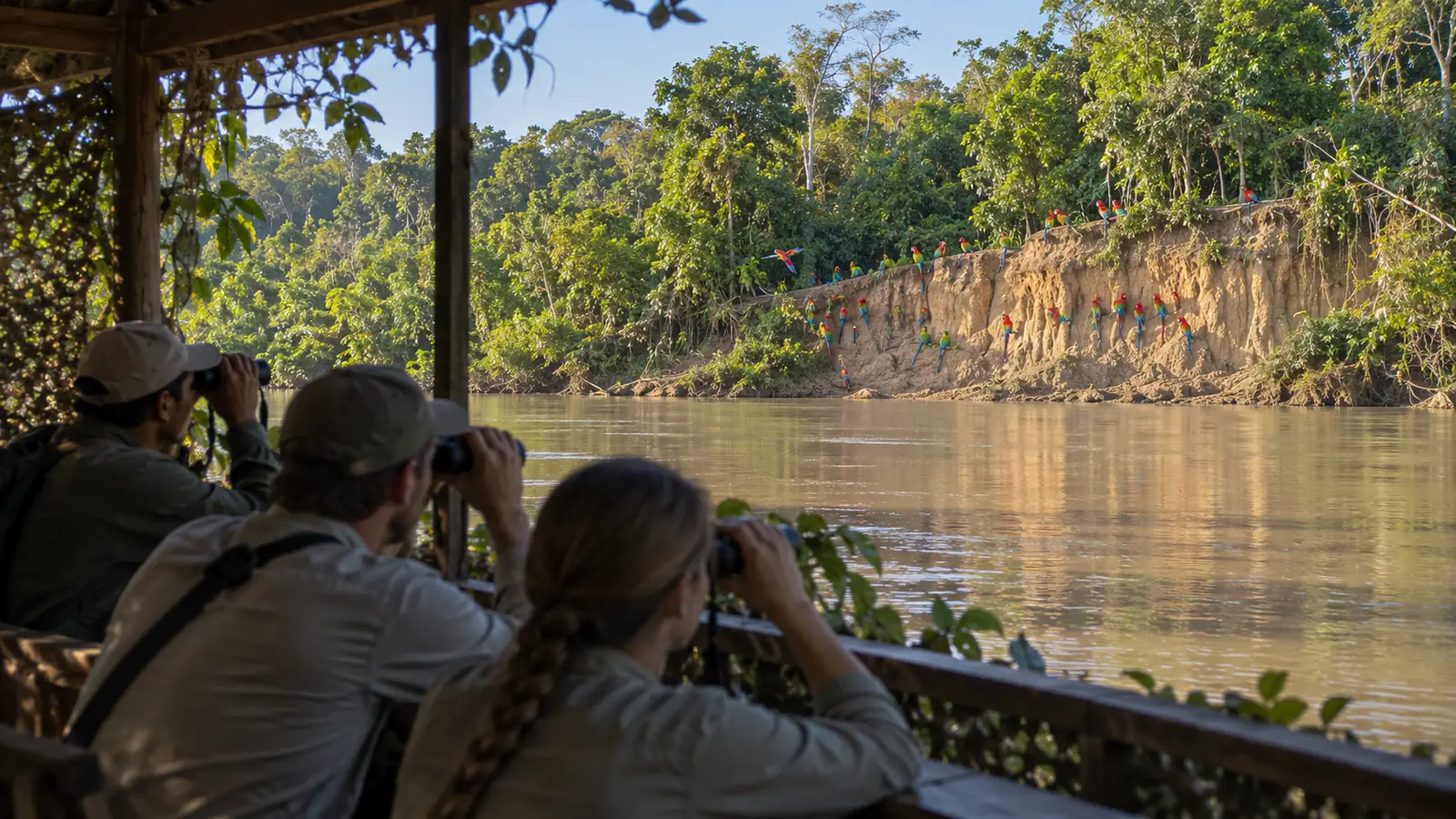
Tambopata’s clay licks are among its best-known wildlife experiences. Parrots and macaws may gather on mineral-rich riverbanks, especially on clear mornings. SERNANP highlights the Chuncho and Colorado clay licks in the High Tambopata sector and provides designated viewing infrastructure.
Activity changes with weather, food supply, breeding cycles and disturbance. Rain or heavy cloud can delay or reduce a gathering. Ethical viewing means using the authorized hide or viewpoint, keeping voices low and accepting the guide’s decision about distance. A lodge that guarantees hundreds of macaws every morning is overselling a natural event.
Macaws also appear as pairs or small groups flying over rivers and palm forest. These unscripted views can be memorable even when the clay bank is quiet.
Monkeys and life in the canopy
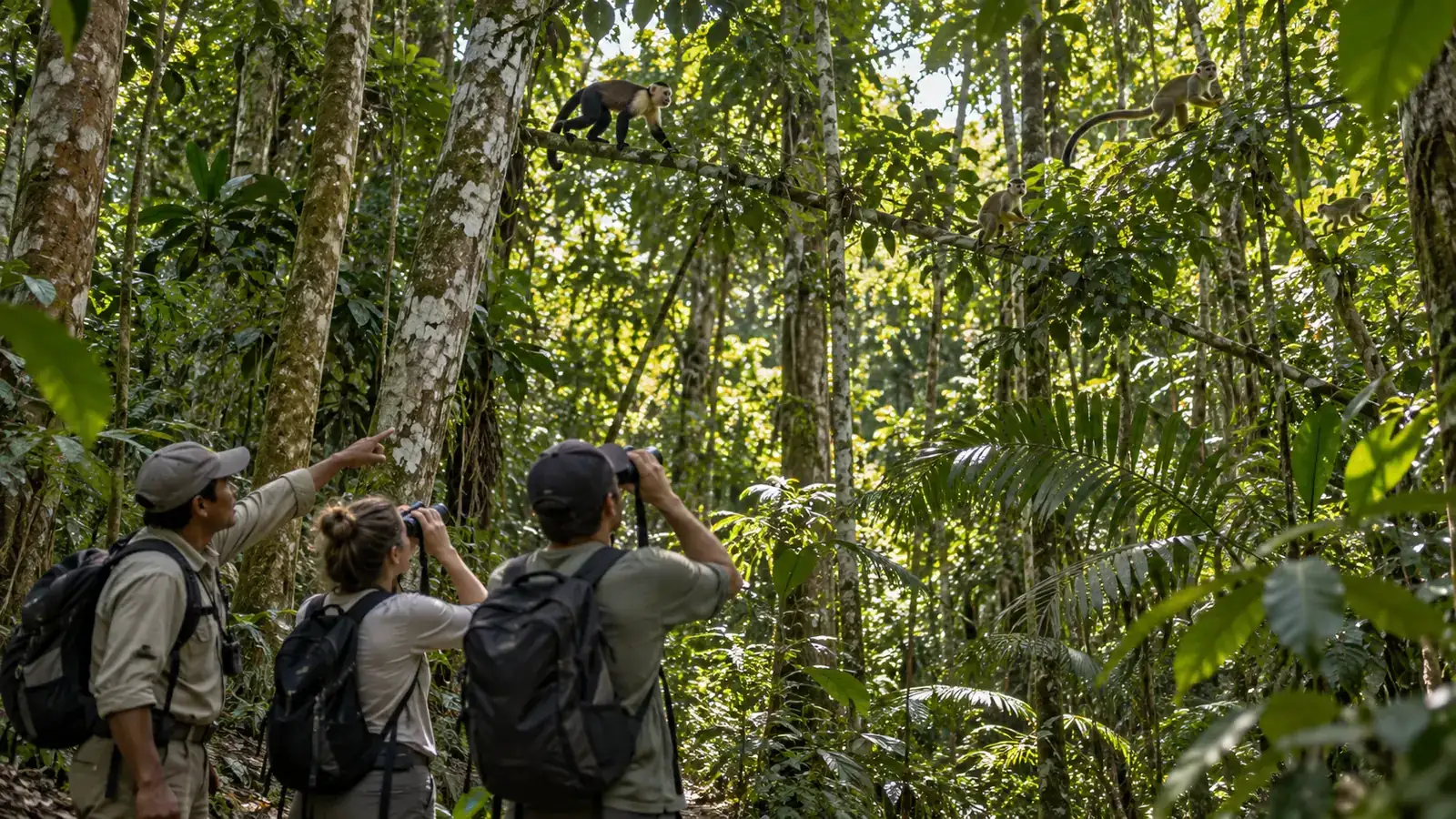
Several monkey species inhabit the region, including capuchins, squirrel monkeys, howlers, tamarins and spider monkeys in suitable habitat. A guide may first detect calls, moving branches or falling fruit. Early and late hours are often productive because heat is lower and forest activity is easier to hear.
Monkey groups should be observed without feeding or calling them closer. Food alters behavior, creates conflict and can expose wildlife to disease. Keep backpacks closed and follow instructions at any site where animals have become accustomed to people.
Binoculars are more useful than trying to stand directly beneath a group. Look for movement across canopy gaps and allow the animals to choose their route.
Birds beyond the macaws
Tambopata’s bird diversity extends far beyond colorful parrots. Hoatzins, toucans, herons, kingfishers, raptors, antbirds, manakins and many other groups use different forest layers. A general nature guide can introduce visible species, while serious birders benefit from a specialist guide and private pace.
Birding improves when the itinerary includes dawn starts, river edges, lake margins, canopy viewpoints and interior forest. Identify a few priority families rather than presenting an enormous target list. Record calls only when site rules and the guide permit it; playback can stress territorial birds and should not be routine.
Caimans and nocturnal wildlife
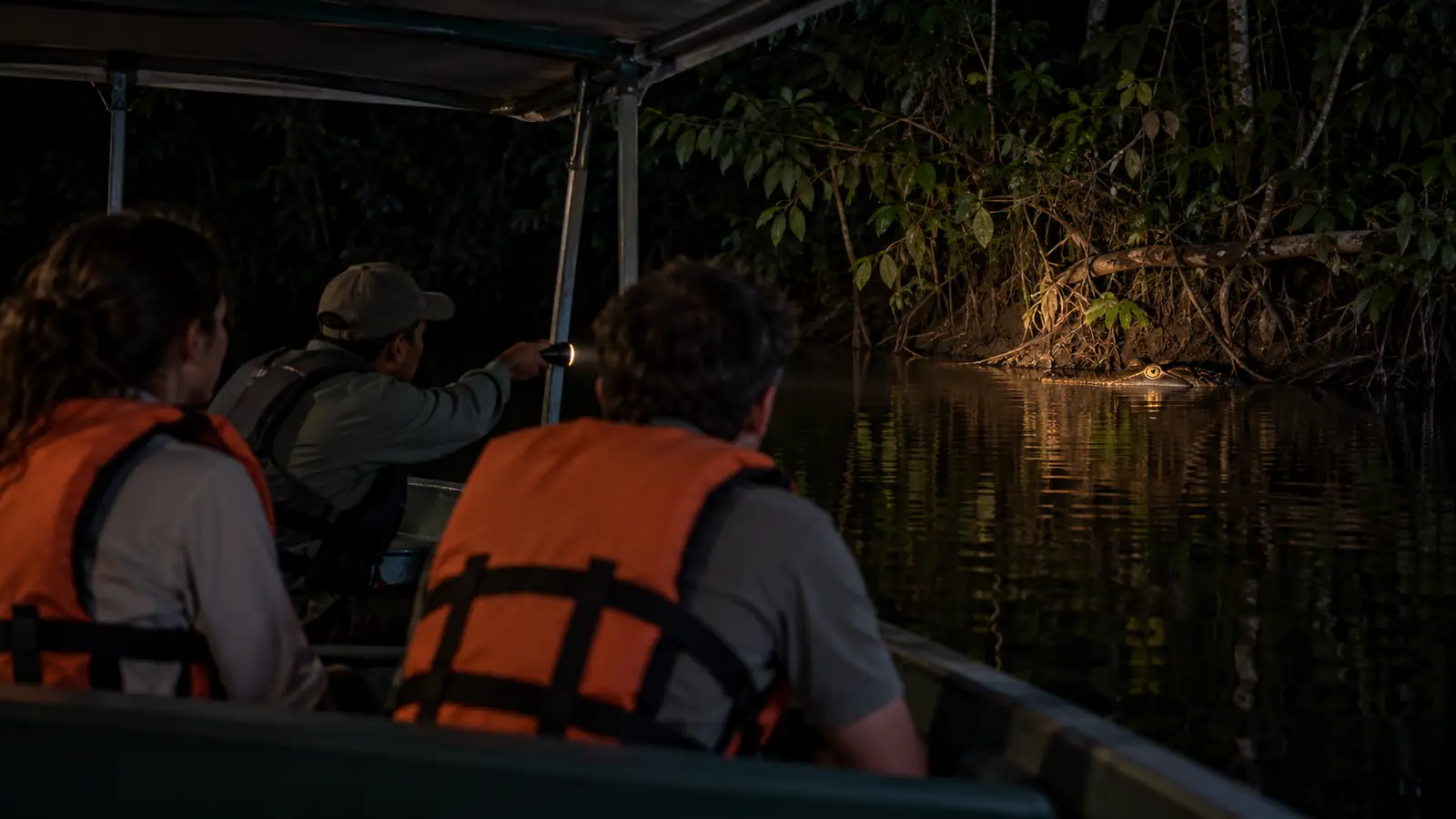
After dark, guides may locate caimans by eye shine along quiet margins. Travelers should remain seated in the boat, wear a life jacket and avoid leaning toward the water. The driver and guide decide whether current, visibility and weather make the outing appropriate.
Night walks can reveal frogs, insects, spiders, sleeping birds and occasionally snakes or small mammals. Use a headlamp with a moderate beam, step only where the guide indicates and never touch an animal. Many tiny species rely on camouflage; careful observation is safer and more rewarding than handling.
Tapirs, jaguars and other elusive mammals

Tapirs and jaguars occur in the Tambopata landscape, but both can move across large areas and avoid people. For most visitors, tracks, scat, scratches or camera-trap information are more realistic evidence than a direct view. A skilled guide can turn these signs into a meaningful lesson about forest ecology.
Jaguars are sometimes seen from rivers in remote sectors, yet this is an exceptional event. Do not choose a short standard tour because a gallery includes a jaguar image. Tapir clay licks require specialized routes, extended waiting and strict behavior; they are not interchangeable with macaw clay licks.
Ocelots, peccaries, deer, agoutis and pacas may also occur. Quiet movement and more days increase opportunity, but none should be promised.
Capybaras, turtles and river-edge sightings
Boat transfers are observation time. Capybaras may graze on open banks, turtles bask on logs and waterbirds patrol the shallows. Keep binoculars available and electronics protected so the group does not demand an abrupt or unsafe maneuver.
The boat should slow without surrounding wildlife or cutting off an escape route. Never ask the driver to land at an unapproved bank for a photograph. River current, hidden debris and erosion make seemingly simple approaches risky.
Amphibians, insects and the overlooked majority
Frogs, beetles, moths, ants, mantises and spiders drive much of the forest’s ecological activity. Rainy or humid nights can be particularly productive for amphibians and invertebrates. These animals are often easier to observe than large mammals and reward travelers who slow down.
Avoid flash repeatedly at very close range, peeling bark or moving animals onto cleaner backgrounds. Photograph organisms where the guide finds them and leave leaves, webs, nests and microhabitats intact.
Wildlife by habitat
Oxbow lakes and palm swamps
Look for giant river otters, hoatzins, herons, kingfishers, caimans, turtles and monkeys along the edge. Quiet paddle boats reduce disturbance and allow guides to hear calls.
Terra firme forest
Trails through higher forest are useful for monkeys, toucans, understory birds, insects and mammal signs. Direct large-mammal encounters remain uncommon.
Rivers and exposed banks
Boat routes can reveal capybaras, caimans, turtles and birds. Water level, traffic and time of day influence visibility.
Clay licks
Bird clay licks serve parrots and macaws, while mammal clay licks can attract tapirs and other animals. Each site has its own protocol, viewing distance and access effort.
Bamboo and secondary growth
These habitats support specialized birds and smaller animals. They may look less dramatic than tall forest but add important diversity to an itinerary.
Best time for Tambopata wildlife
Wildlife remains present all year. May through October generally offers less rain and easier trail conditions, while December through March is wetter and can favor amphibian activity and lush aquatic habitats. Clay-lick activity depends on good weather and biological cycles rather than a guaranteed month.
Read the best time to visit Tambopata for monthly conditions, friajes and trail tradeoffs. Choose dates that permit a good lodge and enough nights instead of pursuing a mythical perfect week.
Plan wildlife viewing around the daily rhythm
Dawn is valuable for bird calls, monkey movement and calm lake conditions. A departure before breakfast may feel demanding, but it often provides cooler temperatures and less boat traffic. Keep binoculars accessible, move quietly at the dock and prepare clothing the night before so the group does not delay the guide.
Late morning is useful for forest interpretation, plants, tracks and insects even when large animals become less active. Midday can be hot, and some lodges use it for rest, lunch or a shorter shaded walk. This pause helps travelers remain attentive during the more productive afternoon period.
Late afternoon brings softer light and renewed activity along riverbanks and canopy edges. Return timing must still respect reserve rules, visibility and safe navigation. After dark, a focused night walk or slow boat excursion reveals a different community rather than simply extending a daytime checklist.
A balanced program therefore uses several short observation windows instead of one exhausting all-day pursuit. Ask whether a tour includes genuine dawn and evening field time or only transfers during those hours. Private guiding can help photographers and birders maintain a slower pace, but even a private group must follow marked routes and wildlife-distance rules.
Why habitat variety beats a long species list
A lodge near one riverbank may provide excellent capybara and bird views but limited access to an oxbow lake or clay lick. A remote lodge can reach quieter forest yet require a longer transfer. Neither is automatically better. Match the location to the habitats needed for your priorities.
For a broad first visit, combine a lake, mature-forest trail, river edge and nocturnal outing. A specialist second visit can focus on a clay lick, bamboo birds or a mammal observation site. This approach produces realistic expectations and reduces pressure on guides to manufacture close encounters.
How many days improve wildlife viewing?
Two lodge nights usually provide only one complete forest day. Three or four nights create more dawns, night walks and habitat changes. Remote Middle or High Tambopata routes also use more travel time than nearby Lake Sandoval programs.
The guide to how many days in the Peruvian Amazon and the three-day Iquitos and Tambopata comparison help translate advertised duration into actual observation time.
How to choose a wildlife-focused lodge or tour
- Ask which specific habitats and reserve sectors the itinerary reaches.
- Confirm the maximum group size and guide-to-guest ratio.
- Request dawn, evening and night opportunities rather than only midday walks.
- Check whether the guide has specialist birding or photography experience.
- Verify that protected-area entry and authorized operation are included where required.
- Reject feeding, touching, captive-photo props or guaranteed rare species.
- Ask how the lodge responds when weather closes a route.
Responsible viewing rules

- Stay on marked routes and follow rangers and guides.
- Keep voices low and silence phone alerts.
- Use binoculars or a telephoto lens instead of approaching.
- Never feed, touch, call, chase or surround wildlife.
- Keep distance from nests, dens, clay licks and otter families.
- Limit flash and artificial light according to the guide’s instructions.
- Take all waste out and leave plants, feathers and shells in place.
SERNANP specifically asks visitors to use marked routes with a guide and avoid disturbing wildlife. These practices protect animals and also make natural behavior more likely.
Photography without disturbing wildlife
Bring a moderate telephoto lens, spare batteries, rain protection and a quiet camera mode. A monopod may help in a hide, while bean bags or boat supports can be safer than a tripod in small craft. Ask before using flash at night.
Do not break branches, leave a trail or pressure the driver for a closer position. A habitat-rich image from a respectful distance tells a more honest story than a frame produced by disturbance.
What to pack for wildlife observation
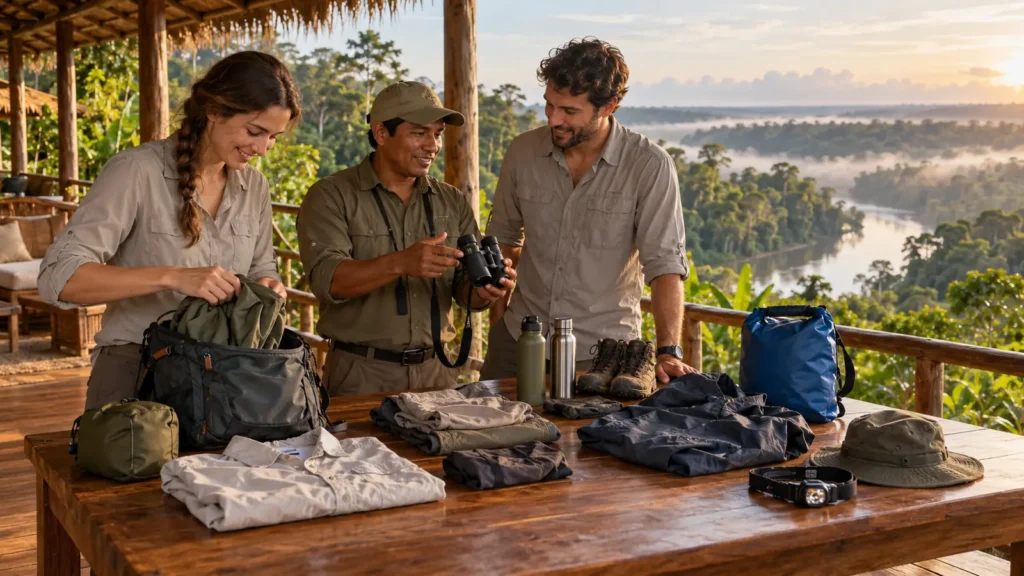
Binoculars are the most important tool. Also bring lightweight long sleeves and trousers, rain protection, hat, refillable bottle, insect repellent, headlamp and waterproof storage. Neutral colors are practical, although silence and movement matter more than an exact shade.
Use the Peruvian Amazon packing list for a complete checklist and Amazon safety advice for boats, night walks and health preparation.
Current Explora el Peru options
The Tambopata National Reserve three-day tour currently includes Lake Sandoval, forest activities, river outings and a night experience according to its live itinerary. The Puerto Maldonado ecological three-day tour offers another lodge-based route.
Confirm the exact lodge, reserve sector, current route, group size and whether each wildlife location is inside the protected area. No live itinerary can guarantee that a named animal will appear.
Frequently asked questions
What animals are most likely in Tambopata?
Birds, monkeys, insects and signs of mammals are realistic across varied habitats. Caimans, capybaras and giant river otters are possible in suitable waterways, but sightings vary.
Can I see a jaguar?
It is possible but rare. A jaguar should be treated as an extraordinary chance encounter, not a standard tour expectation.
Where can I see giant river otters?
Lake Sandoval and selected Middle Tambopata oxbow lakes support otter families. Use authorized routes and maintain the guide’s distance.
Are macaws guaranteed at the clay lick?
No. Good weather supports activity, but biological cycles and disturbance also matter. Observation must remain within the designated area.
Is a night walk safe?
It can be when led by a qualified guide on an approved route. Wear closed footwear, use a headlamp and never touch animals or plants.
Is three days enough for wildlife?
It provides an introduction. Four or five days create more habitats and backup observation windows, especially for remote sectors.
Should I visit Tambopata or Iquitos for wildlife?
Both are excellent but emphasize different habitats and access styles. Read Iquitos or Tambopata and the main Peruvian Amazon guide before choosing.
Editorial sources
Species totals, tourism sectors, lake information, clay-lick context and visitor conduct were checked against the official SERNANP Tambopata National Reserve page. Tour examples were checked against Explora el Peru’s live product pages. Wildlife is free-ranging; sightings and route access vary by day.