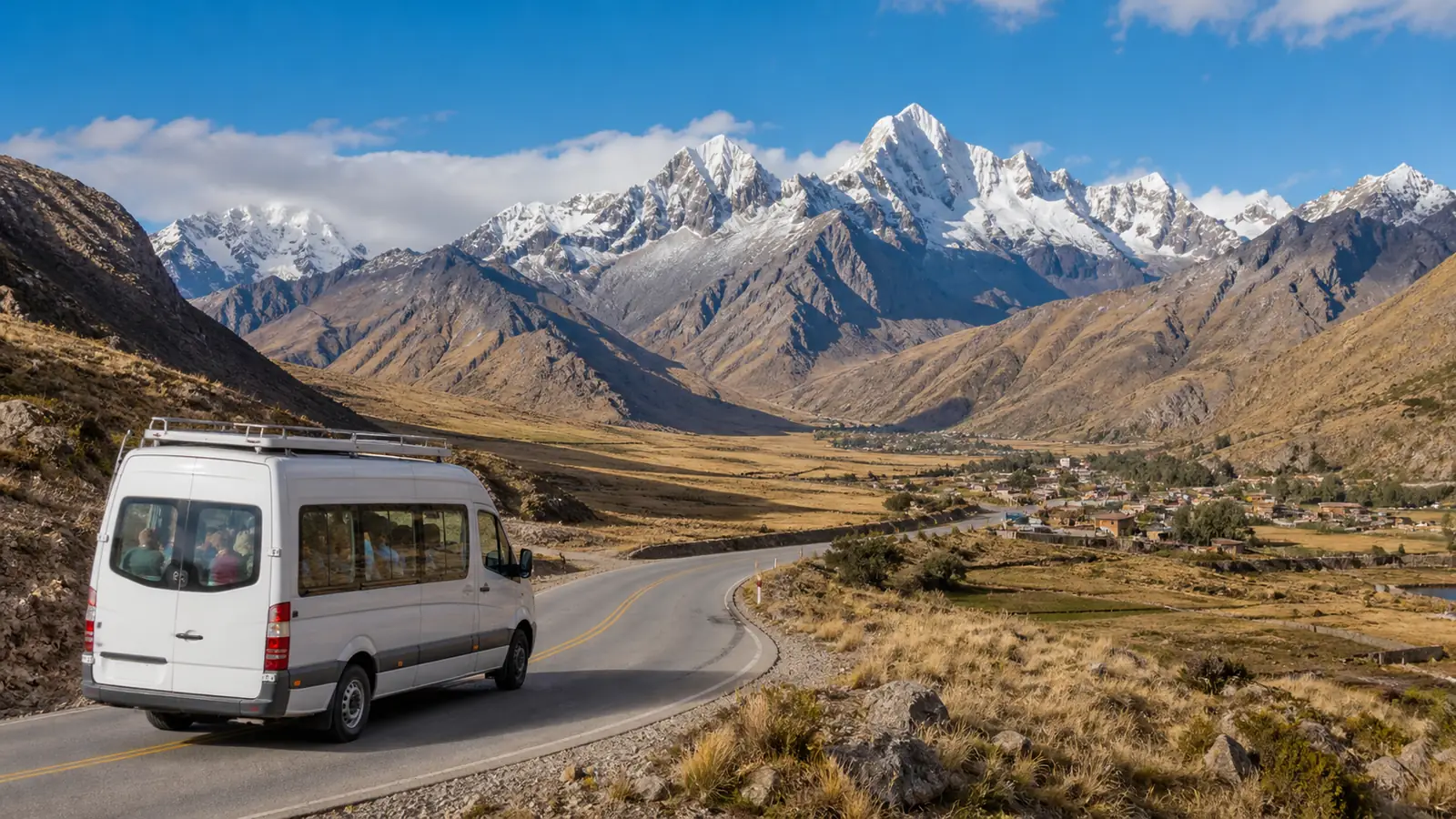

The clearest answer to how to get to Huayhuash is to travel from Lima to Huaraz, spend several days acclimatizing, and continue by prearranged road transport to the trailhead selected by your itinerary. Lima–Huaraz can now be completed either by intercity bus or by a commercial flight to Anta Airport. From Huaraz, the final transfer commonly takes four to six hours, depending on whether the trek begins near Llamac, Cuartelhuain or another access point.
Huayhuash access at a glance
| Stage | Usual transport | Planning time | Key decision |
|---|---|---|---|
| Lima to Huaraz | Intercity bus | About 8–9 hours | Day or overnight service and terminal location |
| Lima to Anta | Commercial flight | About 45–65 minutes in the air | Baggage, schedule and ground transfer |
| Anta to Huaraz | Taxi or arranged transfer | Approximately 30–45 minutes | Confirmed pickup and final hotel location |
| Huaraz to trailhead | Private trekking vehicle | Usually 4–6 hours | Correct route, trailhead and first camp |
All times are estimates. Lima traffic, road works, weather, stops and the exact trailhead can change them. Do not build a flight or international connection around the fastest possible arrival.
Where is the Huayhuash Trek?
The Cordillera Huayhuash lies in Peru’s central Andes across parts of Ancash, Huánuco and Lima regions. The range is south of the Cordillera Blanca and far from the major international arrival points. Huaraz, in Ancash, is the main trekking hub because it combines accommodation, mountain agencies, equipment rentals, food supplies and acclimatization hikes.
The trekking circuit has no single universal entrance. Its starting point depends on route direction, duration and operator logistics. This is why searching for a bus simply “to Huayhuash” creates confusion: travelers must first know whether their program starts at Cuartelhuain, Llamac, Queropalca or another access point.
Step 1: Lima to Huaraz by bus
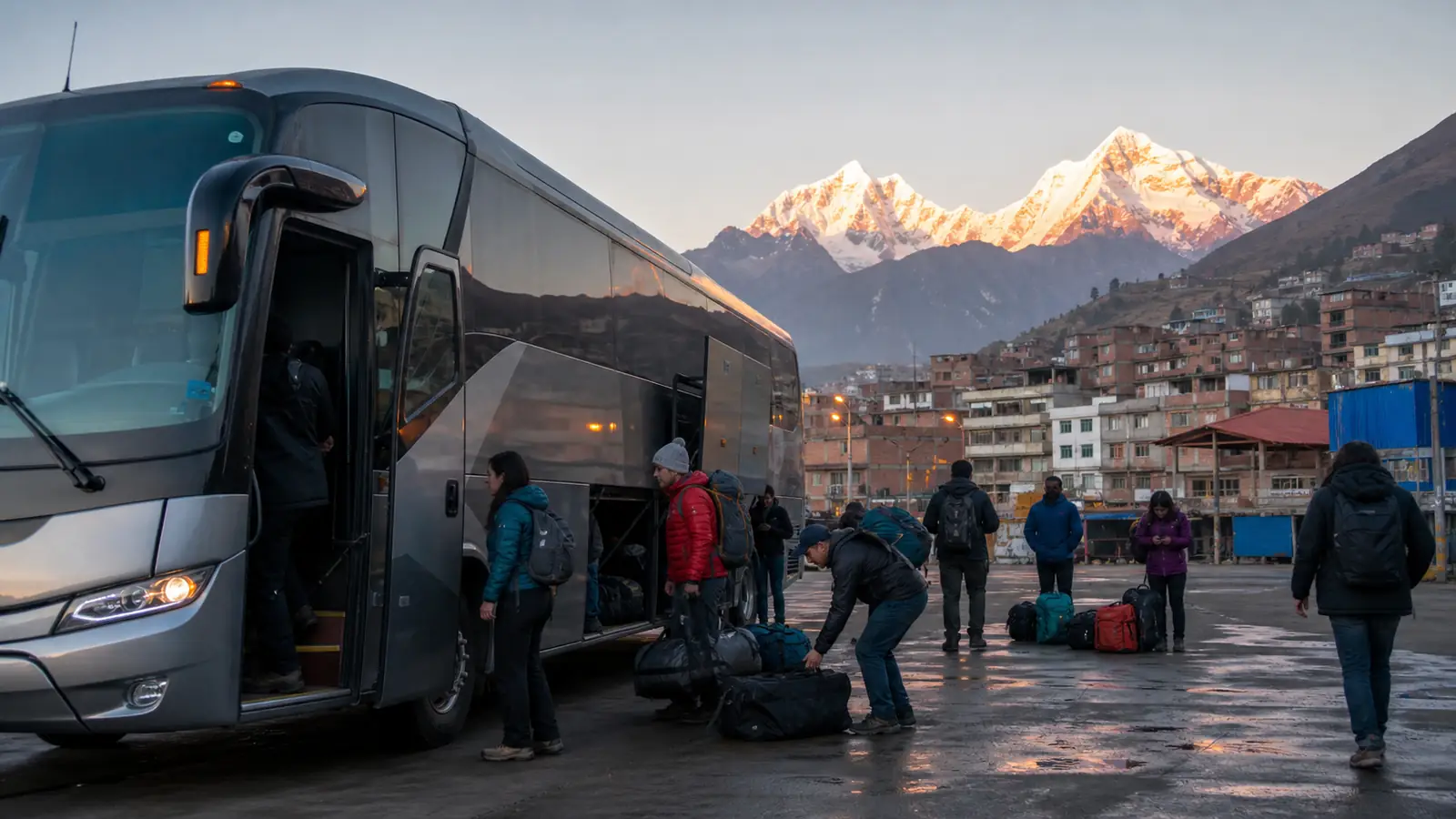
Long-distance bus remains a practical and widely used option. Direct services commonly take approximately eight to nine hours, although Lima congestion and road conditions can extend the journey. Both daytime and overnight departures are available on different dates.
An overnight bus saves a hotel night, but bus sleep is not the same as recovery. Plan a light first day in Huaraz instead of arriving at dawn and immediately completing a hard acclimatization hike. A daytime service sacrifices daylight but lets travelers see the coastal and mountain transition and arrive ready for a normal night.
Operators maintain their own terminals rather than using one single Lima departure station. Check the exact address before purchasing. The airport, Miraflores, Javier Prado and Plaza Norte can be separated by substantial traffic. A ticket that looks convenient by departure time may be unrealistic if its terminal is across the city.
Choosing and booking the bus
Purchase from the operator’s official website or authorized counter, select a direct Lima–Huaraz service and review baggage rules. Movil Bus currently lists Huaraz services, and Cruz del Sur maintains a Huaraz terminal. Schedules and fares change, so this guide does not reproduce a timetable.
- Verify the Lima terminal and Huaraz arrival address.
- Use the name and identification required for boarding.
- Keep passport, medication, phone and valuables in hand luggage.
- Protect trekking poles and backpack straps before checking a bag.
- Arrive early enough for traffic and baggage processing.
- Do not accept transport from an unverified person claiming your bus changed terminals.
Connecting from Lima Airport to a bus
Jorge Chávez International Airport is not next to most long-distance bus terminals. Allow time for immigration, baggage collection, customs, traffic and check-in. A same-day connection should include a large buffer; an overnight in Lima is often the calmer option after a long international flight.
Use an authorized airport taxi, verified app ride or prearranged transfer. Keep the bus company, terminal address and departure time available offline. If an inbound flight is delayed, the bus company may not protect the connection like an airline through-ticket would.
Step 1 alternative: Lima to Huaraz by air
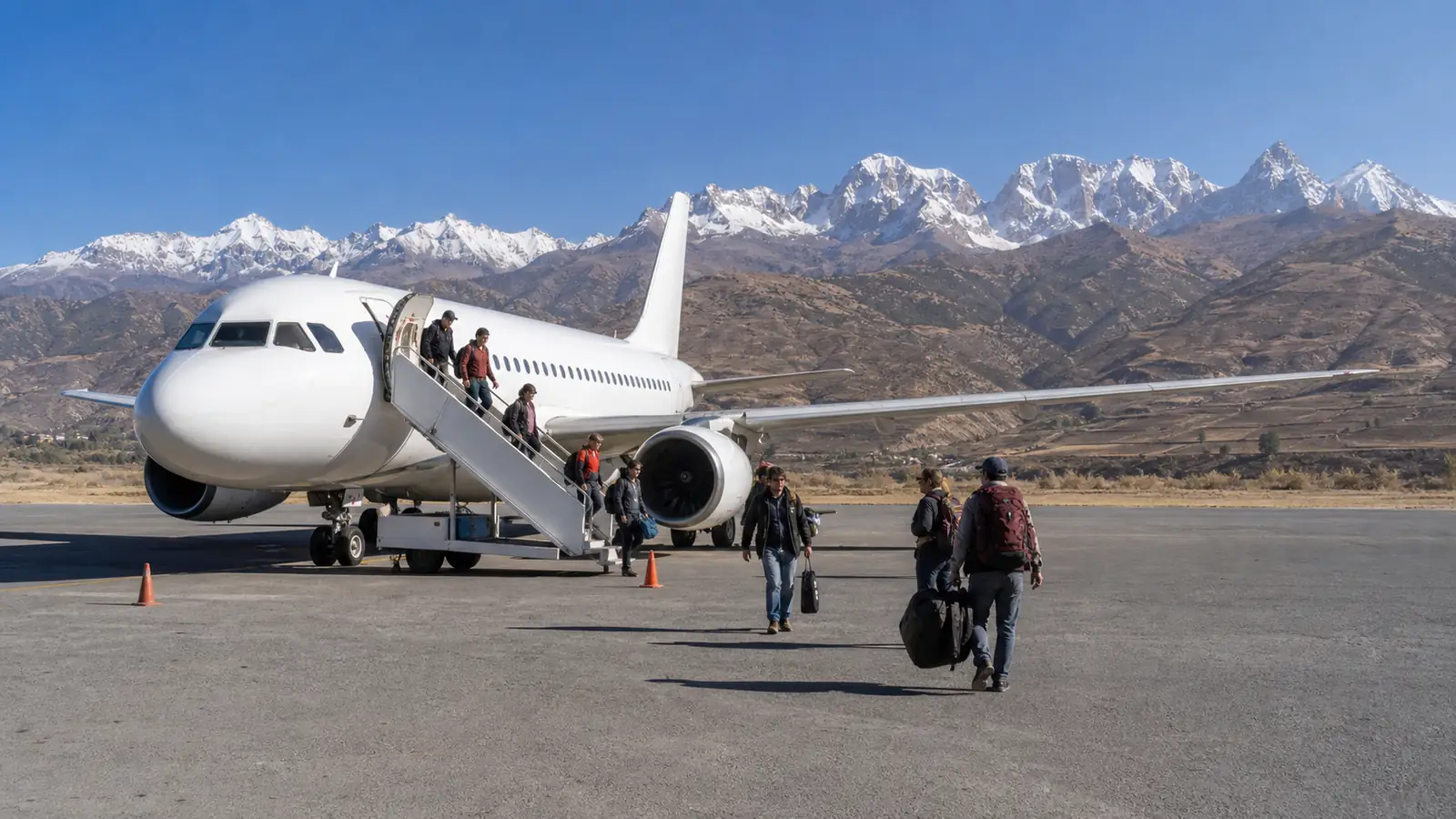
Commercial flights to the Huaraz area are operating in 2026. The route uses Comandante FAP Germán Arias Graziani Airport in Anta (airport code ATA), north of Huaraz—not an airport in the city center. LATAM currently sells direct Lima–Anta/Huaraz flights, with flight time around one hour. The Peruvian government announced expanded service and a second daily frequency in 2026.
Always search the airline for your actual date because frequency, departure time and fare can change. A flight can save most of a road day, but the door-to-door comparison must include Lima airport time, baggage procedures, the Anta transfer and possible weather disruption.
Flying does not replace acclimatization
Air travel moves the body from near sea level to high elevation quickly. The time saved should become preparation time in Huaraz, not an excuse to start the circuit the same day. Huaraz is around 3,050 meters, while many camps are above 4,000 meters.
Plan gradual day hikes and watch how everyone responds. Read the Huayhuash altitude and acclimatization guide before booking the trailhead transfer. A fast arrival followed by a conservative acclimatization schedule can work well; a fast arrival followed by immediate ascent is the problem.
Anta Airport to Huaraz
Anta Airport is in the Carhuaz area. Ground transfers into Huaraz commonly take around thirty to forty-five minutes depending on the destination and traffic. Confirm whether your hotel or operator provides pickup, or use an authorized service at the airport.
Send the correct flight number and arrival date to the driver. Store the contact offline and clarify where the person will wait. If traveling with bulky duffels or poles, confirm vehicle capacity before landing.
Step 2: use Huaraz as the expedition base
Huaraz is where transport, route planning and acclimatization come together. Stay long enough to recover, complete progressive hikes, inspect rented equipment and attend a full briefing. The hotel can often store clean travel clothing and suitcases that do not belong on the circuit.
Before departure, confirm:
- Pickup time and exact hotel address.
- Driver and guide contact details.
- Named trailhead and first campsite.
- Estimated road time and breakfast arrangement.
- Duffel allowance and luggage storage.
- Community access payments.
- Return trailhead, vehicle and arrival window.
Use the Huayhuash packing list for the final equipment check and the Huayhuash cost guide to identify transfers that should appear in a quotation.
Step 3: Huaraz to the trailhead
Most guided departures use a private van or minibus because public transport rarely matches a trekking itinerary, crew, food and equipment. The drive commonly takes four to six hours and may combine paved highways, village roads and rougher highland sections. Stops for breakfast, community coordination or loading animals can extend the day.
Explora el Peru’s current five- and eight-day tours include tourist transportation from Huaraz to the range and the return to Huaraz. Both start their trekking sequence in the Cuartelhuain area after traveling through or near Llamac. Confirm the current pickup arrangement directly because route operations can change.

Cuartelhuain: common northern trailhead
Cuartelhuain, sometimes associated with Matacancha in route descriptions, is a common starting area for clockwise circuits. It gives access toward the first high pass and camps such as Mitucocha. Expedition teams organize pack animals and redistribute equipment here before hikers begin.
The first day is not merely a transfer. Many schedules start walking after several hours in the vehicle, so breakfast, water and trail clothing must remain accessible. Do not bury boots or rain gear beneath the crew luggage.
Llamac: gateway and frequent exit
Llamac is a traditional gateway community on the western side of the circuit. Some itineraries begin walking from or near it; others pass through by vehicle and continue to Cuartelhuain. Full circuits commonly descend to Llamac after Jahuacocha, where the return vehicle meets the group.
This distinction changes hiking distance and transport time. Ask whether “starting at Llamac” means the village is the actual trailhead or simply a road stop. On return day, confirm how far the group walks before meeting the driver.

Queropalca: eastern access
Queropalca, in Huánuco, provides access toward the eastern side of the range and the Carhuacocha area. It can be useful for shorter or point-to-point programs designed around the famous eastern lakes. Reaching it follows different roads and logistics from the classic Huaraz–Llamac approach.
Do not combine a Queropalca route description with Llamac transport instructions. Confirm the regional access, vehicle type, community coordination and final exit. Peru’s official tourism inventory describes road access toward Queropalca followed by walking access into the mountain zone, but current conditions must be verified locally.
Other entry and exit points
Huayllapa can serve as a circuit village, an exit or a logistics point depending on the route. Viconga-area road access can support certain shorter southern itineraries. Jahuacocha often precedes the descent to Llamac on a complete circuit. These are not interchangeable terminals with frequent scheduled vehicles.
The future Huayhuash Trek map and route guide will show how access points connect to camps and passes. Until then, use the exact Huayhuash itinerary rather than a general circuit map to organize transport.
Road conditions and vehicle choice
The final roads cross remote highland terrain. Rain, landslides, maintenance and local traffic can change travel time. A suitable vehicle, experienced local driver, spare tire and early start matter more than promising the fastest transfer.
Check the Huayhuash weather guide and the best time to hike Huayhuash article. Dry-season travel generally offers more reliable road conditions, but dust, construction and delays remain possible.
Independent transport from Huaraz
Independent hikers sometimes combine buses, colectivos and private vehicles, but schedules can be irregular and may stop short of the desired trailhead. A cheap outbound ride does not solve the return. The vehicle needed at Llamac or another exit may have no reason to appear unless arranged.
Obtain current local information in Huaraz and make the plan specific:
- Name the exact community and drop-off coordinate.
- Confirm whether luggage and fuel are accepted.
- Agree on price, departure time and pickup location.
- Save driver and backup contacts offline.
- Carry contingency cash and enough food for a delay.
- Do not rely on mobile coverage or informal hitchhiking.
The future guide to hiking Huayhuash independently will cover the wider logistics and safety decision.
Return to Huaraz
A complete circuit often ends with a descent from Jahuacocha to Llamac and an approximately four-hour drive to Huaraz, as shown on Explora el Peru’s current eight-day program. Shorter itineraries may exit near Viconga or use another pickup point.
Arrival time is an estimate. Do not book a night bus or flight that depends on the group reaching Huaraz at the earliest predicted hour. Shower, retrieve stored luggage and allow for road delay. The safest onward connection is usually the following day.
Sample travel calendar
| Day | Plan | Reason |
|---|---|---|
| Day 1 | Arrive in Lima | Absorb international delay |
| Day 2 | Bus or flight to Huaraz | Settle at elevation |
| Days 3–5 | Progressive acclimatization | Prepare for high camps |
| Day 6 | Transfer to trailhead and begin trek | Match confirmed itinerary |
| After trek | Contingency night in Huaraz | Protect onward connection |
Some travelers need more acclimatization, and a flight into Anta does not shorten that process. The calendar should respond to the group, not only vacation pressure.
Bus or flight: which is better?
Choose the bus when budget and baggage flexibility matter, or when the overnight schedule fits the trip. Choose the flight when saving a road day matters and the fare, luggage allowance and Anta transfer work for you. Neither option makes the mountain expedition easier by itself.
Compare door-to-door cost, environmental priorities, cancellation flexibility, sleep and international connections. Check current schedules directly; transport recommendations can become outdated faster than trekking routes.
Booking a guided transfer
A supported package is simplest because the operator coordinates hikers, staff, food, camping equipment and pack animals. Ask whether transportation is private to your group or shared, what happens if a traveler misses pickup and whether the return can connect to Lima for an additional fee.
Review the five-day Huayhuash tour and eight-day Huayhuash tour for current transport inclusions. The correct service should match your route and level of preparation described in the difficulty guide.
Transport safety checklist
- Use registered bus companies, airlines or prearranged local drivers.
- Share the itinerary and vehicle contact with someone outside the group.
- Wear seatbelts where provided and avoid pressuring the driver to speed.
- Keep essential medicine and documents with you.
- Verify road conditions before remote departure.
- Carry offline addresses and maps.
- Add contingency time before every expensive connection.
Final recommendation
The most reliable journey is Lima to Huaraz, several acclimatization days, then a route-specific private transfer. Bus and air are both viable in 2026; choose based on the complete journey rather than one headline travel time. Above all, never reserve the trailhead vehicle before confirming the itinerary’s actual starting point.
Browse the Huayhuash trekking collection and use the future complete Huayhuash Trek guide as the central planning resource. The future Huayhuash Trek from Huaraz guide will provide a more detailed local departure checklist.
Frequently asked questions
Can you fly from Lima to Huaraz?
Yes. Commercial flights operate from Lima to Anta Airport for the Huaraz region in 2026. Schedules vary, and a ground transfer into Huaraz is still required.
How long is the bus from Lima to Huaraz?
Plan approximately eight to nine hours, with additional time possible for traffic, road conditions and stops.
How far is Huaraz from the Huayhuash trailhead?
Many transfers take four to six hours. The exact distance and time depend on whether the route starts near Cuartelhuain, Llamac, Queropalca or elsewhere.
Can I go directly from Lima to Huayhuash?
A long private road journey may be physically possible, but skipping Huaraz removes essential acclimatization and logistical preparation. It is not recommended for travelers arriving from sea level.
Which trailhead is best?
There is no universal best trailhead. Cuartelhuain suits many classic clockwise routes, Llamac is a traditional gateway and exit, and Queropalca serves eastern approaches.
Is transport included in guided tours?
Round-trip tourist transport from Huaraz is currently included on Explora el Peru’s five- and eight-day Huayhuash programs. Lima–Huaraz travel is separate.
Should I book onward travel on the final trekking day?
No. Preserve a contingency night in Huaraz because walking pace, road conditions and vehicle timing can change.
Transport accuracy note
Air service was checked against LATAM’s current Huaraz destination page, the Peruvian Ministry of Transport and PROMPERÚ’s 2026 connectivity announcement. Queropalca access context was reviewed using the official MINCETUR tourism inventory. Timetables, fares and roads change; verify every segment for your travel date.