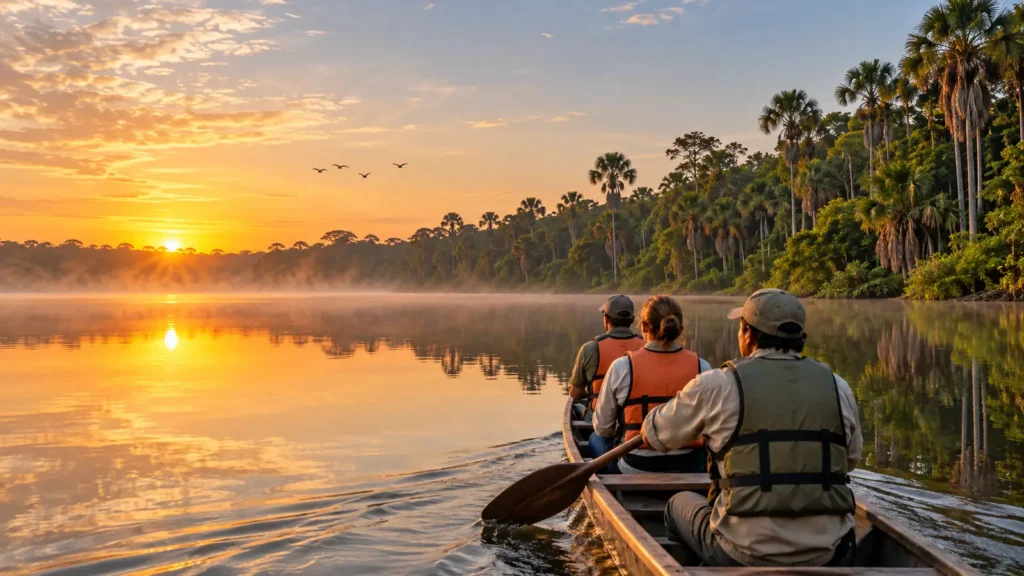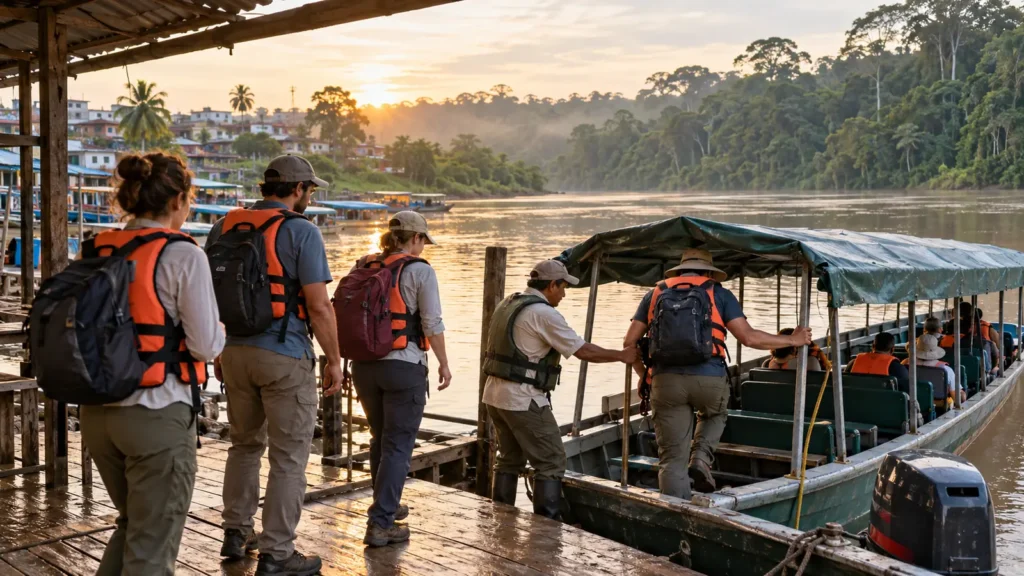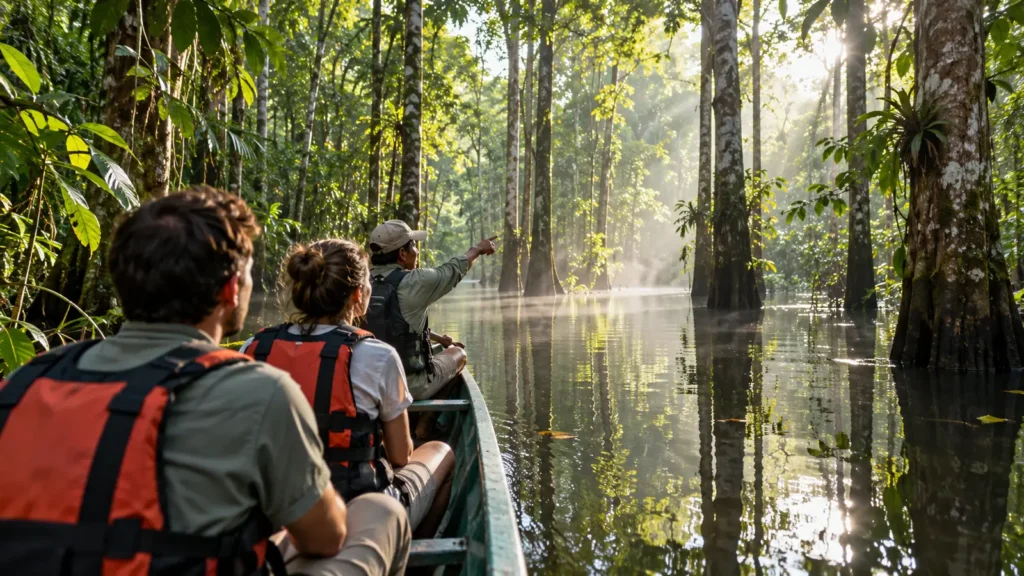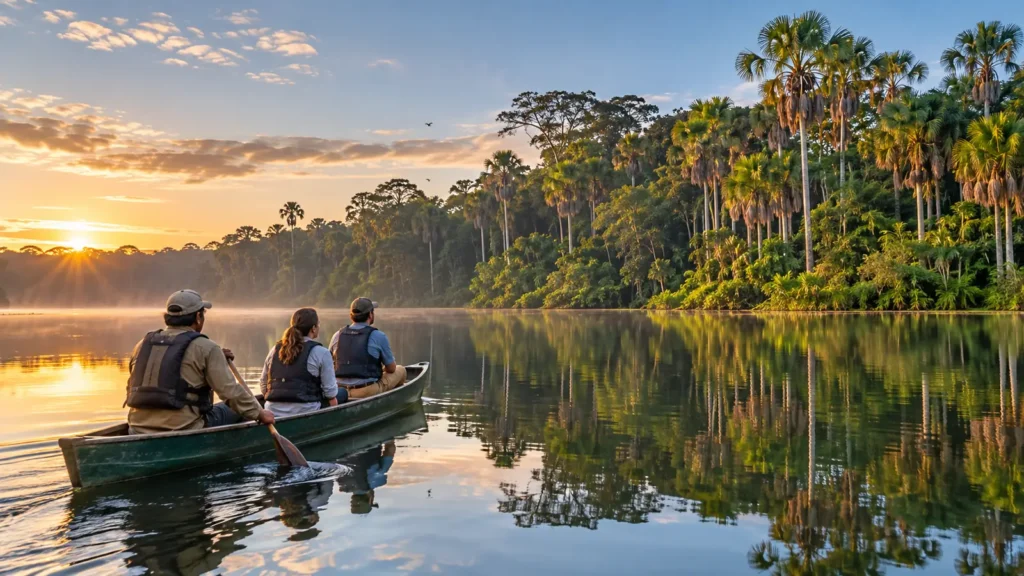

A Peruvian Amazon trip cost is shaped less by a simple room rate than by transport, lodge location, guide service, meals, protected-area access and the number of nights. A useful comparison adds the complete journey from the gateway airport to the lodge and back. The cheapest headline price may become expensive after transfers, entrance fees and meals are added, while an apparently higher package may already include them.
What determines the price of an Amazon trip?
| Cost factor | Why it matters | What to verify |
|---|---|---|
| Duration | Each additional night adds accommodation, meals, guide time and activities | Number of nights and actual excursion time |
| Lodge location | Longer road or river access increases transport and operating costs | Exact lodge and transfer duration |
| Service style | Private guides and private boats cost more than scheduled groups | Maximum group size and shared services |
| Room standard | Private bathroom, electricity, fans and premium spaces affect the rate | Exact room category and occupancy |
| Protected-area access | Some routes require official admission and authorized operation | Whether entry is included |
| Season and demand | Flights and limited lodge inventory can vary by travel date | Quote validity and change conditions |
Why remote lodges cost more
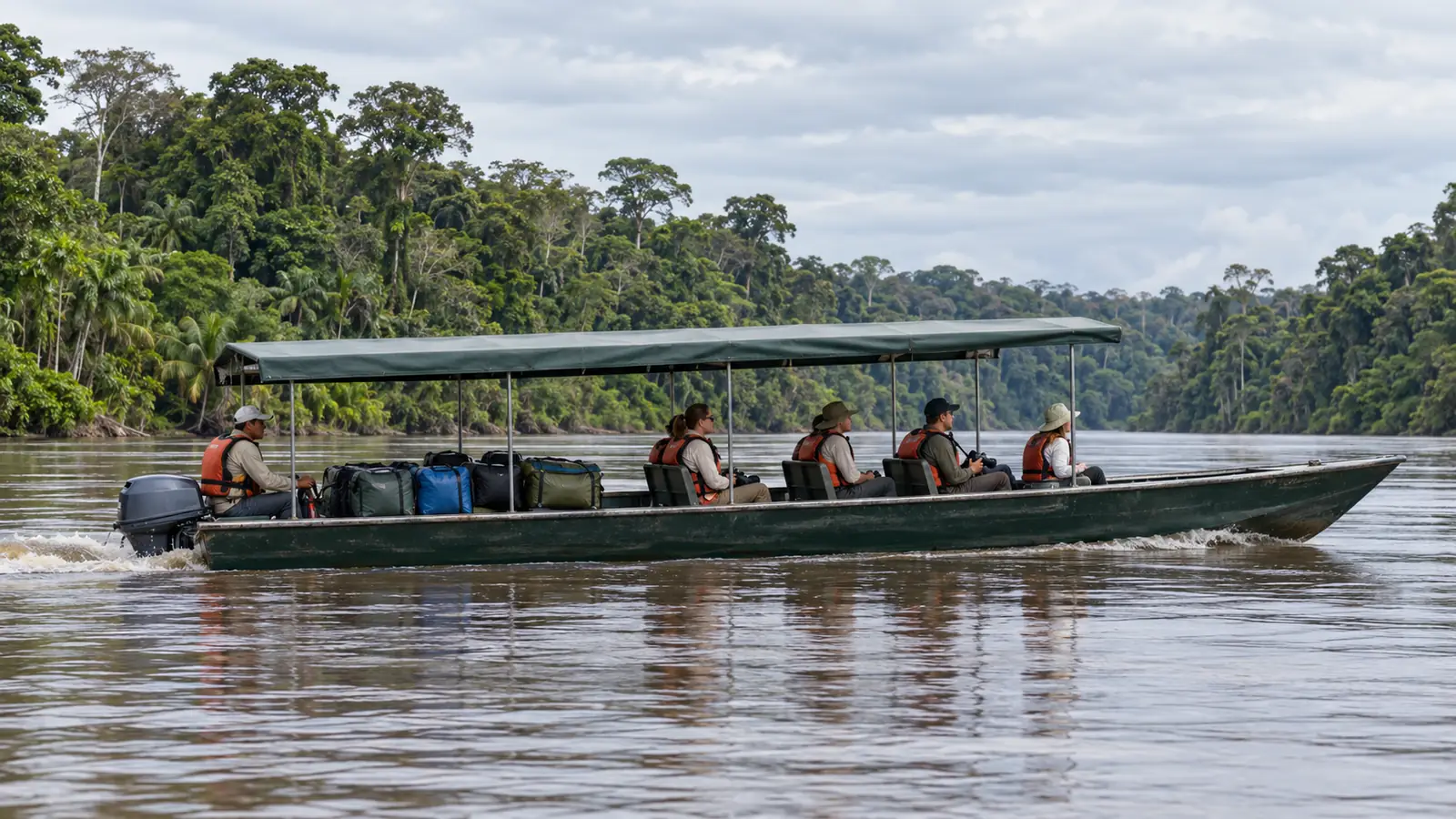
Remote operation requires boats, fuel, trained drivers, maintenance, food transport, communications and staff accommodation. A lodge several hours upriver has a different cost structure from one close to Iquitos or Puerto Maldonado. That difference may buy access to quieter habitat, but distance alone does not guarantee better wildlife.
SERNANP’s official access information illustrates the scale. Tambopata sectors range from a short river approach to Sandoval followed by walking, to multi-hour river travel toward middle and upper sectors. Pacaya Samiria access varies even more by basin. Ask how much of the package supports transfer and how much time remains for excursions.
A fair comparison uses the same starting point. One quote may begin at the city hotel, another at the airport, and another at a river port that travelers must reach independently.
What a lodge package commonly includes
Many organized Peruvian Amazon rainforest programs bundle the services that are difficult to arrange separately. Typical inclusions are:
- Scheduled airport or hotel pickup in the gateway city.
- Road and river transfers to and from the lodge.
- Accommodation for the stated number of nights.
- Meals beginning and ending at specified points in the itinerary.
- Professional guiding and excursions listed in the program.
- Boats, canoes or local transport used during included activities.
- Drinking water under the conditions stated by the operator.
- Protected-area entrance when explicitly named as included.
Never assume a service is included because it seems essential. Ask for written confirmation, especially for reserve admission, airport timing, special diets, private bathrooms and the final day’s meal.
Accommodation levels and room value
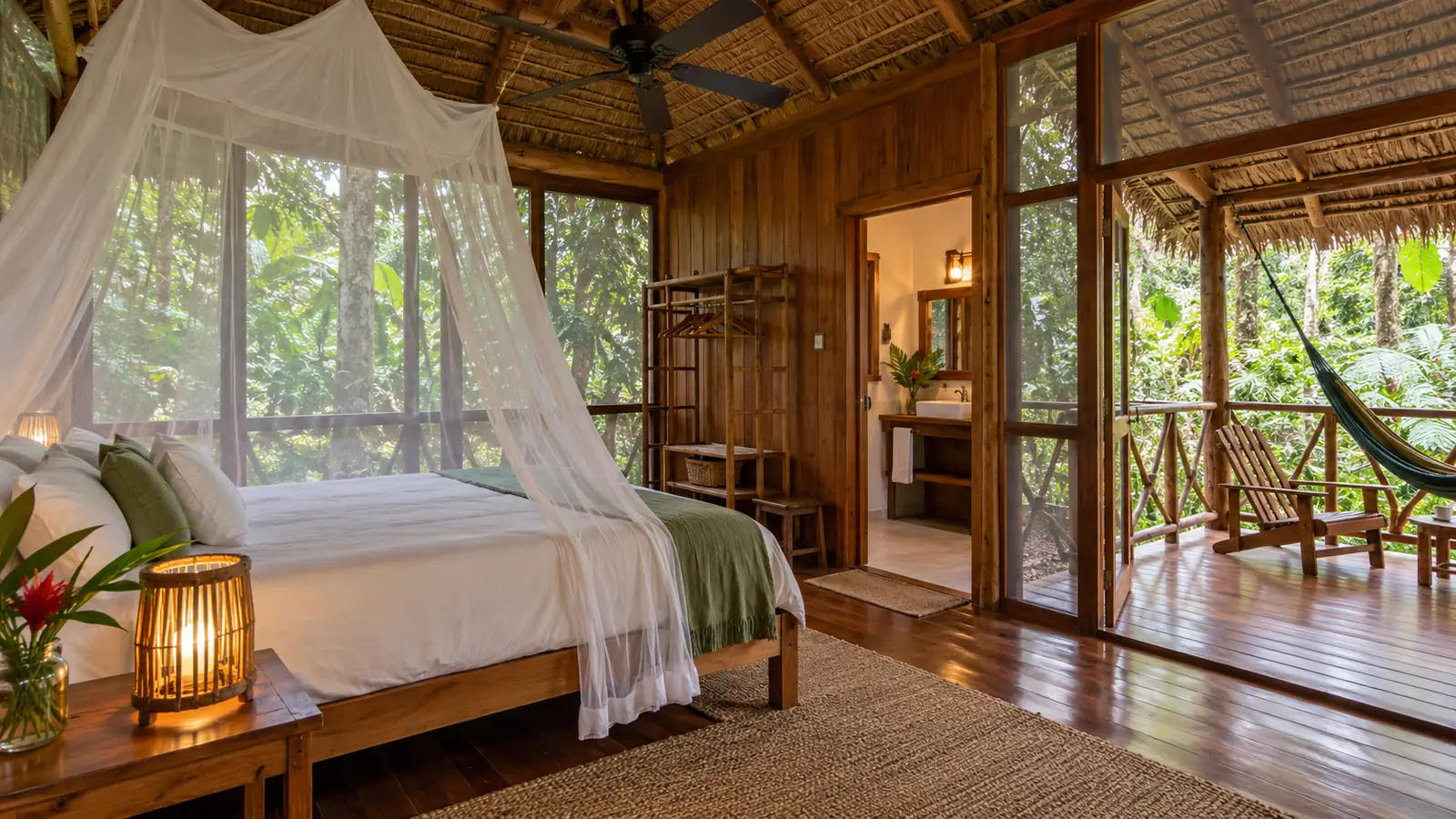
A budget lodge can be clean, well guided and environmentally responsible without luxury finishes. A mid-range bungalow may add a private bathroom, better screening, dependable charging periods, more space and a covered veranda. Premium properties may provide refined rooms, smaller guide ratios and more flexible service.
Compare features that affect sleep and comfort in a tropical climate: mosquito screening, net condition, fan or ventilation, electricity hours, hot water, bathroom type, distance from the main building and noise between rooms. Air conditioning and constant internet should never be assumed in a remote forest lodge.
Solo travelers should request the single-room policy. A low per-person double-occupancy rate may carry a supplement when only one person uses the room. Families should verify bed arrangements rather than relying on a general room-capacity label.
Meals and drinking water
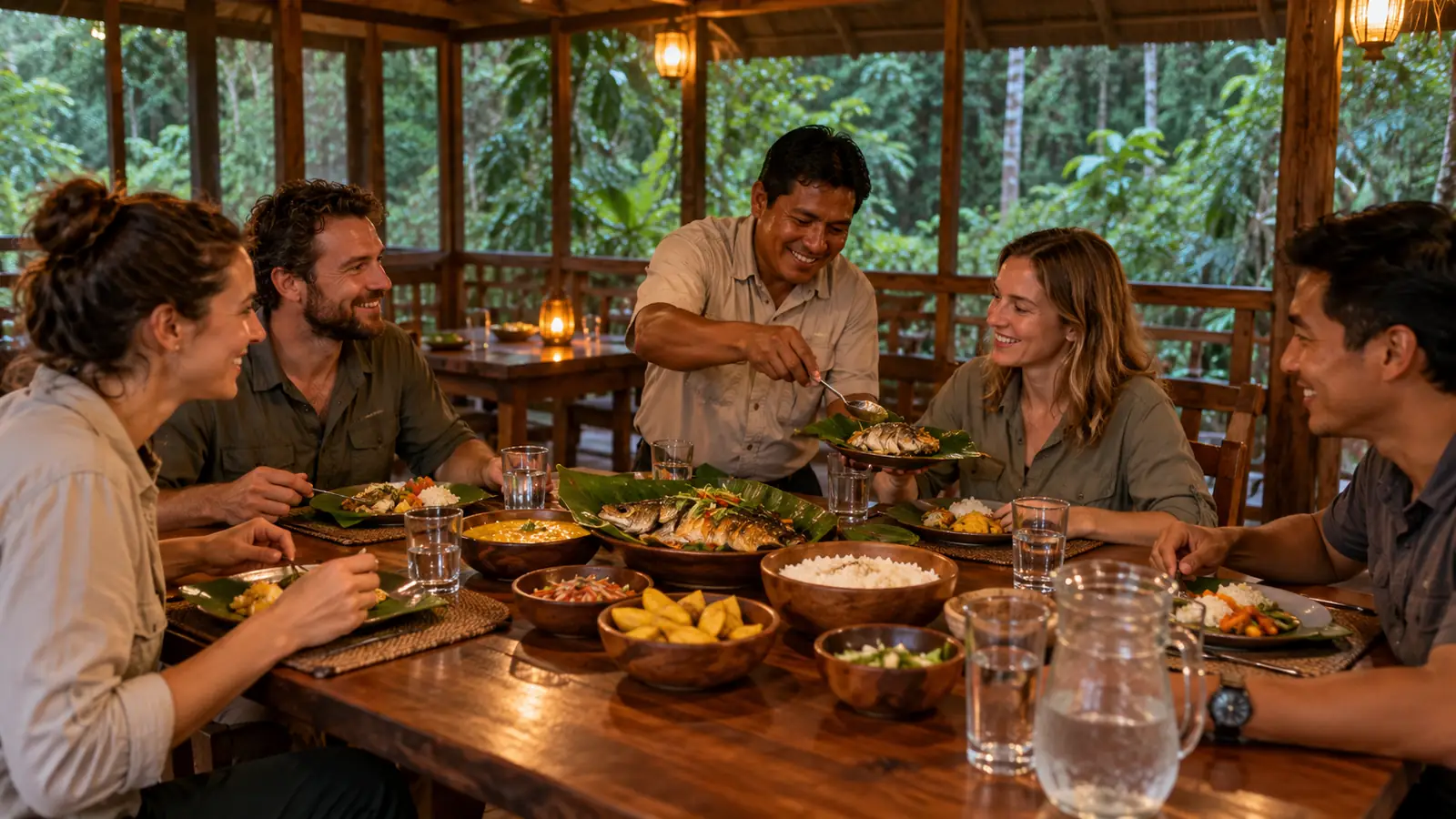
Full-board packages reduce uncertainty because buying meals independently is rarely practical at a remote lodge. Check which meals are served on arrival and departure days, whether drinking water is included during excursions, and how vegetarian, allergy or medical dietary needs are handled.
Bar drinks, bottled specialty beverages and snacks are commonly separate. If an itinerary returns to the city before lunch on the final day, that meal may not be included. These small distinctions matter when comparing two otherwise similar packages.
The value of guides and group size
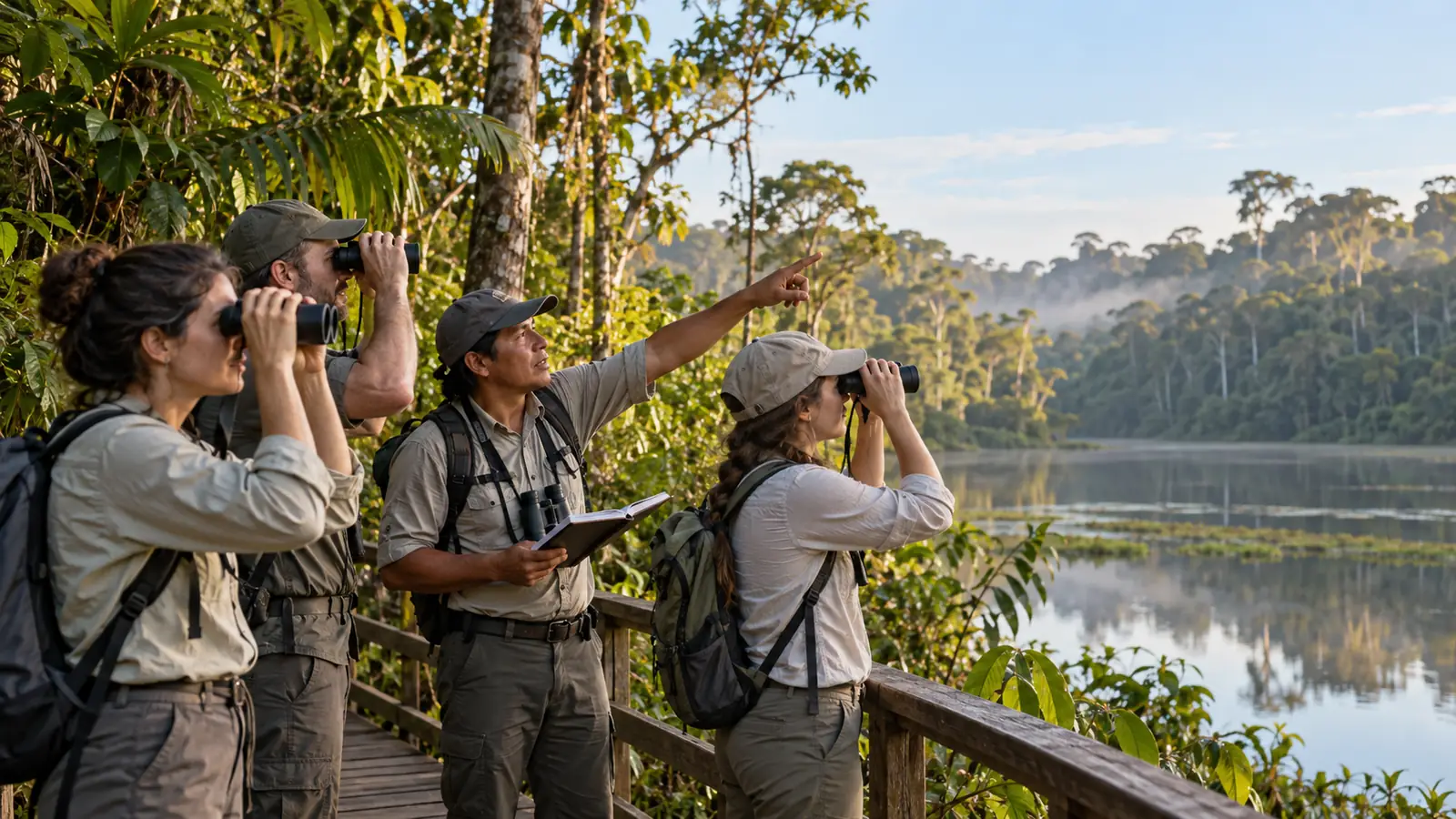
A skilled local naturalist is a central part of the product, not an optional narrator. Guides interpret calls, tracks, weather and animal behavior, manage timing and help the group follow safety and protected-area rules. The Amazon wildlife guide explains why patient observation and habitat knowledge matter more than promises of rare animals.
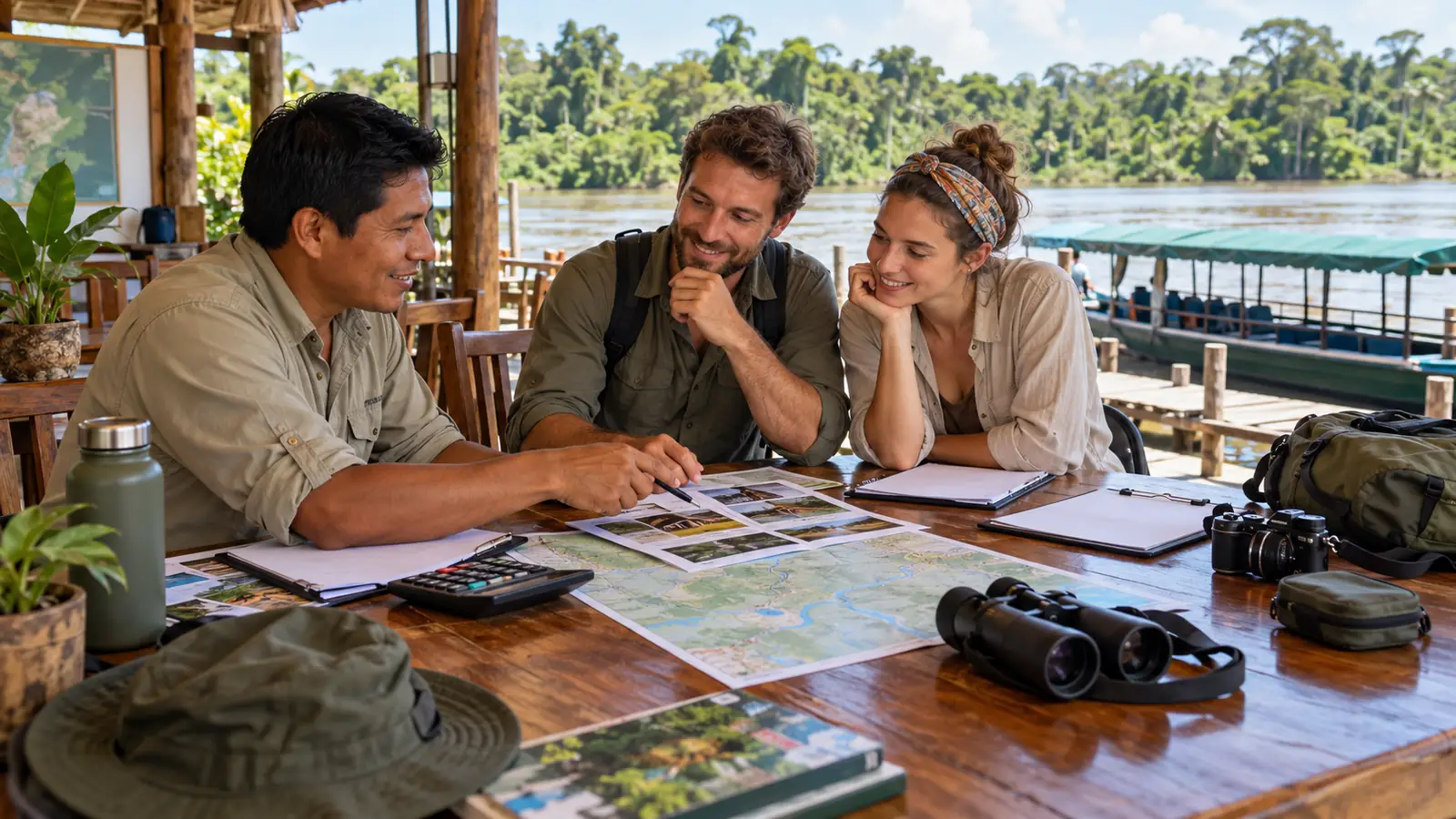
Ask whether the guide is private, assigned to one booking or shared among lodge guests. A larger group may reduce the per-person cost, while a smaller group can improve pace, communication and photography. Also confirm whether one guide accompanies every activity or different specialists rotate.
What is often not included
Build a separate line for costs outside the lodge package:
- Domestic or international flights.
- Gateway hotels before or after the forest stay.
- Travel insurance and any medical preparation.
- Protected-area fees unless explicitly included.
- Bar drinks, laundry, optional activities and personal purchases.
- Tips for guides, boat crews and lodge staff.
- Extra baggage or storage charges where applicable.
- Private transfers outside the operator’s scheduled times.
Current Explora el Peru Amazon itineraries, for example, generally identify flights, bar drinks, tips and personal extras as separate, while exact inclusions vary by tour. Always rely on the final booking document.
Create a complete trip budget
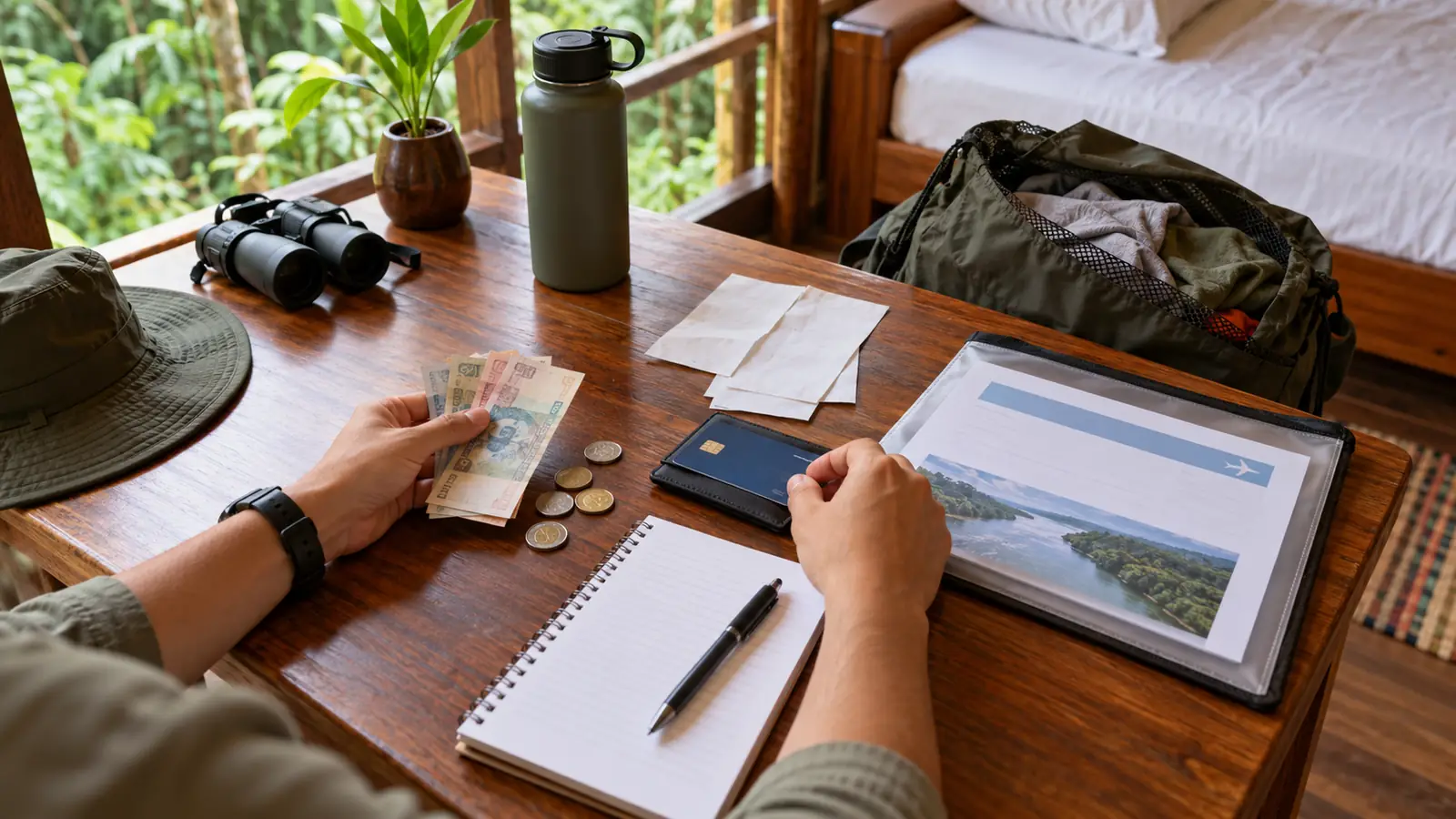
Use a worksheet rather than one total typed into a phone note. The basic calculation is:
Keep the lodge quote in its original currency and record how payment is processed. Exchange rates and card fees can affect the final amount. A contingency is useful for flight changes, weather-related delays or an extra city night; it is not a substitute for insurance.
The Peruvian Amazon packing list helps prevent duplicate purchases. Many travelers already own suitable quick-drying clothing, while binoculars, dry bags, a headlamp or specialized luggage may need to be borrowed or purchased.
Budget, mid-range and premium approaches
Budget-focused trip
Choose a lodge close to the gateway, shared transfers, a small group itinerary and a practical room. Prioritize guide quality, safe transport, screening and included meals over decorative extras. Verify that a low rate is not achieved by removing entrance fees or essential transfers.
Mid-range trip
Look for a private bathroom, clear full-board plan, well-paced three- or four-day itinerary and a reasonable guide-to-guest ratio. This is often the strongest value for first-time visitors because it balances comfort and access without paying for features used only at night.
Premium or specialist trip
Higher spending can support remote access, private guiding, flexible activities, specialist birding or photography, more refined accommodation and smaller groups. Confirm which of those benefits is actually included; a beautiful room alone does not improve field time.
Iquitos vs Puerto Maldonado costs
The existing Iquitos or Tambopata comparison explains the destination differences. Neither gateway is always cheaper. Flight date, lodge distance, river route, reserve sector and service level can outweigh the city name.
Near Iquitos, river transfers dominate many itineraries, and deep Pacaya Samiria programs can require substantial access time. Near Puerto Maldonado, lodges range from relatively close Madre de Dios properties to much farther Tambopata sectors. Compare packages with the same duration, room standard and degree of remoteness.
Does the season change the price?
Season affects demand, availability, flight prices and sometimes the logistics of river or trail access. The best time to visit the Peruvian Amazon should be chosen for experience and access first, not from a promise that one season is universally cheaper.
Request quotes for exact dates and ask whether the price changes with group size or room occupancy. A promotional rate with restrictive cancellation terms may be poor value if the wider Peru itinerary is not yet confirmed.
How trip length affects the budget
The guide to how many days to spend in the Amazon recommends three days as a practical introduction and four days for a better nature balance. An extra night adds cost, but it can improve value by spreading fixed transfer costs across more activity time.
A very short remote trip can be expensive per usable hour because the same boats and transfers are required. Compare the number of lodge nights, full excursion days, dawns and evenings rather than dividing only by the printed tour-day count.
How to compare two quotations
- Match the exact travel dates, number of guests and room occupancy.
- Identify the lodge and calculate transfer time from the same gateway.
- Compare included meals, admissions, excursions and water.
- Check private versus shared guide and boat service.
- List every exclusion in a second column.
- Read deposit, balance, cancellation and change conditions.
- Compare usable forest time and service quality, not only the total.
Red flags include an unnamed lodge, no written inclusions, wildlife guarantees, unclear pickup, pressure to pay an unrelated account or a seller unable to explain protected-area authorization. Consult the Peruvian Amazon safety guide before booking.
Deposits, payment and cancellation terms
A complete budget includes the financial conditions, not only the trip price. Ask how much is due at booking, when the balance is payable, which currencies and payment methods are accepted, and whether processing charges are added. Confirm the legal recipient before sending money and retain the quotation, receipt and booking confirmation.
Read cancellation rules by date band. Lodge space, guides, reserve arrangements and transport may be committed before arrival, so refundable and non-refundable portions can differ. Ask what happens when the traveler cancels, when the operator cancels, and when weather changes one excursion but the lodge stay continues. Travel insurance should be assessed against those written terms rather than treated as a general promise of reimbursement.
Also check the policy for flight delays. A missed scheduled boat may require a private transfer, an extra city night or a shortened itinerary. Determine who pays each consequence before choosing a tight connection. When comparing a flexible quote with a cheaper restrictive one, assign real value to the ability to change dates.
Where responsible spending adds value
Some costs support trained guides, licensed boat crews, safe equipment, local food purchasing, waste management and conservation requirements. These services are less visible than room decoration but contribute directly to safety and experience quality. Ask how guides and community visits are organized and whether wildlife activities follow protected-area rules.
A sustainable claim should be specific. Look for evidence such as refill-water systems, controlled group sizes, authorized access, responsible wildlife distances and clear community arrangements. Paying more does not automatically make a trip sustainable, but a price that cannot support basic staffing and transport deserves careful questioning.
Ways to control costs without weakening the trip
- Use scheduled shared departures when the group size remains reasonable.
- Choose one strong Amazon region instead of paying to visit both on a short Peru trip.
- Book flights with enough connection time to avoid an emergency private transfer.
- Bring essential equipment from home rather than buying it in the gateway.
- Select comfort features you will use and skip purely decorative upgrades.
- Ask for the complete quote before comparing discounts.
Current Explora el Peru tour inclusions
The Amazonas Sinchicuy Lodge 3-day tour currently lists airport or hotel transfers, river transport, two lodge nights, meals, professional guiding and programmed excursions; flights, laundry, bar drinks, tips and extras are separate.
The Ecological Puerto Maldonado 3-day tour lists transfers, bungalow accommodation, guide and meals, with flights, insurance, bar drinks, tips and extras outside the package. The Tambopata National Reserve 3-day tour currently includes transfers, two nights, activities, local guide, river transport, drinking water during excursions and reserve entrance.
These inclusions can change. Open the live tour page and obtain a final written quotation for the selected date rather than treating this article as a price guarantee.
Frequently asked questions
Why does this guide not publish one fixed Amazon price?
Because dates, flights, room occupancy, lodge distance and inclusions change. A fixed number without matching services can mislead more than it helps.
Are meals normally included at jungle lodges?
Often yes in multi-day packages, but check the first and last day, drinking water, special diets and bar drinks.
Do I need cash?
Carry a modest amount of local currency for tips and small purchases because remote card service may be unavailable. Avoid carrying excessive cash.
Is a private Amazon tour worth it?
It can be valuable for photographers, families, specialist birders and travelers needing a custom pace. A well-run small group is usually better value for a general first visit.
Are reserve entrance fees included?
Sometimes. Protected areas publish official fees and access rules, but packages handle them differently. Require the quotation to state this explicitly.
Should I book three or four days?
Three days is a compact introduction; four days adds another night and more weather and wildlife flexibility. Compare the added activities against the incremental cost.
How should I budget for Machu Picchu and the Amazon together?
Use separate budgets for Andes and rainforest services, then add connecting flights and buffer nights. The forthcoming Machu Picchu and Amazon itinerary will explain the sequence.
Editorial sources
Inclusion details were checked against current Explora el Peru tour pages. Access, official entry structure and operator requirements were checked against SERNANP information for Tambopata National Reserve and Pacaya Samiria National Reserve. Verify all live prices, fees and terms for the actual travel date.