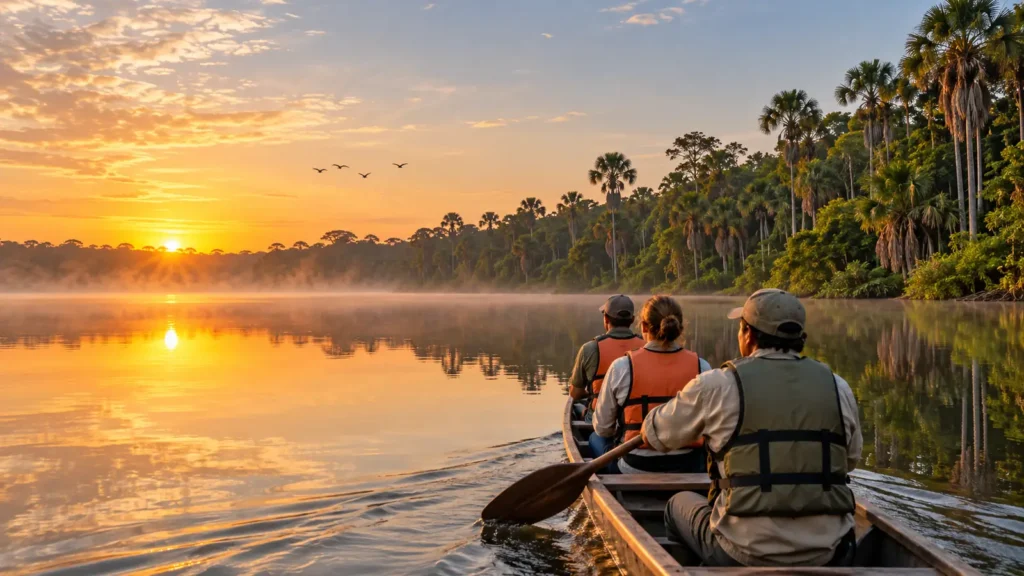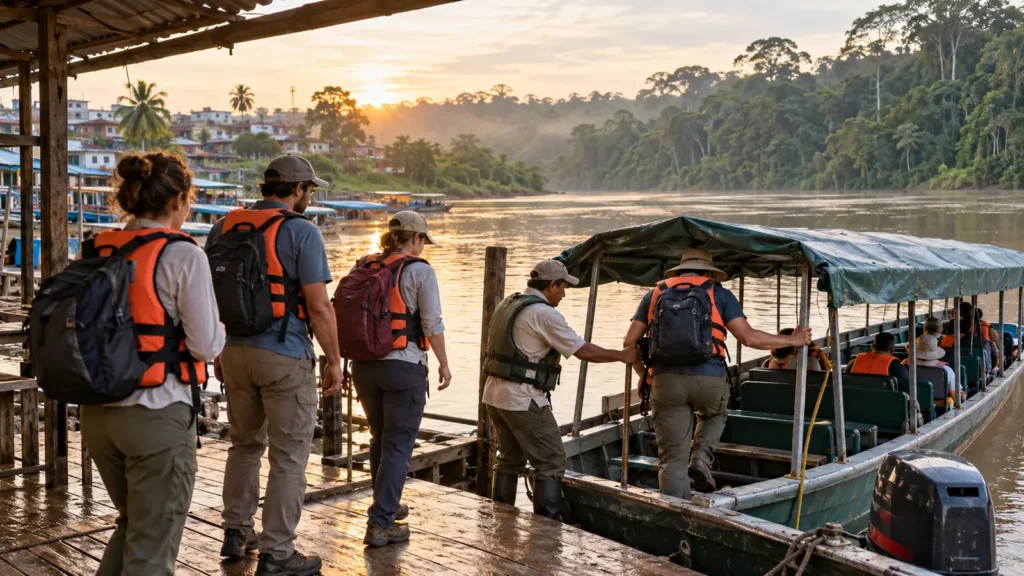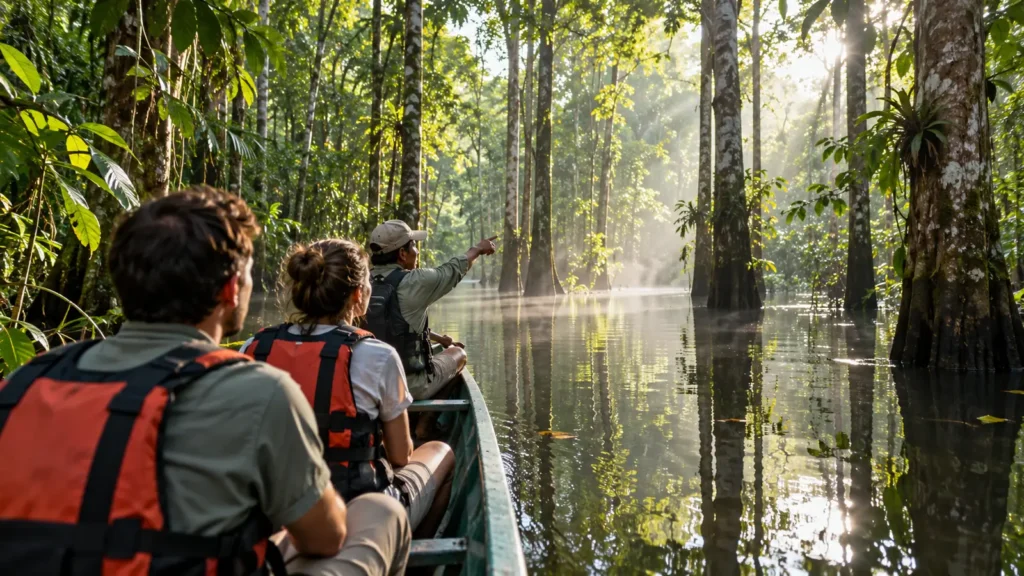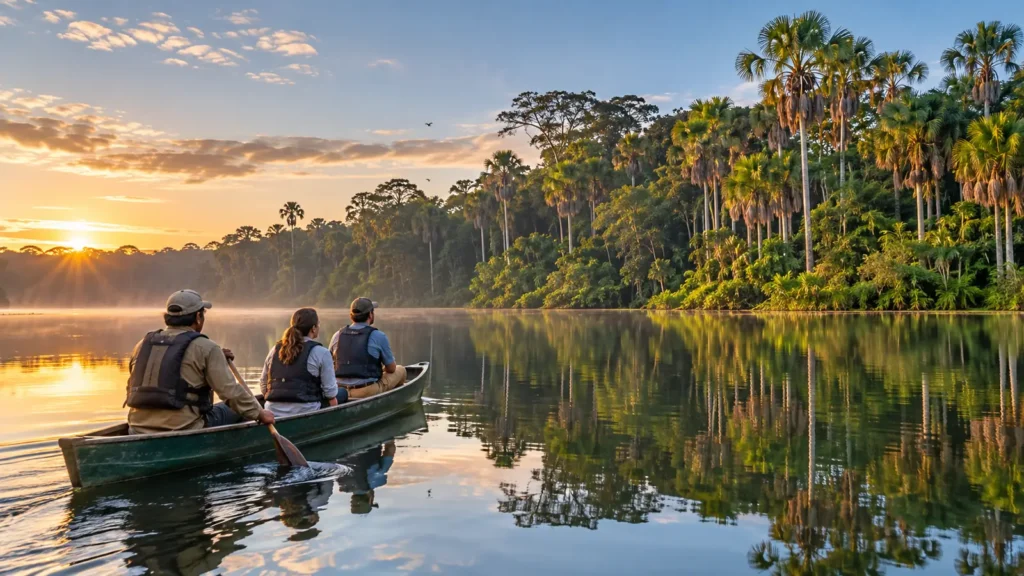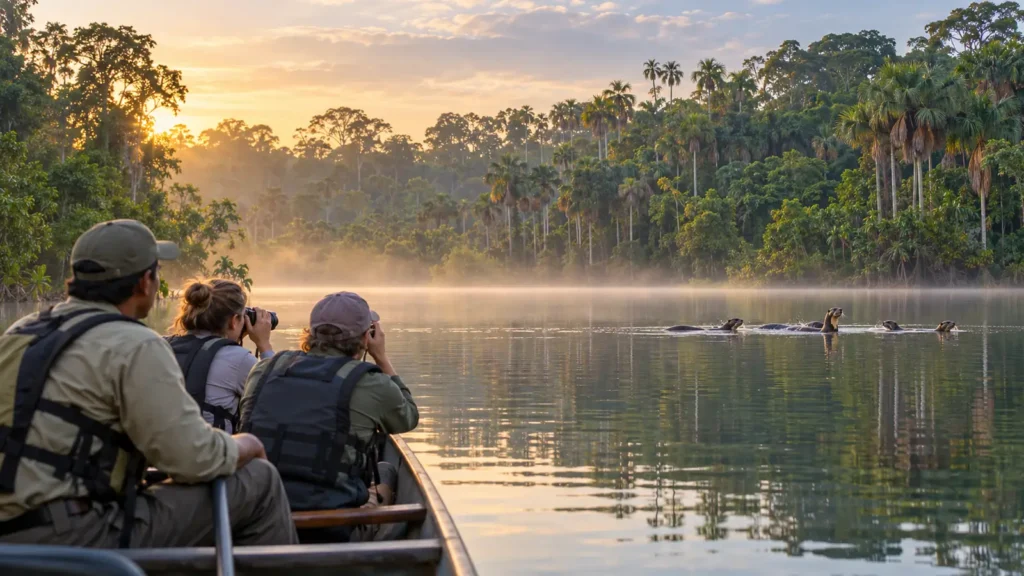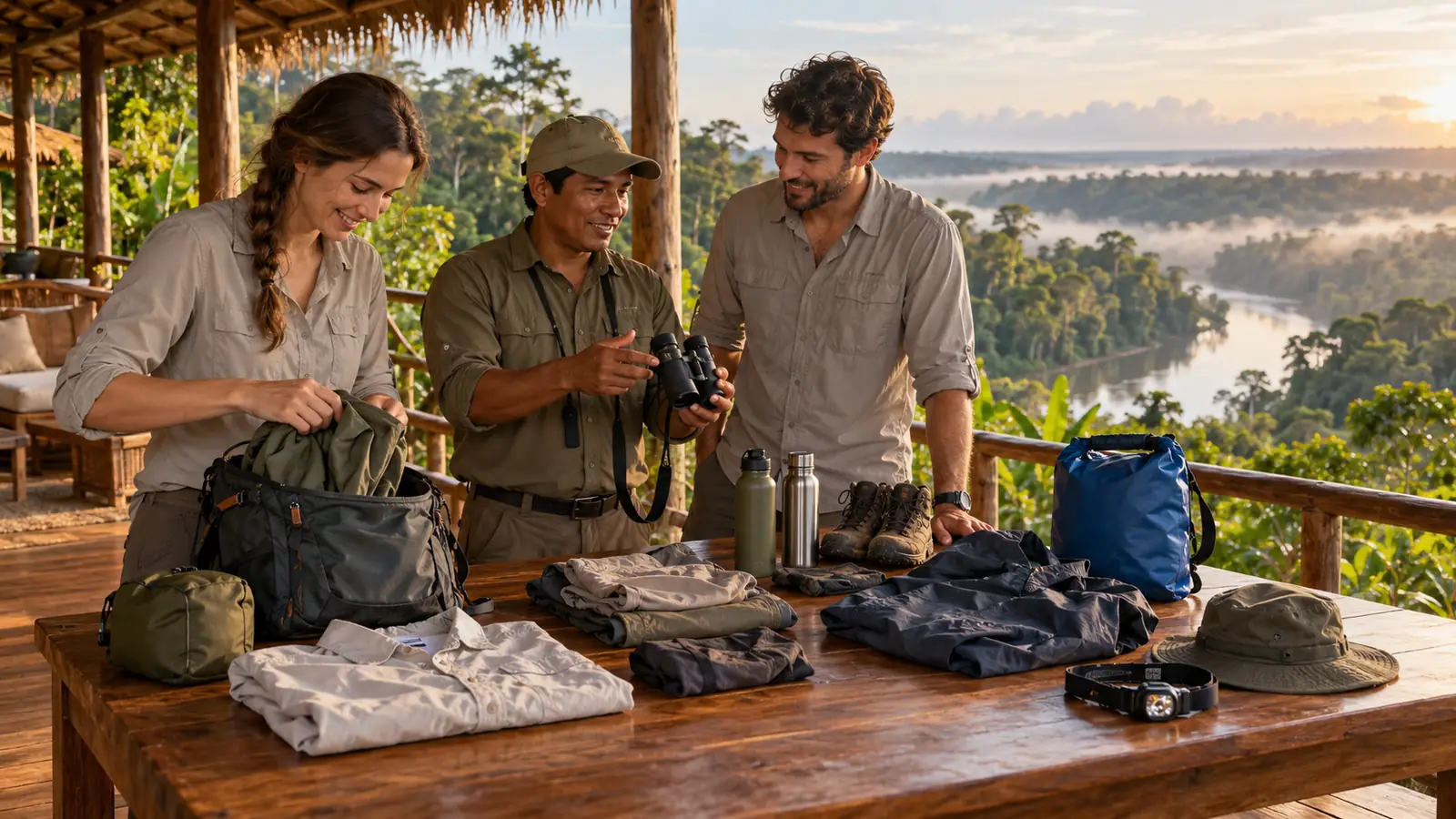

This Peruvian Amazon packing list is designed for a three- to five-day lodge trip from Iquitos or Puerto Maldonado. Pack light, protect everything from rain and humidity, and prioritize long breathable clothing, dependable footwear, insect precautions, a small daypack and waterproof organization. You do not need expedition equipment for a supported lodge program.
Essential Amazon packing checklist
| Category | Essential items |
|---|---|
| Clothing | Light long-sleeve shirts, long quick-drying trousers, underwear, socks, sleepwear, swimwear and one light warm layer |
| Rain and humidity | Breathable rain shell or poncho, pack cover, roll-top dry bags and waterproof phone/passport pouch |
| Footwear | Broken-in closed trail shoes, lodge sandals and rubber boots if the lodge does not provide them |
| Sun and insects | Hat, sunglasses, sunscreen and personally appropriate insect repellent |
| Excursion gear | Small daypack, refillable bottle, headlamp, binoculars and compact towel |
| Health | Personal prescriptions, basic first-aid supplies and documentation recommended by a travel-health professional |
| Electronics | Phone or camera, spare batteries, power bank, charging cables and moisture protection |
| Documents and money | Passport, insurance details, tour voucher and a modest amount of Peruvian soles |
Use this checklist after reading the complete Peruvian Amazon rainforest guide. The exact list changes with trip length, lodge facilities, season and activities.
Start with the right luggage strategy
The most efficient system uses three layers:
- Main travel luggage: the suitcase or backpack used for the wider Peru trip.
- Compact lodge bag: a soft duffel or manageable backpack containing only what you need in the forest.
- Daypack: water, rain protection, binoculars, camera and essentials carried on each excursion.
Large hard-shell luggage can be awkward on docks, boats and lodge paths. Many travelers store nonessential baggage in Iquitos or Puerto Maldonado and transfer only a smaller bag to the lodge. Ask the operator about storage and any boat or aircraft restrictions before arrival.
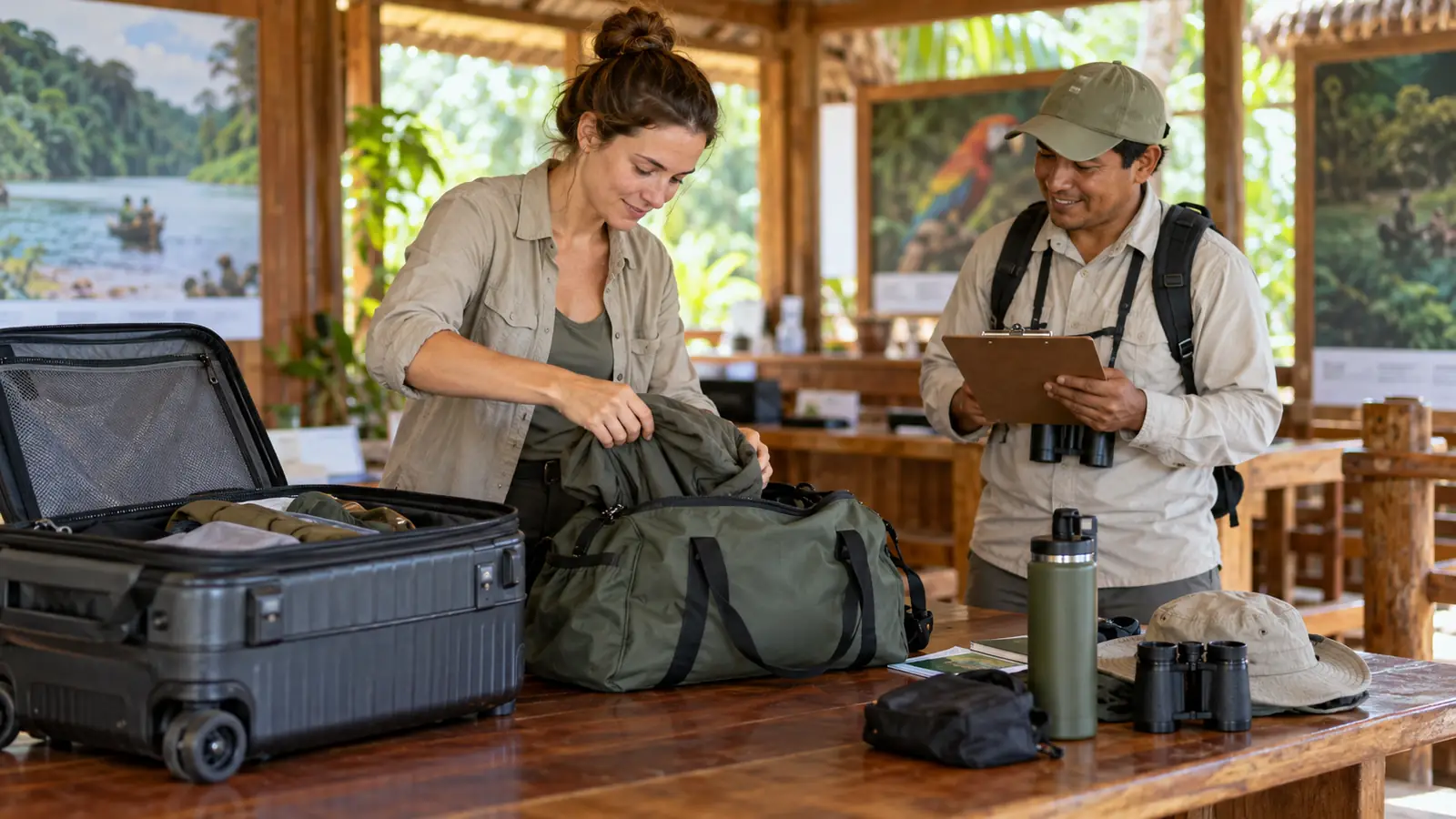
Do not assume a domestic airline’s baggage allowance from an international ticket. Fare rules differ and can change. Verify the operating airline and purchased fare directly, then weigh the finished bag before leaving home.
Clothing: cover skin without overheating
Long sleeves and long trousers protect skin from sun, vegetation and biting insects. The goal is not heavy fabric; it is light coverage that dries quickly. Choose loose, breathable pieces in neutral colors and test them during warm outdoor activity before the trip.
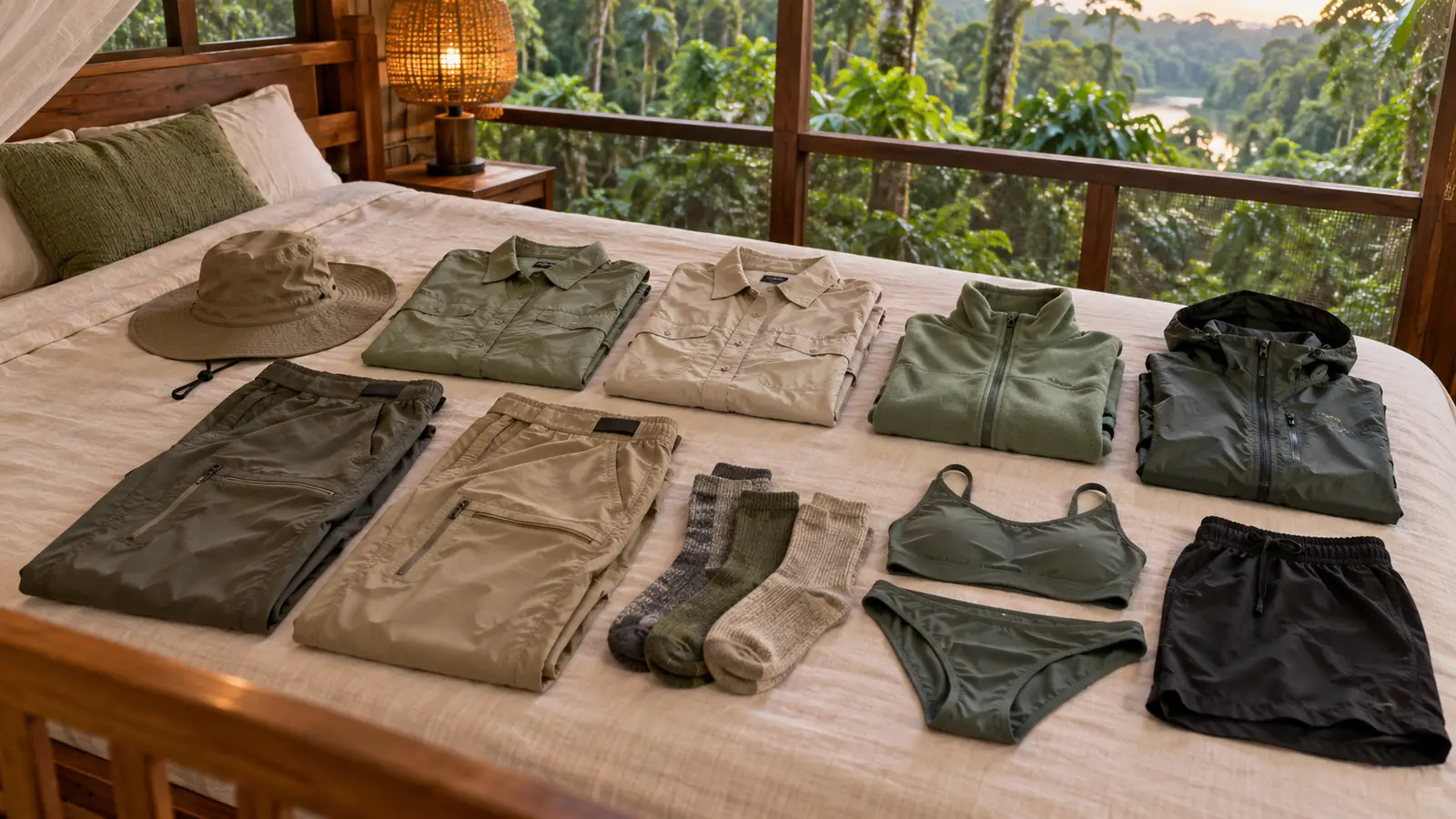
Recommended clothing for three days
- Two or three lightweight long-sleeve shirts.
- Two long quick-drying trousers.
- One optional short-sleeve shirt for the lodge.
- Three sets of breathable underwear and socks.
- Light sleepwear reserved as the dry set.
- Swimwear only when the itinerary and lodge approve swimming.
- A light fleece or warm mid-layer for air-conditioned travel and possible cool mornings.
- A compact waterproof shell or poncho.
Avoid denim for excursions. It becomes heavy when wet and dries slowly. Thick cotton shirts can also hold sweat, although SERNANP’s visitor guidance recommends comfortable long clothing and colors that blend with the environment. A practical compromise is breathable woven fabric that feels comfortable in sustained humidity.
Footwear: trail shoes, rubber boots and sandals
Bring broken-in closed shoes with grip. They should feel secure on wet wood, roots and uneven paths. Waterproof footwear can help in shallow mud, but a membrane does not prevent water entering over the top and may slow drying in humidity.

Rubber boots are useful on muddy or flooded trails and are specifically recommended by SERNANP for Tambopata. Many lodges lend them, but sizes and condition vary. Confirm availability, especially for very small or large feet. Lodge sandals are useful only around accommodation; they are not a substitute for closed walking footwear on forest excursions.
Pack socks that fit each shoe and change them when soaked. A second dry pair can prevent friction from becoming a blister during the next activity.
Rain and humidity protection
Rain is possible in every month. A pack cover helps, but it is not enough because water can enter through seams or while a bag is opened. Place critical items inside individual dry bags or sealed waterproof pouches.
Use separate protection for:
- Passport, insurance and tour documents.
- Phone, camera, spare batteries and charging equipment.
- Medication and first-aid items.
- One complete dry clothing set.
- Wet clothing that must be isolated during a transfer.
Do not seal damp clothes for longer than necessary. Hang them in a ventilated place at the lodge and keep the reserved sleep set dry.
What belongs in the daypack?
A 15–25 liter daypack is normally enough for supported excursions. Carry only what you need between lodge departures and returns. Excess weight becomes uncomfortable in heat and on boat transfers.

- Refillable water bottle.
- Compact rain layer.
- Hat, sunglasses and sunscreen.
- Insect repellent selected for you and used according to its instructions.
- Binoculars.
- Phone or compact camera.
- Headlamp for early starts or night walks.
- Small snack when allowed.
- Personal medication and basic blister supplies.
- Passport only when the operator says it is required; otherwise use secure lodge storage.
Secure loose objects before boarding a canoe or motorboat. Wear the supplied life jacket instead of packing your own unless specialized fit is required.
Sun and insect protection
SERNANP recommends repellent, sunscreen, hats and long sleeves for Tambopata visitors. Protection remains useful during cloudy weather because open rivers and lakes can have strong reflected light.
Insect-borne disease risk varies by destination and individual circumstances. The CDC currently identifies malaria transmission in low-elevation areas east of the Andes, including Iquitos and Puerto Maldonado, and provides destination-specific yellow-fever guidance. Arrange a qualified travel-health consultation well before departure. This packing guide does not prescribe vaccines or medication.
Choose repellent with professional guidance when necessary, follow label directions and do not spray it around other people, food or camera equipment. A physical barrier—long sleeves, trousers and screened accommodation—is part of the strategy.
Personal health and first-aid items
Carry enough prescription medication for the full trip plus a reasonable delay margin, in original labeled packaging when required. Keep it in hand luggage rather than checked baggage or a lodge duffel that may be inaccessible during transfer.
A compact personal kit may contain adhesive dressings, blister care, antiseptic wipes, oral rehydration products and any clinician-recommended medicine. Ask a health professional what is appropriate for your history and itinerary. Do not share prescription medication with other travelers.
Include insurance details, allergy information and generic medication names. Read the future Peruvian Amazon safety guide before finalizing health preparation.
Electronics and photography gear
Humidity, condensation and boat spray are the main risks. Use a waterproof pouch, keep spare batteries dry and bring a few moisture-control packets. When moving from a strongly air-conditioned room into warm humidity, allow equipment to acclimate inside its closed bag before opening it.
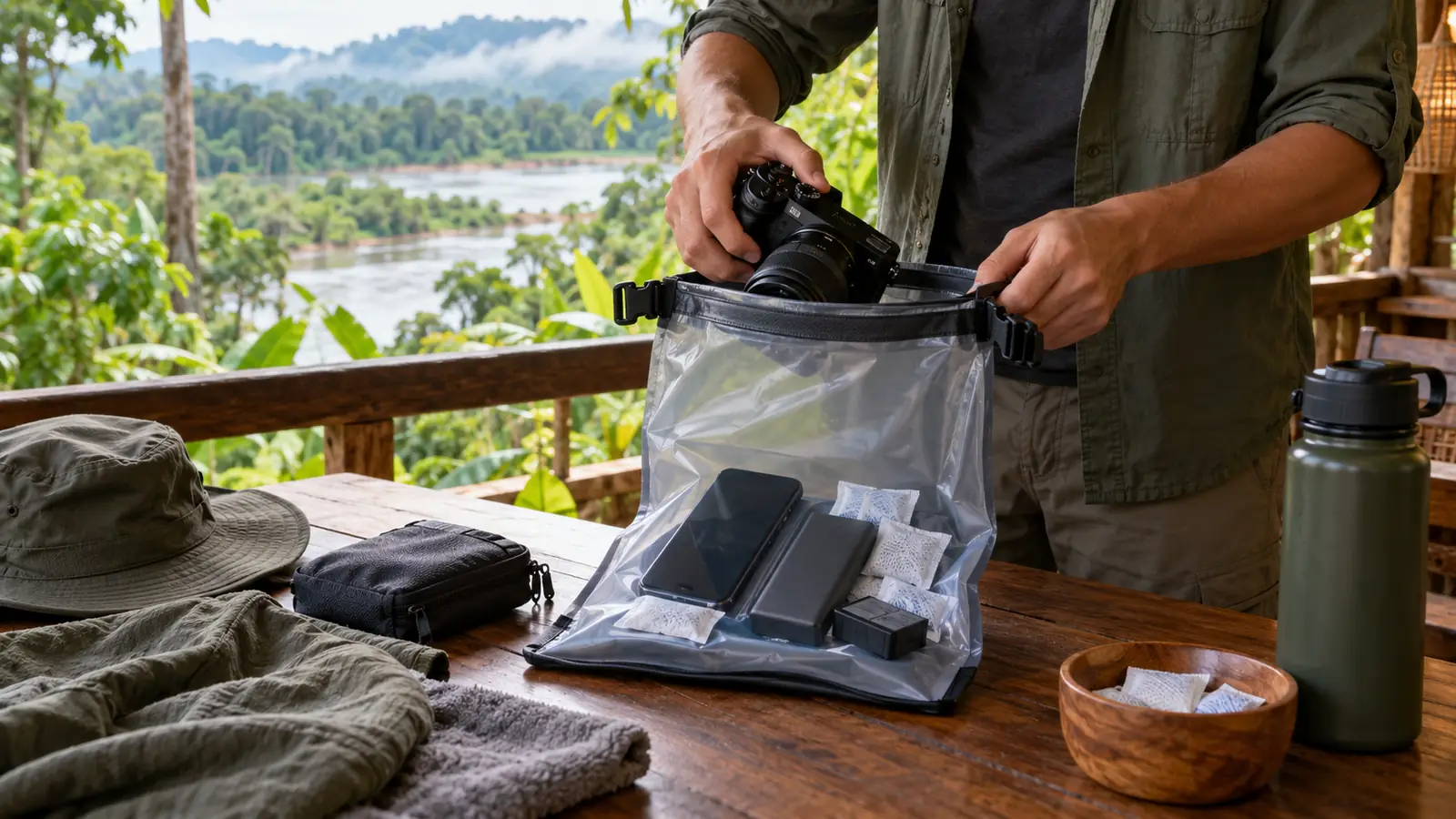
A phone and binoculars are enough for many travelers. Wildlife photography benefits from reach, but a large lens adds weight and can be difficult in a narrow canoe. Bring equipment you already know how to operate. Disable flash around wildlife unless the guide confirms it is appropriate.
Pack:
- Charging cable for each device.
- Power bank within current airline rules.
- Spare camera battery and memory card.
- Lens cloth and small air blower.
- Waterproof storage and moisture control.
- Universal adapter if your equipment requires one.
Ask the lodge when electricity is available. Some properties limit charging to generator or solar-power hours.
Documents, cash and valuables
Carry the passport used for domestic bookings, final tour voucher, insurance information and emergency contacts. Save copies offline and leave another copy with a trusted contact. A waterproof document pouch is more reliable than relying on a phone screenshot.
Bring a modest amount of Peruvian soles for tips, small purchases and situations where cards are not accepted. Remote lodges may have no reliable connection. Avoid displaying expensive jewelry or carrying unnecessary valuables.
Toiletries and personal comfort
- Travel-size unscented toiletries.
- Toothbrush and dental products.
- Small quick-drying towel if not supplied.
- Menstrual products and personal hygiene supplies.
- Reusable cloth bag for laundry.
- Earplugs for forest and lodge sounds.
- Sleep mask when rooms receive early daylight.
Avoid strongly scented cosmetics. They add weight and can attract insects or disturb other guests. Ask the lodge about biodegradable-product policies rather than assuming every product is suitable for local wastewater systems.
Adjusting the list for season and destination
The best time to visit the Peruvian Amazon guide explains the difference between Tambopata’s rainfall pattern and Iquitos river levels.
- Wetter conditions: add a second dry bag, another set of socks and more quick-drying clothing.
- Drier Tambopata months: keep rain protection and strengthen sun protection for open water.
- Possible friaje: retain a fleece or light insulating layer for Puerto Maldonado and Tambopata.
- Higher water near Iquitos: prioritize splash protection and secure footwear for boat boarding.
- Lower water near Iquitos: prepare for more walking and sun exposure on open banks.
What the current Explora el Peru tours include
The Tambopata National Reserve 3-day tour currently lists airport–lodge transfers, two lodge nights, activities, local guide, river transportation, drinking water during excursions and reserve entrance. Its recommended list includes long clothing, boots, sandals, hat, sunglasses, sunscreen, repellent, flashlight, rain poncho, daypack, binoculars and water bottle.
The Ecological Puerto Maldonado 3-day tour follows a similar lodge-based format. The Amazonas Sinchicuy Lodge 3-day tour includes transfers, guide, accommodation, meals and scheduled excursions. Inclusions can change, so confirm the final document instead of packing from an old webpage.
What not to bring
- Heavy denim or clothing that takes a long time to dry.
- New footwear that has not been tested.
- A different outfit for every meal.
- Valuable jewelry or irreplaceable sentimental items.
- Drones without written confirmation of legal and protected-area rules.
- Speakers or devices that add noise to wildlife excursions.
- Single-use plastics when a reusable alternative works.
- Wildlife bait, animal food or anything intended to manipulate an encounter.
Final three-day packing example
For a typical three-day Peruvian Amazon itinerary, one traveler can usually fit the lodge portion into a compact soft bag: three shirts, two trousers, sleepwear, three underwear and sock sets, swimwear, fleece, rain shell, trail shoes, sandals, toiletries, health kit and charging equipment. The daypack holds water, rain protection, binoculars, sun and insect protection, headlamp, camera and medication.
Before closing the bag, wear the entire trail outfit, walk in the footwear, test the rain layer and check that every critical item fits inside waterproof storage. Packing lighter is useful only when it does not remove health, rain or safety essentials.
A simple packing system for every excursion
Divide gear into three layers instead of searching through one large bag. The first layer stays on your body: breathable clothing, closed footwear, hat and any medication that must remain immediately accessible. The second layer is the small daypack used on forest walks and boat rides. Keep water, rain protection, binoculars, headlamp, insect and sun protection, camera and a compact dry pouch there. The third layer is the lodge bag, which holds spare clothing, sleepwear, toiletries and equipment that is not needed during the excursion.
Inside both bags, organize by consequence rather than by product type. Passport, phone, medication and a dry sleep set deserve the strongest waterproof protection because losing them to a sudden downpour would affect the whole trip. Less critical items can share lighter pouches. A bright pouch for health supplies and another for electronics make essentials easier to find in low light without emptying the bag onto a wet boat floor.
Use the same reset routine each evening: recharge devices, replace used batteries, refill the bottle, air footwear, hang damp clothing and return every item to its assigned pouch. Check the next activity with the guide before going to bed. A sunrise boat excursion, a muddy forest trail and time inside a canopy tower require slightly different combinations, even though the main packing list stays the same. This routine reduces forgotten items and keeps departure quiet when wildlife activity begins early.
Frequently asked questions
Should I bring hiking boots?
Bring broken-in closed footwear with dependable grip. Heavy mountain boots are unnecessary for many lodge trails, while the lodge may supply rubber boots for deep mud.
Are shorts useful?
They can be comfortable inside a screened lodge, but long trousers are usually better for forest excursions because they provide more coverage.
Do I need a mosquito net?
Ask the lodge whether beds are screened or netted. Carrying a personal net is usually unnecessary for established lodge accommodation unless specifically advised.
Can I take a wheeled suitcase to the lodge?
Sometimes, but it can be inconvenient on boats and paths. A compact soft bag is normally easier. Confirm storage and transfer rules with the operator.
Should I bring binoculars?
Yes if possible. Binoculars often provide better wildlife experiences than trying to photograph every animal with a phone.
How do I keep clothes dry?
Use separate roll-top dry bags or sealed liners inside the main bag, keep one sleep set protected and air damp items as soon as conditions allow.
What colors should I wear?
Neutral greens, browns, gray and beige are practical. Avoid highly reflective or fluorescent clothing during quiet wildlife observation.
Editorial and health note
Visitor-equipment recommendations were checked against SERNANP’s official Tambopata National Reserve guidance and Explora el Peru’s current Amazon tour pages. Health context was checked against the CDC Peru traveler information. Health recommendations change and depend on the exact itinerary and traveler; obtain individualized professional advice before departure.