
Is the Peruvian Amazon safe? Established lodge trips from Iquitos or Puerto Maldonado are manageable for many travelers when they use a reputable operator, follow guides, prepare for tropical health risks and accept that rivers and remote forests require stricter routines than a city break. The main practical concerns are transport, mosquitoes, heat, dehydration, slippery trails, changing weather and limited access to medical care—not dramatic encounters with wildlife.
Understanding risk in the Amazon
The Peruvian Amazon rainforest includes cities, river ports, community areas, protected reserves and lodges ranging from close-to-town properties to places several hours away by boat. “The Amazon” therefore has no single safety profile. A three-day lodge program with prearranged airport pickup is different from independent travel through an isolated border river.
Risk also changes with season, traveler health, lodge distance, group size and activity. A well-managed itinerary reduces uncertainty by coordinating transfers, checking weather, assigning trained guides and carrying communications and first-aid equipment. Travelers contribute by disclosing relevant conditions, listening to briefings and avoiding impulsive decisions around boats, animals and unfamiliar trails.
Choose an operator and lodge carefully
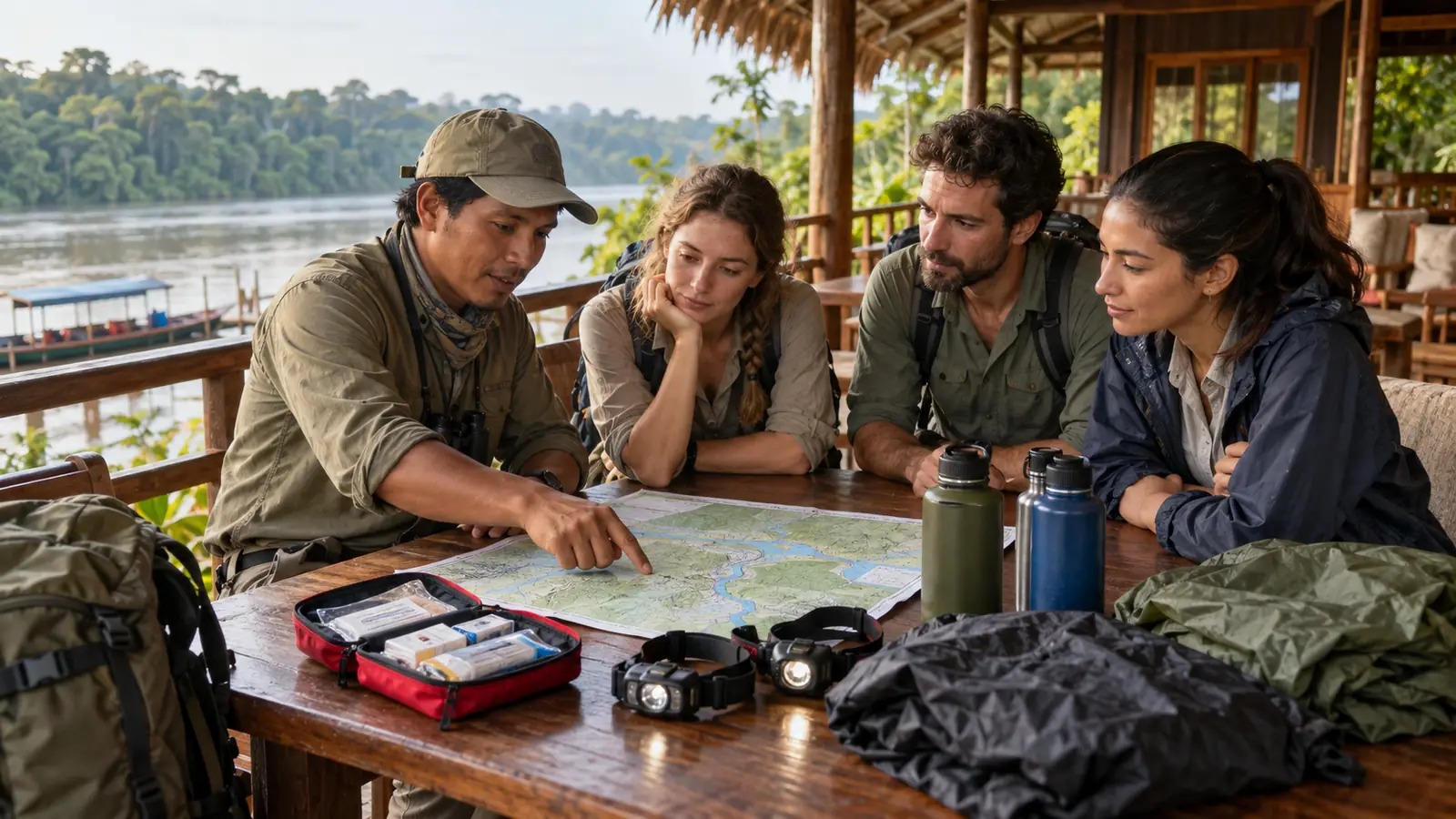
Before paying, request the legal business name, a written itinerary, inclusions, cancellation terms and a 24-hour contact. Ask who meets you at the airport or hotel, which boat is used, whether life jackets are sized for every traveler, and how the lodge communicates when mobile coverage disappears.
For protected areas, verify current access requirements. SERNANP states that visitors to Tambopata National Reserve and Pacaya Samiria National Reserve must use authorized operators and follow park-ranger instructions. Registration at control posts, marked routes and guide accompaniment are part of responsible access, not unnecessary bureaucracy.
A useful pre-booking checklist includes:
- Guide language, training and maximum excursion group size.
- Boat cover, flotation devices and procedure for heavy rain or poor visibility.
- First-aid capacity, communication equipment and nearest appropriate clinic.
- Electricity hours, drinking-water arrangements and dietary accommodations.
- Room screening or mosquito nets and secure storage for valuables.
- Mobility requirements for docks, forest trails, towers and canoe boarding.
Travel-health preparation before departure

Arrange a qualified pre-travel consultation early enough to discuss the exact route, trip length, medical history, routine vaccinations and destination-specific recommendations. Do not copy another traveler’s medication plan. Advice can differ for children, pregnancy, immune conditions, medication interactions and previous vaccination history.
The CDC currently identifies malaria transmission in low-elevation areas east of the Andes, including Iquitos and Puerto Maldonado, and provides yellow-fever recommendations for Loreto and Madre de Dios. A clinician should decide what applies to the individual traveler and itinerary. This article does not prescribe vaccines or preventive medication.
Carry enough regular medication for the trip plus a reasonable delay, in original packaging where practical. Keep essential doses, allergy information and prescription details in hand luggage rather than checked or separately transferred baggage. Confirm that travel insurance covers pre-existing conditions as required and that remote-area care or evacuation is not excluded.
Mosquitoes and insect-bite prevention

Bite prevention matters during the day and at night because different insects are active at different times. Use a repellent appropriate for the traveler, follow its label, wear lightweight long sleeves and trousers, and keep room screens or bed nets arranged correctly. Reapply protection after heavy sweating or washing according to product instructions.
Inspect clothing and footwear before putting them on, especially when items have been left on the floor or veranda. Shake out towels and keep bags closed. Insects are part of the ecosystem; spraying an entire forest room indiscriminately is neither necessary nor responsible. Physical barriers and consistent personal protection are more useful than panic.
Food, water, heat and humidity
Drink treated or sealed water supplied by the lodge and confirm whether water from room taps is potable. Wash or sanitize hands before eating, and inform staff promptly about allergies. Avoid accepting food that has been stored improperly or left exposed for long periods.
Heat and humidity can make an easy-looking walk tiring. Start hydrated, carry water, use sun protection and tell the guide early if dizziness, unusual weakness, headache, nausea or confusion develops. Rest is more effective before symptoms become severe. Alcohol can worsen dehydration and judgment, particularly before an early boat departure.
The CDC also advises avoiding contact with potentially contaminated floodwater or mud, particularly through open cuts, and notes current leptospirosis concerns in northern and Amazonian areas. Cover wounds with waterproof protection and seek medical advice for significant exposure or illness rather than self-diagnosing.
Boat and river safety

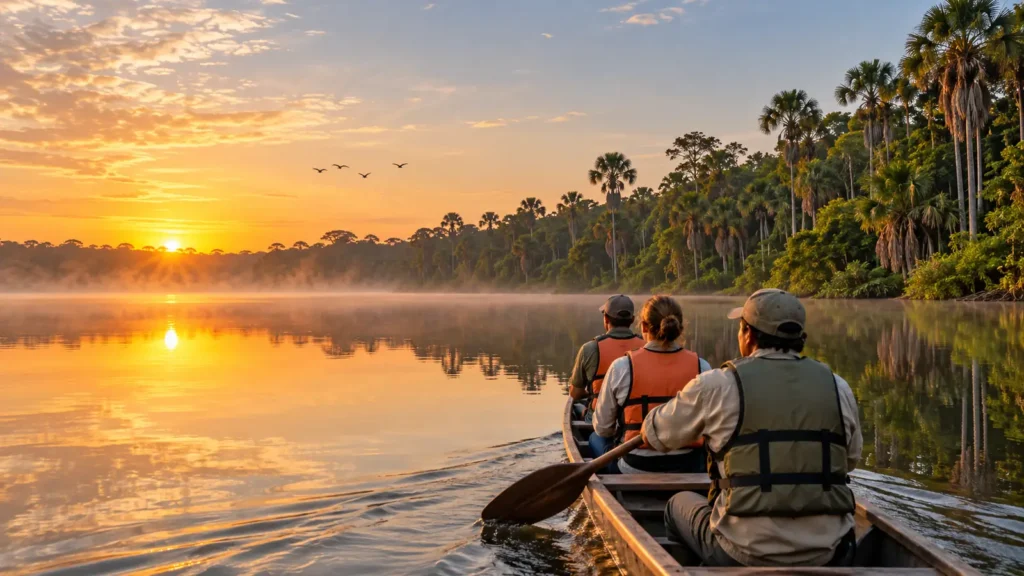
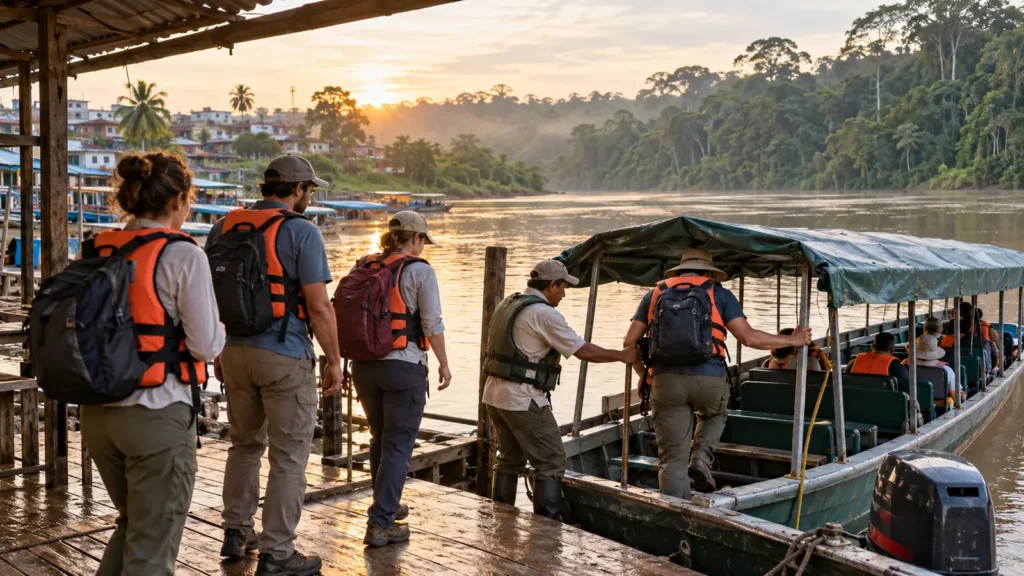
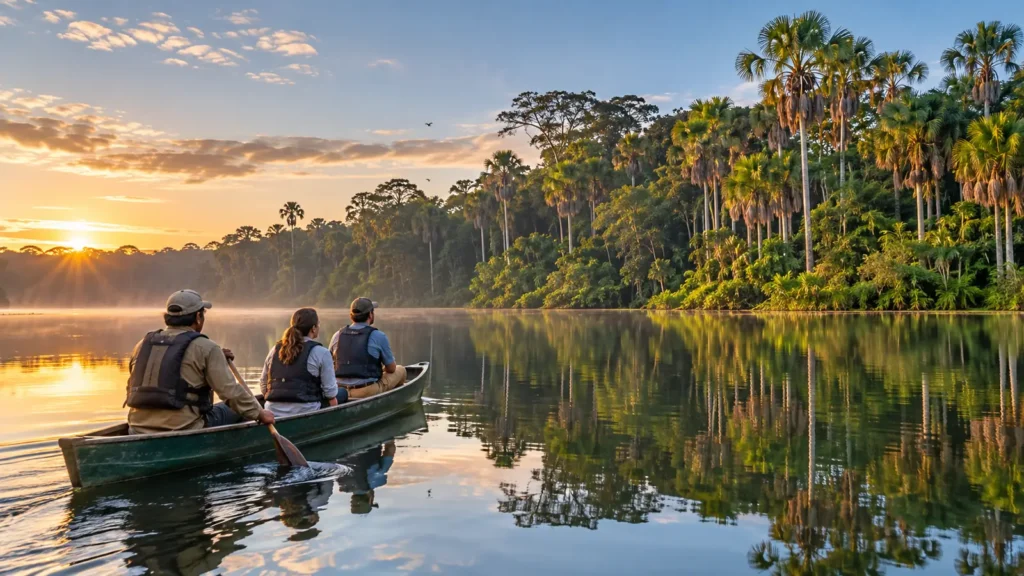
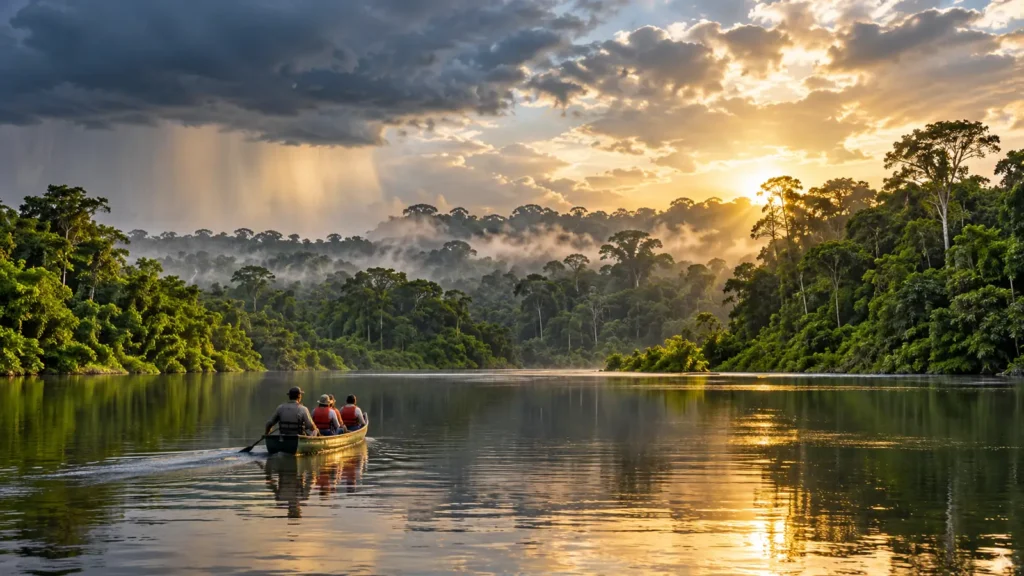
River travel is a normal part of many Amazon itineraries. Wear the supplied life jacket from boarding until the operator says it can be removed. Board one person at a time, use the offered hand, keep weight centered and follow seating instructions. Secure cameras and documents in dry bags without blocking exits or walkways.
Do not stand suddenly, trail hands in the water or pressure a driver to continue in unsafe weather. At night or in heavy rain, visibility and navigation can change quickly. A delay or altered excursion is evidence of responsible judgment when conditions require it.
SERNANP specifically instructs Pacaya Samiria visitors to wear life jackets throughout boat navigation. Ask whether children’s sizes are available before arrival; an adult vest is not an adequate substitute for a child.
Trail, tower and wildlife safety

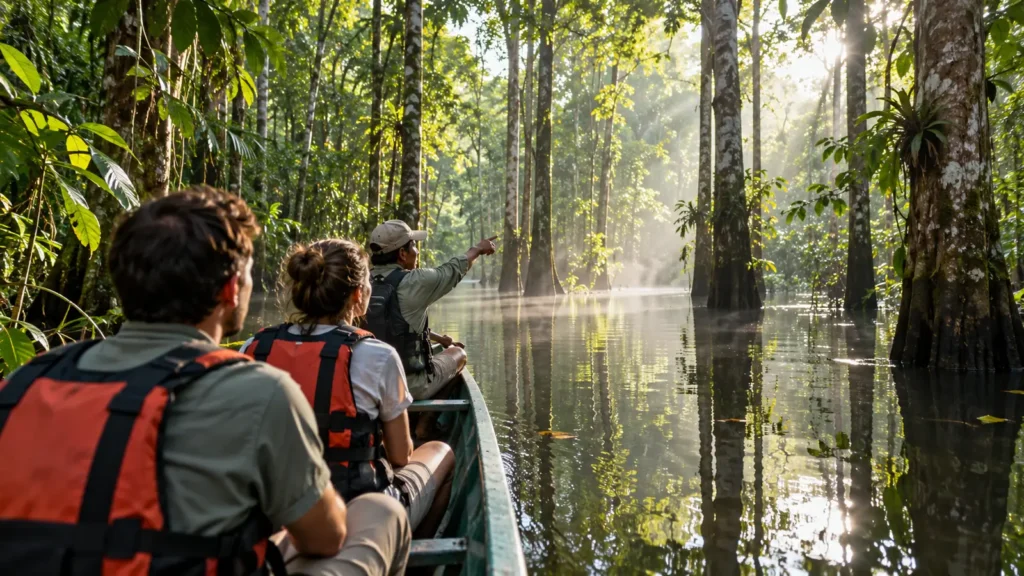
Stay behind the guide, remain on the established trail and keep enough space to see roots, mud and low branches. Closed footwear or supplied rubber boots are more appropriate than open sandals for forest walks. Use handrails on towers and bridges and keep both hands available rather than walking while looking through a camera.
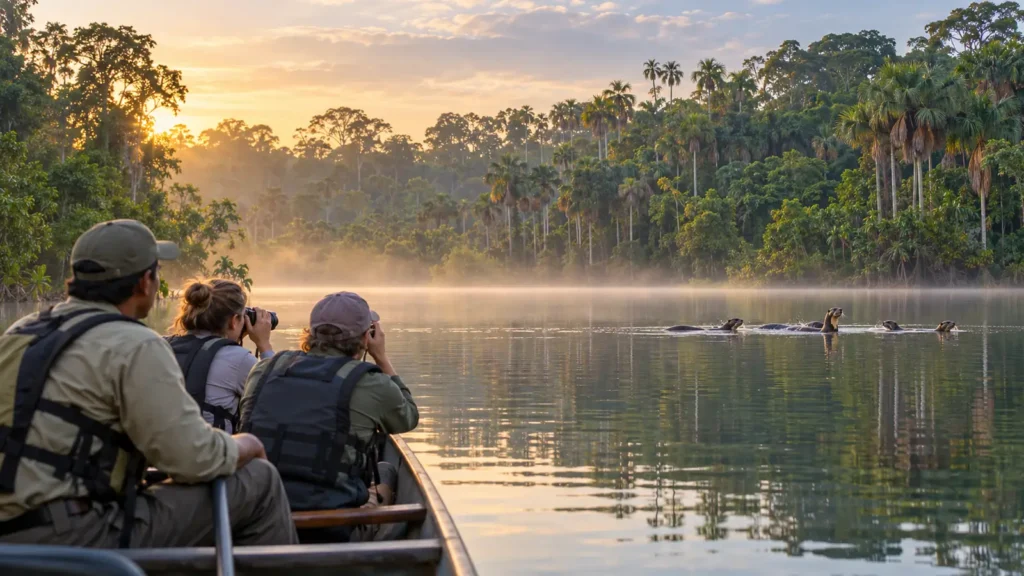
Do not touch leaves, insects, amphibians or apparently harmless animals. Never feed or approach wildlife for a photograph. Most animals avoid people when given space; bites and scratches become more likely when an animal is handled, cornered or fed. The Peruvian Amazon wildlife guide explains what visitors may see and how to observe responsibly.
During a night walk, carry a working headlamp, follow the guide’s light protocol and avoid stepping away from the group. If separated, stop and signal instead of choosing an unverified path.
Rain, changing rivers and itinerary disruptions

Tropical rain can begin quickly, and river levels affect docks, paths and boat routes. The best time to visit the Peruvian Amazon guide explains seasonal patterns, but no month is rain-free. Protect medicine, passport and electronics before leaving the lodge, not after the first downpour.
Reliable operators monitor local conditions and can shorten, move or cancel an activity. Leave connection time before important flights and avoid building a remote lodge return directly against an inflexible international departure. Civil demonstrations and road closures elsewhere in Peru may also affect airports or overland connections, so monitor official and airline updates.
Personal security in gateway cities
Iquitos and Puerto Maldonado require the same urban awareness used elsewhere in Peru. Use prearranged or reputable transportation, keep phones and expensive cameras discreet when not needed, avoid displaying cash, and do not leave valuables unattended in vehicles or public areas. Confirm the identity of the person collecting you instead of following someone who only knows the hotel or tour name.
The current U.S. Department of State advisory places Peru at Level 2, “Exercise increased caution,” and identifies crime and unrest among the national concerns. It separately designates the Colombia–Peru border area in Loreto as a do-not-travel zone. That remote border warning should not be confused with every standard Iquitos lodge route, but travelers must verify their actual river itinerary and current official advice.
Unregulated ayahuasca or kambo experiences introduce risks unrelated to a normal nature tour. The State Department warns of serious illness, deaths, assault, injury and robbery associated with these substances. Do not treat a retreat’s marketing as medical or safety assurance; this cluster covers conventional guided rainforest travel.
Communication, insurance and emergency planning
Mobile service may disappear soon after leaving the city. Ask whether the lodge uses radio, satellite communication or another backup, who decides on evacuation and how long transfer to medical care can take. Share the operator’s contact and itinerary with a trusted person at home.
Read the insurance wording rather than assuming “adventure” coverage includes remote boat travel, canopy structures or evacuation. Keep the policy number and assistance contact offline. The CDC lists 105 for police and 116 for the fire department in Peru; local lodge procedures and medical contacts should also be stored where they are accessible without internet.
If illness develops during the trip, tell the guide or lodge manager early. After returning home, tell a clinician where in the Amazon you traveled and what activities or exposures occurred. The CDC advises urgent medical attention for fever during or after travel in a malaria-risk area and emphasizes communicating the travel history.
Who should plan extra carefully?
Families should confirm minimum ages, child-size flotation devices, balcony or dock design, private-guide options and the walking duration of every activity. Older travelers and anyone with reduced mobility should ask about uneven gangways, canoe entry, heat, stairs and the distance between rooms and the main lodge.
Travelers with severe allergies, diabetes, heart or respiratory conditions, limited mobility or other significant medical needs should discuss remoteness and evacuation time with both a clinician and the operator. A shorter lodge transfer may be more valuable than adding one more activity.
Warning signs when evaluating a jungle tour
Be cautious when a seller refuses to provide a written itinerary, cannot identify the lodge, requests payment to an unrelated personal account or promises guaranteed encounters with dangerous wildlife. Other warning signs include vague pickup arrangements, no explanation of life jackets, pressure to ignore health advice and claims that a guide makes insurance unnecessary.
Photography showing guests holding wild animals should prompt questions about animal welfare and visitor safety. Similarly, a low price is not meaningful until transfers, protected-area entry, meals, guide service and accommodation are itemized. Compare the complete service rather than the headline number.
A legitimate operator should be comfortable explaining limitations. Weather changes, wildlife sightings cannot be guaranteed, and a remote lodge cannot offer the same medical access as a large city. Honest answers about those constraints are more reassuring than a promise that nothing ever goes wrong.
Final 48-hour safety check
- Reconfirm the pickup name, time, location and emergency contact directly with the operator.
- Check official travel advice, local weather and airline or road updates.
- Download insurance details, itinerary and key contacts for offline access.
- Place passport, essential medication, one dry clothing layer and electronics in waterproof hand luggage.
- Tell a trusted contact when communication may be unavailable and when to expect the next message.
- Charge the phone and power bank, test the headlamp and carry spare power where appropriate.
- Review allergies, dietary needs and mobility limits with the guide before leaving the gateway city.
This short review catches practical errors while there is still time to fix them. Once the boat has left the port, replacing medication, correcting a pickup misunderstanding or downloading a policy document becomes much harder.
Safety on current Explora el Peru Amazon tours
The Tambopata National Reserve 3-day tour includes river transport, Sandoval Lake, forest walking and night activities; travelers should be ready for a 3 km forest approach described in the itinerary. The Ecological Puerto Maldonado 3-day tour also combines lodge transfers, rivers and forest excursions.
The Amazonas Sinchicuy Lodge 3-day tour uses organized transfers into the northern Amazon. For any departure, reconfirm pickup details, activity conditions, required equipment and current inclusions. Use the Peruvian Amazon packing list to prepare clothing, dry storage, lighting and personal supplies.
Frequently asked questions
Is it safe to visit the Amazon from Iquitos?
Standard organized lodge routes can be manageable with reputable transfers and clear emergency procedures. Confirm the route because official warnings for the remote Colombia–Peru border area do not describe every Iquitos itinerary.
Is Puerto Maldonado safe for tourists?
It is a major gateway for established lodge programs. Use verified pickup, normal urban precautions and authorized services for protected areas, then follow guide and boat procedures.
Are snakes and jaguars a major danger?
Direct encounters are uncommon on standard guided itineraries. Staying on trails, wearing suitable footwear, using a light at night and never handling wildlife are more useful than worrying about dramatic attacks.
Can I travel alone?
You can arrive independently, but remote forest and protected-area activities should use appropriate authorized guiding and transport. Solo travelers should provide their itinerary to a trusted contact.
How many days are sensible for a first trip?
A structured three-day Amazon itinerary is a practical introduction. The guide to how many days to spend in the Peruvian Amazon compares shorter and longer stays.
What should I do if I become sick after the trip?
Seek professional medical care and clearly report the Amazon destinations, dates, activities, bites, water exposure and any prescribed preventive medication. Fever after a malaria-risk itinerary requires prompt attention.
Editorial and medical disclaimer
This guide was reviewed against current information from the CDC Peru traveler page, the U.S. Department of State Peru advisory, and official SERNANP visitor guidance for Tambopata and Pacaya Samiria. Conditions and health recommendations change. Recheck official sources and obtain individualized professional advice before travel.