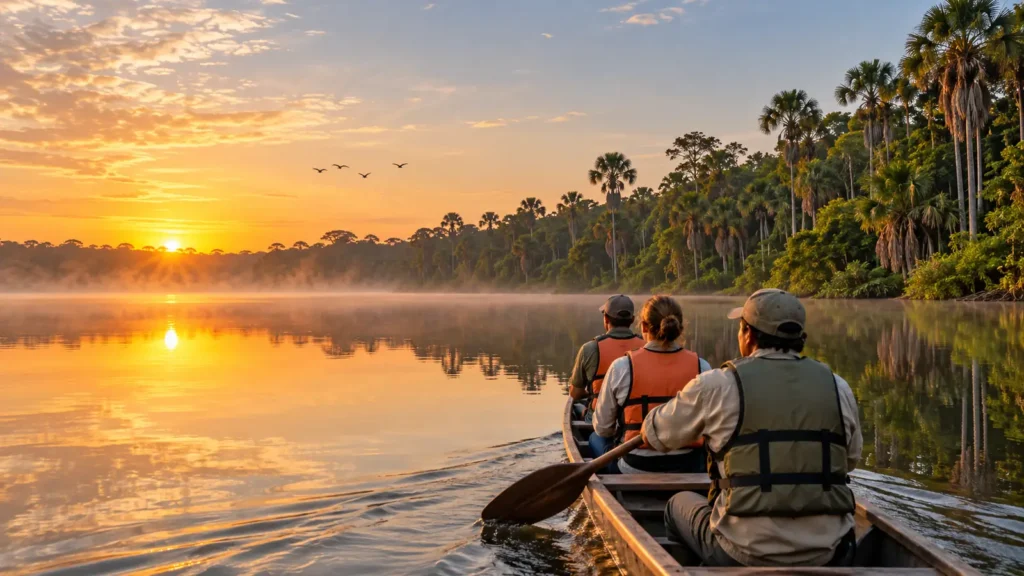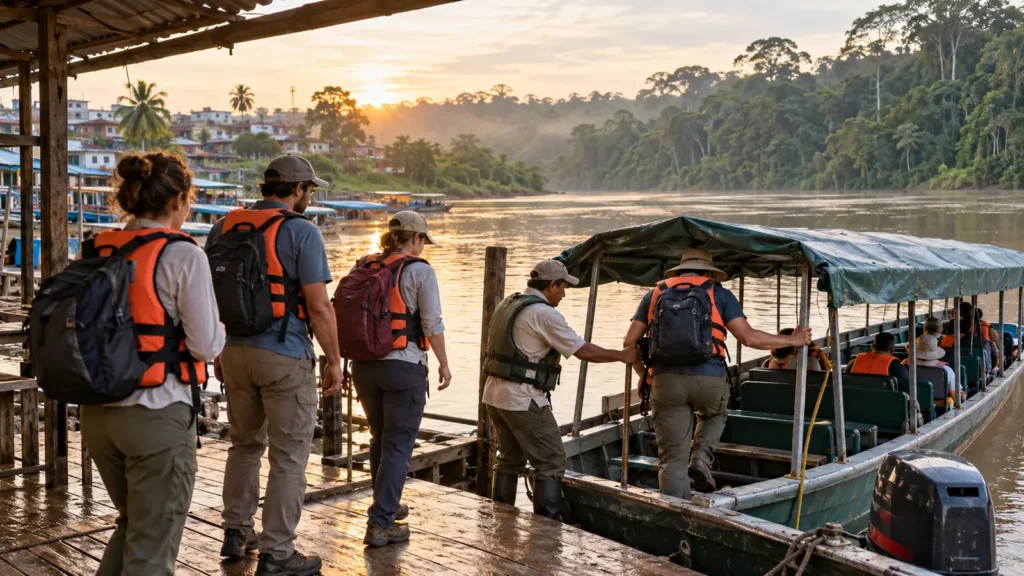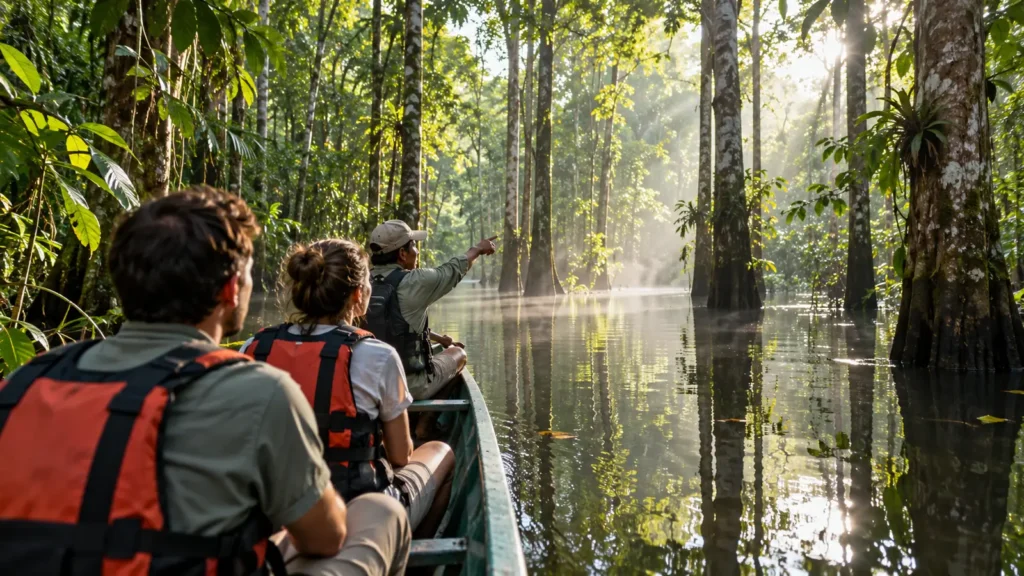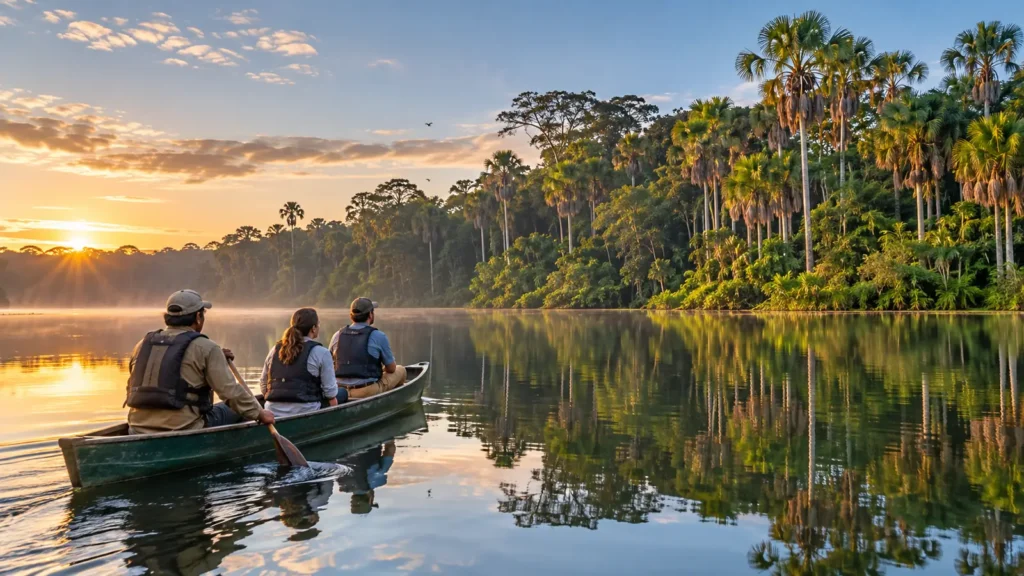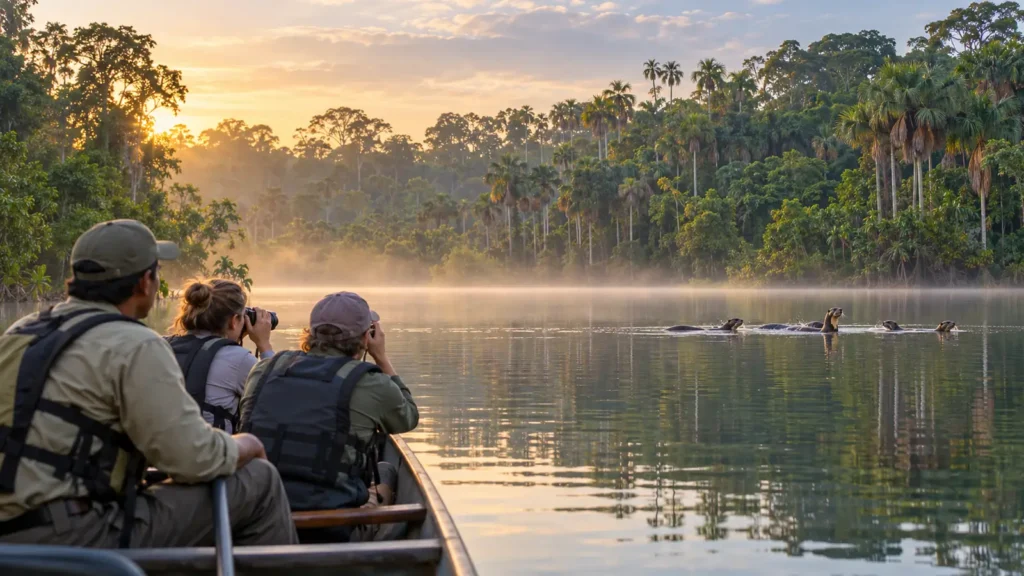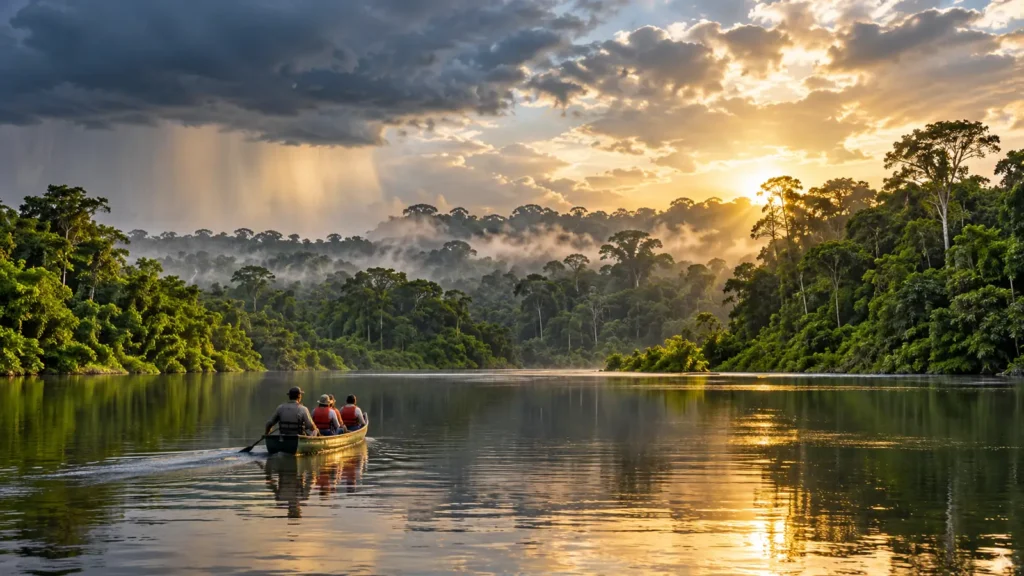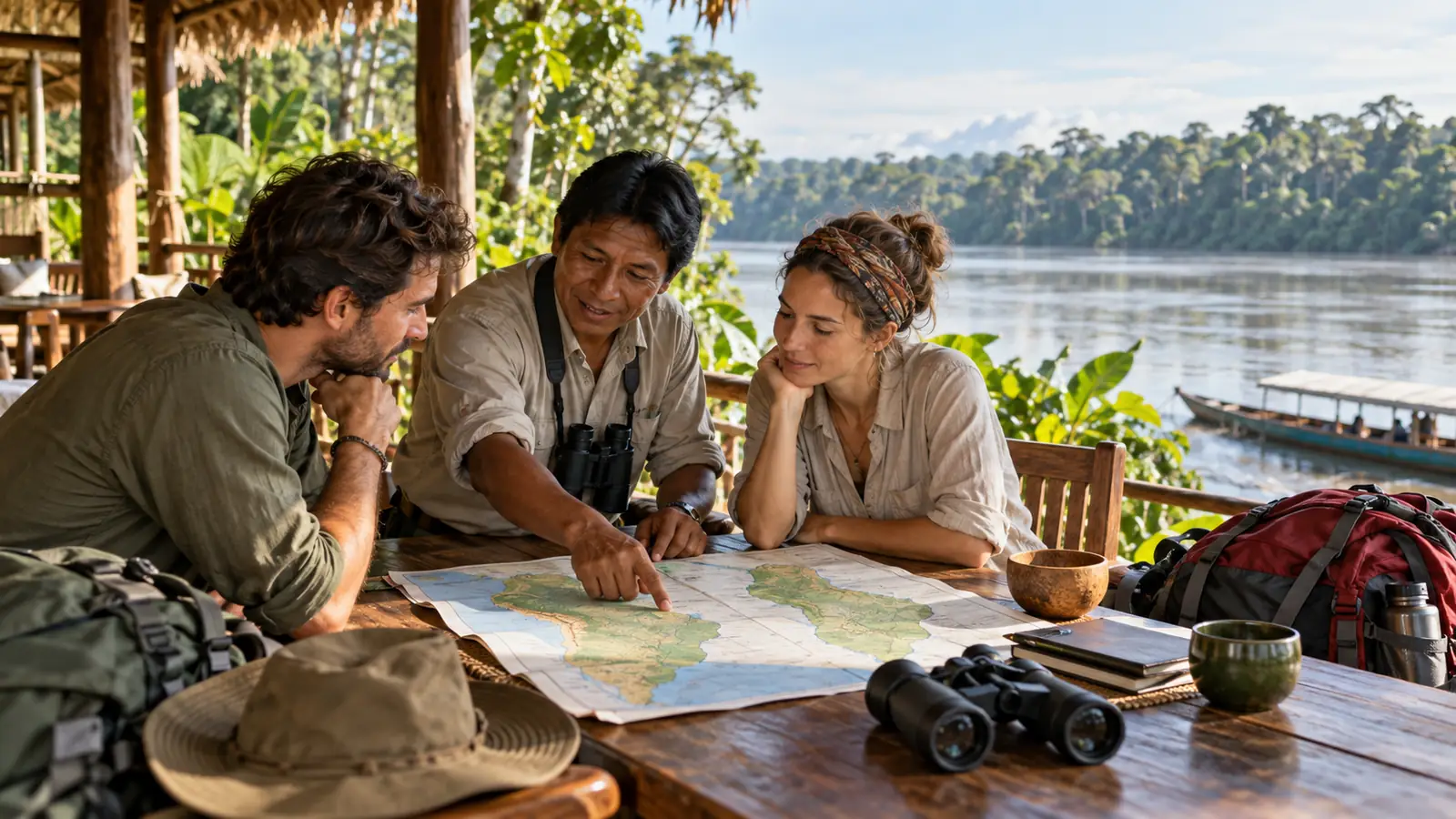

Three days in the Peruvian Amazon can deliver two rainforest nights, one full day of activities and meaningful dawn and evening experiences—but only when the gateway, lodge transfer and flights fit together. Iquitos offers a northern Amazon river setting, while Puerto Maldonado and Tambopata create a practical southern route for travelers coming from Cusco. The best option is not the itinerary with the longest activity list; it is the one that converts limited time into safe, well-guided hours in suitable habitat.
Is three days enough for the Peruvian Amazon?
Three calendar days are enough for an introduction, not a complete Amazon expedition. Most programs include two nights. Part of Day 1 is used for airport or hotel pickup, road travel, port procedures and a boat ride. Part of Day 3 returns along the same chain. Day 2 is normally the only uninterrupted forest day.
A good itinerary still provides several distinct observation windows: an afternoon walk or canoe outing after arrival, a night excursion, an early start, a full daytime activity and a final dawn or morning session. The guide to how many days to spend in the Peruvian Amazon explains why a fourth day improves flexibility if time and budget permit.
If this is your first rainforest journey, begin with the complete Peruvian Amazon rainforest guide for an overview of gateways, habitats, lodges and trip design before comparing short programs.
Three days works best for travelers who accept a focused experience, choose one region and arrive at the gateway before the final scheduled transfer. It is a poor fit if the lodge is extremely remote, the flight lands late, or the onward international departure leaves no margin.
Iquitos or Tambopata for a three-day trip?
| Decision point | Iquitos | Puerto Maldonado / Tambopata |
|---|---|---|
| Landscape | Large rivers, tributaries, floodplain and northern lowland forest | Madre de Dios rivers, terra firme forest, oxbow lakes and palm wetlands |
| Best route fit | Trips routed through Lima or northern Peru | Southern Peru journey with Cusco and Machu Picchu |
| Access | Flight to Iquitos, then road and/or river according to lodge | Flight or land arrival in Puerto Maldonado, then road and river |
| Three-day priority | Select a lodge with efficient river access | Select a sector whose transfer leaves useful field time |
| Extend when | Seeking deeper river systems or more community and nature time | Seeking more remote Tambopata sectors or specialist wildlife outings |
For a deeper destination comparison, read Amazon rainforest of Peru: Iquitos or Tambopata. The choice should follow the wider Peru route, not a checklist of animals. Many species occur in both regions, but sightings depend on habitat, season, weather, guide skill and luck.
Option 1: Three-day Iquitos Amazon itinerary
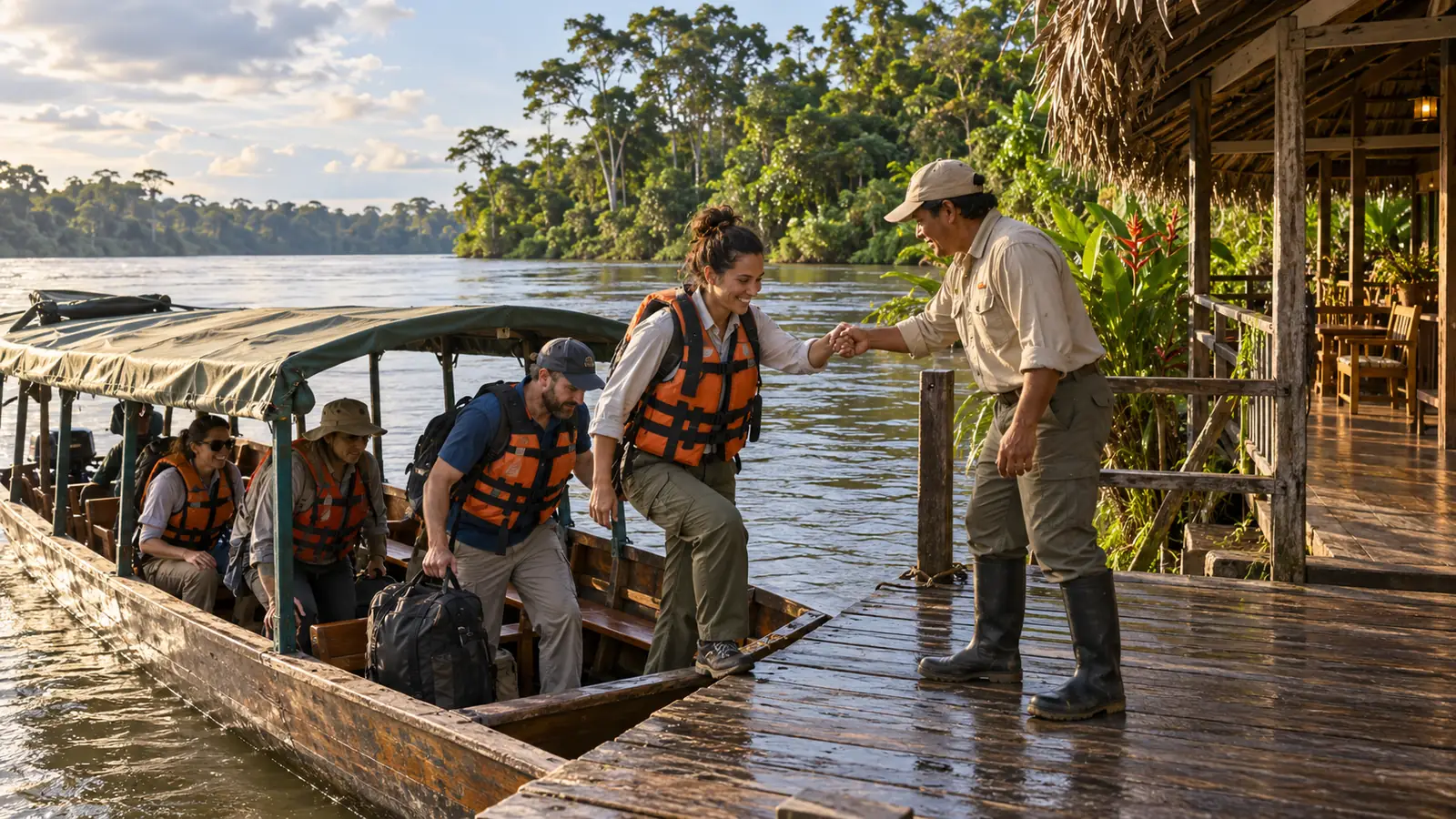
This structure suits travelers who reach Iquitos early and want the river to be central to the experience. Exact stops vary by lodge, water level and current conditions.
Day 1: Iquitos, river transfer and first forest activity
Meet the operator at the agreed airport or city location, check luggage and receive a safety briefing. The transfer can combine road and river segments. Once at the lodge, settle into the room, learn meal and electricity times, and confirm the next morning’s wake-up call.
A practical first afternoon uses nearby habitat: a guided forest walk, small-waterway outing or river observation rather than a distant destination. As daylight softens, guides begin listening for calls and watching activity along the forest edge. After dinner, a short night walk may reveal insects, frogs and nocturnal behavior that remain hidden by day.
Day 2: Dawn observation, forest interpretation and river life
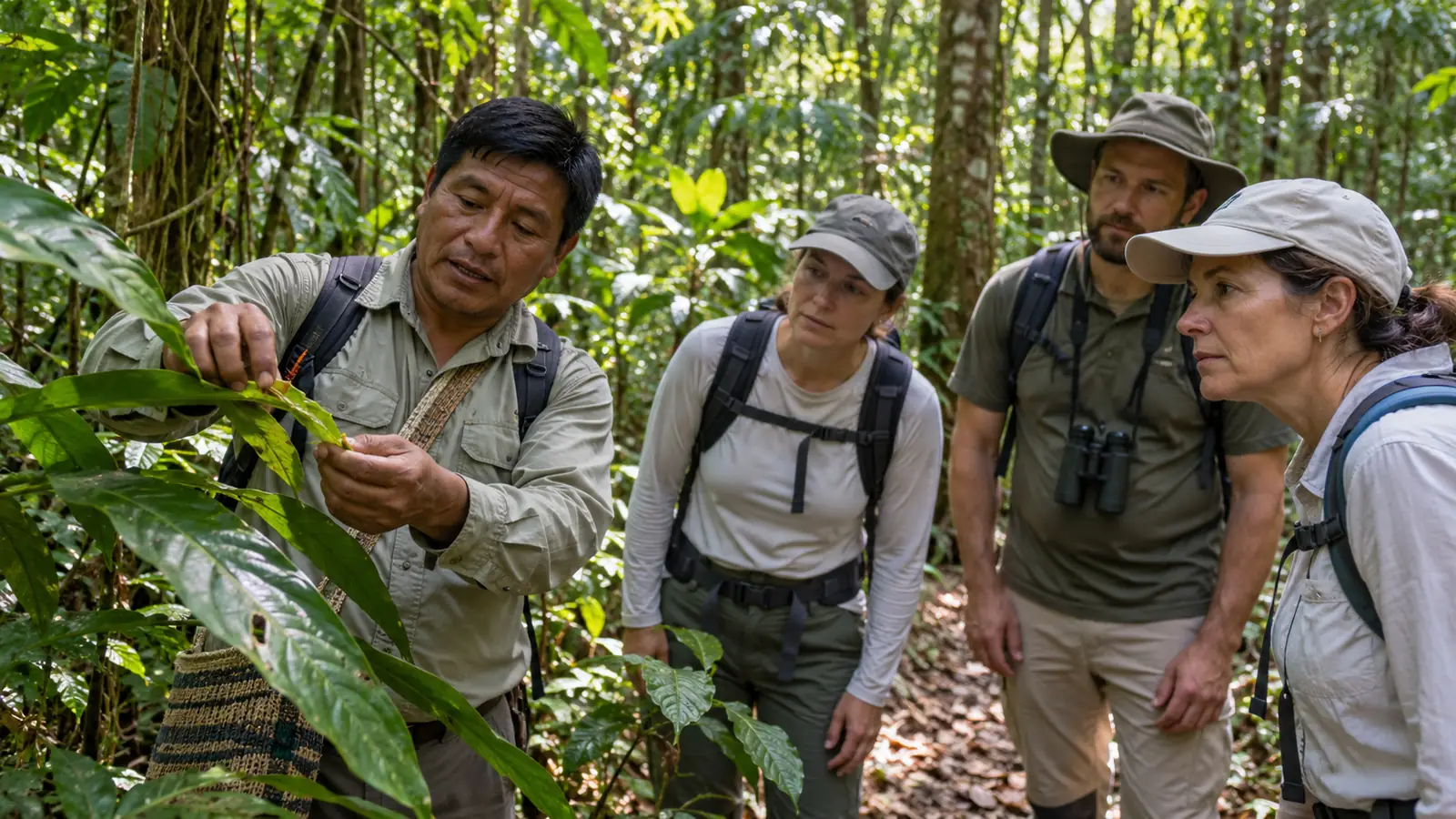
Begin early, when temperatures are cooler and birds are active. Depending on the program, the group may travel by boat, walk a forest trail or observe from a riverbank. A naturalist explains canopy layers, flood cycles, tracks, calls and plant relationships rather than rushing between photo opportunities.
Return for breakfast or carry a prepared meal according to the route. The main daytime excursion might combine forest walking with a tributary or lakeside outing. During the hottest hours, a responsible itinerary allows rest before another late-afternoon activity. Community visits, when offered, should be based on clear local participation rather than staged performances.
After sunset, choose the lodge’s guided activity rather than walking alone. Night outings are weather-dependent and should maintain distance from animals. The forthcoming Iquitos Amazon travel guide will examine districts, river access and longer stays in more detail.
Day 3: Final dawn and return to Iquitos
Use the last morning for a short birding walk or quiet boat outing if the departure schedule permits. Eat breakfast, settle any extras, verify luggage and return to Iquitos with enough time for the booked flight. Do not assume a lodge’s published city-return time protects a separate airline ticket; request the current transfer estimate in writing.
The Amazonas Sinchicuy Lodge three-day tour is a current Explora el Peru option linking Iquitos-area pickup, river transport, two lodge nights, meals, guiding and programmed excursions. Confirm the final itinerary and inclusions for the chosen date.
Option 2: Three-day Puerto Maldonado itinerary
A lodge relatively close to Puerto Maldonado can maximize usable activity time. This is often the simplest Amazon addition after a Machu Picchu and Amazon itinerary. The airport, city, port, road and river sequence still needs to be matched carefully.
Day 1: Arrival, lodge transfer and introductory walk
Meet the lodge team at the confirmed point, repack if needed and travel to the property. A short orientation should cover water, room screening, wildlife rules, emergency contact and safe movement after dark. The first excursion may be a nearby trail, river-edge observation or sunset boat ride.
After dinner, join a guided night walk when conditions allow. This is not merely an added activity: it introduces a different soundscape and animal community while helping visitors understand why a flashlight and closed footwear matter.
Day 2: Oxbow lake or forest day

A strong full day begins early and focuses on one substantial habitat. At Sandoval Lake, access generally combines transport and walking before the canoe portion, so physical ability and current trail conditions should be discussed in advance. Quiet paddling can be more productive than constant movement.
Other lodge programs use terra firme trails, canopy structures or river islands. Avoid selecting a package only because it lists many places. Each transfer reduces observation time. A well-guided morning at one lake followed by rest and a complementary afternoon walk can be more rewarding than four rushed activities.
The current Ecological Puerto Maldonado three-day tour provides a compact lodge-based alternative. Verify its live activity order, arrival requirements and return time before matching flights.
Day 3: One final activity and return
Make the last excursion close to the lodge unless the itinerary clearly protects the airport transfer. Pack before breakfast, keep travel documents dry and place essential medicine in hand luggage. Return to Puerto Maldonado, collect any stored baggage and continue only when the connection margin is realistic.
Option 3: Three days in Tambopata National Reserve
Tambopata can fit into three days when the selected sector and lodge are accessible enough. “Tambopata” covers more than one visitor area; access time differs. A deeper or more remote lodge may deserve four or five days because the river journey consumes a larger share of the trip.
The current Tambopata National Reserve three-day tour begins and ends in Puerto Maldonado and lists Sandoval Lake, a night walk, river activities, forest trails and canopy experiences, along with two lodge nights and reserve entry. Its live page currently shows an early first-day departure and a late-afternoon return on Day 3, so flight compatibility must be confirmed rather than assumed.
The forthcoming Tambopata travel guide will compare reserve sectors, gateway logistics and lodge styles in detail.
What a realistic daily rhythm looks like
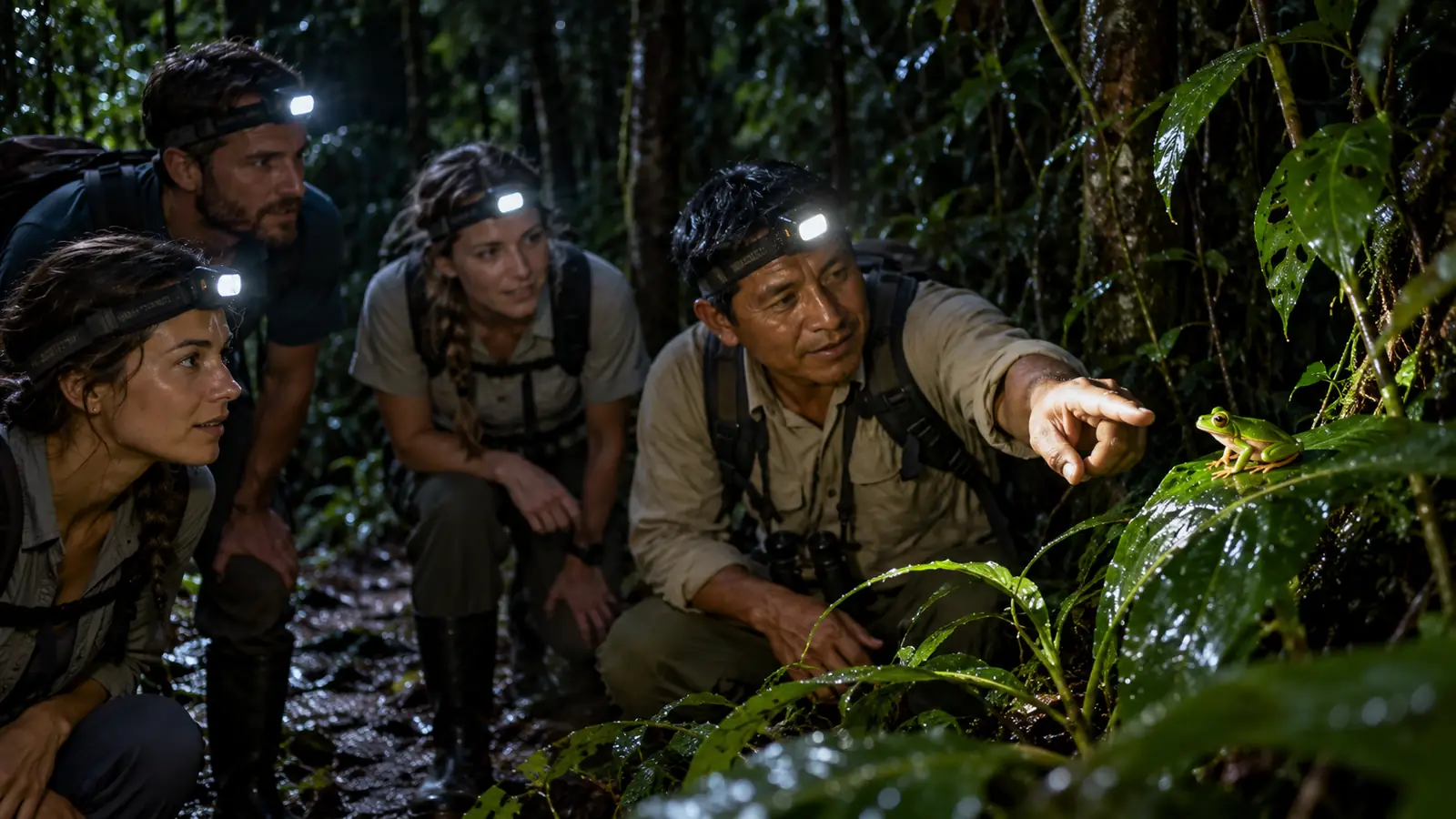
Rainforest days often start before breakfast, pause during the hottest or wettest period, and resume in late afternoon. A sample rhythm may include a 5:30 a.m. wake-up, a two- or three-hour morning outing, breakfast or brunch, rest, a later excursion, dinner and an optional night walk. The exact times follow weather, river conditions and the operator.
More hours do not automatically mean better wildlife observation. Quiet movement, small groups and time spent listening can produce a richer experience. The Peruvian Amazon wildlife guide explains which habitats and behaviors may be encountered without promising sightings.
What is normally included?
Many three-day lodge packages include scheduled airport or hotel pickup, land and river transfers, two nights, meals specified in the itinerary, a local guide and group excursions. Protected-area admission may be included in one package and separate in another. Flights, insurance, bar drinks, tips, laundry and personal expenses are commonly excluded.
Ask for a date-specific document listing:
- Exact lodge and room category.
- Pickup location and latest acceptable arrival.
- All land and boat transfers.
- Meals on arrival and departure days.
- Guide language and maximum group size.
- Reserve entry and activity equipment.
- Final-day city or airport arrival estimate.
- Delay, cancellation and change conditions.
Use the Peruvian Amazon trip cost guide to compare complete packages instead of headline prices.
How to choose between the three options
Choose Iquitos when the wider route already passes through Lima or northern Peru, a major river landscape is a priority, and the lodge transfer fits the available flights.
Choose Puerto Maldonado when efficiency matters, particularly after Cusco, and you want a compact lodge stay with minimal access time.
Choose a Tambopata reserve program when protected habitat and oxbow-lake or deeper forest activities are the priority, and the selected sector genuinely fits two nights.
Add a fourth day when a remote lodge, specialist wildlife interest, photography or connection risk would make three days feel rushed.
Flights and transfer timing
Do not copy flight schedules from an old itinerary. Frequencies and departure times change. Search the exact date, then ask the lodge whether that arrival connects with its shared transfer. A cheaper late flight may force a city night and eliminate the first lodge activity.
On departure, avoid placing an international flight immediately after the rainforest. Weather, river levels and road conditions can affect transfers. If tickets are separate, the next airline may have no obligation to assist after a delay.
What to pack for two nights
Use a small soft-sided bag and leave unnecessary luggage at the gateway hotel when secure storage is available. Pack quick-drying long sleeves and trousers, closed walking shoes, sandals for the lodge, a light rain layer, hat, refillable bottle, headlamp, insect repellent, sunscreen, binoculars and a dry bag or waterproof pouch.
Carry personal medicine, documents and essential electronics in hand luggage. Neutral colors are practical; camouflage-pattern clothing can create legal or social complications in some places and is unnecessary. Review the full Peruvian Amazon packing list before departure.
Weather and seasonal expectations
The Amazon is warm, humid and rainy throughout the year. Drier and wetter periods influence trail conditions, river access and wildlife behavior, but neither season guarantees a particular animal or uninterrupted sunshine. Programs may change the order of activities for safety or access.
Read the best time to visit the Peruvian Amazon guide and choose dates according to route, comfort and availability rather than a simplistic “good” or “bad” season label.
Safety in a short Amazon itinerary
Use the provided flotation device in boats, follow the guide on trails, keep hands inside the canoe, never feed wildlife and do not swim unless the operator specifically confirms that the location and conditions are suitable. Tell the guide about allergies, mobility concerns and medical conditions.
Consult a qualified travel-health professional about vaccines and mosquito-borne disease prevention for the specific region. Advice depends on the traveler and route. The Peruvian Amazon safety guide covers transport, insects, food, water and emergency planning.
Departure-day checklist
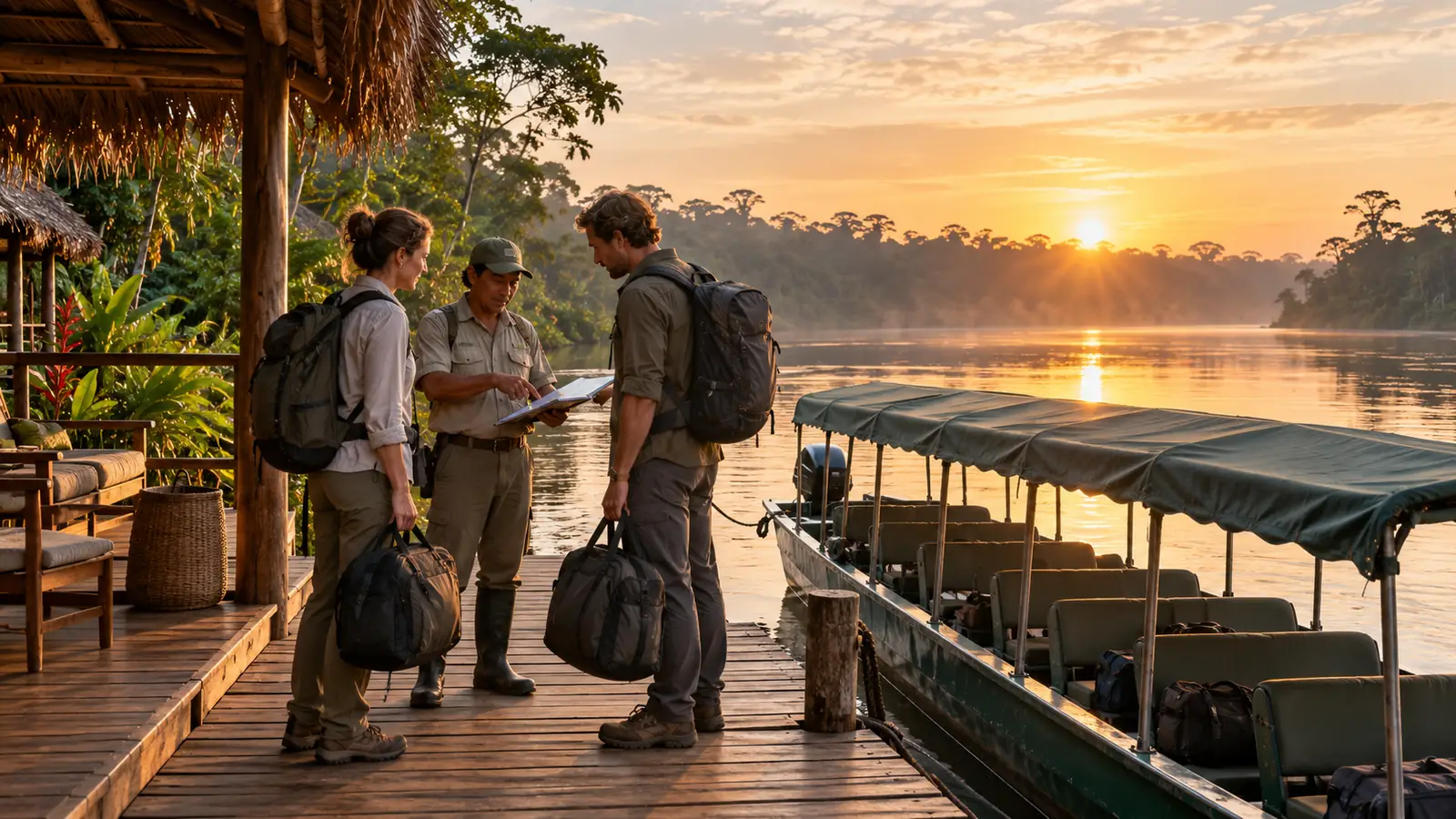
- Confirm wake-up, breakfast and boat departure the previous evening.
- Settle bar, laundry or other extras before the group leaves.
- Check under mosquito nets, charging points and bathroom shelves.
- Keep passport, medicine and electronics in a dry hand bag.
- Record the operator’s emergency contact offline.
- Reconfirm the city arrival estimate and onward flight.
Frequently asked questions
Does a three-day Amazon tour include three full days?
Usually not. It commonly includes an arrival/transfer day, one complete lodge day and a departure/transfer day. Compare usable activity windows, not only the printed duration.
Which is better for wildlife, Iquitos or Tambopata?
Neither universally. Habitat, lodge location, season, guide quality and time in the field matter more than the gateway name. Choose the ecosystem and logistics that fit the trip.
Can I visit Pacaya Samiria in three days?
Some access points and programs may be marketed at that length, but remote sectors require substantial river travel. Verify the exact reserve entrance, lodge and usable field time; longer programs are often more appropriate.
Can I go directly from Machu Picchu to an Amazon lodge?
Not in one simple transfer. Return by bus, rail and road toward Cusco or the Sacred Valley, then connect to Puerto Maldonado or another gateway. A buffer night is usually safer.
Will I see monkeys, caimans or giant otters?
You may, but ethical operators do not guarantee wild animals. Habitat, timing and patient observation influence the opportunity.
Is three days suitable for children?
It can be if the lodge accepts the child’s age, transfers are manageable and activities can be adjusted. Ask about boat safety, walking distance, room configuration and medical access.
Should I choose three or four days?
Choose three for a focused introduction near the gateway. Choose four when access is longer, wildlife is a main priority or you want more protection from rain and delays.
Editorial sources
Current itinerary structure and inclusions were checked against Explora el Peru’s Iquitos, Puerto Maldonado and Tambopata tour pages. Protected-area context was checked against official SERNANP visitor information for Tambopata National Reserve and Pacaya Samiria National Reserve. Conditions, flight schedules and activities change; verify the final booking documents for the actual date.