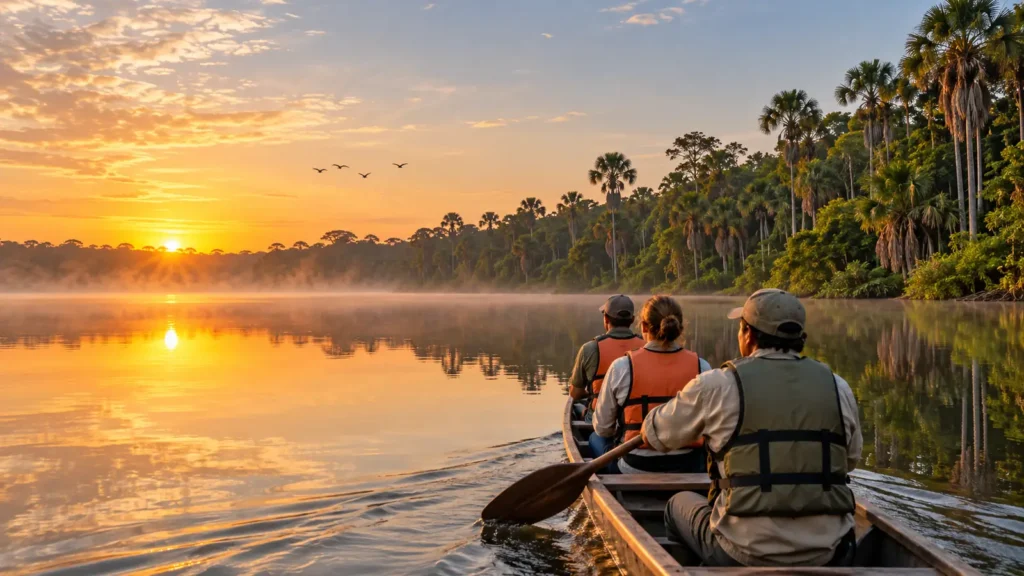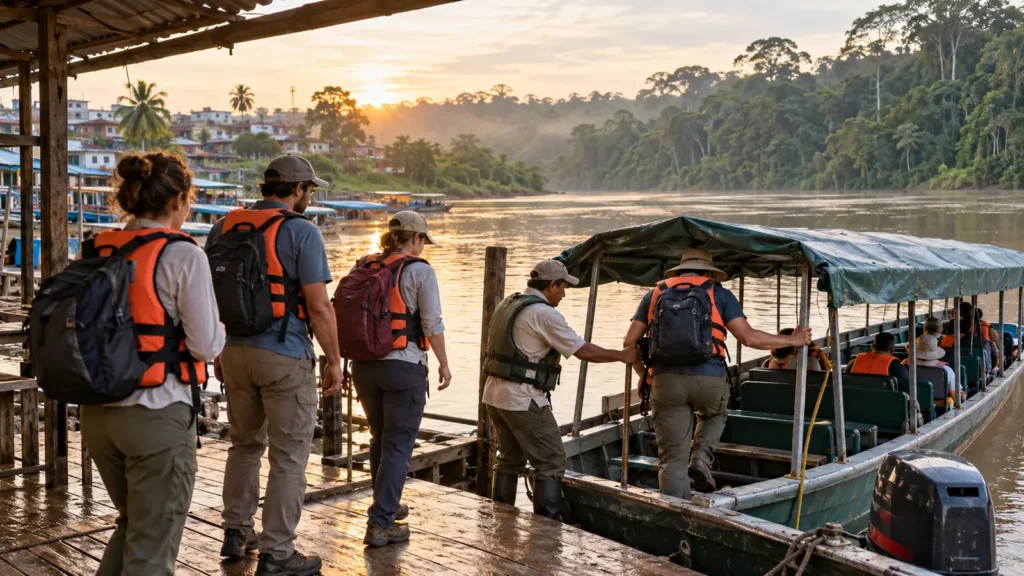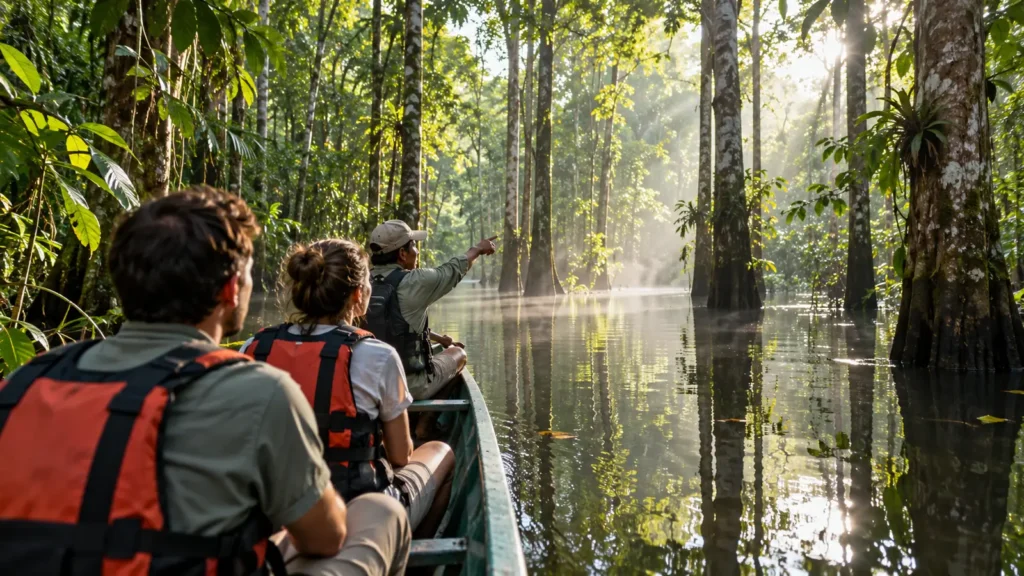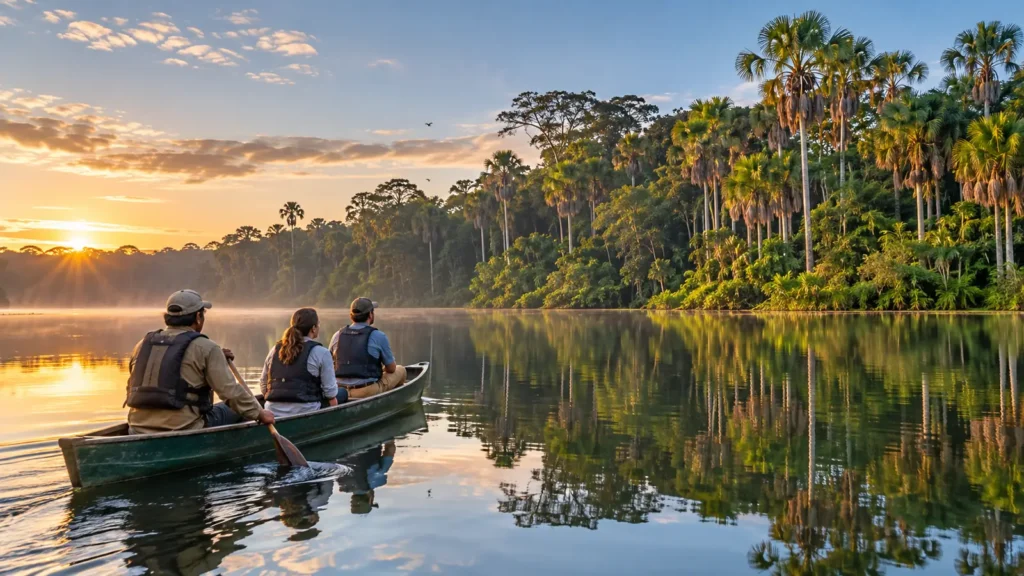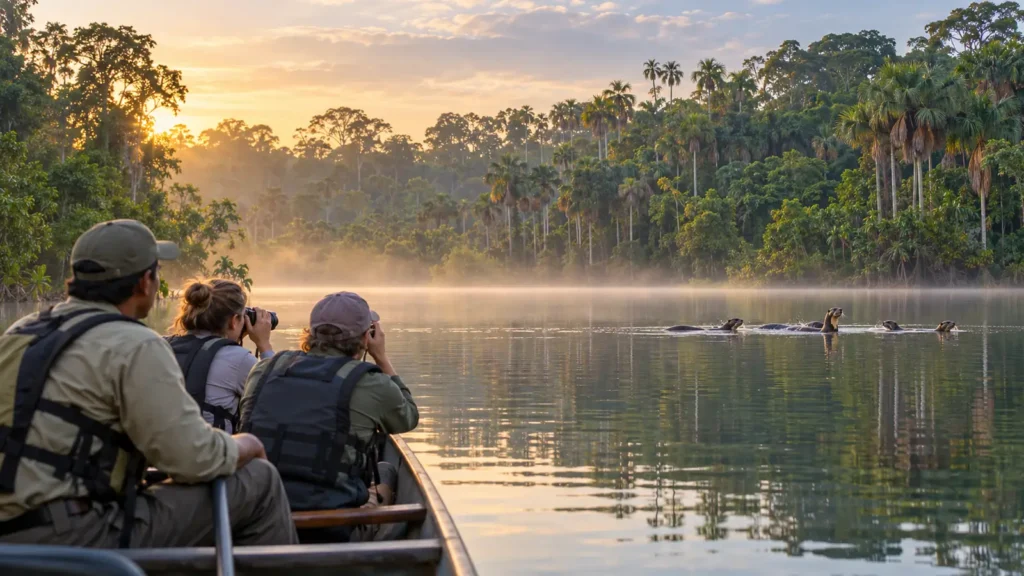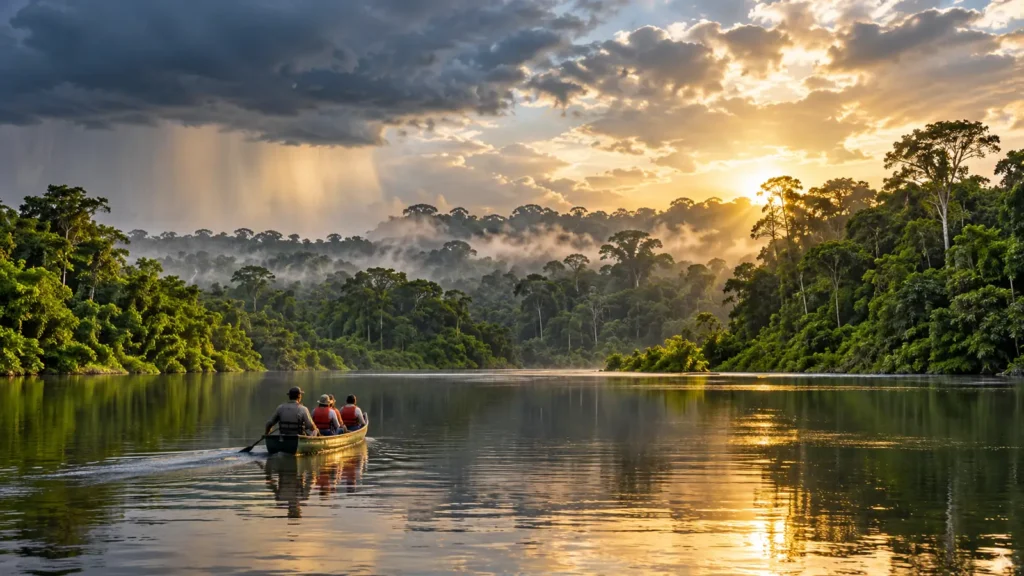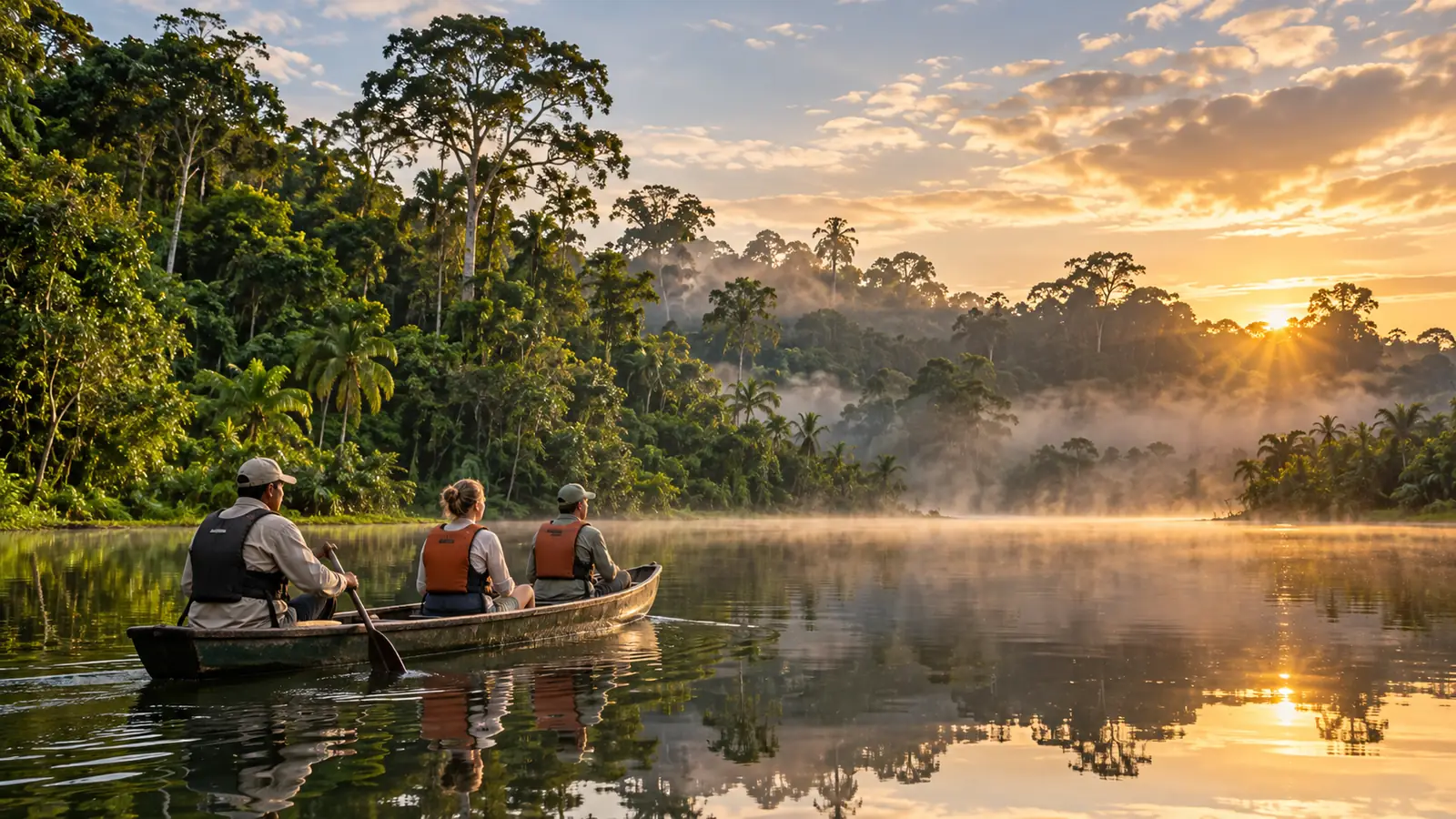

The Peruvian Amazon rainforest can be explored through two main gateways: Iquitos in northern Peru and Puerto Maldonado in the southeast. Iquitos offers the immense Amazon River, floodplain forests and river-based lodge experiences. Puerto Maldonado provides efficient access to Tambopata, oxbow lakes and lowland forest that combines naturally with a Cusco or Machu Picchu itinerary.
Peruvian Amazon facts at a glance
| Planning question | Practical answer |
|---|---|
| Main visitor gateways | Iquitos and Puerto Maldonado |
| Best short trip length | 3 days / 2 nights; 4–5 days provides more time for wildlife and slower travel |
| Most convenient from Cusco | Puerto Maldonado and Tambopata |
| Best for the Amazon River | Iquitos and its surrounding river systems |
| Common activities | Guided forest walks, boat excursions, oxbow lakes, canopy viewpoints and night walks |
| General conditions | Hot, humid and rainy year-round, with meaningful seasonal differences by region |
| Wildlife expectations | Birds, monkeys, caimans, insects and many other species are possible; no sighting is guaranteed |
| Accommodation | Jungle lodges, city hotels and, around Iquitos, river cruises |
| Essential items | Light long clothing, rain protection, closed footwear, sun protection and insect precautions |
What is the Peruvian Amazon?
Peru contains a vast section of the Amazon basin, extending east from the Andean foothills into lowland rainforest. It is not one attraction or one uniform ecosystem. Rivers, seasonally flooded forest, terra firme forest, palm swamps, oxbow lakes and cloud-forest transitions support different wildlife and travel styles.
For visitors, “the Amazon” often means a lodge reached from Iquitos or Puerto Maldonado. The gateway city is only the beginning. The quality of the experience depends on how far the itinerary travels from urban areas, the habitats visited, guide expertise, group size, season and number of nights.
Explora el Peru’s Amazon destination page brings together the current jungle programs. This guide explains how those options fit into a broader Peru trip.
Iquitos, Puerto Maldonado or Tambopata?
Iquitos and Puerto Maldonado are cities; Tambopata is a province and protected rainforest destination accessed through Puerto Maldonado. Understanding that distinction prevents a common planning mistake. You normally fly or travel to a gateway, then continue by road and boat to a lodge or protected-area excursion.
| Feature | Iquitos | Puerto Maldonado and Tambopata |
|---|---|---|
| Region | Loreto, northern Peru | Madre de Dios, southeastern Peru |
| Defining landscape | Amazon River and extensive floodplain waterways | Lowland forest, Madre de Dios River, oxbow lakes and protected Tambopata sectors |
| Best connection | Usually through Lima; flight schedules must be checked for the travel date | Especially practical before or after Cusco and Machu Picchu |
| Typical experience | River journey, lodge, communities and northern forest | Lodge, forest trails, lake excursions, canopy activities and wildlife observation |
| Good choice for | Travelers who want the Amazon River itself to shape the trip | Travelers seeking an efficient nature extension from southern Peru |
The existing Iquitos or Tambopata comparison provides a direct destination decision. Avoid choosing solely from wildlife lists: exact activities and habitats on the booked itinerary matter more than a city’s name.
Exploring Tambopata from Puerto Maldonado
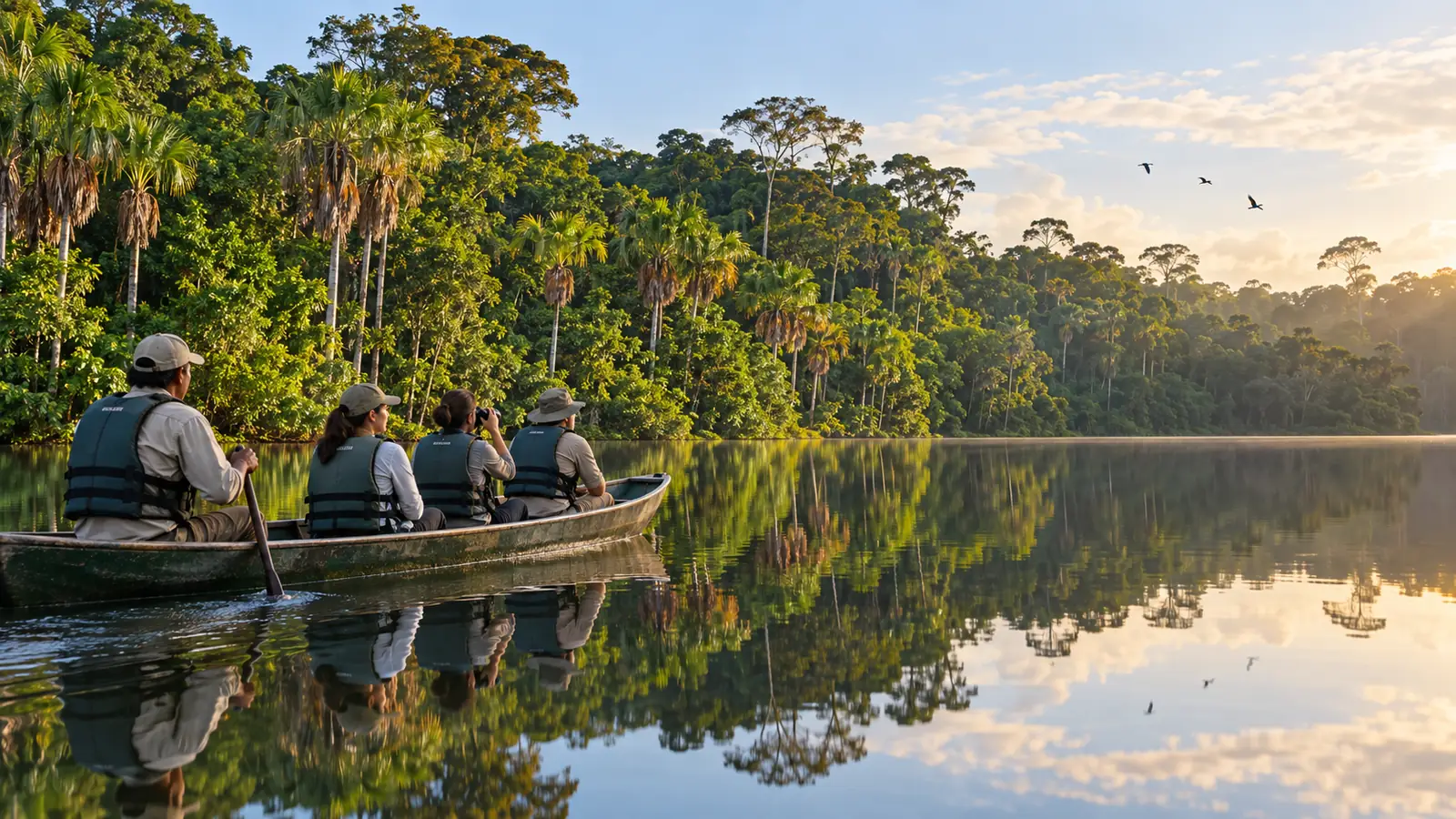
Puerto Maldonado is the principal gateway to Madre de Dios. After arrival, travelers generally continue by road, boat or both. Journey time varies from a short transfer to several hours, and a more remote lodge is not automatically better for every traveler. A well-designed short itinerary can combine several productive habitats without exhausting transfer time.
Tambopata National Reserve protects 274,690 hectares according to Peru’s protected-area authority, SERNANP. Its official visitor information lists approximately 600 bird species, 169 mammals, 103 amphibians and 103 reptiles. Those figures describe biodiversity across the reserve—not what one person will see in three days.
Lake Sandoval, forest trails, aguaje palm areas and river environments provide different observation opportunities. Giant river otters, monkeys, caimans, capybaras and many birds live in the wider region, but weather, season, noise, timing and luck affect every encounter.
The Tambopata National Reserve 3-day tour currently includes Lake Sandoval, a night walk, kayaking, Monkey Island, a night safari, the Tapir Trail and canopy bridges. The Ecological Puerto Maldonado 3-day tour offers a separate three-day program around the Madre de Dios River, lodge-based activities and forest exploration. Compare the actual daily itinerary rather than treating the names as interchangeable.
Read the future Tambopata travel guide, Puerto Maldonado guide and Tambopata wildlife guide for destination-specific planning.
Exploring the Amazon from Iquitos
Iquitos sits in Loreto and cannot be reached by a conventional intercity road from Lima. Visitors generally arrive by air or undertake a much longer river journey. From the city, boats connect travelers with lodges and communities along the surrounding river system.
The northern Amazon is strongly shaped by water. Seasonal river levels change access, landscapes and activities. Higher water can open flooded-forest channels to small boats; lower water can reveal beaches and walking areas. Neither season is universally better.
The Amazonas Sinchicuy Lodge 3-day tour begins in Iquitos and continues by boat. Its current program includes lodge accommodation, meals, guided excursions, the Yanayacu area, a forest of giant trees, community and cultural components, and a reforestation activity. Read the itinerary carefully so you understand which observations occur in wild habitat and which visits may involve managed or semi-captive settings.
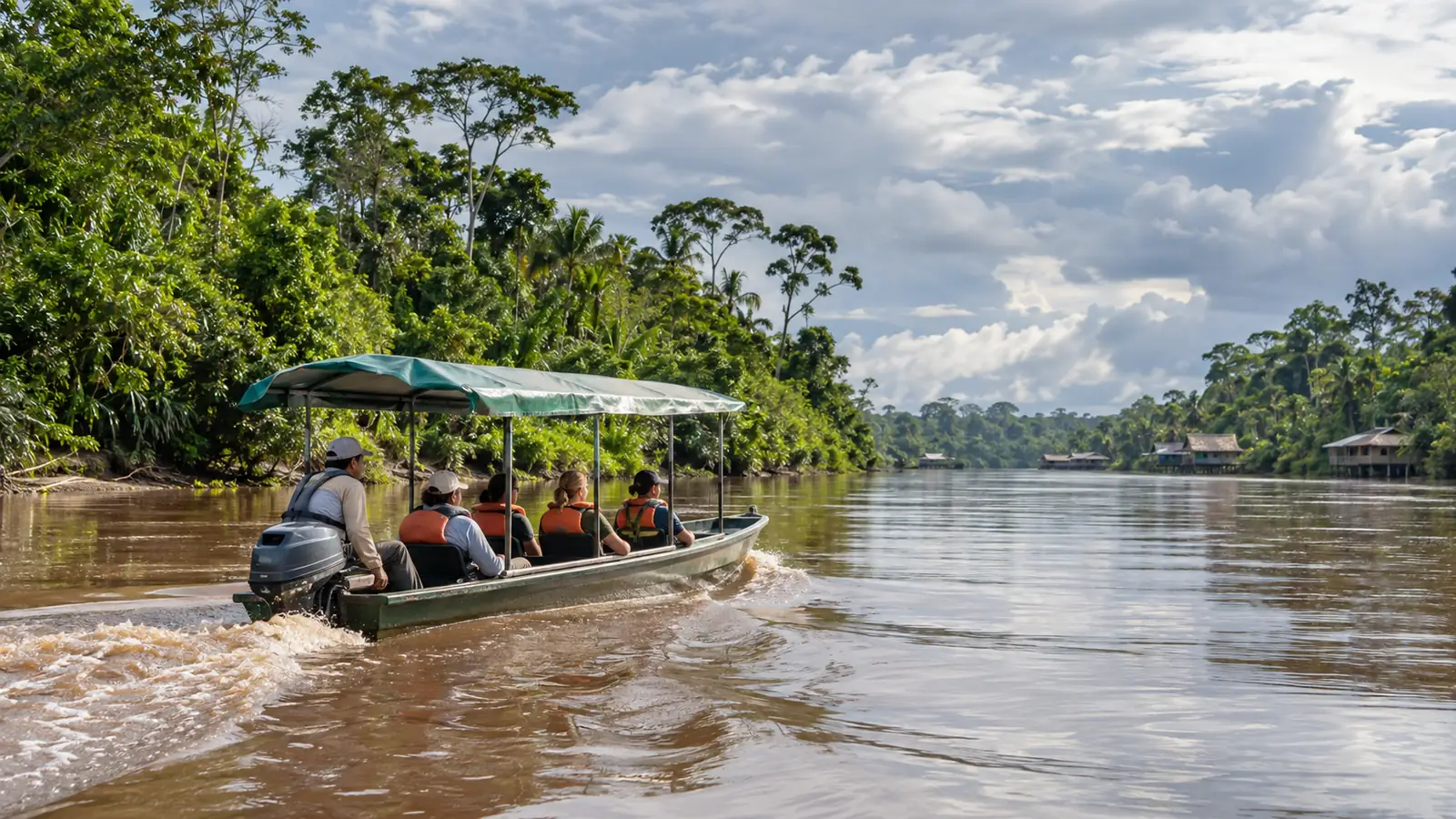
For a deeper northern journey, travelers may also research Pacaya Samiria National Reserve and longer river programs. SERNANP describes Pacaya Samiria as a vast floodplain ecosystem known as the “Forest of Mirrors.” Access, time and logistics differ from a three-day lodge near Iquitos, so these experiences should not be represented as equivalent.
The future Iquitos Amazon travel guide, Iquitos access guide and high-water versus low-water guide will explain the options in detail.
How many days do you need?
Three days and two nights is the practical minimum for a lodge-based introduction. It allows two useful dawn or evening periods, at least one boat excursion and guided forest time. Because arrival and departure consume part of days one and three, the experience is shorter than the calendar suggests.
- 2 days: only a brief introduction, vulnerable to transport delays and weather.
- 3 days: suitable for a compact lodge program and the format of Explora el Peru’s current Amazon tours.
- 4–5 days: better for varied habitats, repeat wildlife sessions and a less rushed pace.
- 6 or more days: appropriate for remote reserves, specialist birding, deeper river travel or a cruise.
More time improves opportunity, not certainty. Animals move freely and guides cannot schedule them. Use the future how many days in the Peruvian Amazon guide and three-day Amazon itinerary comparison to match expectations with available time.
Best time to visit
The forest is hot, humid and biologically active throughout the year. “Dry season” does not mean no rain, and one Amazon region should not be described with another region’s river calendar.
For Tambopata, SERNANP identifies May through October as the recommended visiting period and December through March as the rainy season. Drier conditions can make some trails easier, while wet months bring lush forest, heavier showers and changing river levels. A cold southern air mass, locally known as a friaje, can occasionally lower temperatures sharply in Madre de Dios.
Around Iquitos, water level is a major planning variable. Higher water and lower water support different routes and observation angles. Rain remains possible in any month. The future best time to visit the Peruvian Amazon article will compare regions month by month; destination detail will appear in the Tambopata seasonal guide and Iquitos seasonal guide.

What wildlife can you realistically see?
Commonly discussed groups include macaws and parrots, toucans, hoatzins, kingfishers, monkeys, caimans, capybaras, turtles, frogs, butterflies and countless insects. Oxbow lakes in southeastern Peru may support giant river otters. Northern waterways are associated with river dolphins, but sightings depend on the exact route and conditions.
Large cats, tapirs, anacondas and harpy eagles occur in Amazonian ecosystems but are difficult to see. A responsible operator should never promise a jaguar, quote an unsupported percentage chance or bait wildlife for a photograph. The best sightings usually come from quiet groups, early starts, patient observation and an experienced local guide.
Forest knowledge also extends beyond headline animals. Guides interpret tracks, calls, canopy layers, medicinal plant traditions and relationships between rivers, trees and seasonal flooding. Read the future Peruvian Amazon wildlife guide for habitat-specific expectations.

Typical Amazon activities
- Boat excursions: travel between lodge, rivers, lakes and observation areas.
- Day walks: learn forest structure, plants, tracks and animal calls with a guide.
- Night walks: search for insects, amphibians and other nocturnal life without handling them.
- Oxbow-lake exploration: paddle or travel quietly through still-water habitat.
- Canopy viewpoints: observe a forest layer that is difficult to see from the ground.
- Community visits: meaningful when locally led, fairly compensated and approached respectfully.
Not every tour contains every activity, and advertised activities may change with water, weather, wildlife protection or local decisions. The current itinerary—not a generic Amazon checklist—should determine what you expect.
How to reach the Peruvian Amazon
From Lima
Flights connect Lima with both Iquitos and Puerto Maldonado, subject to current airline schedules. Build sufficient connection time if arriving in Peru on an international flight. A missed same-day connection can also mean missing a lodge boat departure.
From Cusco and Machu Picchu
Puerto Maldonado is normally the most efficient Amazon addition to a southern Peru itinerary. Air service is faster; overland travel is longer and should be evaluated by current schedule, comfort and weather. Avoid assuming a direct flight operates every day—confirm the actual date before designing the itinerary.
Iquitos usually requires a connection pattern based on current flights. The future Cusco to Puerto Maldonado guide and Machu Picchu and Amazon itinerary will help sequence altitude, flights and lodge transfers.
Choosing a jungle lodge
A lodge is more than a room. Location controls transfer time and nearby habitats; guide quality influences what you notice; group size affects noise and flexibility. Ask the following before paying:
- How long are the road and boat transfers in normal conditions?
- Which excursions and entrance fees are included?
- Is the guide shared or private, and what is the maximum group size?
- Does the room have a private bathroom, mosquito screening and electricity?
- When is electricity available for charging batteries?
- Are drinking water, rubber boots and dietary requests included?
- What changes if rain, river level or safety closes an activity?
- How does the operator work with local communities and conservation?
More remote does not always mean more comfortable or automatically more ethical. Look for transparent logistics, realistic wildlife language and clear operating standards.
What to pack
Pack for moisture, heat and sudden rain rather than fashion. Bring lightweight long-sleeved shirts, long quick-drying trousers, a breathable rain shell, closed walking shoes, sandals for the lodge, sun protection, a hat, insect precautions, personal medication, a small dry bag and a reusable water bottle.
Binoculars often add more value than a heavy camera lens for a general trip. Protect electronics with waterproof storage and silica packs. Avoid camouflage clothing, scented products and bright flash around wildlife. Confirm whether the lodge supplies boots, towels and toiletries before carrying duplicates.

The future Peruvian Amazon packing list will separate luggage, daypack and lodge items.
Health, insects and safety
Amazon travel involves heat, humidity, uneven paths, boats and biting insects. Arrange a pre-travel medical consultation early enough to discuss your personal itinerary, vaccinations, mosquito-borne disease precautions and medication. Requirements and individual recommendations vary; a tour article should not prescribe treatment.
On the trip, follow the guide, wear the provided life jacket, keep hands inside boats, use railings on wet walkways and do not walk away from marked trails. Drink treated water, protect skin, change out of wet clothing and report illness promptly. Travelers with limited mobility should request precise information about docks, steps, mud and boat boarding.
Read the future Peruvian Amazon safety guide for a fuller risk-management checklist.
Responsible wildlife and community travel
- Never feed, touch, chase or restrain wildlife for a photograph.
- Avoid flash when it may disturb nocturnal animals.
- Keep noise low and follow distance instructions from the guide.
- Do not remove plants, feathers, shells or other natural material.
- Ask before photographing residents, homes, children or ceremonies.
- Prefer community experiences led and explained by community members.
- Use refillable water containers and minimize single-use plastic.
A photograph with a captive animal is not evidence of conservation. Ask how any wildlife center is licensed, why animals are held and whether visitor contact is prohibited. Responsible tourism values natural behavior more than close-up content.
How much does an Amazon trip cost?
Cost depends on flights, destination, transfer distance, lodge standard, group size, guide service, entrance fees and number of nights. A lodge package often combines accommodation, meals, transfers and excursions, but inclusions differ.
Compare the complete trip rather than a headline price. Check airport transfers, reserve admission, drinking water, equipment, single-room supplements, domestic flights and tips. Prices and policies change, so this guide deliberately avoids presenting a fixed figure as permanent. The future Peruvian Amazon trip cost guide will provide a comparison framework using current inclusions.
Which Explora el Peru Amazon tour should you choose?
| Current tour | Best suited to | Primary setting |
|---|---|---|
| Amazonas Sinchicuy Lodge 3 Days | Travelers prioritizing Iquitos, river travel, lodge activities and cultural components | Northern Amazon from Iquitos |
| Ecological Puerto Maldonado 3 Days | Travelers wanting a compact lodge experience around the Madre de Dios gateway | Puerto Maldonado and surrounding forest |
| Tambopata National Reserve 3 Days | Travelers prioritizing Lake Sandoval, guided forest activities and a varied active program | Tambopata and Madre de Dios environments |
Availability, order of activities and operating details can change. Confirm the current written itinerary, inclusions and pickup instructions before booking.
What does a well-paced three-day Amazon itinerary look like?
A three-day program works best when transfers and activities are grouped logically. On day one, arrival, orientation and the journey to the lodge should leave enough time for a gentle introductory walk or sunset boat excursion. This first activity helps travelers understand safety procedures, forest sounds and how to move quietly before a more ambitious day.
Day two should use the cooler morning and late afternoon for wildlife observation. Depending on the destination, that may mean an oxbow lake, river journey, forest trail or canopy viewpoint. Midday is often better for lunch and rest because heat and humidity are strongest and animal activity may be lower. A guided night walk can reveal frogs, insects and nocturnal behavior, but it should remain optional for a tired traveler.
Day three normally includes an early excursion, breakfast and the return transfer. Do not count on a full activity day if a flight or long road journey follows. The current three-day Peruvian Amazon itinerary guide will compare the Iquitos, Puerto Maldonado and Tambopata programs activity by activity.
Booking checklist
- Choose the gateway by trip route and preferred ecosystem, not only by the lowest fare.
- Check the exact airport, pickup time and latest acceptable arrival flight.
- Confirm every road and boat transfer and whether delays affect the itinerary.
- Review accommodation type, bathroom, mosquito screens, electricity and charging hours.
- Ask which meals, drinking water, entrance fees and equipment are included.
- Verify group size, guide language and whether activities are shared or private.
- Read cancellation and change terms for weather, river conditions and flight disruption.
- Disclose dietary needs, mobility limitations and relevant health information in advance.
- Confirm luggage limits for domestic flights and any smaller bag required for the lodge.
- Purchase suitable travel insurance and keep essential medication in hand luggage.
Save the operator’s contact details offline and carry the final voucher, not an old screenshot of a web page. A clear pre-departure briefing is one of the strongest signs of a well-organized rainforest trip.
Frequently asked questions
Is the Peruvian Amazon worth visiting?
Yes, particularly for travelers interested in ecosystems, rivers, wildlife observation and guided nature interpretation. It adds a lowland environment that contrasts strongly with the Andes and Pacific coast.
Is Iquitos or Tambopata better?
Iquitos is better when the Amazon River and northern river culture are central priorities. Tambopata is often better for an efficient wildlife-focused extension from Cusco. The right choice depends on routing, time and preferred activities.
Can you visit the Amazon after Machu Picchu?
Yes. Puerto Maldonado usually provides the simplest geographic combination. Leave reasonable connection time and avoid placing a nonrefundable lodge departure immediately after a fragile transport connection.
Is three days enough?
Three days provides a worthwhile introduction, but only parts of the first and last day may be available for activities. Four or five days creates more observation sessions and resilience against rain.
Will I see a jaguar?
Probably not. Jaguars live in the wider rainforest, but they are elusive and wide-ranging. Choose a trip for the entire ecosystem rather than one rare-species promise.
Does it rain during the dry season?
Yes. The Amazon remains humid and rain is possible throughout the year. “Drier” describes a seasonal tendency, not a guarantee.
Do I need to be very fit?
Most three-day lodge programs are not strenuous, but heat, slippery paths, boat boarding and early starts can be tiring. Ask about walking distance and accessibility for the exact itinerary.
Can children visit?
Many families enjoy lodge programs, but suitability depends on age, swimming ability, heat tolerance, boat behavior and the lodge’s room and safety arrangements. Confirm age policies directly.
Editorial accuracy note
Protected-area facts and visitor guidance were checked against SERNANP’s official Tambopata National Reserve information and its Pacaya Samiria visitor publication. Product descriptions were checked against Explora el Peru’s current Iquitos, Puerto Maldonado and Tambopata tour pages. Wildlife remains free-ranging, weather is variable, and routes, schedules, prices and inclusions can change. Confirm final operating details before travel.