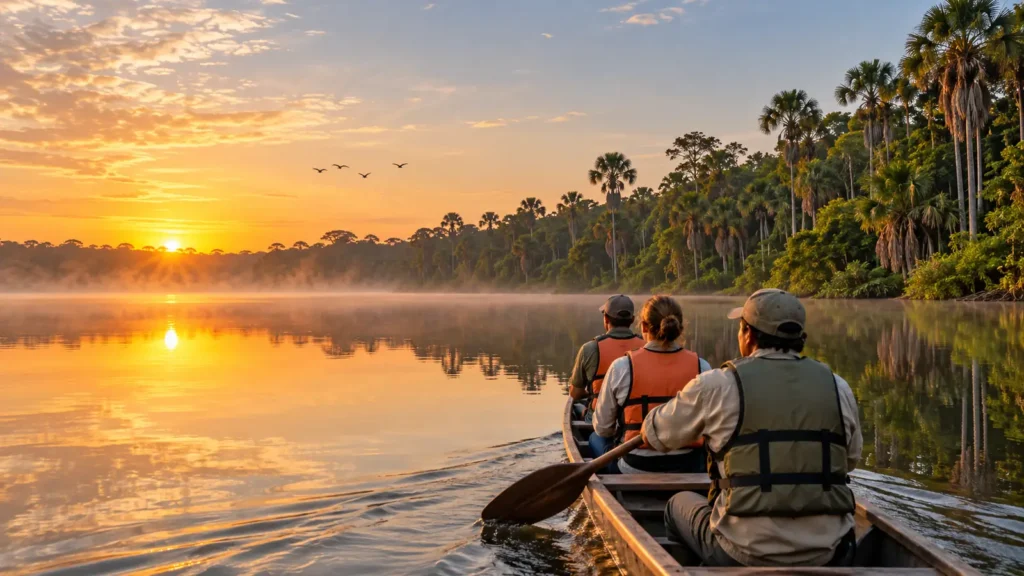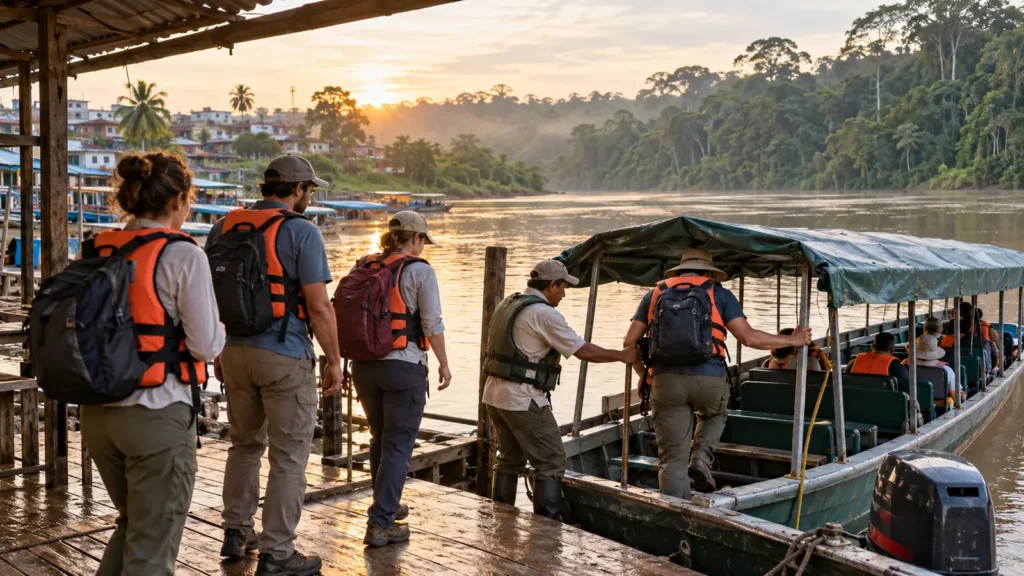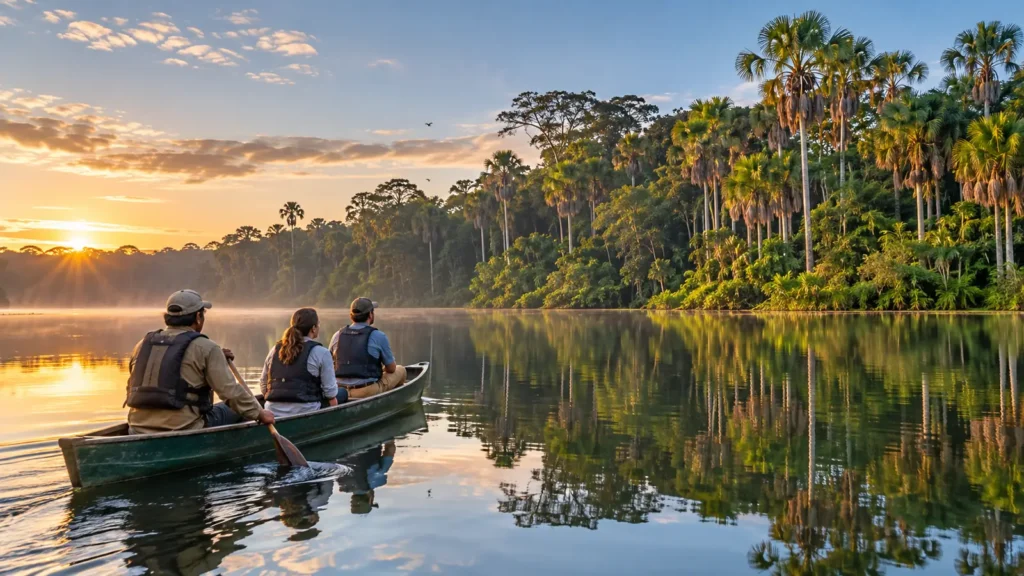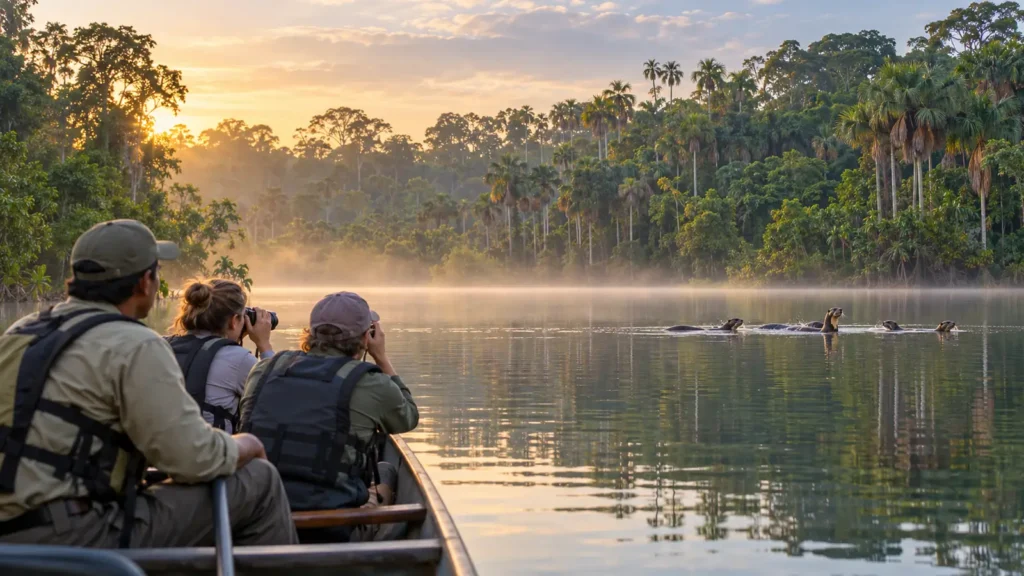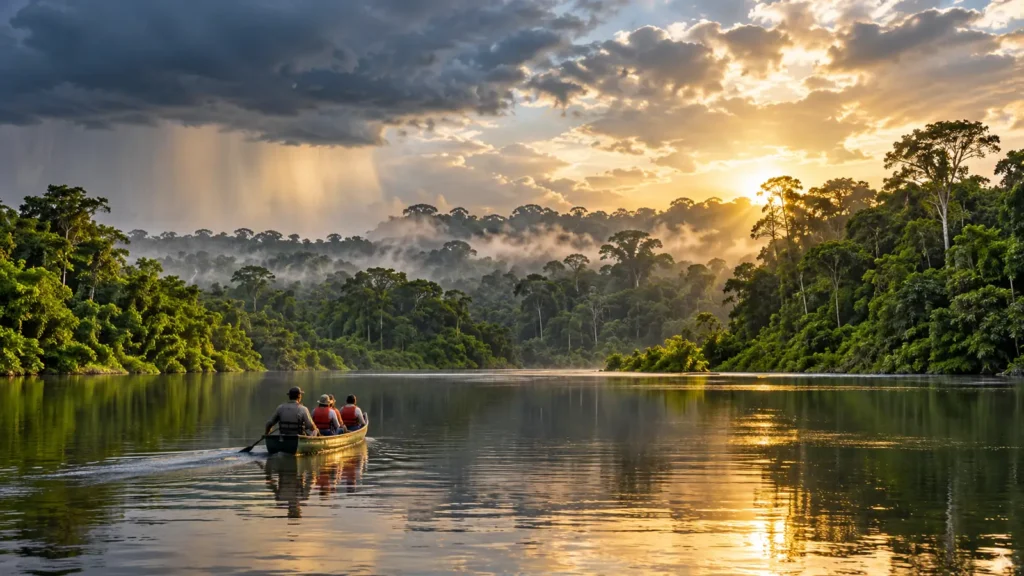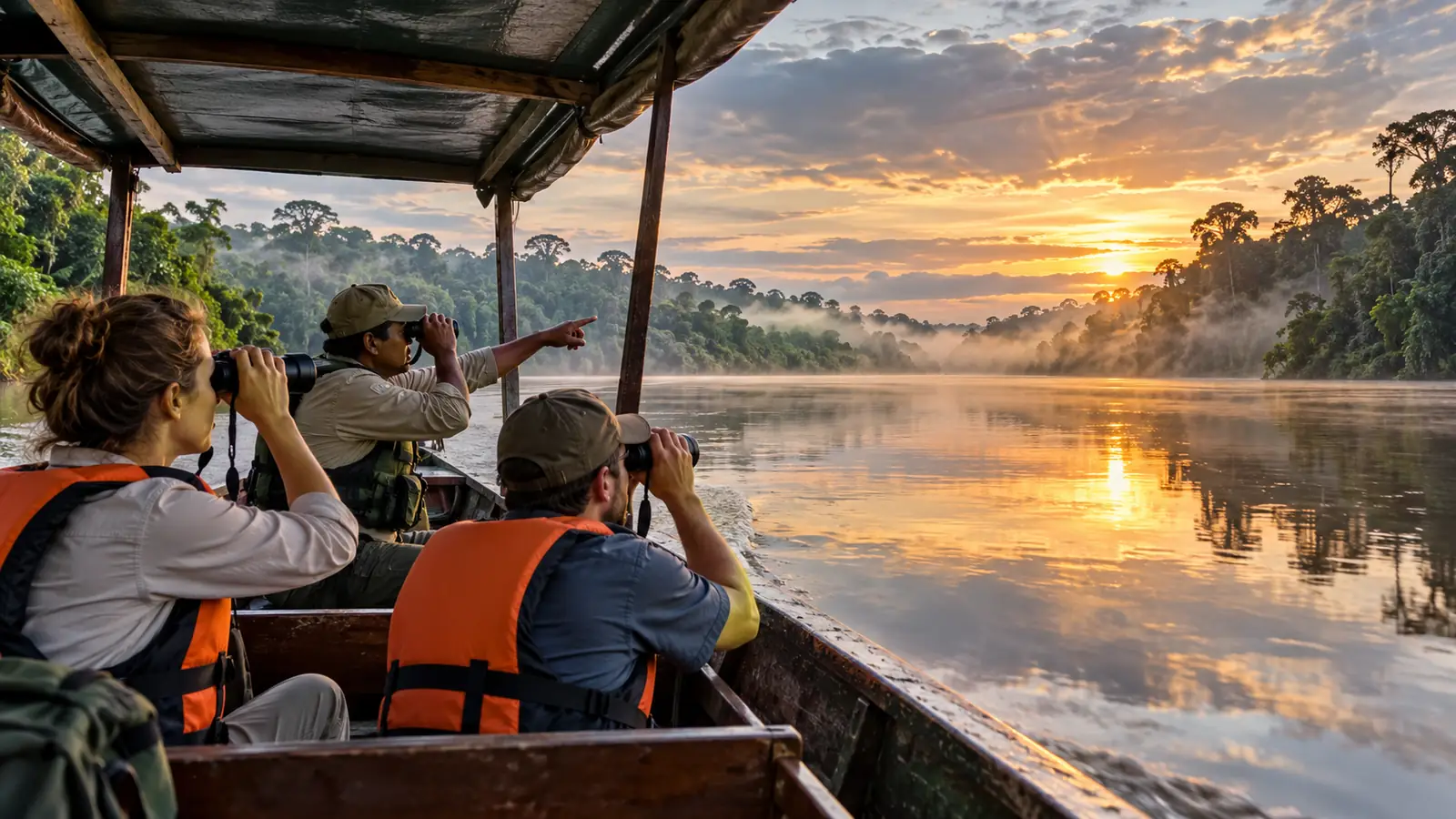

This Iquitos Amazon travel guide explains how to choose between a lodge near the city, a longer river journey and a Pacaya Samiria expedition. Iquitos is the principal gateway to Peru’s northern Amazon and is reached primarily by air or river rather than by a highway from Lima. The city opens onto immense waterways, flooded forest, blackwater tributaries and river communities—but the experience depends heavily on lodge location, water level and transfer time.
Where is Iquitos?
Iquitos is the capital of Peru’s Loreto region in the northeastern Amazon. It stands within a landscape shaped by the Amazon, Nanay and Itaya river systems. Because the city has no conventional road connection to Lima or Cusco, most visitors arrive by commercial flight. Long-distance riverboats connect regional towns but are transportation experiences of their own, not quick substitutes for flying.
The city is a gateway, not a single rainforest product. A nearby lodge may require a relatively short boat trip and suit a compact itinerary. Deeper programs can involve overland travel to Nauta followed by hours—or in some basins much longer—on the water. Begin with the Peruvian Amazon rainforest guide if you are still comparing Peru’s jungle regions.
Why choose the Iquitos Amazon?
Iquitos is compelling for travelers who want rivers to define the trip. Wide channels, smaller tributaries, seasonally flooded forest and blackwater lagoons create a journey in which boats are not merely transfers; they are observation platforms and part of everyday life.
The northern Amazon also fits travelers interested in floodplain ecology, pink river dolphin habitat, giant water lilies, river communities and longer expeditions into Pacaya Samiria. None of these experiences should be guaranteed from a city tour or the shortest lodge package. Habitat, distance and season determine what is realistic.
For a direct regional choice, read the Iquitos or Tambopata comparison. Travelers prioritizing a simple extension after Cusco may prefer the southern route described in the Tambopata travel guide.
Who is Iquitos best for?
Iquitos suits travelers fascinated by rivers, floodplain ecology and the relationship between the city, communities and forest. It works especially well when the wider Peru route passes through Lima, when a river cruise is a priority, or when there are enough days for Pacaya Samiria. Birders and photographers should consider private guiding or a longer stay because boat position, pace and early departures matter.
It is less suitable for travelers expecting a quick road transfer, constant internet or guaranteed large-animal sightings. Families should confirm minimum ages, flotation equipment, room layout and whether long boat days can be shortened. Travelers with limited mobility need precise information about unstable docks, boat entry, steps, muddy trails and distance from the room to common areas.
Should you spend time in Iquitos city?
One city night can protect the lodge transfer and provide time to reorganize luggage. The riverfront, historic architecture and markets reveal an urban Amazon context, but explore with normal city awareness and ask before photographing vendors or residents. Store unnecessary luggage securely, withdraw needed cash before the lodge and reconfirm the pickup point.
A city stay should complement—not replace—the forest experience. Avoid filling the only available nature day with attractions that could be visited before or after the lodge. If an animal venue is proposed, evaluate its legal status and welfare practices rather than assuming every “rescue” claim is verified.
How to get to Iquitos
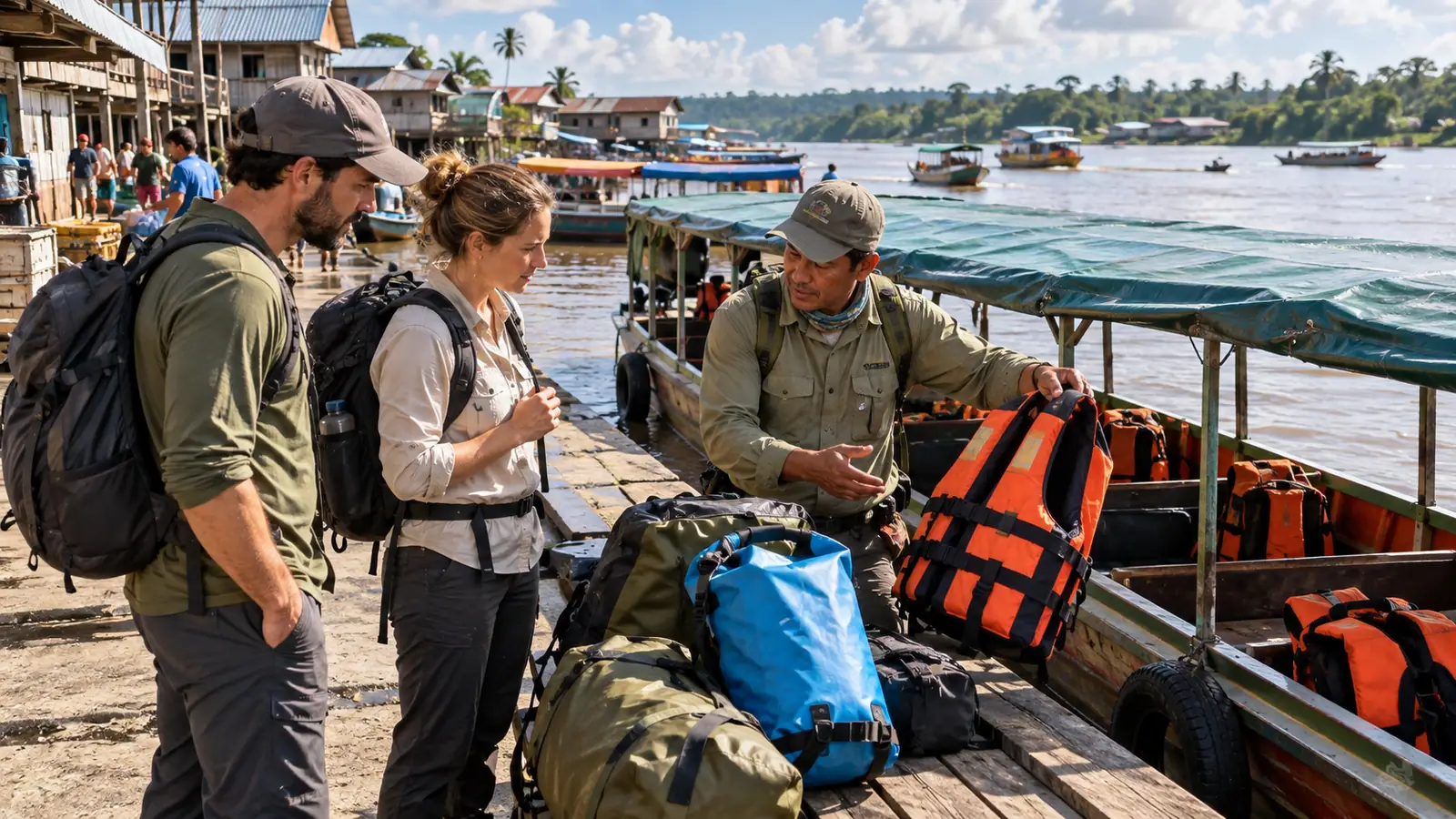
Flying is the practical choice for most international travelers. Search schedules for the actual date because routes and frequencies change. Many journeys connect through Lima; do not assume a direct Cusco service operates on every date. Leave a realistic connection margin, especially when tickets are separate.
After landing, the lodge route may begin at the airport, a city hotel or a port. It can combine road and boat travel. Ask for the latest flight that connects with the shared departure and what happens if a delay misses the boat. An overnight in Iquitos is often safer than building a costly private transfer around a late arrival.
The forthcoming guide on how to get to Iquitos and reach a jungle lodge will compare flights, Nauta access, ports, baggage and transfer buffers in detail.
Understand the main trip styles
| Trip style | Best for | Main tradeoff |
|---|---|---|
| Lodge near Iquitos | Two-night introduction, families and tight schedules | Less isolation and limited reach into remote habitat |
| Tributary or mid-distance lodge | More continuous forest and varied boat outings | Longer first- and last-day transfers |
| Pacaya Samiria expedition | Flooded forest, blackwater basins and deeper immersion | Requires authorized access, more time and a larger budget |
| River cruise | Comfortable multi-day movement between habitats | Usually higher cost and less lodge-based trail time |
Choosing an Iquitos jungle lodge
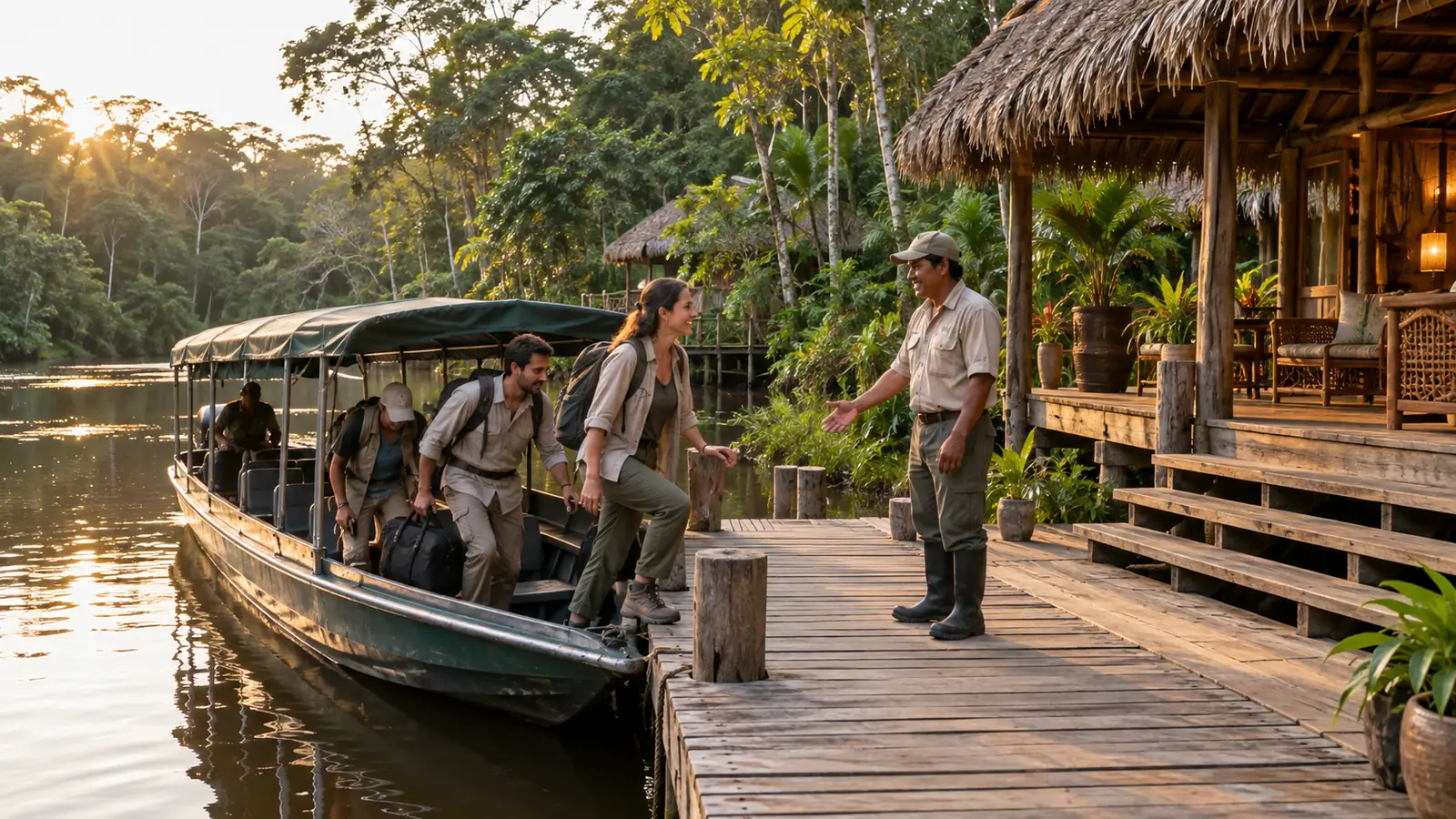
Request the lodge name and map location before paying. “Near Iquitos” can describe very different transfer chains. Compare river time, habitat, group size and guide quality before room decoration. A property close to the city may offer more activity time on a three-day visit, while a farther lodge can provide quieter surroundings when the itinerary is long enough.
Verify mosquito screening, bed nets, bathroom type, electricity hours, charging, ventilation, hot water, drinking water, communication and emergency procedure. Air conditioning and reliable internet should never be assumed. Solo travelers should ask about supplements; families should confirm bed configuration and minimum ages.
Also examine the daily plan. Several short activities can look impressive on paper while leaving little quiet observation time. Ask which outings are motorized, which use paddle canoes, how long the forest walks are, and whether activities vary with water level.
Iquitos high-water and low-water seasons
River levels rise and fall over a broad annual cycle, but exact timing and height vary. Higher water opens canoe routes into flooded forest and brings visitors closer to the canopy. Lower water exposes beaches and riverbanks and can create more opportunities for forest walking. Rain remains possible throughout the year.
Higher-water experience
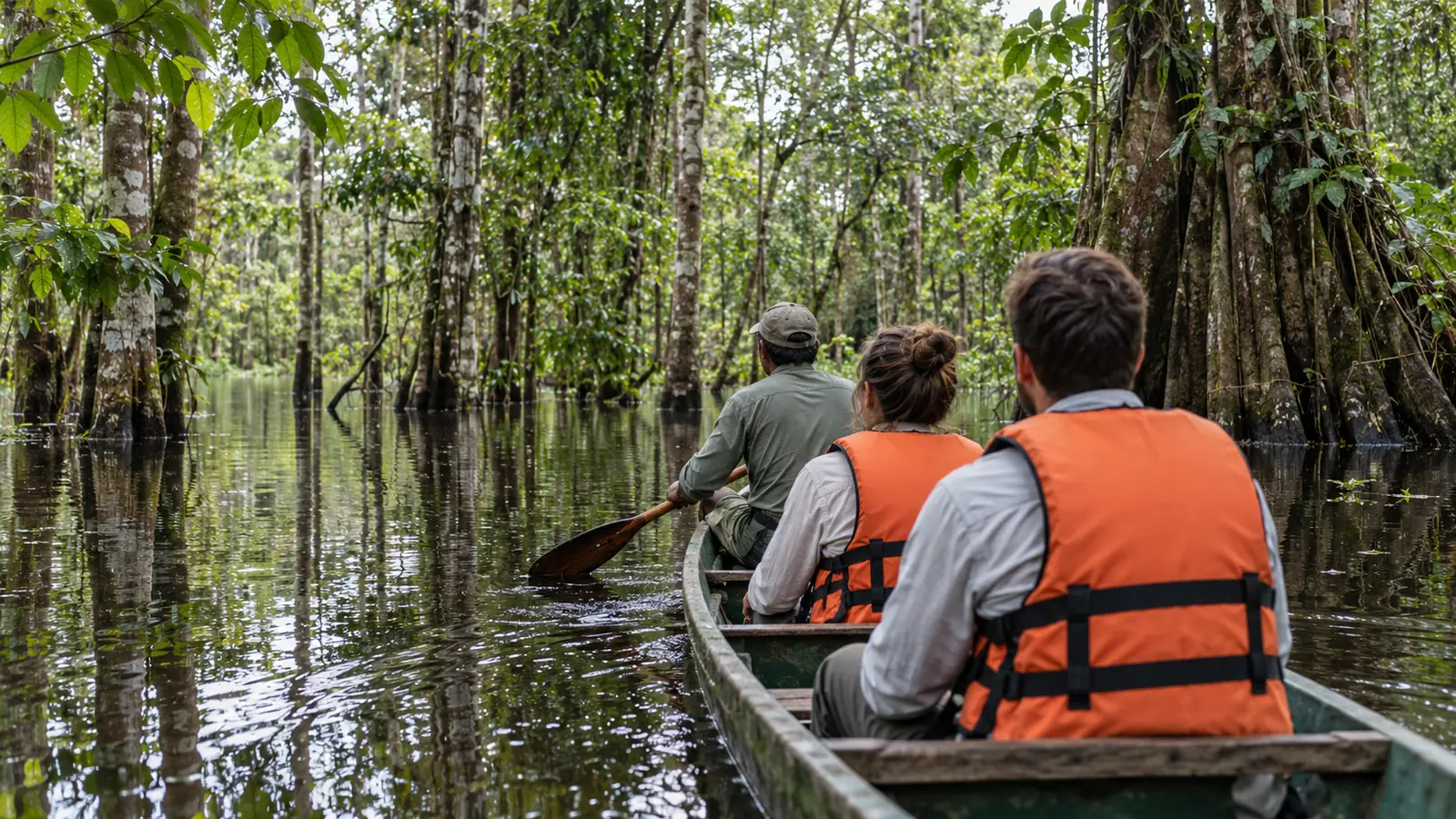
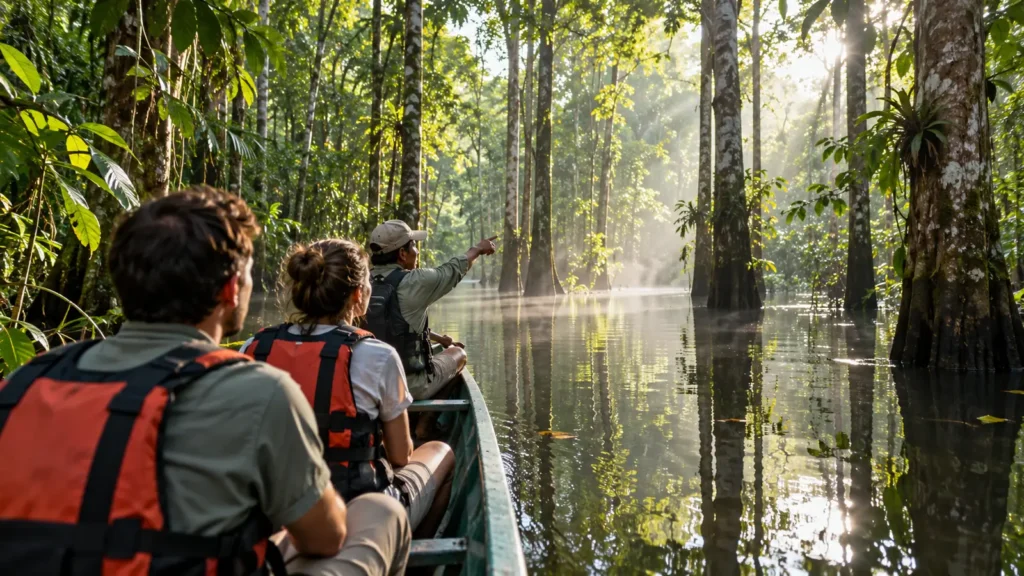
During higher water, small boats and canoes may move among inundated trees. This creates unusual eye-level perspectives into flooded habitat. It can also reduce access to some terrestrial trails. Currents, navigation and landing conditions require experienced drivers and strict use of flotation equipment.
Lower-water experience
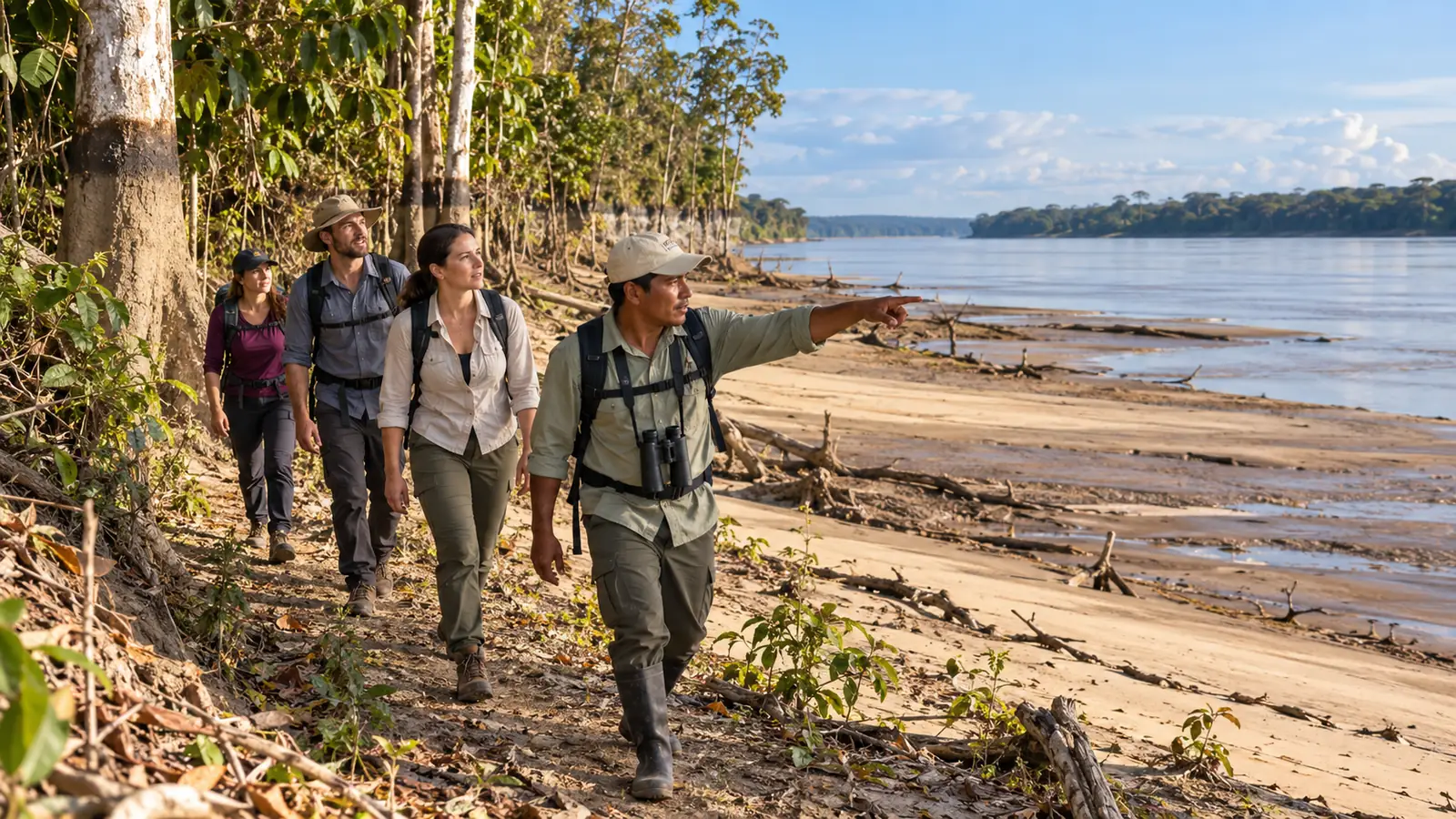
As water recedes, sandbars, beaches and longer forest paths can emerge. Walking conditions may become more central to the itinerary, while some narrow waterways become difficult to navigate. Heat and exposed sun can feel stronger on open banks.
Neither season is universally better. The planned habitat and activity should decide. The future Iquitos high-water versus low-water guide will make a month-by-month comparison, while the broader best time to visit the Peruvian Amazon guide covers regional patterns.
Pacaya Samiria National Reserve

Pacaya Samiria protects a vast floodplain system in Loreto and is often called the Forest of Mirrors because calm dark water can reflect the surrounding forest. It contains river, lake, flooded-forest and aguaje palm habitats, along with communities involved in sustainable resource management.
The reserve is not beside central Iquitos. A common access chain begins with road travel to Nauta and continues by boat, but distance differs dramatically by basin and checkpoint. Official SERNANP information shows that some entrances require several hours from Nauta while deeper Pacaya access can require far longer. Ask which basin, checkpoint and overnight area are included.
Visitors must use an operator or local tourism group authorized for the protected area, register at checkpoints and follow ranger instructions. A generic Iquitos lodge stay should not be presented as Pacaya Samiria unless the itinerary actually enters the reserve under current requirements.
Wildlife expectations
Possible observations in the Iquitos region include pink and gray river dolphins, monkeys, sloths, caimans, turtles, kingfishers, herons, hoatzins, macaws, toucans and many smaller birds, reptiles, amphibians and insects. Pacaya Samiria also protects aquatic and floodplain species adapted to its seasonal cycle.
Wildlife remains wild. A river dolphin may surface briefly and far from the boat; a sloth can be hidden high in the canopy; a night walk can reveal small animals rather than a dramatic mammal. The Peruvian Amazon wildlife guide explains how habitat, weather, guide skill and patient observation affect sightings.
Avoid operators that guarantee species, encourage feeding or use captive animals as photo props. Semi-captive or rescue settings should be evaluated carefully: ask who manages the facility, why each animal is present and whether handling is permitted. Responsible viewing maintains distance and prioritizes welfare.
Best activities around Iquitos
River and tributary excursions
Boat outings reveal the scale of the landscape and connect habitats. Covered motorboats protect from sun and rain; paddle canoes can enter quieter water. Life jackets should be worn, not merely stored.
Flooded-forest canoeing
When water levels permit, paddling between trees is one of the region’s defining experiences. Quiet movement improves listening and reduces disturbance.
Guided forest walks
Walks focus on trees, palms, vines, insects, tracks and traditional plant knowledge. Claims about medicinal effects should be treated as cultural interpretation, not personal medical advice.
Dawn and night outings
Dawn brings active birds and cooler air. Night reveals frogs, insects, spiders and different sounds. Stay with the guide, use closed footwear and never touch an animal or plant without instruction.
Community visits
A good visit is arranged with community participation, explains the purpose and respects photography consent. Avoid experiences that reduce living cultures to costumes or pressure visitors into purchases. Ask how fees and purchases benefit local people.
How many days do you need?
Three days: two lodge nights and one full activity day. Best for a property with efficient access. See the complete three-day Peruvian Amazon itinerary.
Four or five days: stronger for nature, with more dawn and evening windows and less pressure from transfer time. This is a practical first choice when the Amazon is a trip priority.
Six days or more: appropriate for remote Pacaya Samiria sectors, specialist birding, photography or a slow expedition. The guide to how many days to spend in the Amazon helps compare calendar days with usable field time.
Sample four-day Iquitos lodge itinerary
- Day 1: Arrive in Iquitos, meet the operator, transfer by road and river, receive a lodge briefing and join a nearby afternoon or night activity.
- Day 2: Begin with dawn observation, then explore a tributary or flooded habitat. Rest in the hotter period and return outside in late afternoon.
- Day 3: Walk a forest trail, visit a contrasting river habitat or participate in a properly arranged community visit. Add a second night outing if weather permits.
- Day 4: Take a short dawn excursion, eat breakfast and return to Iquitos with a safe margin before the flight.
A Pacaya Samiria itinerary should be designed around the selected basin rather than forced into this template. Deeper access may use most of the first and last days.
Best time to visit Iquitos
Iquitos is hot, humid and rainy year-round. The seasonal question is as much about water level as rainfall. Higher-water months favor flooded-forest navigation; lower-water periods favor exposed banks and more terrestrial walking. Wildlife opportunities continue in both.
Holiday demand, flights and limited lodge rooms may matter as much as weather. Use exact travel dates and ask what the lodge normally substitutes when a lake, trail or tributary is inaccessible. The upcoming best time to visit the Iquitos Amazon guide will focus on Loreto’s water cycle.
Costs and package inclusions
A complete quote should identify airport or hotel pickup, land and boat transfers, lodge nights, meals, guide, excursions, drinking water and any protected-area admission. Flights, insurance, bar drinks, laundry, tips and personal expenses are commonly separate.
Remote access increases fuel, boat, staffing and supply costs. Compare the same room occupancy and trip length, then calculate usable field time. The Peruvian Amazon trip cost guide provides a structured comparison method without relying on prices that quickly become outdated.
What to pack
Bring lightweight long sleeves and trousers, closed walking shoes, lodge sandals, a rain layer, hat, sunscreen, insect repellent, headlamp, refillable bottle, binoculars and a waterproof pouch or dry bag. Keep documents, personal medicine and one change of clothing in hand luggage.
Use a soft bag when the operator limits boat luggage. Neutral colors are practical; quick-drying fabrics are better than heavy cotton for most activities. Review the complete Peruvian Amazon packing list for cameras, batteries, medication and laundry planning.
Health and safety
Discuss vaccines, mosquito-borne disease prevention and personal health with a qualified travel-health professional. Recommendations depend on route, season, age and medical history. Use repellent according to instructions and cover skin when practical.
Wear the flotation device during navigation, keep weight balanced in canoes, protect against sun and dehydration, and follow the guide around docks and trails. Never swim unless the operator confirms that the specific place and conditions are appropriate. The Peruvian Amazon safety guide covers transport, insects, food, water and emergency preparation.
Combining Iquitos with Machu Picchu
Iquitos can follow Machu Picchu, but it is not the most direct geographic pairing. Many dated flight combinations require a connection through Lima. Check the full route live and add a buffer when tickets are separate. Do not return from Aguas Calientes and attempt a fragile multi-segment connection to a lodge boat on the same day.
The Machu Picchu and Amazon itinerary compares Iquitos with Puerto Maldonado and explains how to protect fixed Machu Picchu entry, rail travel and lodge transfers.
Current Explora el Peru Iquitos option
The Amazonas Sinchicuy Lodge three-day tour currently begins and ends in Iquitos and lists airport or hotel transfers, river transport, two lodge nights, meals, a Spanish- or English-speaking guide and programmed excursions. Its live itinerary includes Amazon River navigation, forest and tributary activities, birding, night exploration and community-related visits.
Flights, laundry, bar drinks, tips and personal extras are listed separately. Activity order, river access and wildlife opportunities can change, so obtain the final date-specific program. Evaluate any animal facility or semi-captive encounter using the welfare questions described above.
Responsible travel
Choose operators with clear safety and environmental practices, keep noise low, avoid single-use plastics, carry waste out and never remove plants or animals. In Pacaya Samiria, register at control posts, follow ranger instructions and stay within authorized routes.
Respect community consent, ask before photographing people and buy crafts directly when appropriate. Conservation language should be supported by concrete practices such as refill-water systems, responsible wildlife distances, local employment and transparent community arrangements.
Frequently asked questions
Can you drive to Iquitos from Lima?
No conventional through-road connects Lima to Iquitos. Most visitors fly; regional river travel is possible but takes much longer and requires separate planning.
Is Iquitos inside the Amazon rainforest?
Iquitos is an Amazon city and gateway surrounded by river and forest landscapes. A stay in the city is not the same as living at a jungle lodge or entering a protected reserve.
Is Pacaya Samiria close to Iquitos?
Not in the sense of a quick city excursion. Access often begins through Nauta and continues by boat, with travel time varying greatly by basin and checkpoint.
Will I see pink river dolphins?
You may encounter them in suitable waterways, but sightings, distance and behavior cannot be guaranteed. Boats should avoid chasing or crowding dolphins.
Is three days enough?
Three days works as an introduction at an efficiently reached lodge. Four or five days provide more useful observation time and flexibility.
Should I choose high water or low water?
Choose high water for flooded-forest navigation and low water for more exposed banks and terrestrial trails. Neither season is inherently superior.
Do I need a Pacaya Samiria permit?
Protected-area entry follows SERNANP rules and requires an authorized operator or local tourism group. Confirm that admission and checkpoint arrangements are included.
How is Iquitos different from Tambopata?
Iquitos emphasizes northern river and floodplain environments. Tambopata is reached through Puerto Maldonado and fits southern Peru more naturally. Lodge location matters within both regions.
Editorial sources
Pacaya Samiria access, authorized-operator requirements, habitats and visitor conduct were checked against the official SERNANP Pacaya Samiria National Reserve page. Current tour structure and inclusions were checked against Explora el Peru’s live Sinchicuy Lodge page. Flight schedules, water levels, activities, fees and entry rules change; verify the final booking documents for the actual date.