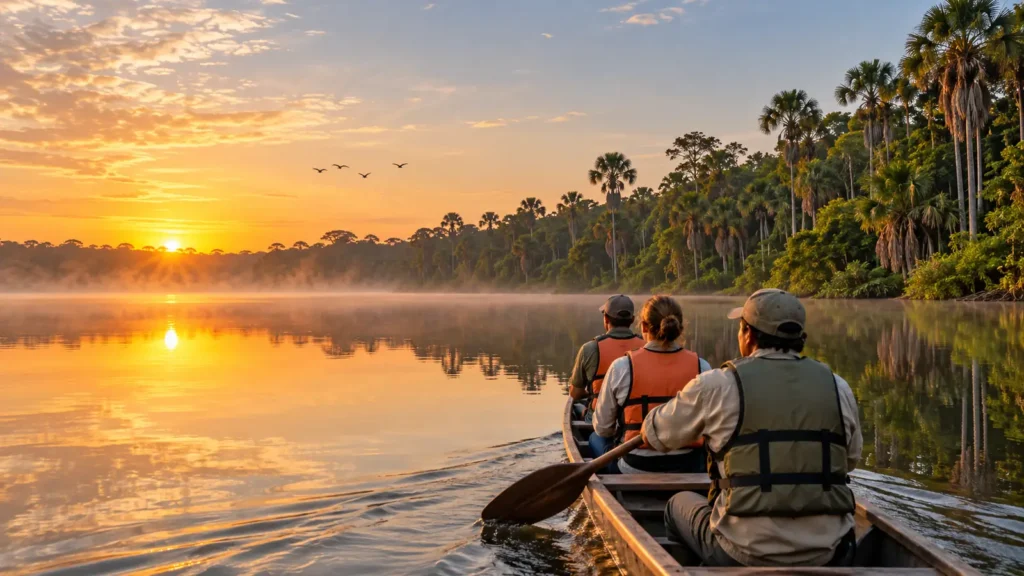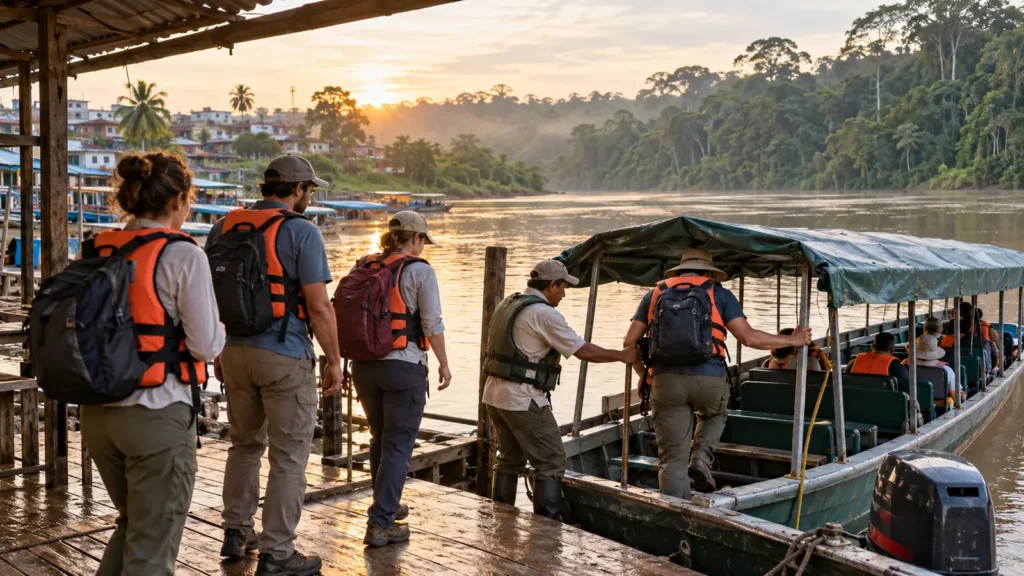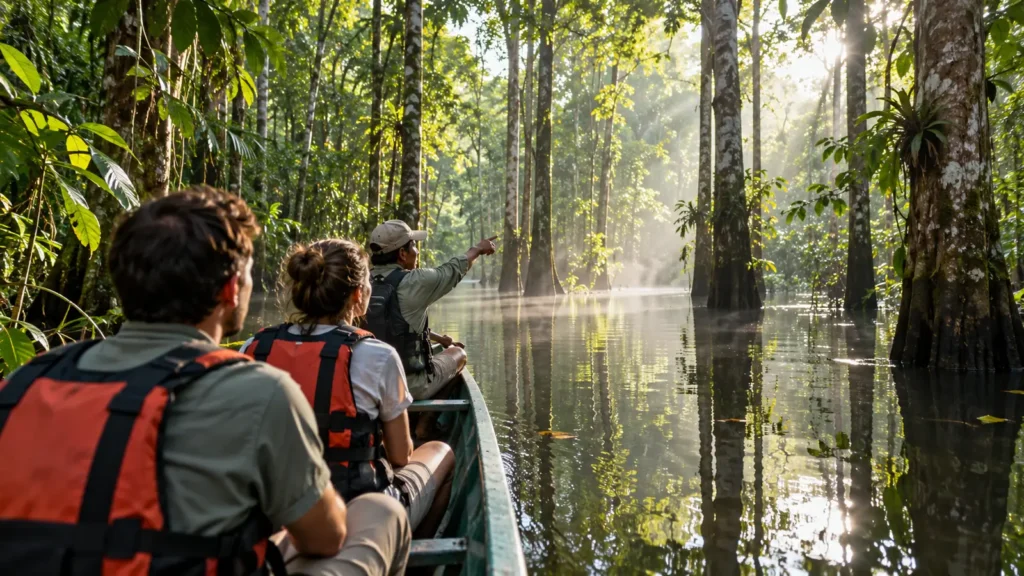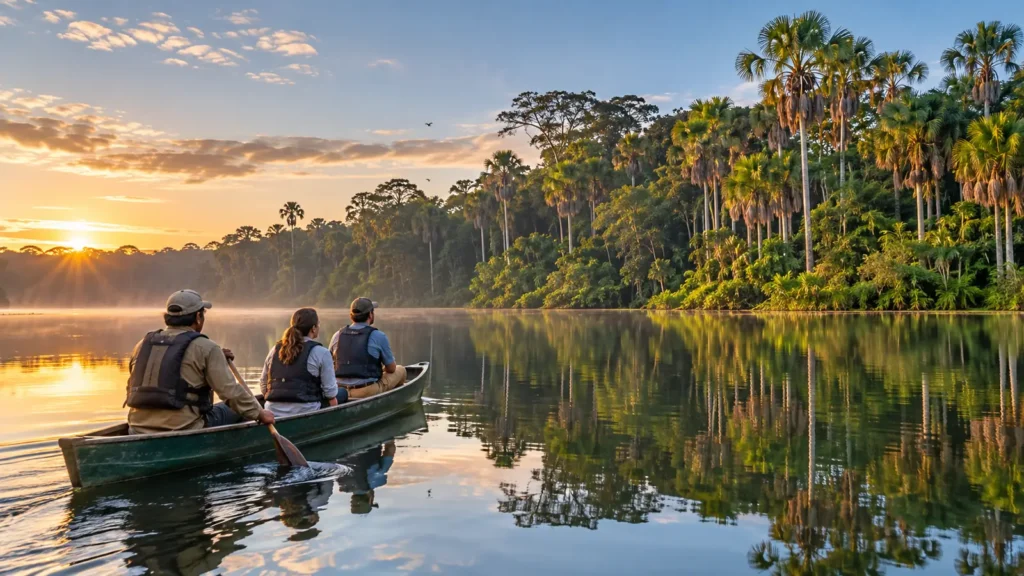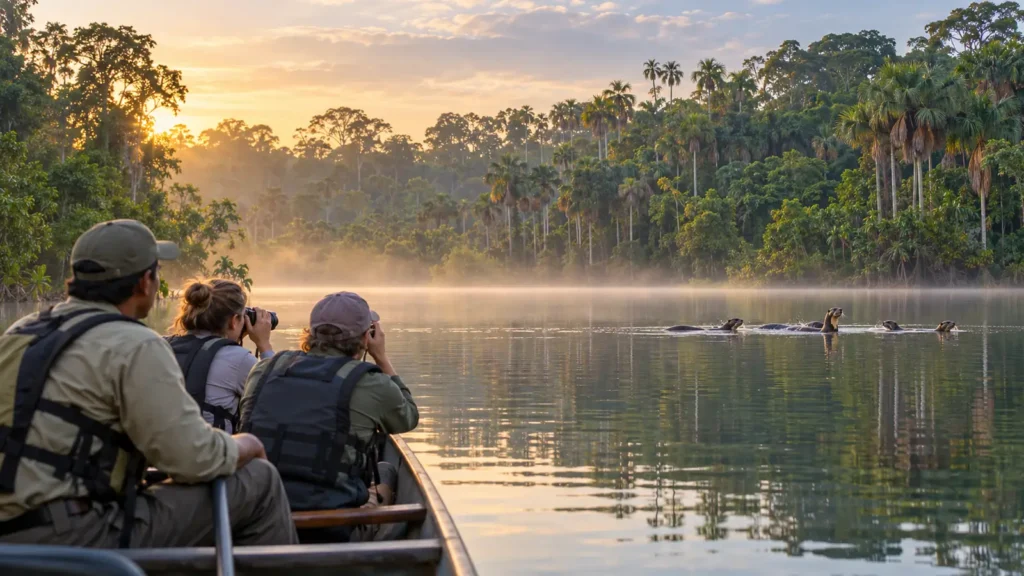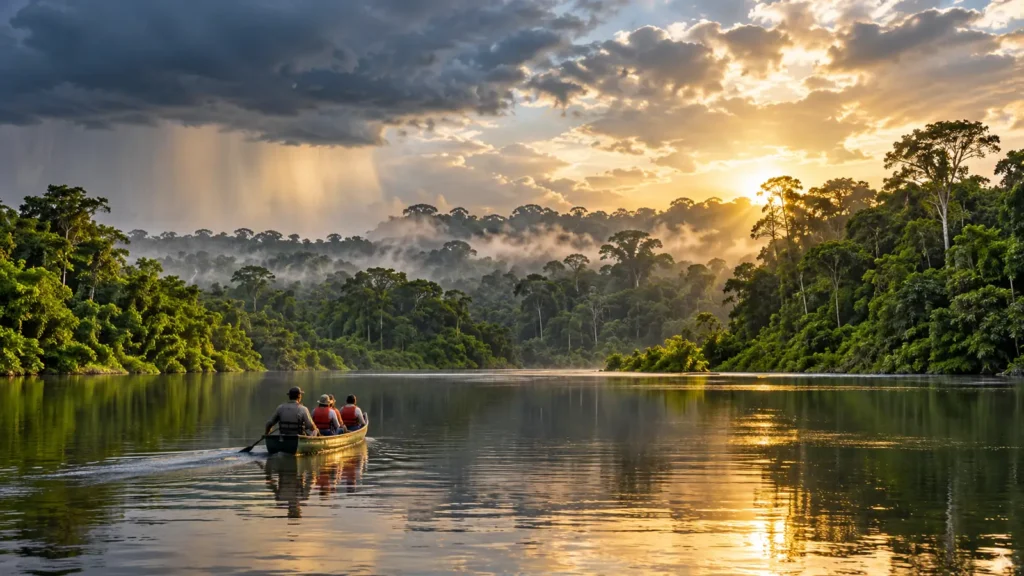
How many days in the Peruvian Amazon are enough? For most first-time visitors, three days and two nights is the practical minimum for an organized lodge experience, while four days and three nights offers a better balance of wildlife opportunities, varied habitats and flexibility for rain. Five days or more makes sense for deeper reserves, specialized birding, photography or travelers who want a slower pace.
Amazon trip length at a glance
| Trip length | Best for | Main limitation |
|---|---|---|
| 2 days / 1 night | A short taste near Iquitos or Puerto Maldonado | Only one dawn and very little weather flexibility |
| 3 days / 2 nights | First visits and travelers combining several Peru destinations | Activities must be carefully selected |
| 4 days / 3 nights | Wildlife, photography and a less compressed pace | Higher total cost and another vacation day |
| 5–7 days | Remote reserves, specialist birding and deeper immersion | Longer transfers and diminishing value if the program repeats habitats |
The correct duration depends on the lodge location. A nearby property reached by a short river transfer can use the first afternoon for activities. A remote reserve may require most of a day to reach, so the same three-day label produces much less field time.
Days, nights and full activity days are not the same
Tour labels normally count the arrival and departure dates as days. A “3 days / 2 nights” program may begin after a morning flight, reach the lodge around midday and return to the gateway during the third afternoon. In practice, that usually creates one full lodge day plus two partial days. A “4 days / 3 nights” trip often creates two full days, which is why the experience can feel substantially longer rather than only one day longer.
Ask the operator to state three separate details: the pickup time in the gateway, the expected lodge arrival and the return time to the airport or hotel. Then count how many dawn departures, night walks and long excursions remain. This simple calculation is more useful than comparing tour names, particularly when two lodges require very different transfer times.
Why transfers change the real duration

An Amazon itinerary usually begins after an airport or hotel pickup, followed by road and river transport. Check the scheduled collection time, boat duration and expected lodge arrival. On the last day, ask when the group returns to the city and whether the timing is designed around a particular flight.
A three-day tour rarely means three complete days in the forest. The first and last days combine activities with transfers, meals and briefings. The middle day is normally the only uninterrupted lodge day. This does not make the program poor value, but it explains why a fourth day feels more generous than the numbers suggest.
Remote access magnifies the difference. SERNANP’s official information for Pacaya Samiria shows that reaching Nauta from Iquitos and continuing by water can require several hours, with time varying greatly by sector. In Tambopata, official access descriptions range from the relatively close Sandoval sector to river journeys of several hours toward higher sectors. Compare the exact route instead of assuming every lodge around one gateway is equally close.
Is two days enough?
Two days and one night can provide a forest walk, sunset or night activity, one early morning and a river journey. It works best when the lodge is close to the gateway and the traveler has a fixed schedule. It is not ideal for anyone expecting multiple habitats or several independent chances to see wildlife.
The trip also becomes vulnerable to a delayed flight or heavy rain because there is no spare activity window. If two days is the only option, prioritize one high-quality habitat and avoid an itinerary that spends more time moving between attractions than observing nature.
Three days: the practical first-trip minimum
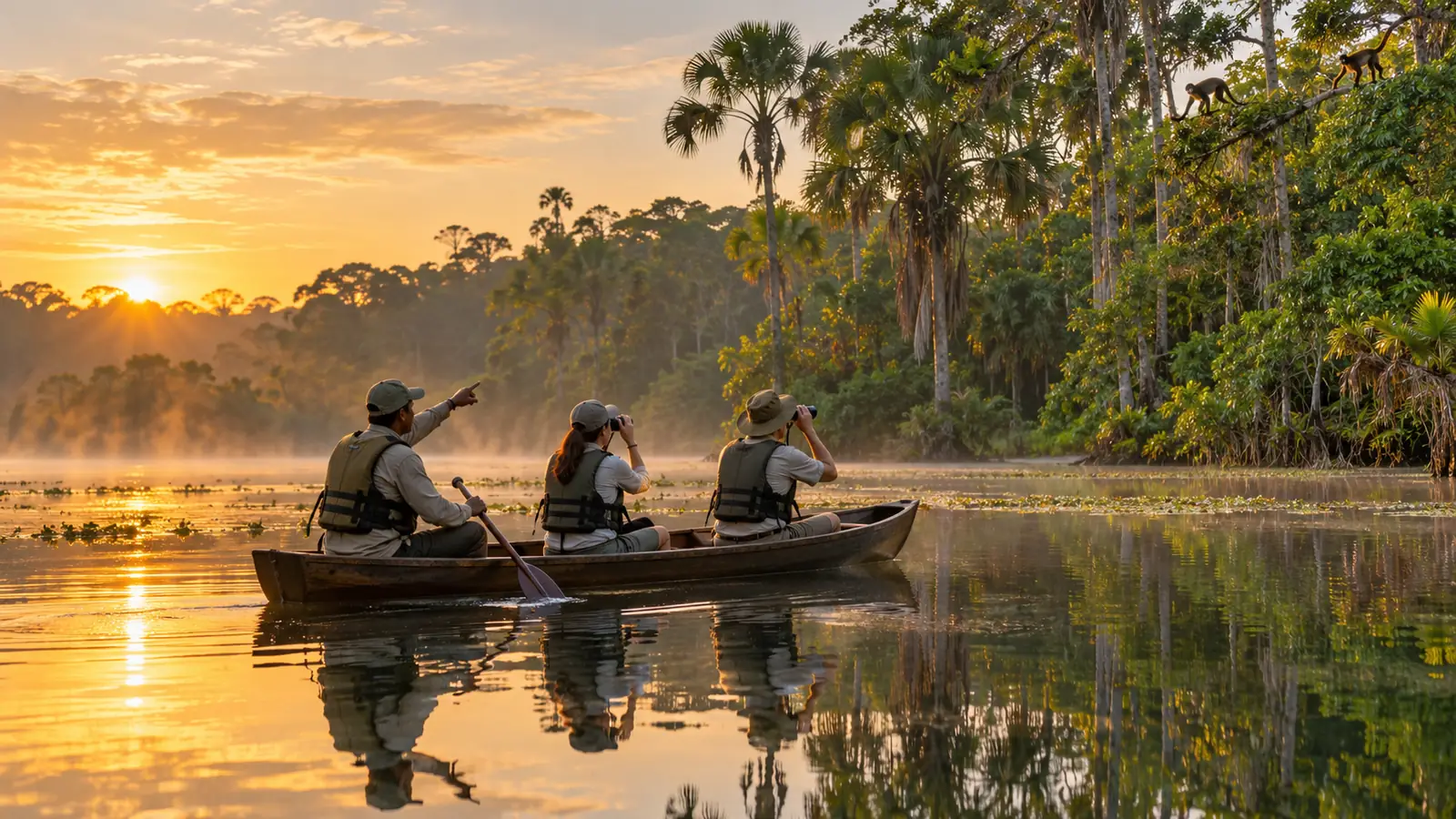
Three days and two nights is the most common compact format. It creates one arrival afternoon, one full day, two nights and a final morning or early afternoon. A balanced program can include a river transfer, forest walk, lake or canoe excursion, night walk, dawn birding and a cultural or conservation activity.
The dedicated three-day Peruvian Amazon itinerary compares Iquitos and Tambopata in detail. The main discipline is not trying to include everything. A rushed list of lake, tower, community, island and multiple wildlife stops can create more transit than immersion.
Three days suits travelers combining the Peruvian Amazon rainforest with Cusco, Machu Picchu or another region. Arrive in the gateway city early enough for the official pickup and avoid placing an inflexible international connection immediately after the return.
Four days: the best overall balance

Four days and three nights adds a second full day or a substantial extra activity block. That creates room for another habitat, such as an oxbow lake, canopy platform, clay lick, flooded channel or longer forest trail. It also provides another dawn and night, when wildlife activity differs from midday.
The extra time is valuable even when no new attraction is added. Guides can slow down around fruiting trees, tracks and mixed bird flocks; travelers can rest during the hottest hours; and an excursion affected by rain may be moved rather than lost. For first-time visitors whose main goal is nature, four days is often the strongest recommendation.
Review the Peruvian Amazon wildlife guide with realistic expectations. More days improve opportunities, but they never guarantee a jaguar, giant river otter, river dolphin or any other free-ranging species.
Five to seven days: when longer is worthwhile
A longer stay makes sense when access itself is long, the program reaches a more remote protected area, or the traveler has a specialist goal. Birders benefit from repeated dawns and different elevations within the canopy. Photographers gain more light and weather windows. Researchers, families and slow travelers may prefer fewer activities per day with more recovery time.
Length alone does not create depth. Ask how a five-day itinerary differs from the three-day version. It should add habitats, routes or interpretive value rather than repeating the same short trail. A longer stay close to town can still be excellent, but the program should explain what the added nights make possible.
Iquitos: how many days should you stay?
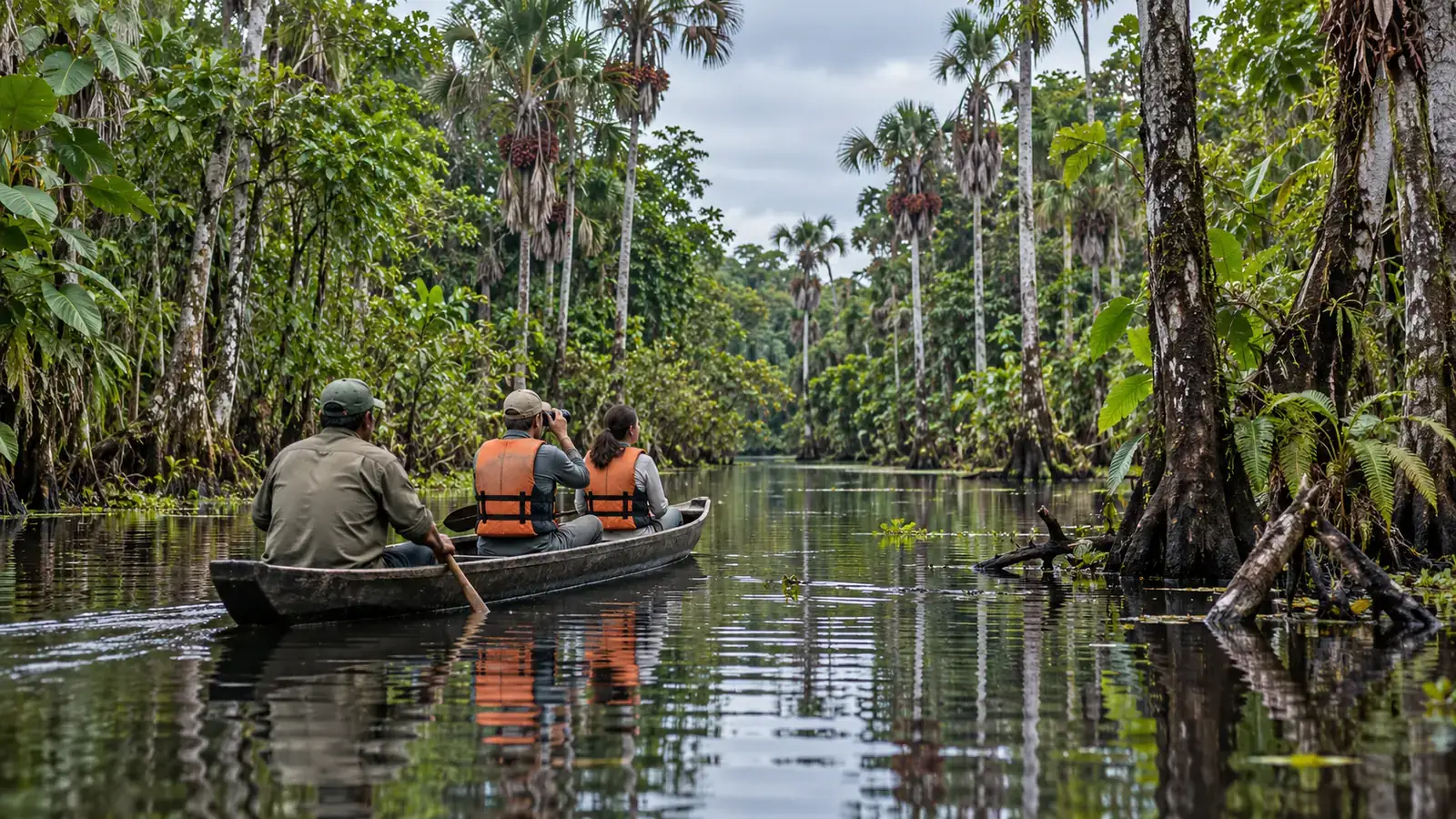
Iquitos is a river-based gateway. A nearby lodge can fit into three days, while programs entering deeper floodplain systems need more time because boat and overland connections are part of the experience. Water level also changes which channels, lakes and trails are accessible.
Three days works for a lodge relatively close to the city, offering river navigation, forest walking, dawn or night activity and community context. Four days gives another opportunity for dolphins, birds and flooded-forest exploration. Pacaya Samiria or other remote sectors commonly justify five days or longer because the approach can be substantial.
Use the forthcoming Iquitos Amazon travel guide and the existing Iquitos or Tambopata comparison before choosing. Do not book a same-day flight connection based only on an optimistic boat-return time.
Tambopata and Puerto Maldonado: how many days?

Puerto Maldonado provides access to lodges along the Madre de Dios and Tambopata systems. Some properties are reached quickly enough for a first-day excursion, while higher Tambopata sectors require much longer river travel.
Three days can combine an oxbow lake, forest trails, a night walk and canopy or river activities. Four days is better when wildlife and photography are priorities because it reduces pressure to stack excursions. Five days is appropriate for farther sectors, macaw-clay-lick programs or guests who prefer a slower rhythm.
The forthcoming Tambopata travel guide will cover access and sectors in greater detail. Always confirm the actual lodge and transfer time: “Tambopata” is a broad destination, not one fixed point on a map.
How many wildlife opportunities do you really get?
Count dawns, evenings and habitat changes rather than tour days. A two-night stay normally provides two early mornings at most, while a three-night stay adds a third and offers more flexibility. Night walks may happen after dinner, and lake visits are often scheduled when light and animal activity are favorable.
The best program mixes forest interior, water, canopy and edge habitats without racing between them. Repeated observation can be useful: returning to a lake at a different hour is not necessarily duplication because weather, light and animal movement change.
Sample three-day rhythm
- Day 1: gateway pickup, river transfer, lodge briefing, first forest or water excursion, sunset and optional night walk.
- Day 2: dawn observation, breakfast, longer habitat excursion, midday rest, afternoon activity and evening wildlife observation.
- Day 3: final morning walk or conservation activity, breakfast or lunch depending on schedule, boat return and transfer to the airport or hotel.
This structure shows why flight timing matters. A late arrival can remove the first excursion, while an early departing flight can erase the final morning. Compare the hours, not just the day count.
Factors that justify adding a day
- Your priority is wildlife, birding or photography rather than simply seeing the forest once.
- The lodge requires several hours of combined road and river travel.
- You are traveling in a season when rain may change the activity schedule.
- You prefer one main excursion per half-day instead of a compressed checklist.
- You are traveling with children, older adults or anyone who benefits from rest.
- You want cultural or conservation activities without removing nature excursions.
Balance time against budget using the future Peruvian Amazon trip cost guide. One additional lodge night may improve the experience more than adding several rushed city activities elsewhere, but only if the itinerary uses that time well.
Current three-day options from Explora el Peru
The Amazonas Sinchicuy Lodge 3-day tour currently combines Iquitos transfers, Amazon River navigation, two lodge nights, wildlife and plant interpretation, community activities and a return to the city on day three.
The Ecological Puerto Maldonado 3-day tour uses a compact structure with river transfer, lodge stay, lake and forest activities, then a day-three return. The Tambopata National Reserve 3-day tour currently lists Sandoval Lake, night walking, river activities, forest trails and canopy bridges across its program.
Inclusions and timings can change. Ask for the final itinerary, exact pickup and return schedule, lodge name and flight recommendation before booking. Review the Amazon safety guide and Amazon packing list once the route is confirmed.
Frequently asked questions
Is three days enough for the Peruvian Amazon?
Yes for a well-designed introductory lodge trip with manageable transfers. It provides one full day plus useful activity time on arrival and departure days.
Is four days better than three?
Usually for wildlife, photography and a relaxed pace. The added night creates another dawn, evening and weather window.
Can I visit the Amazon on a two-day trip?
Yes near a gateway city, but choose a close lodge and realistic activity list. Long transfers make a one-night trip poor value.
How many days do I need for Pacaya Samiria?
Often five or more once access is considered, although the correct duration depends on the selected sector and transport. Request a route-specific schedule from an authorized operator.
Should I spend longer in Iquitos or Tambopata?
Neither automatically needs more time. Lodge distance and chosen sector matter more than the gateway name. Nearby programs fit three days; remote routes justify longer stays.
Does the rainy season require extra days?
An additional day provides flexibility, but rain is possible year-round. Use the best-time guide to understand regional patterns and water levels.
Editorial sources
Access and duration context was checked against official SERNANP visitor information for Tambopata National Reserve and Pacaya Samiria National Reserve, plus current Explora el Peru tour itineraries. Transport times and activities are operational details that should be reconfirmed before travel.